Japan
Capital: Tokyo. Japan is one of the 48 countries in the Asia quiz.
Quick answers: What is the capital of Japan? · Which countries border Japan?
Facts about Japan
- CapitalTokyo
- Population123.4 million
- Area377,930 km²
- RegionsAsia, East Asia
- LanguageJapanese
- CurrencyJapanese yen (JPY)
Japan is the 6th most populous of the 48 countries in Asia and the 17th largest by area. Worldwide it ranks 12th by population and 61st by area.
Where is Japan?
Japan is an island country off the east coast of Asia, in the north-west Pacific Ocean. The Sea of Japan separates it from Russia, North Korea and South Korea to the west; the East China Sea lies to the south-west, towards China and Taiwan. The country is a long arc of islands running from north-east to south-west. Four of them hold almost everyone: Hokkaido in the north, Honshu in the middle, and Shikoku and Kyushu in the south-west. Tokyo, the capital, is on the east coast of Honshu, on Tokyo Bay.
Japan has no land borders with anyone.
How to find Japan on the map
- Start from Korea. The Korean peninsula points south from China; Japan is the curve of islands just east of it, across the sea.
- Look for the arc. Japan bends like a bow, with Hokkaido at the top and a tail of small islands (the Ryukyus) trailing down towards Taiwan.
- Don't confuse it with the Philippines. The Philippines are a cluster of islands much further south, east of Vietnam.
- Hokkaido is Japanese. The roundish island at the top of the arc is sometimes mistaken for Russian territory; Russia's Sakhalin is the long thin island north of it.
Flag
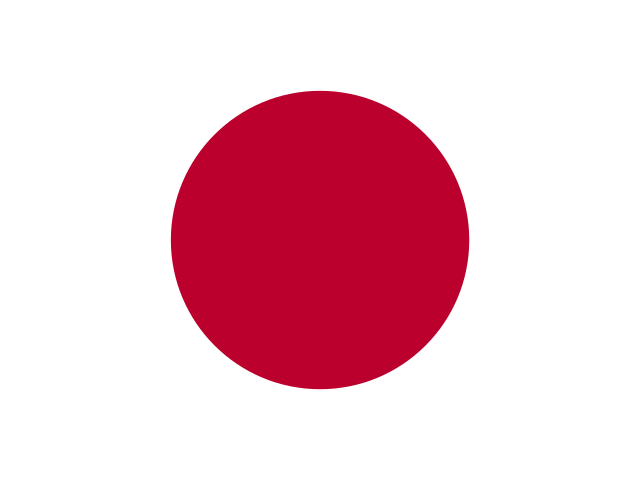
The Hinomaru – "circle of the sun" – is a plain red disc centred on a white field. It is one of the simplest national flags and almost impossible to confuse once you know it, though the Flags quiz does offer two near-neighbours: Bangladesh, which has a red disc set slightly towards the hoist on a dark green field, and Palau, which has a yellow disc on blue. Only Japan is red on white.
A short history of Japan
People have lived on the Japanese islands for tens of thousands of years. The Jōmon culture made some of the oldest pottery in the world, and during the first millennium BC the Yayoi culture brought wet-rice farming and metalworking from the Asian mainland. From the 300s AD the Yamato clan built a state in central Honshu, and its rulers became the imperial family that still reigns today – the oldest continuous hereditary monarchy in the world.
Buddhism arrived through Korea in the 500s, along with wider use of Chinese writing. Permanent capitals were founded at Nara in 710 and Heian, now Kyoto, in 794. Real power then slipped to warrior clans, and from 1185 a military ruler, the shogun, governed in the emperor's name. Two Mongol invasion fleets were wrecked by storms in 1274 and 1281, giving rise to the idea of the kamikaze, or "divine wind".
After a century of civil war, Tokugawa Ieyasu united the country and founded a shogunate at Edo in 1603. For more than 200 years Japan kept foreigners almost entirely out. That ended when American warships under Commodore Perry arrived in 1853. The Meiji Restoration of 1868 returned power to the emperor, moved the capital to Edo – renamed Tokyo, "eastern capital" – and launched a rush to industrialise. In the same era Japan absorbed the Ainu homeland of Hokkaido and the Ryukyu Kingdom, now Okinawa.
Japan defeated China in 1895 and Russia in 1905, annexed Korea in 1910 and later invaded China. Its attack on Pearl Harbor in 1941 brought the United States into the Second World War, which ended after the atomic bombings of Hiroshima and Nagasaki in August 1945. Under American occupation a new constitution made the emperor a symbol and renounced war.
Rebuilding was astonishingly fast: the bullet train and the Tokyo Olympics both arrived in 1964. Today Japan is one of the world's largest economies, a leader in cars, electronics and robotics, facing the challenge of an ageing and shrinking population.
Culture and daily life in Japan
Japanese is written with three scripts at once: kanji characters borrowed from Chinese, and two native syllabaries, hiragana and katakana. The country also has minority languages, including Ainu and the Ryukyuan languages of Okinawa. Most people follow both Shinto, with its shrines to local spirits, and Buddhism – a newborn may be blessed at a shrine and a funeral held at a temple.
Literature goes back a thousand years to The Tale of Genji by the court lady Murasaki Shikibu, often called the world's first novel. Matsuo Bashō perfected the haiku in the 1600s, and Katsushika Hokusai's woodblock print The Great Wave off Kanagawa is one of the best-known images on Earth. Theatre ranges from the slow, masked Noh to the colourful drama of kabuki.
Modern Japan exports culture on a huge scale, from Akira Kurosawa's samurai films to the anime of Hayao Miyazaki and Studio Ghibli, manga and video games. Sumo is the traditional national sport, but baseball draws bigger crowds, and the tea ceremony, flower arranging and calligraphy are still widely studied.
Five facts worth knowing
- Japan is made of roughly 14,000 islands, but the four main ones make up about 97% of the land area. Honshu alone is bigger than Great Britain.
- Tokyo is the largest metropolitan area in the world, with around 37 million people in the greater city region.
- Japan has 47 prefectures, the regional divisions that have their own quiz on this site. Hokkaido is the largest; Kagawa on Shikoku is the smallest.
- Mount Fuji, the highest peak at 3,776 metres, is an active volcano – Japan sits on the Pacific Ring of Fire and has around 10% of the world's active volcanoes.
- Japan's nearest foreign land is South Korea. The Tsushima Strait between Kyushu and Busan is about 200 km wide at its narrowest point; at the far north, Russia's Kuril Islands are a few kilometres from Hokkaido.
Culture and traditions in Japan
- Saying hello
A bow, deeper for more formal situations, with "Konnichiwa".
- Food and drink
Sushi; ramen noodle soup; matcha green tea.
- Festivals and traditions
Hanami, cherry blossom viewing in March-April; Obon in mid-August, honouring ancestors.
- Everyday life
Shoes come off indoors, tipping is not customary, and people keep quiet on trains.
- Did you know?
Thanks to a 1970s marketing campaign, eating KFC on Christmas Eve is a popular tradition in Japan.
Common mistakes
- Tapping the Philippines, Taiwan or the Korean peninsula.
- Tapping Sakhalin (Russian) as if it were part of Hokkaido.
- Picking Bangladesh's flag because of the red disc.
Practise with Japan
- Asia quiz – Japan is the island arc east of Korea; the challenge is placing it against the Philippines and Taiwan.
- East Asia quiz – only a handful of countries, so the map zooms in on Japan, the Koreas, China, Mongolia and Taiwan.
- Japanese Prefectures – all 47, from Hokkaido to Okinawa.
- Asia flags – the Hinomaru versus Bangladesh.
- Asia capitals quiz – Tokyo.
- Mystery Country – the curved chain of four big islands is one of the most recognisable outlines in the world.
Quick check: how well do you know Japan?
3 questions, no sign-up. Tap an answer.
1. Which flag belongs to Japan?
That's the flag of Japan.
2. What is the capital of Japan?
The capital of Japan is Tokyo.
3. Which is bigger by area?
Japan (377,930 km²) is bigger than Oman (309,500 km²).
Keep going on the Asia quiz – Japan is one of 48 countries there.
More ways to practise: find Japan on the blank map with no borders (hard mode), or play today's Globe and the other daily puzzles.
Frequently asked questions about Japan
What language is spoken in Japan?
Japanese is spoken by almost everyone, although no law formally makes it the official language. It is written with a mix of Chinese-derived kanji and two syllabic scripts, hiragana and katakana. The Ainu language of Hokkaido and the Ryukyuan languages of Okinawa are endangered.
What currency does Japan use?
Japan uses the yen (JPY), one of the world's most traded currencies. The yen was introduced in 1871 during the Meiji modernisation. Japan was long known as a cash-heavy society, though card and mobile payments have grown quickly.
What time zone is Japan in?
All of Japan uses Japan Standard Time, UTC+9, and there is no daylight saving time. Japan tried summer time during the US occupation from 1948 to 1951 but abandoned it, and proposals to bring it back have been rejected.
Which side of the road do they drive on in Japan?
Japan drives on the left. The habit is often traced to samurai walking on the left so their swords would not clash, and it was confirmed when British engineers helped build Japan's first railways. Okinawa drove on the right under US rule until 1978.
What is the highest point in Japan?
The highest point is Mount Fuji, about 3,776 metres, a near-perfect volcanic cone on the island of Honshu, south-west of Tokyo. The official climbing season runs in July and August, and the mountain was listed by UNESCO as a cultural site in 2013.
Why is Japan called the Land of the Rising Sun?
The Japanese name, Nihon or Nippon, means "origin of the sun", because Japan lies east of China, where the sun rises. The red disc on the flag reflects the same idea, and the English name Japan probably came through Chinese and Malay forms of the name.
Quizzes with Japan
Often confused with
Guides that help with this
- Oceans, seas, rivers and mountainsThe physical map: seas around each continent, the big rivers and ranges.
- Flags that look alike (and how to tell them apart)Chad or Romania? Australia or New Zealand? The flag pairs that cost quiz points.
- The 25 hardest countries to find on a mapPacific islands, Caribbean islands and landlocked Africa – where they are.