Madagascar
Capital: Antananarivo. Madagascar is one of the 54 countries in the Africa quiz.
Quick answers: What is the capital of Madagascar? · Which countries border Madagascar?
Facts about Madagascar
- CapitalAntananarivo
- Population32.7 million
- Area587,041 km²
- RegionsAfrica, Southern Africa
- LanguagesFrench, Malagasy
- CurrencyMalagasy ariary (MGA)
Madagascar is the 15th most populous of the 54 countries in Africa and the 21st largest by area. Worldwide it ranks 49th by population and 45th by area.
Where is Madagascar?
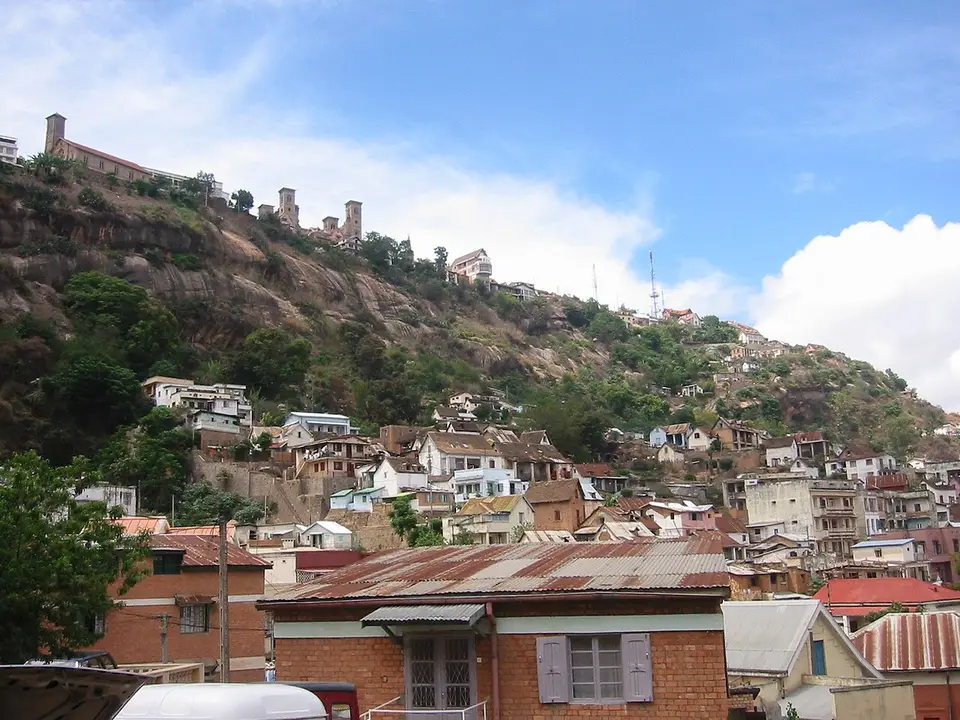
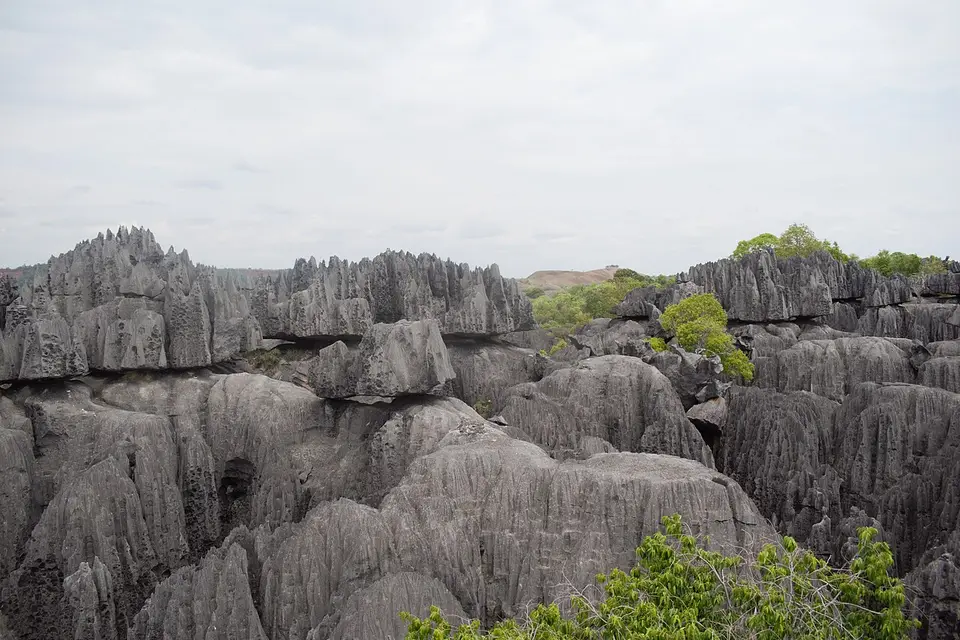
Madagascar is a large island in the Indian Ocean off the south-east coast of Africa, separated from Mozambique by the Mozambique Channel, about 400 km wide at its narrowest. The island runs roughly north to south for about 1,600 km and is the fourth-largest in the world after Greenland, New Guinea and Borneo. The capital, Antananarivo, is in the central highlands, well inland.
On a world map, find the southern half of Africa and look to its right. The big island lying alongside Mozambique is Madagascar. The small islands further north-east are the Comoros, the Seychelles and Mauritius.
How to find Madagascar on the map
- Start from Mozambique. Madagascar is the island opposite it across the channel.
- Look for the biggest island near Africa. Nothing else in the region comes close in size.
- Note the tilt. The island leans so its northern tip points north-east while its southern end sits level with South Africa's eastern coast.
- Don't confuse it with Sri Lanka or Taiwan. Those are off Asia. Madagascar is the one off Africa.
Flag
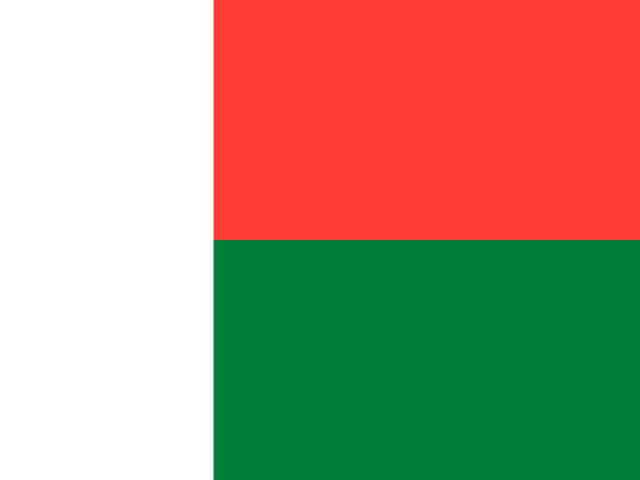
Madagascar's flag has a vertical white band at the hoist and two horizontal bands, red over green, filling the rest. The red and white are said to come from the Merina kingdom that ruled before French colonisation; the green represents the coastal peoples and the land. It was adopted in 1958, two years before independence.
The layout, one vertical stripe and two horizontal, is rare. Benin uses it with green at the hoist and yellow over red; Guinea-Bissau has a red hoist band with a black star. White at the hoist with red over green is Madagascar.
A short history of Madagascar
Madagascar was one of the last large landmasses on Earth to be settled by people. Seafarers from the islands of Southeast Asia crossed the Indian Ocean and arrived more than a thousand years ago, and people from the East African mainland came too. Over time the two groups mixed, creating the Malagasy people. Arab and Swahili traders set up posts on the north-west coast, bringing Islam to some communities and the first written form of Malagasy, using Arabic letters called sorabe.
From the 1500s several kingdoms rose across the island, such as the Sakalava in the west and the Betsimisaraka in the east. In the central highlands, King Andrianampoinimerina united the Merina people in the late 1700s and made Antananarivo his capital. His son Radama I conquered much of the island and welcomed British missionaries, who wrote Malagasy in the Latin alphabet. His widow, Queen Ranavalona I, who ruled from 1828 to 1861, pushed back against foreign influence and persecuted Christians. Later Merina queens made Protestant Christianity the religion of the court.
France invaded in 1895, abolished the monarchy and made Madagascar a colony in 1896, exiling the last queen, Ranavalona III. In 1947 a large uprising against French rule was put down at the cost of tens of thousands of lives; 29 March is still marked as a day of remembrance. Madagascar became independent on 26 June 1960.
The years since have been politically unsteady. A socialist revolution in 1975 brought Didier Ratsiraka to power, and the country later returned to multi-party politics. Disputed elections in 2002 and a coup in 2009 left long periods of crisis and isolation.
Today Madagascar remains one of the poorest countries in the world, even though it is rich in nickel, graphite, sapphires and farmland. Vanilla, cloves and lychees are key exports, and ecotourism based on its unique wildlife is growing.
Culture and daily life in Madagascar
Malagasy is spoken across the whole island in many dialects, and this single shared language is unusual for an African country. Its closest relative is Ma'anyan, spoken in southern Borneo, though it has borrowed words from Bantu languages, Arabic, French and English. There are around 18 recognised ethnic groups, and the old divide between highland Merina and coastal peoples still matters in politics.
Most Malagasy are Christian, but respect for the razana, the ancestors, shapes almost every part of life. Tombs are often grander than houses, and among the Mahafaly of the south they are decorated with carved wooden posts called aloalo. The Rova of Antananarivo, the old royal palace complex, and the sacred royal hill of Ambohimanga are national landmarks.
Music is everywhere, from the valiha, a bamboo tube zither, to the fast salegy dance music of the north. Public speaking is valued: kabary, formal speeches full of proverbs, are delivered at weddings and funerals. Many people wear the lamba, a wrap of cloth, and rugby union is the national sport.
Five facts worth knowing
- Around 90 per cent of Madagascar's wildlife is found nowhere else on Earth, including all its lemurs and the baobabs of the famous Avenue of the Baobabs.
- The Malagasy people are partly of Southeast Asian origin. The first settlers arrived by boat from Borneo, and the Malagasy language is related to languages of Indonesia.
- Madagascar is the world's largest producer of vanilla, grown mainly in the north-east.
- Antananarivo sits at over 1,200 metres, giving it a far cooler climate than the coast.
- The island gained independence from France in 1960, and French remains an official language alongside Malagasy.
Culture and traditions in Madagascar
- Saying hello
A friendly "Salama" or "Manao ahoana" is common, usually with a handshake.
- Food and drink
Romazava, a beef and leafy-greens stew, served with lots of rice; Malagasy eat rice at almost every meal.
- Festivals and traditions
Famadihana, the "turning of the bones", is a highland family reunion honouring ancestors, held mainly in the dry winter months (June-September).
- Everyday life
Respect for elders and ancestors shapes daily life. Many places have local fady (taboos), so visitors should ask before touching sacred sites.
- Did you know?
Around 90% of Madagascar's wildlife, including all lemurs, is found nowhere else on Earth.
Common mistakes
- Tapping Mozambique, the mainland neighbour across the channel.
- Choosing Benin's flag because of the matching layout.
- Assuming the capital is on the coast; Antananarivo is high in the centre.
Practise with Madagascar
- Africa quiz – the big island to the right of Mozambique.
- East Africa quiz – included with the mainland countries of the region.
- Africa flags – white at the hoist, red over green.
- Africa capitals quiz – Antananarivo.
- Mystery Country – a long oval with a narrow northern tip, one of the easiest island outlines to recognise.
Quick check: how well do you know Madagascar?
3 questions, no sign-up. Tap an answer.
1. Which flag belongs to Madagascar?
That's the flag of Madagascar.
2. What is the capital of Madagascar?
The capital of Madagascar is Antananarivo.
3. Which is bigger by area?
Namibia (825,615 km²) is bigger than Madagascar (587,041 km²).
Keep going on the Africa quiz – Madagascar is one of 54 countries there.
More ways to practise: find Madagascar on the blank map with no borders (hard mode), or play today's Globe and the other daily puzzles.
Frequently asked questions about Madagascar
What language is spoken in Madagascar?
Malagasy and French are the official languages. Malagasy, spoken by nearly everyone, is an Austronesian language with regional dialects, and the standard form is based on the Merina dialect of the highlands. French is used in government, business and higher education.
What currency does Madagascar use?
Madagascar uses the ariary (MGA). It is one of only two currencies in the world that are not divided by tens: one ariary is worth five iraimbilanja. It replaced the Malagasy franc, with the change completed in 2005.
What time zone is Madagascar in?
Madagascar is on East Africa Time, UTC+3, all year and does not use daylight saving time. Its clocks match those of Kenya and Tanzania across the Mozambique Channel.
Which side of the road do they drive on in Madagascar?
Madagascar drives on the right, following French practice. The main paved roads, called routes nationales, radiate from Antananarivo, but many are in poor condition, and the cheap shared minibuses known as taxi-brousse are the most common way to travel.
What is the highest point in Madagascar?
The highest point is Maromokotro, about 2,876 metres, in the Tsaratanana Massif in the north of the island. The summit is rarely climbed because the massif is a strict nature reserve that needs special permission to enter.
Is Madagascar part of Africa?
Madagascar is an African country and a member of the African Union, lying about 400 kilometres off the coast of Mozambique. It split from the African mainland over 150 million years ago, and its people are of mixed Southeast Asian and East African descent.
Quizzes with Madagascar
Guides that help with this
- Learn all 54 African countries in a weekLearn the coastline in order, region by region.
- Flags that look alike (and how to tell them apart)Chad or Romania? Australia or New Zealand? The flag pairs that cost quiz points.
- The 25 hardest countries to find on a mapPacific islands, Caribbean islands and landlocked Africa – where they are.