Singapore
Capital: Singapore. Singapore is one of the 48 countries in the Asia quiz.
Quick answers: What is the capital of Singapore? · Which countries border Singapore?
Facts about Singapore
- CapitalSingapore
- Population6.1 million
- Area735 km²
- RegionsAsia, Southeast Asia
- LanguagesEnglish, Malay, Tamil, Chinese
- CurrencySingapore dollar (SGD)
Singapore is the 35th most populous of the 48 countries in Asia and the 47th largest by area. Worldwide it ranks 113th by population and 178th by area.
Where is Singapore?
Singapore is a city-state on an island at the very tip of the Malay Peninsula, in Southeast Asia. It sits just north of the equator, separated from Malaysia by the narrow Johor Strait and from the Indonesian islands of the Riau archipelago by the Singapore Strait to the south. The whole country is about 730 square kilometres – smaller than many cities – and the capital is simply Singapore itself.
Its location is the reason it exists: the Strait of Malacca, between Sumatra and the peninsula, is one of the busiest shipping lanes in the world, and Singapore sits at its eastern entrance.
How to find Singapore on the map
- Start from the Malay Peninsula. Follow it south from Thailand through Malaysia until the land runs out. The dot at the end is Singapore.
- Look between Malaysia and Sumatra. Singapore is in the gap where the Strait of Malacca opens into the South China Sea.
- Zoom in. At world zoom, Singapore is a single pixel. On the Southeast Asia quiz it becomes a recognisable diamond-shaped island.
- Don't confuse it with Brunei. Brunei is also small and rich, but it's on the north coast of Borneo, far to the east.
Flag
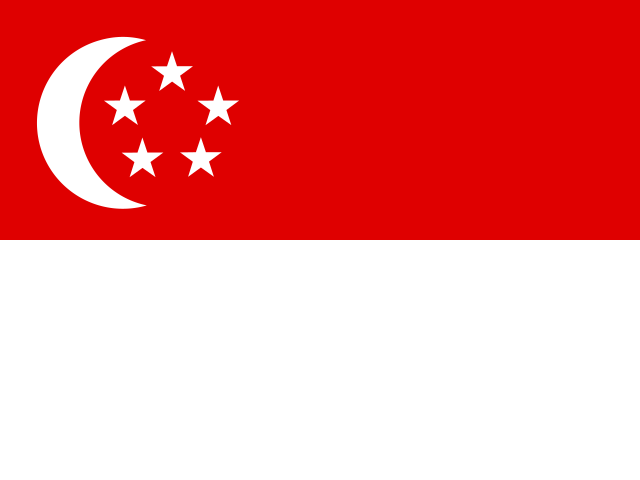
The Singaporean flag is red on top and white below, with a white crescent moon and five small white stars in a circle in the top-left corner. The crescent represents a young nation on the rise, and the five stars its ideals: democracy, peace, progress, justice and equality.
Without the crescent and stars it would be the Indonesian flag, and Indonesia is right next door. If there is a crescent and a ring of five stars in the corner, it's Singapore.
A short history of Singapore
Long before Raffles, the island was a busy port. Chinese records and Malay legends point to a trading town called Temasek in the 1300s, and the Malay Annals tell how a prince named Sang Nila Utama saw a strange beast he took to be a lion and called the place Singapura, "lion city". Archaeologists have found Chinese porcelain and coins on Fort Canning Hill that confirm a thriving settlement. By the 1400s the port had declined, overshadowed by the Sultanate of Malacca, and later the island fell under the Sultanate of Johor.
The British East India Company wanted a base to rival the Dutch, who controlled much of the region. In 1819 Raffles struck a deal with a claimant to the Johor throne and with the local chief, and the British set up a free port. In 1824 a treaty with the Netherlands split the region into British and Dutch spheres – roughly the line that still divides Malaysia from Indonesia. Singapore joined Penang and Malacca as the Straits Settlements, and its tax-free trade drew migrants from southern China, India and the Malay world.
The Second World War was a turning point. Britain had built a huge naval base and believed the island was a fortress, but Japanese forces came down the Malay Peninsula by land and Singapore surrendered in February 1942. Churchill called it the worst disaster in British military history. The Japanese occupation that followed was brutal, especially for the Chinese community, and it shook faith in British protection.
After the war Singapore moved towards self-government, gaining it in 1959 under Lee Kuan Yew and the People's Action Party. Its union with Malaysia lasted less than two years, broken by tensions over race and politics, and Singapore was separated in 1965. With no natural resources, the new state bet on foreign investment, a disciplined workforce, public housing and education. Britain's withdrawal of its military bases around 1971 added to the pressure, but the economy grew at remarkable speed.
Today Singapore is a global centre for finance, shipping, trade and technology, and one of the richest countries in the world per person.
Culture and daily life in Singapore
Singapore's mix of peoples is visible on every street. Ethnic Chinese form the majority, with large Malay and Indian communities and smaller groups such as the Eurasians and the Peranakans, whose ancestors were Chinese traders who married into local Malay society. In daily conversation many people slip into Singlish, an English-based creole sprinkled with Hokkien, Malay and Tamil words and its own particles such as "lah". Buddhism, Christianity, Islam, Taoism and Hinduism all have large followings, and temples, mosques and churches often stand side by side, as on South Bridge Road.
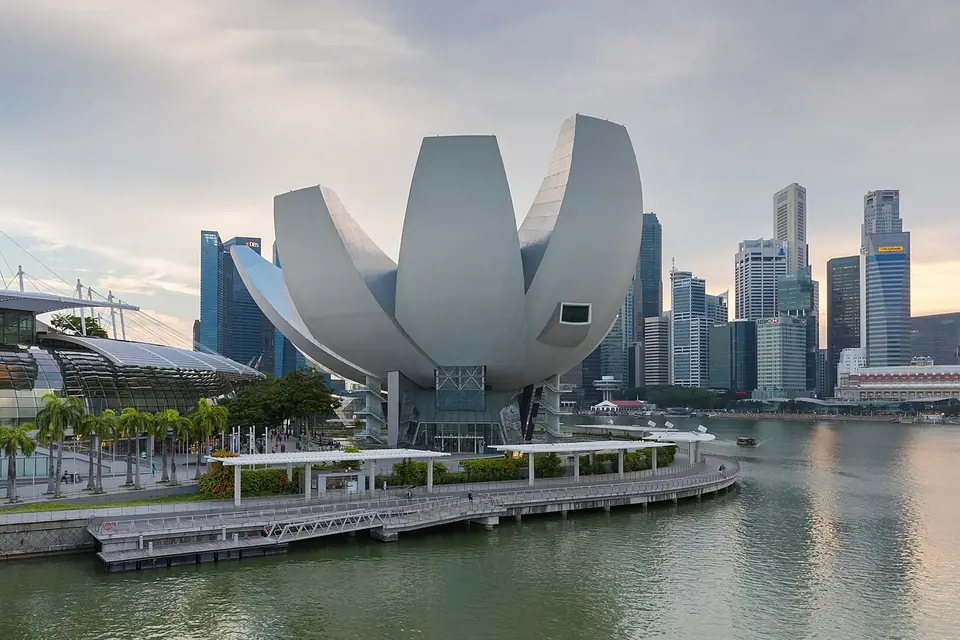
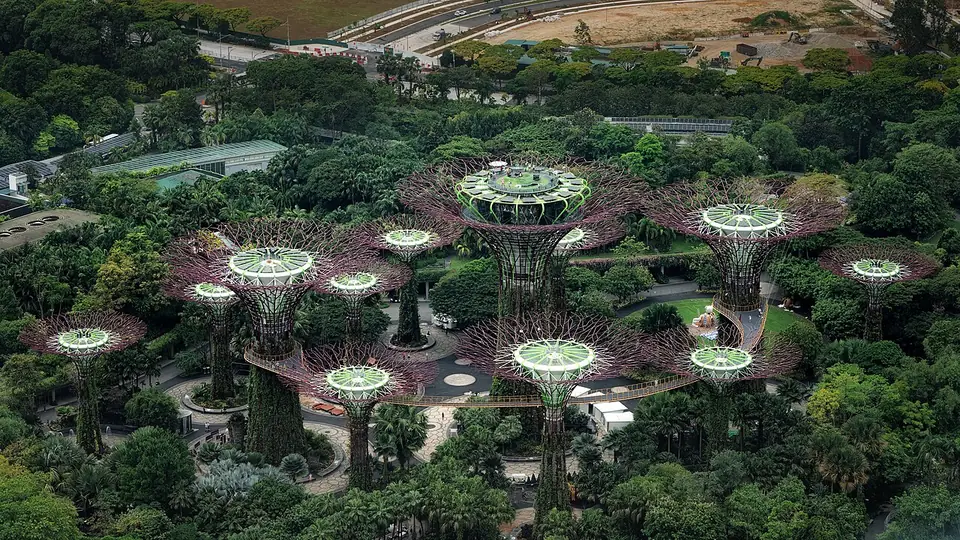
Public housing shapes daily life: most Singaporeans live in flats built by the Housing and Development Board, and the government uses ethnic quotas to keep neighbourhoods mixed. The city's architecture ranges from colourful Peranakan shophouses to Marina Bay Sands and the Gardens by the Bay, with its giant "supertrees". The Botanic Gardens became a UNESCO World Heritage Site in 2015.
Food is a national passion, and in 2020 Singapore's hawker culture, built around open-air food centres, was added to UNESCO's Intangible Cultural Heritage list. In sport, swimmer Joseph Schooling won the country's first Olympic gold medal in 2016. The Formula One night race around Marina Bay has become a fixture on the calendar.
Five facts worth knowing
- Singapore has four official languages: English, Malay, Mandarin and Tamil. Malay is the national language and the anthem is sung in it.
- It was a British trading post founded in 1819 by Stamford Raffles, joined Malaysia in 1963, and became independent in 1965.
- The Port of Singapore is one of the busiest in the world by container volume, rivalled only by Shanghai.
- Singapore has grown by reclaiming land from the sea – the country is about a quarter larger than it was in the 1960s.
- Changi Airport has repeatedly been named the world's best.
Culture and traditions in Singapore
- Saying hello
A light handshake is common, often with "Hello" in English, the main shared language.
- Food and drink
Hainanese chicken rice, often called the national dish; chilli crab and laksa, a spicy coconut noodle soup.
- Festivals and traditions
Chinese New Year, Hari Raya Puasa and Deepavali are all public holidays; National Day falls on 9 August.
- Everyday life
Locals reserve hawker-centre seats by leaving a tissue packet on the table ("chope"). Tipping isn't expected, since bills usually include a service charge.
- Did you know?
Singapore's hawker culture was added to UNESCO's Intangible Cultural Heritage list in 2020.
Common mistakes
- Tapping the southern tip of Malaysia – the two look joined at world zoom.
- Tapping Batam or Bintan in Indonesia, the larger islands immediately south.
- Picking Indonesia's flag in the Flags quiz; look for the crescent and stars.
Practise with Singapore
- Asia quiz – the dot at the end of the peninsula; tap carefully.
- Southeast Asia quiz – the zoomed view makes it a fair target rather than a pixel.
- Asia flags – red over white with the crescent and five stars.
- Asia capitals quiz – Singapore, one of the few countries whose capital shares its name.
- Mystery Country – a small diamond-shaped island; one of the trickiest outlines on the site.
Quick check: how well do you know Singapore?
3 questions, no sign-up. Tap an answer.
1. Which flag belongs to Singapore?
That's the flag of Singapore.
2. What is the capital of Singapore?
The capital of Singapore is Singapore.
3. Which is bigger by area?
Armenia (29,743 km²) is bigger than Singapore (735 km²).
Keep going on the Asia quiz – Singapore is one of 48 countries there.
More ways to practise: find Singapore on the blank map with no borders (hard mode), or play today's Globe and the other daily puzzles.
Frequently asked questions about Singapore
What language is spoken in Singapore?
Singapore has four official languages: English, Malay, Mandarin Chinese and Tamil. English is the main language of government, business and schooling, while Malay is the national language used in the anthem. Many people also speak Singlish, a local English-based creole.
What currency does Singapore use?
Singapore uses the Singapore dollar, code SGD, divided into 100 cents. Rather than setting interest rates, the central bank manages the currency against a hidden basket of its trading partners' currencies. Brunei's dollar is exchangeable with it at par.
What time zone is Singapore in?
Singapore uses UTC+8, the same as Malaysia, China and the Philippines, and does not observe daylight saving time. Geographically it would sit closer to UTC+7, so sunrise and sunset come relatively late.
Which side of the road do they drive on in Singapore?
Singapore drives on the left, a legacy of British rule, like neighbouring Malaysia. Car ownership is tightly controlled: buyers must bid for a certificate of entitlement, which can cost more than the car itself.
What is the highest point in Singapore?
Bukit Timah Hill is the highest natural point at about 164 metres. It lies inside Bukit Timah Nature Reserve, one of the last areas of primary rainforest on the island.
Why is Singapore so clean?
Singapore is famous for strict rules on public behaviour. Littering brings heavy fines, and the sale of chewing gum has been banned since 1992, apart from some for medical use. Regular cleaning campaigns and tree-planting have earned it the label "garden city".
Quizzes with Singapore
Often confused with
Guides that help with this
- Oceans, seas, rivers and mountainsThe physical map: seas around each continent, the big rivers and ranges.
- Flags that look alike (and how to tell them apart)Chad or Romania? Australia or New Zealand? The flag pairs that cost quiz points.
- The 25 hardest countries to find on a mapPacific islands, Caribbean islands and landlocked Africa – where they are.