Taiwan
Capital: Taipei. Taiwan is one of the 48 countries in the Asia quiz.
Quick answers: What is the capital of Taiwan? · Which countries border Taiwan?
Facts about Taiwan
- CapitalTaipei
- Population23.6 million
- Area36,197 km²
- RegionsAsia, East Asia
- LanguageChinese
- CurrencyNew Taiwan dollar (TWD)
Taiwan is the 23rd most populous of the 48 countries in Asia and the 37th largest by area. Worldwide it ranks 60th by population and 134th by area.
Where is Taiwan?
Taiwan is an island off the south-east coast of mainland China, separated from it by the Taiwan Strait, which is about 130 kilometres wide at its narrowest. Japan's Ryukyu Islands lie to the north-east and the Philippines to the south across the Luzon Strait. The main island is roughly 400 kilometres long and 150 wide, with a spine of high mountains running down the east and flat plains in the west where most people live.
The capital, Taipei, is at the northern end of the island. Taiwan's political status is disputed – it functions as a self-governing state but is claimed by China – and map sites handle it differently. This site lists Taiwan as its own entry.
How to find Taiwan on the map
- Start from China's coast. Follow the coastline south from Shanghai; Taiwan is the large island sitting just offshore, opposite the Chinese province of Fujian.
- Look for the sweet-potato shape. Taiwanese people often describe their island as shaped like a sweet potato – a tilted oval, wider in the middle.
- It is between Japan and the Philippines. The Ryukyu chain points down towards Taiwan from the north-east, and the Philippines begin just to the south.
- Don't confuse it with Hainan, the Chinese island further south-west in the South China Sea, or with the Philippine island of Luzon.
Flag
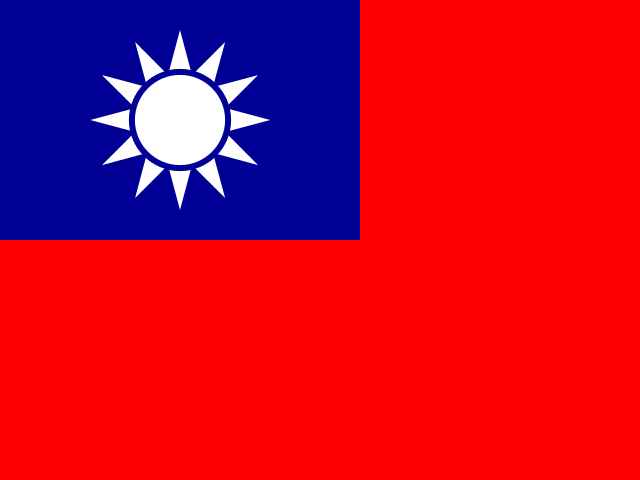
Taiwan's flag is a red field with a blue canton in the upper hoist containing a white sun with twelve rays. It is formally the flag of the Republic of China, dating from 1928. Red stands for the people, blue for nationalism and white for the people's livelihood – the "Three Principles" of the republic's founder Sun Yat-sen. The twelve rays represent the twelve hours of the traditional Chinese day.
It is sometimes confused with the flag of Samoa (red with a blue canton containing white stars) or Myanmar's older flags. A white sun with twelve points in a blue corner means Taiwan.
A short history of Taiwan
For thousands of years Taiwan belonged to Austronesian peoples. Many linguists think the Austronesian language family – which today stretches from Madagascar to Hawaii and New Zealand – began its spread from this island. Their descendants, Taiwan's Indigenous peoples, still live mainly in the mountains and on the east coast.
Europeans arrived in the 1600s. The Dutch built Fort Zeelandia near today's Tainan in 1624, and the Spanish held the north for a few years. In 1662 the Ming loyalist commander Zheng Chenggong, known in the West as Koxinga, drove out the Dutch and set up his own kingdom. The Qing dynasty took the island in 1683, and settlers from Fujian and Guangdong crossed the strait in growing numbers, making Han Chinese the majority.
After China lost the First Sino-Japanese War, Taiwan was handed to Japan in 1895. Fifty years of Japanese rule brought railways, schools and industry, but also harsh control. In 1945 the island was placed under the Republic of China. Tension with the new administration erupted in the 228 Incident of 1947, when a crackdown killed thousands. In 1949, after losing the civil war to the Communists, the ROC government retreated to Taiwan. It also kept Kinmen and Matsu, small islands just off the Fujian coast, which is why Taipei still controls land within sight of the mainland.
Martial law lasted until 1987. Meanwhile, Taiwan's economy boomed, first in light industry and then in electronics. In 1971 the United Nations seat for "China" passed to the People's Republic. Democracy arrived in stages, with the first direct presidential election in 1996.
Taiwan's status remains disputed. The People's Republic of China regards it as a province that must be reunified, while the government in Taipei maintains that the Republic of China is a sovereign state; only a small number of countries formally recognise it. Today Taiwan is a high-income, high-tech economy at the centre of global electronics supply chains.
Culture and daily life in Taiwan
Mandarin is the main official language, written in traditional Chinese characters rather than the simplified form used on the mainland. Many families also speak Taiwanese Hokkien or Hakka, brought by settlers from southern China, and more than a dozen Indigenous languages are officially recognised. Children learn to read using Zhuyin, a phonetic alphabet often nicknamed bopomofo.
Religion is a lively blend of Buddhism, Taoism and folk belief. The sea goddess Mazu is especially loved, and her annual pilgrimage from Dajia draws huge crowds walking for more than a week. Busy temples such as Longshan Temple in Taipei sit beside modern towers.
The National Palace Museum in Taipei holds a vast collection of imperial Chinese art brought from the mainland in 1949, including the famous Jadeite Cabbage. Taiwanese film-makers such as Ang Lee and Hou Hsiao-hsien have won international awards, and singers like Teresa Teng and Jay Chou are stars across the Chinese-speaking world. Baseball, introduced under Japanese rule, is the most popular team sport.
Five facts worth knowing
- Taiwan produces most of the world's advanced semiconductors, with TSMC the largest contract chipmaker in the world.
- Yushan (Jade Mountain), at 3,952 metres, is the highest peak in Taiwan and higher than any mountain in Japan.
- The Portuguese called the island Formosa, meaning "beautiful", a name still seen in older references.
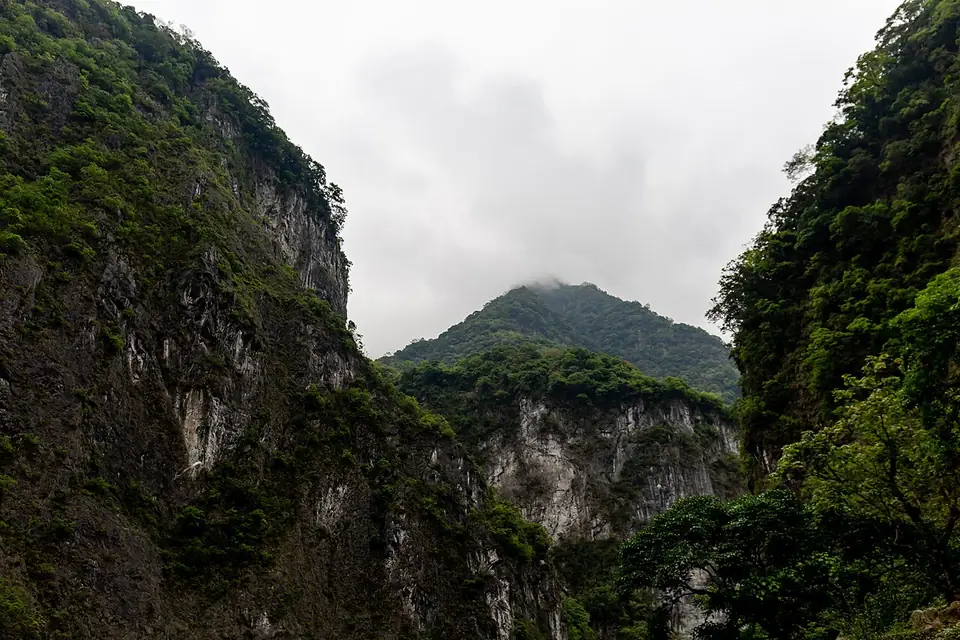
- Taroko Gorge on the east coast is a marble canyon carved by the Liwu River and one of Taiwan's most visited natural sites.
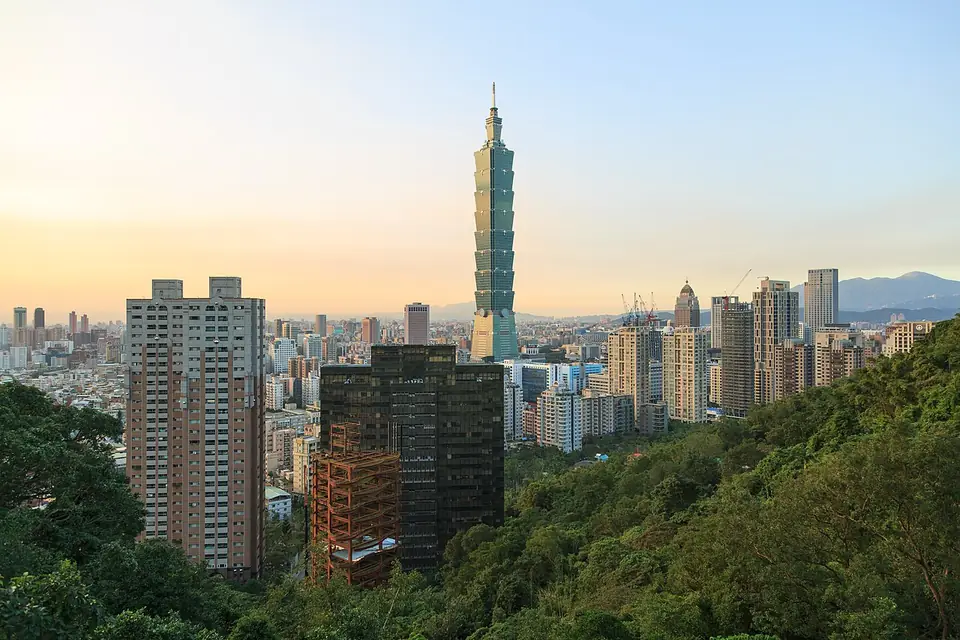
- Taipei 101 was the tallest building in the world from 2004 to 2010, when the Burj Khalifa overtook it.
Culture and traditions in Taiwan
- Saying hello
A handshake or nod with "Nǐ hǎo" (hello).
- Food and drink
Beef noodle soup; xiaolongbao soup dumplings; bubble tea, which was invented in Taiwan in the 1980s.
- Festivals and traditions
The Lantern Festival, with sky lanterns released in Pingxi; the Dragon Boat Festival in early summer.
- Everyday life
Night markets are central to social life. Tipping isn't expected, and convenience stores are everywhere.
- Did you know?
Garbage trucks play music, often Beethoven's "Für Elise", so residents know when to bring out their trash.
Common mistakes
- Tapping Hainan, China's island further south-west.
- Tapping Luzon, the northern island of the Philippines.
- Choosing Samoa's flag in the Flags quiz because of the similar red field with a blue canton.
Practise with Taiwan
- East Asia quiz – the island opposite Fujian, between Japan's southern islands and the Philippines.
- Asia quiz – follow China's coast south from Shanghai to the first large island.
- Asia flags – the white sun in a blue canton on red.
- Asia capitals quiz – Taipei.
- Chinese Provinces – learn Fujian and you'll always know which stretch of coast Taiwan faces.
Quick check: how well do you know Taiwan?
3 questions, no sign-up. Tap an answer.
1. Which flag belongs to Taiwan?
That's the flag of Taiwan.
2. What is the capital of Taiwan?
The capital of Taiwan is Taipei.
3. Which is bigger by area?
Turkey (783,562 km²) is bigger than Taiwan (36,197 km²).
Keep going on the Asia quiz – Taiwan is one of 48 countries there.
More ways to practise: find Taiwan on the blank map with no borders (hard mode), or play today's Globe and the other daily puzzles.
Frequently asked questions about Taiwan
What language is spoken in Taiwan?
Mandarin Chinese, written in traditional characters, is the main official language. Taiwanese Hokkien is spoken by most families at home, Hakka by a sizeable minority, and the Indigenous peoples speak more than a dozen Austronesian languages.
What currency does Taiwan use?
Taiwan uses the New Taiwan dollar (TWD), often written NT$. It was introduced in 1949, replacing the old Taiwan dollar at a rate of 40,000 to one, and it floats under the management of Taiwan's central bank.
What time zone is Taiwan in?
Taiwan is on UTC+8 all year, the same time as mainland China, Hong Kong and the Philippines. It does not use daylight saving time. Taiwan is eight hours ahead of London in winter and seven in summer, when Britain moves its clocks forward.
Which side of the road do they drive on in Taiwan?
Taiwan drives on the right. Scooters are everywhere, and at many junctions they make left turns in two stages using a marked box at the front of the traffic, a rule that surprises visitors.
What is the highest point in Taiwan?
The highest point is Yushan, or Jade Mountain, at about 3,950 metres, in the Central Mountain Range. Snow sometimes falls on its summit in winter, even though the Tropic of Cancer crosses the island.
What is Taiwan famous for?
Taiwan is famous for making the world's most advanced computer chips, for its busy night markets and for bubble tea, invented there in the 1980s. Its high mountains, Taroko Gorge and oolong teas are also well known.
Quizzes with Taiwan
Often confused with
Guides that help with this
- Oceans, seas, rivers and mountainsThe physical map: seas around each continent, the big rivers and ranges.
- Flags that look alike (and how to tell them apart)Chad or Romania? Australia or New Zealand? The flag pairs that cost quiz points.
- The 25 hardest countries to find on a mapPacific islands, Caribbean islands and landlocked Africa – where they are.