Name all 30 volcanoes
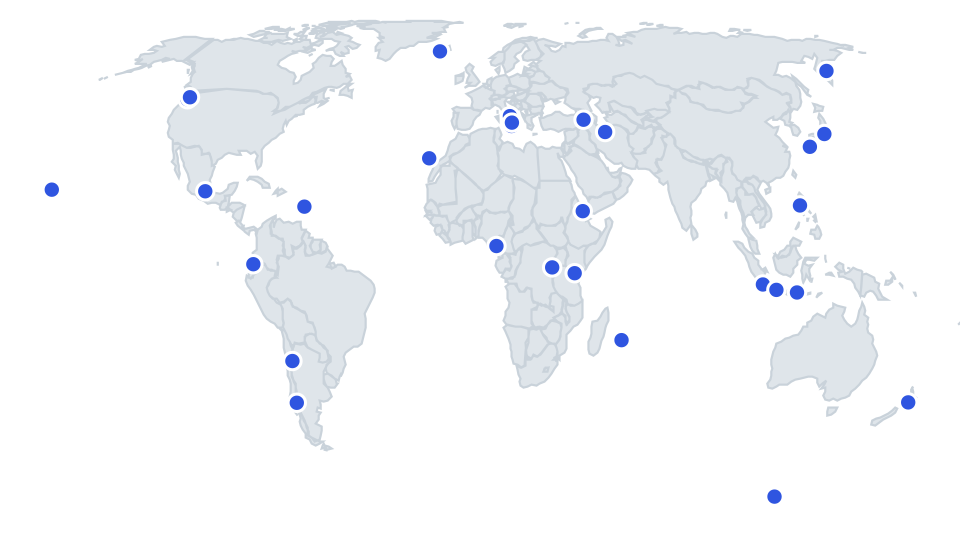
No map hints and no multiple choice: just type every one you can remember. Each correct answer lights up on the map, and the clock keeps running until you give up or get all 30.
Top scores
- The five fastest 100% rounds on this quiz.
Finish with 100% and post your time to get on the board – here or in full screen. All leaderboards
Your next quiz
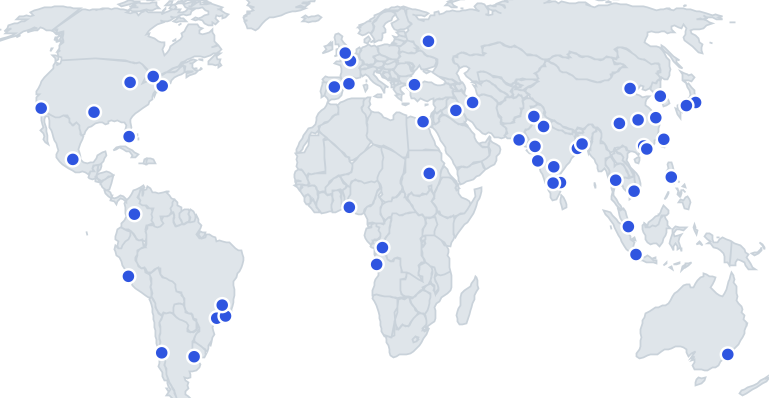 Largest cities quiz53 cities
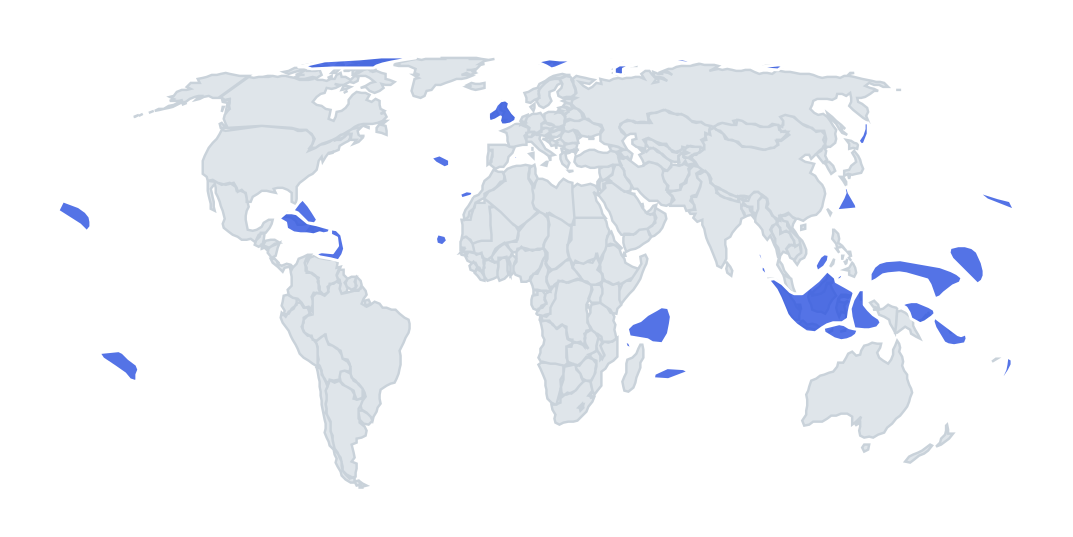 Archipelagos quiz34 island groups
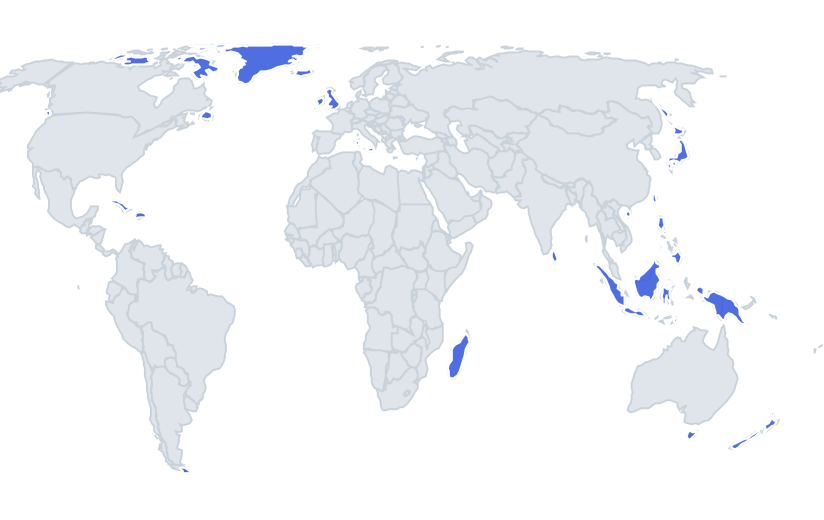 Islands quiz41 islands
What's on this map
Thirty volcanoes to type from memory, and the spelling is half the battle. Many names come from local languages and carry meaning. Popocatépetl is Nahuatl for "smoking mountain", and Mexicans often just call it Popo. Eyjafjallajökull means "island-mountain glacier" in Icelandic. Kilimanjaro is the tallest free-standing mountain in the world. Nyiragongo in DR Congo has held one of the largest lava lakes on Earth in its crater.
The list mixes famous eruptions with sheer size. Vesuvius buried Pompeii and Herculaneum in AD 79. Tambora's eruption in 1815 is the largest in recorded history, and the ash it threw into the air caused the "year without a summer" in 1816. Krakatoa's 1883 explosion was heard thousands of kilometres away. Mount Pelée destroyed the town of Saint-Pierre on Martinique in 1902, Mount St. Helens blew out its north side in 1980, and Pinatubo's 1991 eruption cooled the whole planet slightly for about a year. Eyjafjallajökull is on the list for grounding flights across Europe in 2010.
The places people miss
- Klyuchevskaya Sopka – the tallest active volcano in Eurasia, on Kamchatka. Most people give up on the spelling; learn it as Klyuchev-skaya, plus Sopka, the local word for a hill.
- Ojos del Salado – the highest volcano on Earth at 6,893 m, on the Chile–Argentina border. The name refers to the salt deposits in the area.
- Erta Ale – a low shield volcano in Ethiopia's Danakil Depression; the name means "smoking mountain" in the local Afar language.
- Piton de la Fournaise – "peak of the furnace", on Réunion, one of the most active volcanoes in the world.
- Mauna Loa vs Mauna Kea – only Mauna Loa is on this list. Mauna Kea appears in the World Peaks quiz instead.
How to learn it
- Type by region: Italy (Vesuvius, Etna, Stromboli), Iceland (Hekla, Eyjafjallajökull), Japan (Fuji, Sakurajima), Indonesia (Krakatoa, Tambora, Merapi), the Americas north to south, then Africa.
- Note which names carry "Mount" (Etna, Fuji, Erebus, Merapi) and which stand alone (Hekla, Teide, Stromboli, Cotopaxi), so you do not hesitate mid-word.
- Add the singletons at the end: Erebus in Antarctica, Ararat, Damavand, Teide and Mount Ruapehu.
- Done is all thirty with time to spare, including a correct Eyjafjallajökull.
Guides that help with this
- Oceans, seas, rivers and mountainsThe physical map: seas around each continent, the big rivers and ranges.
- Why you forget countries – and how spaced repetition fixes itThe forgetting curve, and how the Mistake Bank and flashcards use it.
- Flags that look alike (and how to tell them apart)Chad or Romania? Australia or New Zealand? The flag pairs that cost quiz points.
How it works
Type a name and press enter. Spelling is forgiving: accents, capital letters and common alternative names are all accepted. When you stop, the ones you missed are shown on the map so you know which to practise next time.
Most people get well under half on the first try. Play the map quiz a few times first, then come back and see how many you can name.
Answer list (30 volcanoes)
Show all 30 answers (spoilers)
- Cotopaxi
- Erta Ale
- Eyjafjallajökull
- Hekla
- Klyuchevskaya Sopka
- Krakatoa
- Mauna Loa
- Mount Ararat
- Mount Cameroon
- Mount Damavand
- Mount Erebus
- Mount Etna
- Mount Fuji
- Mount Kilimanjaro
- Mount Merapi
- Mount Pelée
- Mount Pinatubo
- Mount Rainier
- Mount Ruapehu
- Mount St. Helens
- Mount Tambora
- Mount Vesuvius
- Nyiragongo
- Ojos del Salado
- Piton de la Fournaise
- Popocatépetl
- Sakurajima
- Stromboli
- Teide
- Villarrica