Antigua and Barbuda
Capital: St John's. Antigua and Barbuda is one of the 23 countries in the North America quiz.
Quick answers: What is the capital of Antigua and Barbuda? · Which countries border Antigua and Barbuda?
Facts about Antigua and Barbuda
- CapitalSt John's
- Population94,209
- Area442 km²
- RegionsNorth America, The Caribbean
- LanguageEnglish
- CurrencyEast Caribbean dollar (XCD)
Antigua and Barbuda is the 21st most populous of the 23 countries in North America and the 19th largest by area. Worldwide it ranks 186th by population and 184th by area.
Where is Antigua and Barbuda?
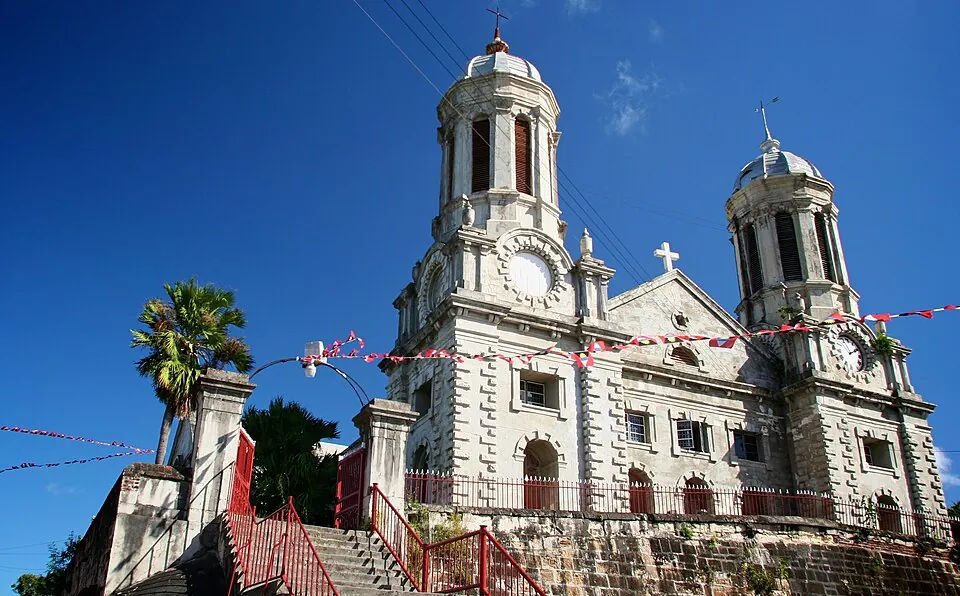
Antigua and Barbuda is a small island country in the eastern Caribbean, part of the Leeward Islands. It is made up of two main inhabited islands – Antigua in the south, where almost everyone lives, and the flatter, quieter Barbuda about 40 km to the north – plus the small uninhabited island of Redonda. The capital, St John's, is on the north-west coast of Antigua.
On a world map, find Puerto Rico and follow the arc of small islands south-east towards Guadeloupe. Antigua and Barbuda sits just north of Guadeloupe and east of St Kitts and Nevis.
How to find Antigua and Barbuda on the map
- Start from Guadeloupe. Antigua is the next island group directly north of Guadeloupe's butterfly shape.
- Look for the pair. Two islands close together, the larger one south of the smaller – that's Antigua and Barbuda.
- It's in the Leeward Islands, the northern half of the Lesser Antilles, above Dominica.
- Don't confuse it with St Kitts and Nevis. That pair is just to the west, smaller and closer together.
Flag
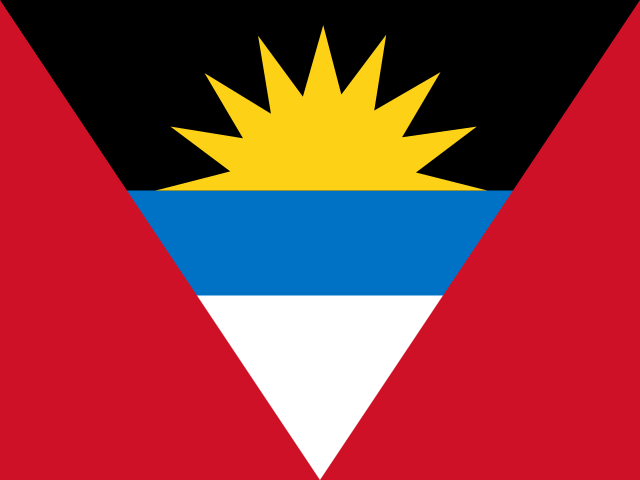
A red field is cut by a large white V, and inside the V are horizontal bands of black, blue and white with a golden rising sun on the black band. The sun stands for a new era, black for African heritage, blue for the sea and white for the beaches. The V itself represents victory.
In the Flags quiz, look for the V shape – nothing else in the region uses it.
A short history of Antigua and Barbuda
The first people to live on these islands arrived thousands of years ago, and later waves of Arawak-speaking farmers came up from South America, bringing pottery and crops such as cassava. By the time Europeans arrived, the region was home to the Kalinago, often called Caribs. Christopher Columbus sighted Antigua in 1493 and named it after a church in Seville, Santa María la Antigua.
English settlers from nearby St Kitts founded a colony on Antigua in 1632. Within decades the forests were cleared for sugar, and the island was covered with plantations worked by enslaved Africans. Stone windmill towers, built to crush cane, still stand all over the countryside, and the Betty's Hope estate has been partly restored to show how they worked. In 1736 colonial authorities claimed to have uncovered a planned uprising of the enslaved and executed dozens of people, including its alleged leader, known as Prince Klaas.
Barbuda had a different history. It was leased for nearly two centuries to the Codrington family, who used it to raise food and livestock rather than sugar. Land on Barbuda was traditionally held in common, a practice that still shapes debates about development on the island today.
When Britain ended slavery in 1834, Antigua chose to free people straight away rather than use the "apprenticeship" period imposed in most colonies. Life stayed hard, however, and in the 20th century the labour movement became the driving force of politics. Trade union leader V. C. Bird led the push for self-government, and the islands became an associated state of Britain in 1967 before full independence. Bird became the first prime minister, and his family remained central to politics for decades.
Today tourism is by far the biggest industry, alongside financial services and a citizenship-by-investment programme. As a small low-lying country, Antigua and Barbuda is outspoken on climate change and hurricane risk.
Culture and daily life in Antigua and Barbuda
English is the official language, but at home most people speak Antiguan Creole, which grew out of English and West African languages on the plantations. Christianity is the main religion, with Anglican, Moravian, Methodist and other churches. The Moravians were among the first to teach enslaved people to read.
Music runs through daily life. Calypso and soca dominate the carnival season, steel bands are popular, and an older local folk style called benna mixed songs and gossip with social comment. The writer Jamaica Kincaid, born in St John's, became internationally known, and her short book A Small Place is a sharp portrait of tourism and colonial history on the island.
Cricket here goes well beyond one famous name. Fast bowlers Andy Roberts and Curtly Ambrose and captain Richie Richardson all came from Antigua, and Brian Lara set Test batting records at the Antigua Recreation Ground in 1994 and 2004. On Sunday evenings, locals and visitors gather at Shirley Heights for steel-pan music and sunset views over English Harbour.
Five facts worth knowing
- Antigua is said to have 365 beaches, one for every day of the year – a tourist slogan, but the coast really is almost all beaches and bays.
- The country became independent from the United Kingdom in 1981 and is in the Commonwealth.
- Barbuda was evacuated after Hurricane Irma in 2017, which destroyed most of its buildings.
- Cricket is the national sport, and the country produced the legendary batsman Viv Richards.
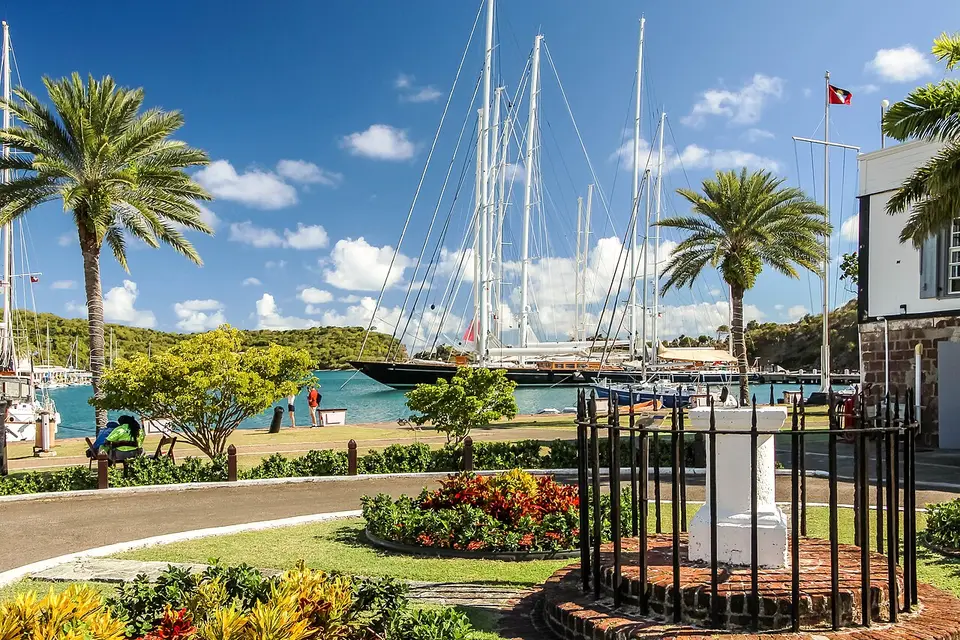
- English Harbour on Antigua's south coast was an 18th-century British naval base, and its restored dockyard is a UNESCO World Heritage Site.
Culture and traditions in Antigua and Barbuda
- Saying hello
Say "Good morning" or "Good afternoon" before anything else; skipping it is seen as rude.
- Food and drink
Fungee and pepperpot, the national dish: a cornmeal side with a thick vegetable and meat stew.
- Festivals and traditions
Carnival from late July to early August celebrates emancipation; Antigua Sailing Week is held in late April or May.
- Everyday life
Life moves at a relaxed pace, cricket is hugely popular, and beachwear is kept for the beach.
- Did you know?
Antigua is famously said to have 365 beaches, one for every day of the year.
Common mistakes
- Tapping St Kitts and Nevis, the neighbouring two-island country to the west.
- Tapping Guadeloupe, which is French and not a quiz target, just to the south.
- Confusing Antigua with Antigua, Guatemala – a city in Central America, not an island.
Practise with Antigua and Barbuda
- Caribbean quiz – the zoomed-in map where the Leeward Islands are big enough to tell apart.
- North America quiz – tiny on the continental map, so use the Caribbean quiz first.
- North America flags – the white V and rising sun.
- North America capitals quiz – St John's.
- Mystery Country – two small islands, one above the other.
Quick check: how well do you know Antigua and Barbuda?
3 questions, no sign-up. Tap an answer.
1. Which flag belongs to Antigua and Barbuda?
That's the flag of Antigua and Barbuda.
2. What is the capital of Antigua and Barbuda?
The capital of Antigua and Barbuda is St John's.
3. Which is bigger by area?
Antigua and Barbuda (442 km²) is bigger than St Kitts and Nevis (261 km²).
Keep going on the North America quiz – Antigua and Barbuda is one of 23 countries there.
More ways to practise: find Antigua and Barbuda on the blank map with no borders (hard mode), or play today's Globe and the other daily puzzles.
Frequently asked questions about Antigua and Barbuda
What language is spoken in Antigua and Barbuda?
English is the official language, used in government, schools and the media. In everyday life most people speak Antiguan Creole, an English-based creole with West African influences, and Spanish is spoken by immigrants from the Dominican Republic.
What currency does Antigua and Barbuda use?
Antigua and Barbuda uses the East Caribbean dollar (XCD), shared with seven other members of the Eastern Caribbean Currency Union. It has been pegged to the US dollar at 2.70 since 1976, and US dollars are widely accepted.
What time zone is Antigua and Barbuda in?
Antigua and Barbuda is on Atlantic Standard Time, UTC−4, all year round, with no daylight saving time. In winter that puts it one hour ahead of New York; in summer the two share the same time.
Which side of the road do they drive on in Antigua and Barbuda?
People drive on the left in Antigua and Barbuda, a legacy of British rule. Many Caribbean islands that were once British colonies, such as Barbados and Jamaica, also drive on the left.
What is the highest point in Antigua and Barbuda?
The highest point is Mount Obama, about 402 metres, in the south-west of Antigua. It was known as Boggy Peak until it was renamed in 2009. Barbuda is very flat by comparison.
Why is Antigua called Antigua?
Christopher Columbus sighted the island in 1493 and named it after Santa María de la Antigua, a revered painting of the Virgin Mary in Seville Cathedral. Antigua means "old" or "ancient" in Spanish.
Quizzes with Antigua and Barbuda
Guides that help with this
- The 25 hardest countries to find on a mapPacific islands, Caribbean islands and landlocked Africa – where they are.
- All 50 US states on the map, region by regionThe ordering tricks that make the states stick.
- Flags that look alike (and how to tell them apart)Chad or Romania? Australia or New Zealand? The flag pairs that cost quiz points.