Denmark
Capital: Copenhagen. Denmark is one of the 46 countries in the Europe quiz.
Quick answers: What is the capital of Denmark? · Which countries border Denmark?
Facts about Denmark
- CapitalCopenhagen
- Population6 million
- Area43,094 km²
- RegionsEurope, The Nordics
- LanguageDanish
- CurrencyDanish krone (DKK)
Denmark is the 22nd most populous of the 46 countries in Europe and the 29th largest by area. Worldwide it ranks 114th by population and 130th by area.
Where is Denmark?
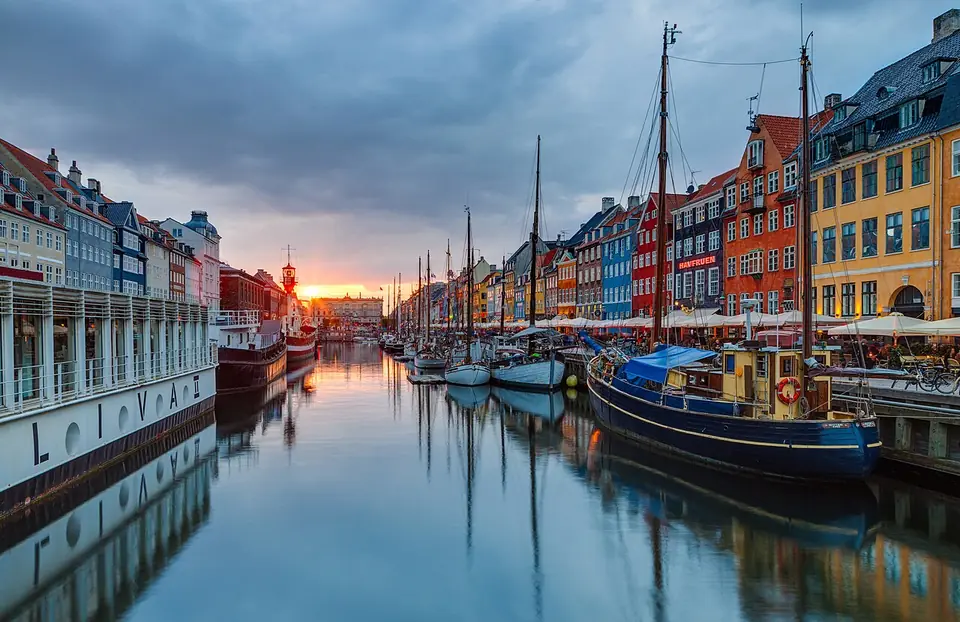
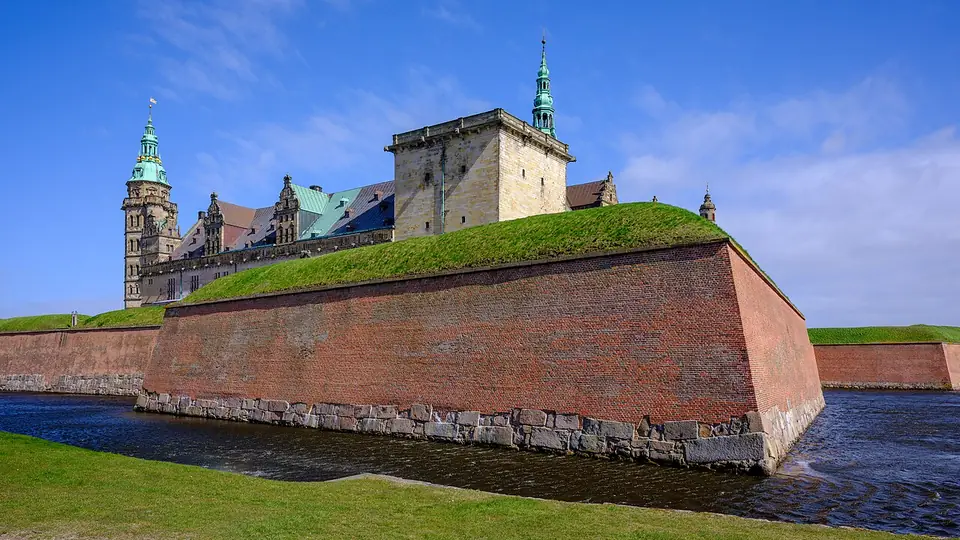
Denmark sits at the top of Germany, where Central Europe meets Scandinavia. The country is made of the Jutland peninsula, which points north from the German border, plus more than 400 islands – the two biggest, Zealand and Funen, hold most of the population. Copenhagen is on Zealand, on the eastern edge, facing Sweden across the narrow Øresund strait.
On a world map, find the gap between the North Sea and the Baltic Sea. Denmark is the plug in that gap. If you can find Germany, Denmark is the small lump on top of it.
How to find Denmark on the map
- Start from Germany. Denmark is the only country directly north of Germany by land.
- Look for the islands. Denmark is the European country that most obviously spills into the sea – a peninsula plus a scatter of islands between it and Sweden.
- Don't confuse it with the Netherlands. Both are small, flat and on the North Sea, but the Netherlands is west of Germany, Denmark is north of it.
- It's not Norway or Sweden. Both are much longer. Denmark is compact and roughly square at world-map zoom.
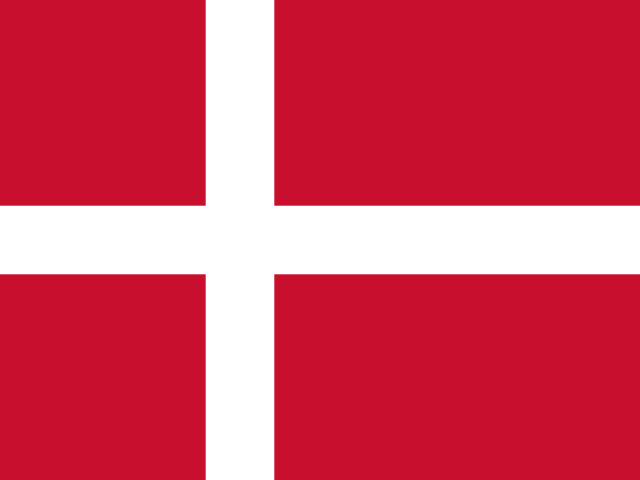
Flag
The Danish flag, the Dannebrog, is a white Nordic cross on a red field. It's the oldest continuously used national flag in the world – legend dates it to 1219. Every other Nordic cross flag (Sweden, Norway, Finland, Iceland) copies its layout. Among them, Denmark is the only one that is red with a white cross; Norway adds a blue cross inside the white one, Iceland reverses to blue with a red cross.
In the Flags quiz, if you see a plain red field with a plain white cross and nothing else – that's Denmark.
A short history of Denmark
After the last Ice Age, hunters followed the retreating ice into what is now Denmark. Farming arrived around 4000 BC, and the Bronze Age left treasures such as the Trundholm Sun Chariot. Bog bodies like the Tollund Man, preserved in peat for more than two thousand years, give a rare face-to-face look at the Iron Age.
The Viking Age began in the late 700s. Danish ships raided and settled in England, Ireland and northern France, and for a time in the 1000s Cnut the Great ruled England, Denmark and Norway together. Harald Bluetooth, who united the Danes and made them Christian, recorded his achievements on the great runestones at Jelling around 965.
In 1397 Queen Margrethe I brought Denmark, Norway and Sweden together in the Kalmar Union. Sweden left in 1523, but Norway stayed under Danish rule until 1814, which is why Iceland, the Faroe Islands and Greenland, once Norwegian possessions, ended up Danish. The Reformation made Denmark Lutheran in 1536. Wars with Sweden in the 1600s cost Denmark Scania and the other provinces east of the Øresund, which is why the border now runs through the sea rather than along the land.
In 1849 Denmark adopted a constitution and became a democracy. In 1864 it lost Schleswig and Holstein to Prussia and Austria, a painful defeat, and its people turned inward to make the most of the land they had left, draining heaths and building farming cooperatives. After a referendum in 1920, northern Schleswig returned, fixing today's border with Germany. Germany occupied Denmark from 1940 to 1945, and in 1943 most Danish Jews were helped across to neutral Sweden by fishing boat.
Denmark joined NATO in 1949 and the European Community in 1973. It built one of the world's most extensive welfare states, funded by high taxes. Today it is a wealthy country known for shipping, pharmaceuticals, wind energy and design.
Culture and daily life in Denmark
Danish is a North Germanic language, close to Norwegian and Swedish; Danes and Norwegians read each other's writing easily, though the soft Danish pronunciation can puzzle neighbours. Denmark is one of the world's oldest monarchies, and most people belong to the Lutheran Church of Denmark, even if few attend regularly.
Hans Christian Andersen, whose fairy tales include The Little Mermaid and The Ugly Duckling, is the most famous Danish writer, and the philosopher Søren Kierkegaard is a founder of existentialism. Danish design is world-renowned, from the chairs of Arne Jacobsen and Hans Wegner to Jørn Utzon's Sydney Opera House. LEGO was invented in the town of Billund, and Danish television dramas such as Borgen have found audiences abroad.
Football is the leading sport, and the surprise win at the 1992 European Championship is still a national memory. Handball and cycling are hugely popular too. Danes join clubs and associations in large numbers, trust in institutions is high, and the concept of "Janteloven", a social code against showing off, still shapes manners.
Five facts worth knowing
- Denmark has no mountains. Its highest natural point, Møllehøj, is 171 metres. That's why wind power works so well here – nearly half the country's electricity comes from wind.
- Greenland and the Faroe Islands are part of the Kingdom of Denmark, but they're self-governing and don't count in the Denmark quiz outline. Greenland alone is 50 times bigger than mainland Denmark.
- Denmark borders only one country by land – Germany – but is joined to Sweden by the Øresund Bridge, a 16 km road and rail link between Copenhagen and Malmö.
- Copenhagen is one of the most cycled cities in the world; around half of its residents commute by bike.
- Denmark is divided into 5 regions and 98 municipalities, both of which have their own quizzes on this site.
Culture and traditions in Denmark
- Saying hello
A handshake and a simple "Hej"; first names are used almost immediately.
- Food and drink
Smørrebrød (open rye sandwiches) and æbleskiver, round pancake balls at Christmas.
- Festivals and traditions
Sankt Hans Aften on 23 June with bonfires, and Christmas with many traditions.
- Everyday life
Hygge, cosy togetherness, is central to life; cycling is everywhere and punctuality matters.
- Did you know?
The Danish flag, the Dannebrog, is considered the oldest national flag still in continuous use.
Common mistakes
- Tapping the Netherlands instead of Denmark (wrong side of Germany).
- Tapping southern Sweden – the Scania region looks like it could be a Danish island.
- Forgetting that Bornholm, the island far out in the Baltic near Sweden, is Danish.
Practise with Denmark
- Europe quiz – Denmark is one of 46 countries. Easy to find once you've located Germany.
- Nordics quiz – only 5 countries, so the map zooms right in on Scandinavia.
- Danish Regions and Danish Municipalities – go deeper into Denmark itself.
- Europe flags – learn to tell the five Nordic crosses apart.
- Mystery Country – Denmark's outline, with Jutland and the islands, is one of the more recognisable in Europe.
Nearby countries
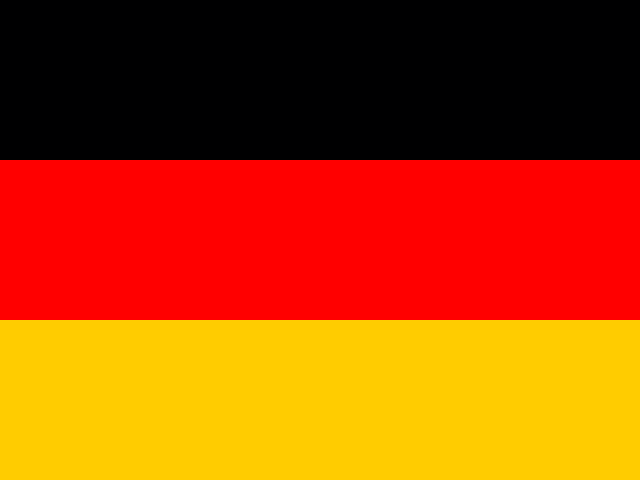 GermanyBerlin
Quick check: how well do you know Denmark?
3 questions, no sign-up. Tap an answer.
1. Which flag belongs to Denmark?
That's the flag of Denmark.
2. What is the capital of Denmark?
The capital of Denmark is Copenhagen.
3. Which of these countries borders Denmark?
Germany borders Denmark.
Keep going on the Europe quiz – Denmark is one of 46 countries there.
More ways to practise: find Denmark on the blank map with no borders (hard mode), or play today's Globe and the other daily puzzles.
Frequently asked questions about Denmark
What language is spoken in Denmark?
Danish is the official language. A German-speaking minority lives in southern Jutland near the border, and German is recognised there. In the self-governing Faroe Islands and Greenland, Faroese and Greenlandic are the main languages. Most Danes also speak English well.
What currency does Denmark use?
Denmark uses the Danish krone (DKK). Danes voted against joining the euro in 2000, but the krone is pegged closely to the euro through the EU exchange rate mechanism, ERM II. Greenland and the Faroe Islands also use the krone.
What time zone is Denmark in?
Denmark uses Central European Time, UTC+1, and moves to UTC+2 for summer time. The Faroe Islands are one hour behind, and Greenland has its own time zones further behind.
Which side of the road do they drive on in Denmark?
Danes drive on the right. Cars must keep dipped headlights on at all times, and cyclists have their own lanes and traffic lights in most towns, so drivers must check for bikes when turning right.
What is the highest point in Denmark?
Møllehøj in east Jutland is the highest natural point at 171 metres. Nearby Yding Skovhøj reaches about 173 metres only because of a Bronze Age burial mound. Across the wider kingdom, Greenland's Gunnbjørn Fjeld rises to about 3,690 metres.
Is Denmark part of Scandinavia?
Yes. Denmark, Norway and Sweden form Scandinavia, linked by closely related languages and shared history. The wider term Nordic countries adds Finland and Iceland, together with the Faroe Islands, Greenland and Åland.
Quizzes with Denmark
Often confused with
Guides that help with this
- All 46 European capitals, with a memory trick for eachCapitals grouped by region, with hooks for the ones people forget.
- Flags that look alike (and how to tell them apart)Chad or Romania? Australia or New Zealand? The flag pairs that cost quiz points.
- The 25 hardest countries to find on a mapPacific islands, Caribbean islands and landlocked Africa – where they are.