El Salvador
Capital: San Salvador. El Salvador is one of the 23 countries in the North America quiz.
Quick answers: What is the capital of El Salvador? · Which countries border El Salvador?
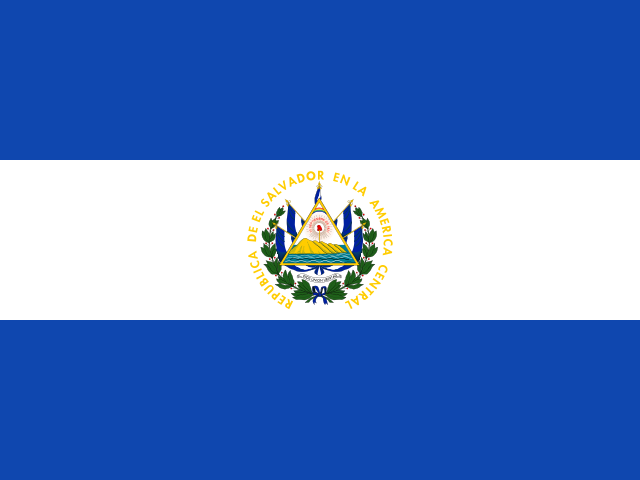
Facts about El Salvador
- CapitalSan Salvador
- Population6.4 million
- Area21,041 km²
- RegionsNorth America, Central America
- LanguageSpanish
- CurrenciesUS dollar (USD), Salvadoran colón (SVC)
El Salvador is the 10th most populous of the 23 countries in North America and the 13th largest by area. Worldwide it ranks 112th by population and 149th by area.
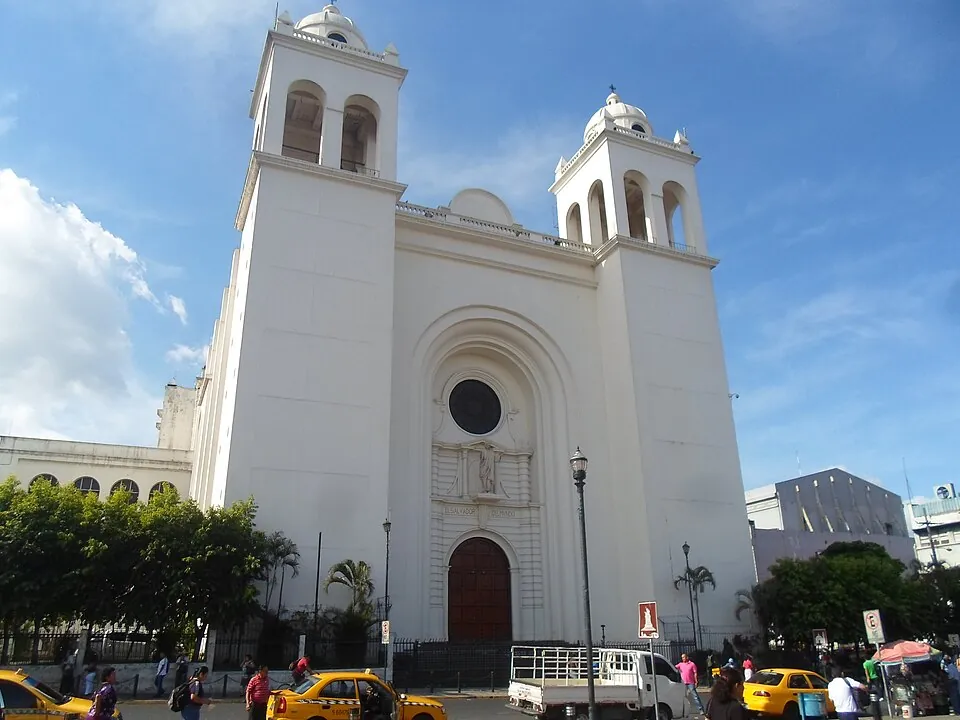
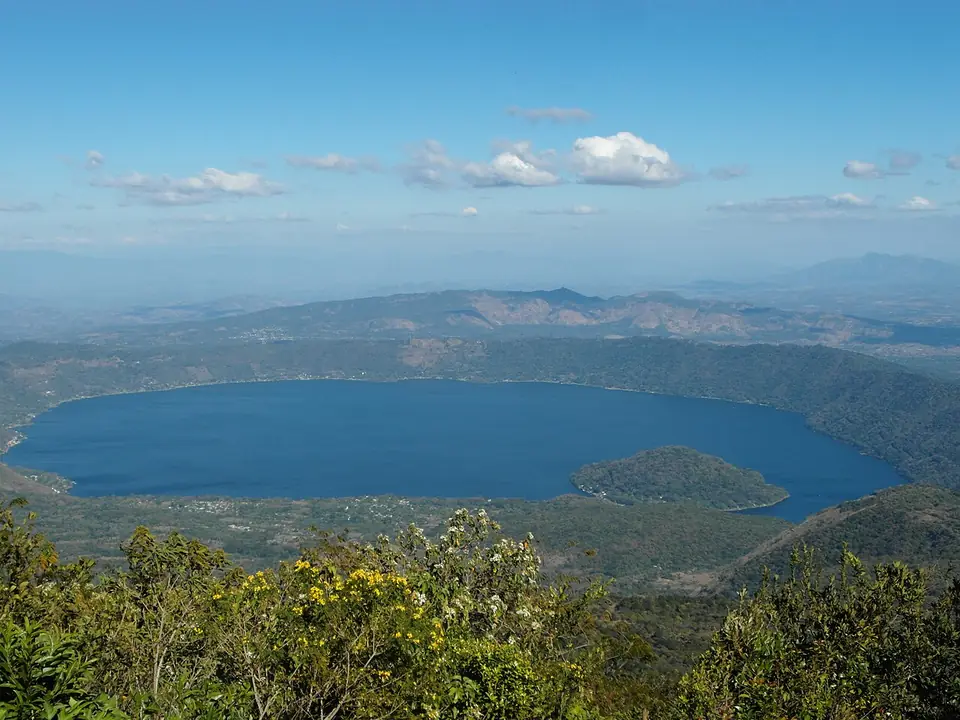
Where is El Salvador?
El Salvador is the smallest country in Central America and the only one without a Caribbean coastline. It sits on the Pacific side of the isthmus, with Guatemala to the west and Honduras to the north and east. Across the Gulf of Fonseca to the south-east lies Nicaragua. The capital, San Salvador, is in the centre of the country, in a valley beneath a volcano of the same name.
On a world map, follow Central America south from Mexico. After Guatemala, look at the Pacific coast. The small strip of land squeezed between Guatemala and Honduras, facing the Pacific only, is El Salvador.
How to find El Salvador on the map
- Start from Guatemala. El Salvador is the small country tucked under Guatemala's south-eastern corner.
- Check the coast. It touches the Pacific but never the Caribbean; Honduras wraps around it on the inland side.
- Look for the small rectangle. El Salvador is wider than it is tall, a compact block along the coast.
- Don't confuse it with Belize. Belize is also small but sits on the Caribbean side, north of Guatemala.
Flag
El Salvador's flag has three horizontal bands – blue, white, blue – with the national coat of arms in the centre of the white band. The coat of arms shows five volcanoes rising from the sea inside a triangle, representing the five original members of the Federal Republic of Central America.
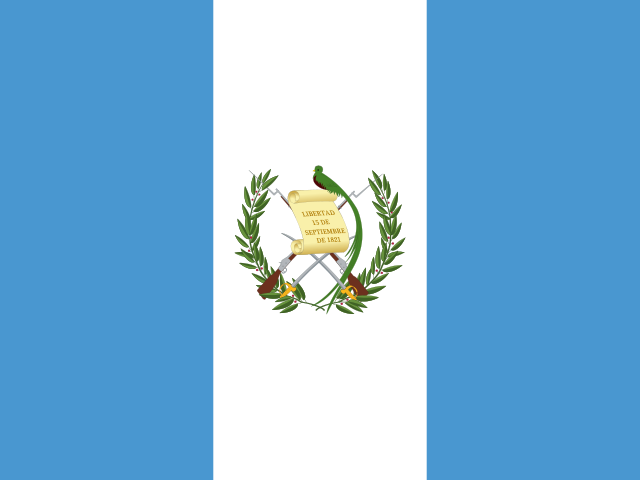
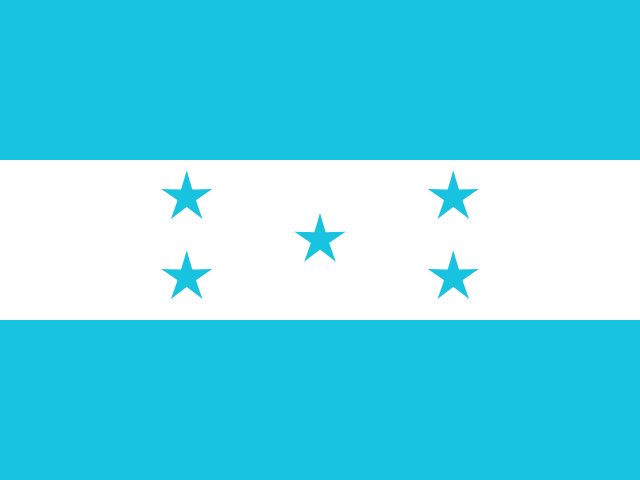
In the Flags quiz, this is one of a family. Honduras, Nicaragua and Guatemala also use blue and white. Nicaragua's has a similar emblem but without the wording in a wreath around it; Honduras has five blue stars; Guatemala's stripes are vertical. Look for the volcanoes and the gold lettering to pick El Salvador.
A short history of El Salvador
Maya peoples lived in western El Salvador for many centuries, building ceremonial centres such as Tazumal and San Andrés. Around the 1000s, Nahua-speaking migrants from central Mexico moved in and founded the realm of Cuzcatlán, centred on the area around today's capital. Their descendants are known as the Pipil, and the Lenca lived further east.
Spanish forces under Pedro de Alvarado invaded from Guatemala in 1524 and met strong resistance, but the region was conquered over the following years. Under Spanish rule it formed part of the Captaincy General of Guatemala. Settlers grew indigo, a blue dye in demand in Europe, on large estates, while Indigenous communities kept some of their land in common.
El Salvador declared independence along with the rest of Central America in 1821 and resisted being absorbed into Mexico. It was a leading member of the Federal Republic of Central America, and San Salvador served as its capital for a time, before the federation collapsed in 1841. In the late 1800s coffee replaced indigo. Communal lands were abolished, and a small group of wealthy families came to own most of the best land.
In 1932 a peasant uprising in the west was crushed by the military in a massacre known as La Matanza, in which thousands of people, many of them Indigenous, were killed. Military governments ruled for most of the next half-century. A short war with Honduras in 1969, sparked partly by migration and land disputes, became known as the Football War because it coincided with World Cup qualifiers. Rising repression led to a civil war from 1980 to 1992 between the government and left-wing guerrillas of the FMLN. Archbishop Óscar Romero was assassinated while saying Mass in 1980. The war ended with peace accords signed in 1992.
Since then El Salvador has held regular elections. Its economy depends heavily on money sent home by Salvadorans living in the United States, along with textile manufacturing and services.
Culture and daily life in El Salvador
Spanish is spoken by almost everyone, with distinctive local slang; Salvadorans often use "vos" instead of "tú". Nawat, the Pipil language, is spoken by only a few elderly people, and there are efforts to teach it to children. Most people are Catholic, though evangelical churches have grown fast, and Óscar Romero, declared a saint in 2018, is a national figure of huge importance.
The village of Ilobasco is known for miniature clay figures, and La Palma for brightly painted wooden crafts in a naive style. The poet Roque Dalton is the country's best-known writer. Traditional music includes the xuc, a lively dance rhythm, and the marimba is heard at village fiestas held for each town's patron saint.
Football is the leading sport, and Salvadorans remember the team's World Cup appearances in 1970 and 1982. Family is central, many families have relatives abroad, and the town of Suchitoto, with its cobbled streets above Lake Suchitlán, is a favourite weekend escape.
Five facts worth knowing
- El Salvador is the most densely populated country in mainland Central America, with more than six million people in an area smaller than Wales.
- It is known as the Land of Volcanoes, with more than 20 volcanoes, several of them active, including Santa Ana and Izalco.
- The country adopted the US dollar in 2001 and in 2021 became the first country in the world to make Bitcoin legal tender, a status it later rolled back.
- Surfing on the Pacific coast, especially at El Tunco and Punta Roca, draws international competitions.
- The Joya de Cerén archaeological site is a Maya farming village buried by volcanic ash around 600 AD and preserved much like Pompeii.
Culture and traditions in El Salvador
- Saying hello
A handshake and "Buenos días" is standard; friends and women often greet with a light kiss on the cheek.
- Food and drink
Pupusas, thick corn tortillas stuffed with cheese, beans or pork, served with curtido (pickled cabbage) and tomato salsa.
- Festivals and traditions
Fiestas Agostinas in San Salvador in early August; National Pupusa Day on the second Sunday of November.
- Everyday life
Family life is very close-knit, and lunch is traditionally the main meal of the day. Polite greetings when entering a shop or room are expected.
- Did you know?
The pupusa is so important that El Salvador declared an official National Pupusa Day by law in 2005.
Common mistakes
- Tapping Honduras, which curves around El Salvador on two sides.
- Tapping Guatemala, the larger neighbour to the west.
- Choosing the Nicaraguan or Honduran flag in the Flags quiz.
Practise with El Salvador
- North America quiz – Central America is included; find the Pacific coast between Guatemala and Nicaragua.
- Central America quiz – seven countries on a zoomed map, with El Salvador clearly the smallest.
- North America flags – the blue and white Central American flags are a good drill.
- North America capitals quiz – San Salvador.
- Mystery Country – a short, wide outline with a straight-ish Pacific coast.
Nearby countries
Quick check: how well do you know El Salvador?
3 questions, no sign-up. Tap an answer.
1. Which flag belongs to El Salvador?
That's the flag of El Salvador.
2. What is the capital of El Salvador?
The capital of El Salvador is San Salvador.
3. Which of these countries borders El Salvador?
Guatemala and Honduras border El Salvador.
Keep going on the North America quiz – El Salvador is one of 23 countries there.
More ways to practise: find El Salvador on the blank map with no borders (hard mode), or play today's Globe and the other daily puzzles.
Frequently asked questions about El Salvador
What language is spoken in El Salvador?
Spanish is the official language and is spoken by nearly everyone. Salvadorans use 'vos' instead of 'tú' and plenty of local slang. Nawat, the language of the Pipil people, survives with only a few speakers, and efforts are under way to revive it.
What currency does El Salvador use?
El Salvador uses the US dollar (USD), which replaced the Salvadoran colón (SVC) in 2001. The colón is still technically legal tender at a fixed rate of 8.75 to the dollar, but it is no longer seen in daily use.
What time zone is El Salvador in?
El Salvador uses Central Standard Time, UTC−6, all year. It does not use daylight saving time, so it shares the time of Guatemala and Honduras.
Which side of the road do they drive on in El Salvador?
Salvadorans drive on the right. Brightly painted former US school buses, often decorated with names and slogans, are a common sight on the roads and serve as public transport.
What is the highest point in El Salvador?
Cerro El Pital, on the border with Honduras, is the highest point at about 2,730 metres. Its cool cloud forests around La Palma are a contrast to the hot coastal lowlands.
Why is it called El Salvador?
El Salvador means 'The Saviour' in Spanish, a name given by the Spanish conquerors in honour of Jesus Christ. The full colonial name was the Province of Our Lord Jesus Christ, the Saviour of the World.
Quizzes with El Salvador
Guides that help with this
- The 25 hardest countries to find on a mapPacific islands, Caribbean islands and landlocked Africa – where they are.
- All 50 US states on the map, region by regionThe ordering tricks that make the states stick.
- Flags that look alike (and how to tell them apart)Chad or Romania? Australia or New Zealand? The flag pairs that cost quiz points.