Jamaica
Capital: Kingston. Jamaica is one of the 23 countries in the North America quiz.
Quick answers: What is the capital of Jamaica? · Which countries border Jamaica?
Facts about Jamaica
- CapitalKingston
- Population2.8 million
- Area10,991 km²
- RegionsNorth America, The Caribbean
- LanguageEnglish
- CurrencyJamaican dollar (JMD)
Jamaica is the 13th most populous of the 23 countries in North America and the 15th largest by area. Worldwide it ranks 139th by population and 160th by area.
Where is Jamaica?
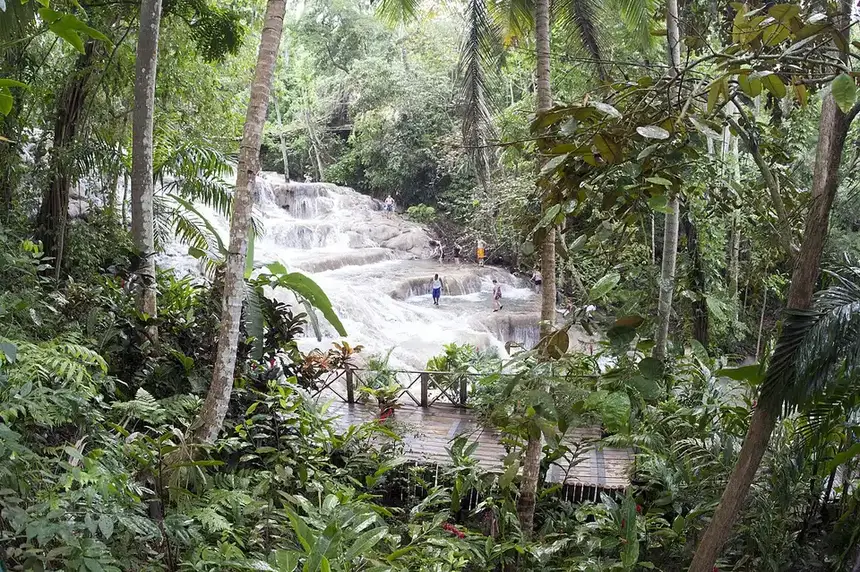
Jamaica is an island in the Caribbean Sea, about 150 kilometres south of Cuba and west of Haiti. It is the third-largest island in the Caribbean after Cuba and Hispaniola, and it stands alone – no other country shares the island or sits close beside it. The capital, Kingston, is on the south-east coast beside a large natural harbour. Montego Bay, the main tourist gateway, is on the north-west coast.
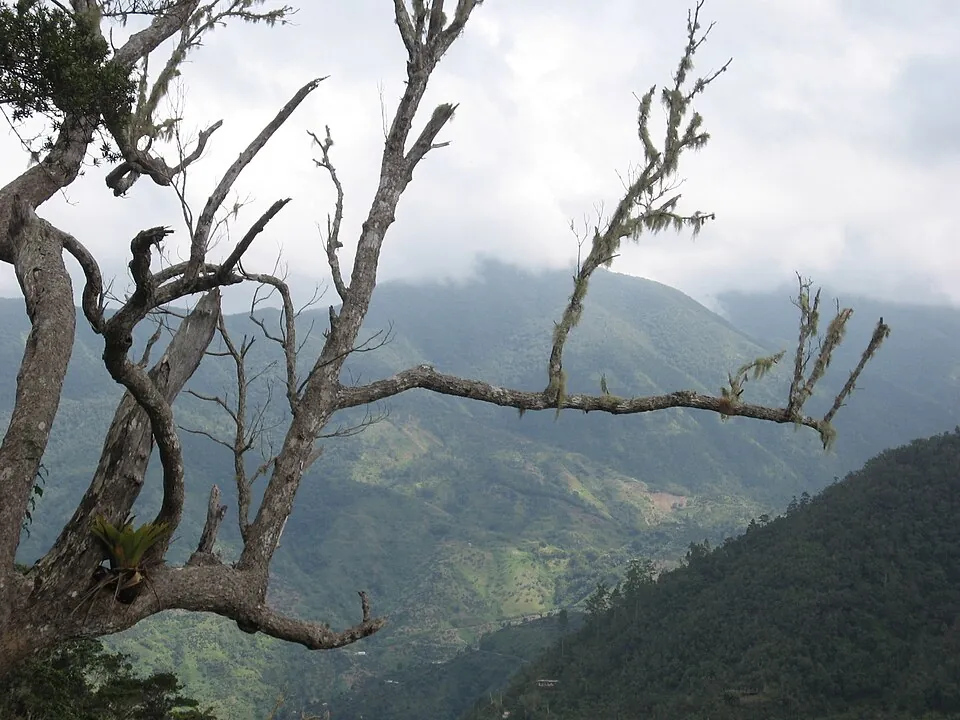
The interior is mountainous, rising to the Blue Mountains in the east, where the famous Blue Mountain coffee is grown.
How to find Jamaica on the map
- Start from Cuba. Jamaica is the island directly south of Cuba's eastern half.
- Look west of Haiti. Hispaniola is the large island east of Cuba; Jamaica is the smaller island to its west and slightly south.
- It's on its own. Unlike the Lesser Antilles, Jamaica is not part of a chain. It sits in open sea between Cuba and Central America.
- Shape check. Jamaica is an oval, wider than it is tall, with no long peninsulas.
Flag
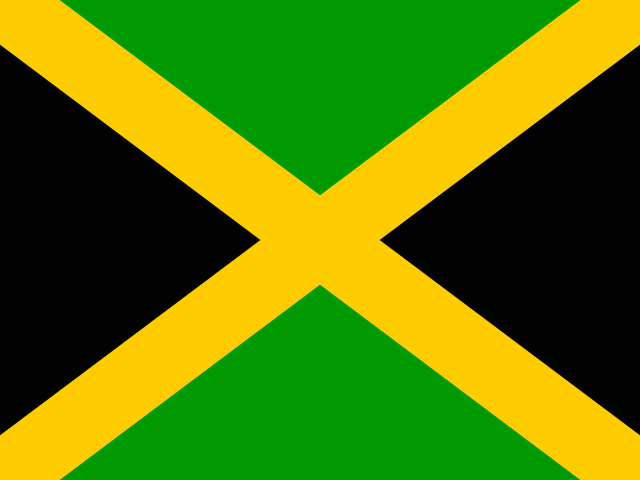
Jamaica's flag is a gold diagonal cross dividing the field into four triangles: green at the top and bottom, black at the hoist and fly. Gold stands for sunshine and natural wealth, green for hope and the land, and black for the strength of the people. It was adopted at independence in 1962.
The flag is widely noted as the only national flag that contains none of red, white or blue. In the Flags quiz, any flag with a yellow X on green and black is Jamaica.
A short history of Jamaica
The first Jamaicans were the Taíno, farmers and fishers who reached the island from South America by canoe. They called it Xaymaca, often translated as "land of wood and water". Christopher Columbus arrived in 1494, and Spanish settlers followed in 1509. Within a few generations the Taíno had almost vanished, killed by violence, forced labour and European diseases.
England seized the island from Spain in 1655. In the decades that followed, Port Royal became a base for buccaneers who raided Spanish ships, until an earthquake in 1692 sank much of the town into the sea. The real wealth, though, came from sugar. Hundreds of thousands of enslaved Africans were shipped to Jamaica to work on plantations, and by the 1700s it was one of Britain's most profitable colonies.
Resistance never stopped. Escaped slaves known as Maroons built free communities in the hills and fought the British to a standstill, signing treaties in 1739. A great uprising led by the Baptist preacher Sam Sharpe in 1831 helped push Britain to abolish slavery, which ended fully in 1838. Poverty remained, and the Morant Bay Rebellion of 1865, led by Paul Bogle, was crushed harshly. Afterwards London ruled directly, and in 1872 the capital moved from Spanish Town to the busier port of Kingston.
Strikes and riots in 1938 gave rise to trade unions and to the two parties that still dominate politics, founded by Alexander Bustamante and Norman Manley. Universal adult suffrage arrived in 1944. Jamaica joined the West Indies Federation in 1958 but voted to leave it in 1961, and became independent on its own the following year.
Today Jamaica earns its living from tourism, bauxite mining and money sent home by a large diaspora in Britain, the United States and Canada.
Culture and daily life in Jamaica
English is the official language, but the everyday speech of most people is Jamaican Patois, or Patwa. It grew from English mixed with West African languages during slavery, and its rhythms carry that history. The poet and performer Louise Bennett-Coverley, known as Miss Lou, championed it at a time when many saw it as "bad English", and the novelist Marlon James used it in A Brief History of Seven Killings, which won the Booker Prize in 2015.
Jamaica is said to have more churches per square mile than almost anywhere, and Christianity in many forms shapes Sunday life. The island also gave birth to Rastafari in the 1930s, a movement that reveres Ethiopia's emperor Haile Selassie and inspired dreadlocks, ital food and much of reggae's imagery. Before reggae came mento, ska and rocksteady, and after it came dub and dancehall, all spread by street sound systems with towering speakers.
Sport runs deep beyond the track. Cricket and football are hugely popular, the "Reggae Boyz" reached the 1998 World Cup, and the bobsleigh team at the 1988 Winter Olympics became a legend. Marcus Garvey, born in St Ann's Bay, remains a national hero.
Five facts worth knowing
- Jamaica became independent from Britain in 1962 and remains a Commonwealth realm, with the British monarch as head of state.
- Reggae music was born in Jamaica in the 1960s, and Bob Marley, from the village of Nine Mile, became its global face.
- Jamaica is a sprinting superpower. Usain Bolt, holder of the 100 m and 200 m world records, is one of many Jamaican Olympic champions.
- Blue Mountain Peak, at 2,256 metres, is the island's highest point, and the surrounding slopes produce one of the world's most expensive coffees.
- Kingston has one of the largest natural harbours in the Caribbean, sheltered by the Palisadoes spit that leads out to the old pirate town of Port Royal.
Culture and traditions in Jamaica
- Saying hello
"Good morning" is polite; casually, people say "Wah gwaan?" (what's going on?).
- Food and drink
Ackee and saltfish, the national dish; jerk chicken, spicy and smoked.
- Festivals and traditions
Independence Day on 6 August; Reggae Sumfest in Montego Bay in July.
- Everyday life
Greeting people properly before asking anything is important. Sunday dinner with rice and peas is a family tradition.
- Did you know?
Reggae music from Jamaica was added to UNESCO's Intangible Cultural Heritage list in 2018.
Common mistakes
- Tapping Haiti, the island to the east.
- Tapping eastern Cuba, which lies just to the north.
- Confusing Jamaica with Puerto Rico, which is further east beyond Hispaniola.
Practise with Jamaica
- Caribbean quiz – the zoomed-in map shows Jamaica sitting alone south of Cuba.
- North America quiz – the Caribbean belongs here; aim for the island below Cuba.
- North America flags – the gold cross on green and black is one of the easiest in the set.
- North America capitals quiz – Kingston.
- Mystery Country – a simple oval that is easy to recognise once you know it.
Quick check: how well do you know Jamaica?
3 questions, no sign-up. Tap an answer.
1. Which flag belongs to Jamaica?
That's the flag of Jamaica.
2. What is the capital of Jamaica?
The capital of Jamaica is Kingston.
3. Which is bigger by area?
United States (9,372,610 km²) is bigger than Jamaica (10,991 km²).
Keep going on the North America quiz – Jamaica is one of 23 countries there.
More ways to practise: find Jamaica on the blank map with no borders (hard mode), or play today's Globe and the other daily puzzles.
Frequently asked questions about Jamaica
What language is spoken in Jamaica?
English is the official language, used in government, schools and the media. Most Jamaicans speak Jamaican Patois, or Patwa, an English-based creole with West African influences, in everyday life. Reggae and dancehall have spread many Patois words around the world.
What currency does Jamaica use?
Jamaica uses the Jamaican dollar (JMD), introduced in 1969 to replace the Jamaican pound. Its value floats, and US dollars are widely accepted in tourist areas, where many hotel and tour prices are quoted in dollars.
What time zone is Jamaica in?
Jamaica is on UTC−5 all year, the same as Eastern Standard Time in North America. It does not use daylight saving time, so in the northern summer it is one hour behind New York and Toronto.
Which side of the road do they drive on in Jamaica?
Jamaica drives on the left, a legacy of British rule. The North–South Highway links Kingston with Ocho Rios, and the main coastal road runs around much of the island, linking tourist towns such as Montego Bay and Negril.
What is the highest point in Jamaica?
The highest point is Blue Mountain Peak, about 2,256 metres, in the Blue Mountains east of Kingston. Hikers often start before dawn to reach the summit at sunrise, when on clear days Cuba can sometimes be seen to the north.
What is Jamaica famous for?
Jamaica is famous for reggae music and Bob Marley, for sprinters such as Usain Bolt and Shelly-Ann Fraser-Pryce, for Blue Mountain coffee and jerk cooking. It is also known for rum, Rastafari and beaches such as Negril's Seven Mile Beach.
Quizzes with Jamaica
Often confused with
Guides that help with this
- The 25 hardest countries to find on a mapPacific islands, Caribbean islands and landlocked Africa – where they are.
- All 50 US states on the map, region by regionThe ordering tricks that make the states stick.
- Flags that look alike (and how to tell them apart)Chad or Romania? Australia or New Zealand? The flag pairs that cost quiz points.