Morocco
Capital: Rabat. Morocco is one of the 54 countries in the Africa quiz.
Quick answers: What is the capital of Morocco? · Which countries border Morocco?
Facts about Morocco
- CapitalRabat
- Population38.4 million
- Area446,550 km²
- RegionAfrica
- LanguagesArabic, Tamazight
- CurrencyMoroccan dirham (MAD)
Morocco is the 12th most populous of the 54 countries in Africa and the 25th largest by area. Worldwide it ranks 41st by population and 57th by area.
Where is Morocco?
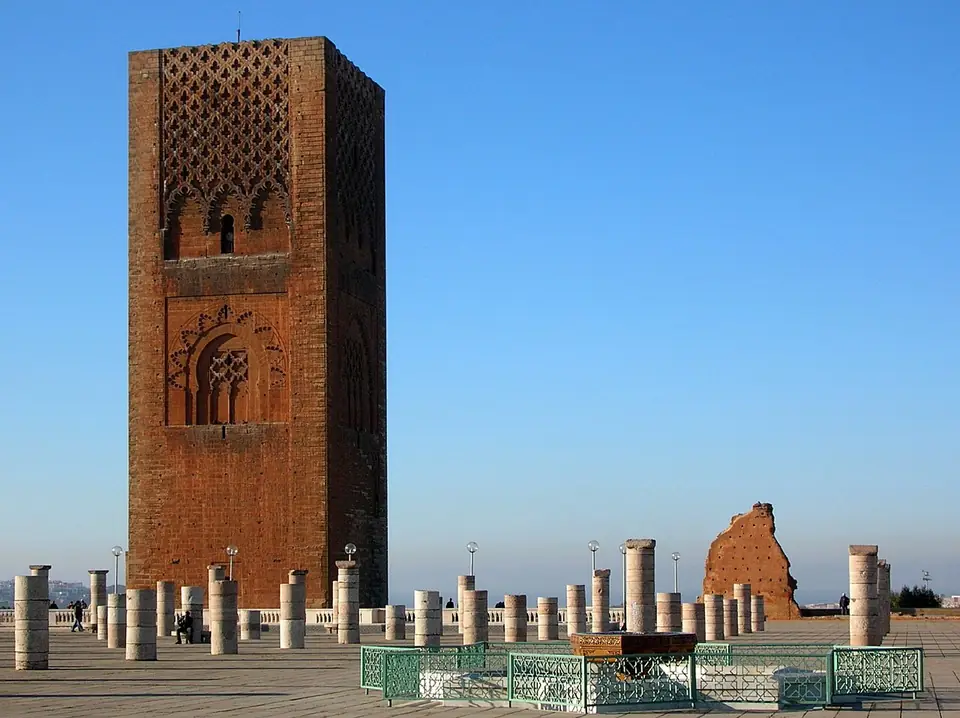
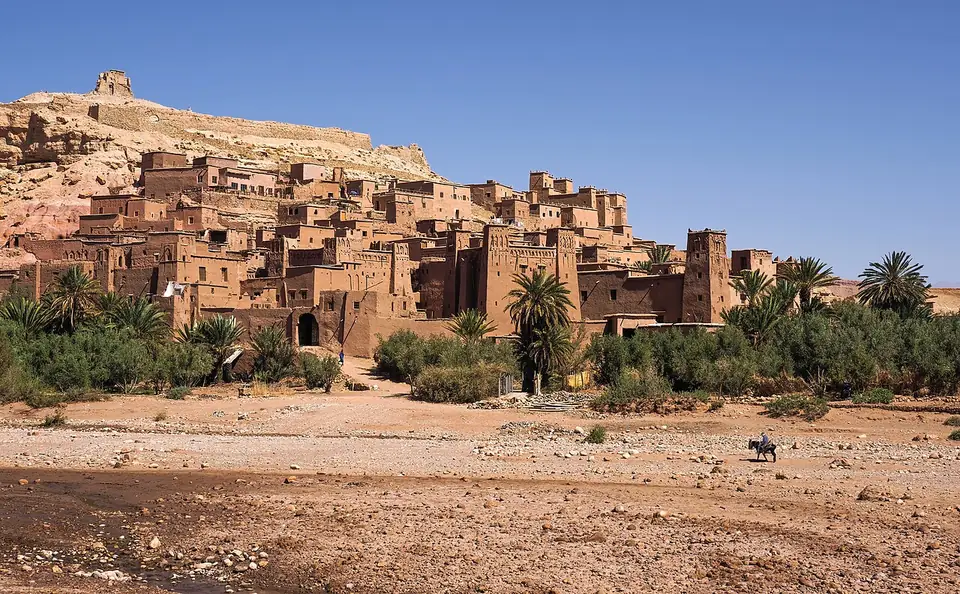
Morocco is in the top-left corner of Africa, the closest African country to Europe. It has two coastlines: the Atlantic Ocean to the west and the Mediterranean Sea to the north. Spain lies just across the Strait of Gibraltar, which is only about 14 km wide at its narrowest point. Algeria is to the east, and the disputed territory of Western Sahara lies to the south. Rabat, the capital, is on the Atlantic coast.
On a world map, find the point where Africa almost touches Europe, directly below Spain. The country on the African side of that gap is Morocco.
How to find Morocco on the map
- Start from Spain. Morocco is directly south, across the narrow strait.
- Look for the corner. Morocco is the country wrapped around the north-west corner of the continent, with sea on two sides.
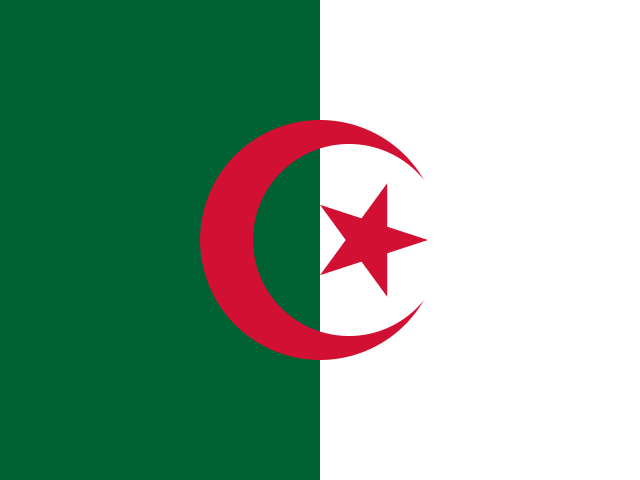
- Don't confuse it with Algeria. Algeria is the huge country next door to the east and has no Atlantic coast.
- Don't confuse it with Tunisia. Tunisia is the small country on the other side of Algeria, facing Sicily.
Flag
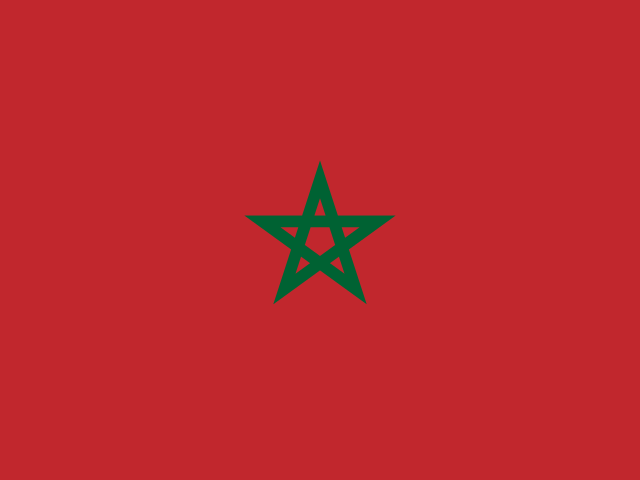
Morocco's flag is a red field with a green five-pointed star in the centre. The star is drawn as an interlaced pentagram – a single line woven over and under itself – rather than a solid shape. Red is a traditional colour of the Moroccan royal dynasty, and the green star was added in 1915.
Very few flags are plain red with one central symbol, so it's hard to mistake. Vietnam has a yellow star on red, China has yellow stars in the corner, and Turkey has a white star and crescent. A single green star on red is Morocco.
A short history of Morocco
Fossils found at Jebel Irhoud, around 300,000 years old, are among the oldest remains of modern humans ever discovered. In historical times the land belonged to the ancestors of the Amazigh, or Berber, peoples. Phoenician and Carthaginian traders set up posts along the coast, and later the Berber kingdom of Mauretania became a client of Rome, which ruled cities such as Volubilis.
Arab armies arrived at the end of the 7th century and brought Islam. In 788 Idris I founded the first Moroccan dynasty, and his son made Fes its capital. A series of Berber dynasties followed. The Almoravids founded Marrakesh in the 11th century, and both they and the Almohads ruled empires that stretched into Spain. After the Christian reconquest of Spain, Muslims and Jews fleeing Andalusia settled in Moroccan cities, bringing styles of music, architecture and cooking still found there today.
The Saadian dynasty defeated a Portuguese invasion at the Battle of the Three Kings in 1578. In the 1600s the Alaouite dynasty came to power, and it still reigns today, making it one of the oldest ruling houses in the world. Under Moulay Ismail, Meknes became a grand imperial capital.
In 1912 the Treaty of Fes made most of Morocco a French protectorate, while Spain took a zone in the north and strips in the south. Tangier became an international zone. In the Rif mountains, Abd el-Krim led a major revolt against Spain in the 1920s. Nationalist pressure grew, and when France exiled Sultan Mohammed V in 1953, protests forced his return in 1955. Morocco regained independence in 1956, and Mohammed V took the title of king.
In 1975, as Spain prepared to leave Western Sahara, King Hassan II organised the Green March, in which some 350,000 Moroccans crossed into the territory. Morocco considers it part of its national territory, while the Polisario Front seeks independence. Today Morocco is a growing hub for car manufacturing, phosphates, tourism and renewable energy, and a bridge between Africa and Europe.
Culture and daily life in Morocco
Moroccan Arabic, called Darija, is the everyday language, and it is quite different from Arabic spoken in the Middle East. Amazigh languages are spoken by a large share of the population, especially in the mountains, and since 2011 Amazigh has been an official language alongside Arabic, written in its own Tifinagh script. French is widely used in business and higher education, and Spanish is common in the north.
Islam is the state religion, and the king also holds the title Commander of the Faithful. The Hassan II Mosque in Casablanca, built partly over the Atlantic, has one of the tallest minarets in the world. Morocco also had one of the largest Jewish communities in the Arab world, and the old Jewish quarters, or mellahs, survive in many cities.
The walled old cities, or medinas, of Fes and Marrakesh are mazes of craftsmen's workshops. The leather tanneries of Fes and the zellige mosaic tilework are famous worldwide. Gnaoua music, with its trance rhythms and metal castanets, has roots in sub-Saharan Africa. Djemaa el-Fna, Marrakesh's main square, fills every evening with storytellers, musicians and food stalls. Football is a passion, and Morocco reached the World Cup semi-finals in 2022, the first African team to do so.
Five facts worth knowing
- Rabat is the capital, not Casablanca or Marrakesh. Casablanca is the largest city and economic centre; Marrakesh is the famous tourist destination; Rabat holds the government.
- The Atlas Mountains run through the country, and their highest peak, Toubkal, is the tallest mountain in North Africa at over 4,100 metres.
- Spain still holds two small cities on Morocco's Mediterranean coast, Ceuta and Melilla, so Morocco technically has a land border with the European Union.
- The University of al-Qarawiyyin in Fes, founded in 859, is often cited as the oldest continuously operating university in the world.
- Morocco's southern edge depends on the map. It controls most of Western Sahara, but the territory's status is disputed, so some outlines show Morocco with the extra land and others without it.
Culture and traditions in Morocco
- Saying hello
"Salam alaikum" with a handshake, often followed by placing the right hand on the heart.
- Food and drink
Tagine, slow-cooked stew in a cone-shaped pot, and couscous, traditionally served on Fridays; mint tea is everywhere.
- Festivals and traditions
The Fes Festival of World Sacred Music (spring) and the Imilchil Marriage Festival (September) are well known.
- Everyday life
Bargaining in souks is normal and friendly. Eat with the right hand, and expect sweet mint tea as a sign of welcome.
- Did you know?
The University of al-Qarawiyyin in Fez, founded in 859, is considered the oldest continuously operating university.
Common mistakes
- Tapping Algeria, which is far larger and sits right alongside.
- Answering Casablanca or Marrakesh in the Capitals quiz.
- Being surprised by the outline in Mystery Country when Western Sahara is or isn't included.
Practise with Morocco
- Africa quiz – the country in the top-left corner, across from Spain. A good anchor for the whole of North Africa.
- Africa flags – the green star on red is one of the easiest flags on the continent.
- Africa capitals quiz – Rabat.
- Whole World quiz – find the Strait of Gibraltar and you've found Morocco.
- Mystery Country – the two coastlines meeting at a corner give it away.
Nearby countries
 AlgeriaAlgiers
Quick check: how well do you know Morocco?
3 questions, no sign-up. Tap an answer.
1. Which flag belongs to Morocco?
That's the flag of Morocco.
2. What is the capital of Morocco?
The capital of Morocco is Rabat.
3. Which of these countries borders Morocco?
Algeria borders Morocco.
Keep going on the Africa quiz – Morocco is one of 54 countries there.
More ways to practise: find Morocco on the blank map with no borders (hard mode), or play today's Globe and the other daily puzzles.
Frequently asked questions about Morocco
What language is spoken in Morocco?
Arabic and Amazigh (Berber) are the official languages. Everyday conversation is mostly in Darija, Moroccan Arabic, while Tashelhit, Tamazight and Tarifit are spoken in the mountains and the south. French is widely used in business, universities and government, and Spanish is heard in the north.
What currency does Morocco use?
Morocco uses the Moroccan dirham (MAD), divided into 100 centimes. Its value is managed against a basket of the euro and US dollar, and it is a closed currency: visitors are generally not allowed to take dirhams out of the country.
What time zone is Morocco in?
Since 2018 Morocco has stayed on UTC+1 for most of the year. During the holy month of Ramadan, clocks are moved back temporarily to UTC+0, then forward again after it ends.
Which side of the road do they drive on in Morocco?
Morocco drives on the right. A motorway network links Tangier, Rabat, Casablanca, Marrakesh and Agadir, and Africa's first high-speed railway, Al Boraq, has run between Tangier and Casablanca since 2018.
What is the highest point in Morocco?
Jebel Toubkal, in the High Atlas about 60 kilometres south of Marrakesh, is Morocco's highest point at about 4,167 metres. It is a popular two-day climb from the village of Imlil and needs no technical equipment in summer.
What is the oldest university in Morocco?
The University of al-Qarawiyyin in Fez was founded in 859 by Fatima al-Fihri, a woman from Kairouan. It is often described as the oldest continuously operating educational institution in the world, and its library holds rare early Islamic manuscripts.
Quizzes with Morocco
Often confused with
Guides that help with this
- Learn all 54 African countries in a weekLearn the coastline in order, region by region.
- Flags that look alike (and how to tell them apart)Chad or Romania? Australia or New Zealand? The flag pairs that cost quiz points.
- The 25 hardest countries to find on a mapPacific islands, Caribbean islands and landlocked Africa – where they are.