South Korea
Capital: Seoul. South Korea is one of the 48 countries in the Asia quiz.
Quick answers: What is the capital of South Korea? · Which countries border South Korea?
Facts about South Korea
- CapitalSeoul
- Population51.7 million
- Area100,210 km²
- RegionsAsia, East Asia
- LanguageKorean
- CurrencySouth Korean won (KRW)
South Korea is the 13th most populous of the 48 countries in Asia and the 30th largest by area. Worldwide it ranks 29th by population and 107th by area.
Where is South Korea?
South Korea occupies the southern half of the Korean Peninsula, which hangs down from north-eastern China and points towards Japan. Its only land border is with North Korea, along the Demilitarised Zone roughly following the 38th parallel. The Yellow Sea lies to the west, facing China; the Sea of Japan (called the East Sea in Korea) is to the east; and the Korea Strait to the south separates it from the Japanese islands. Seoul is in the north-west of the country, surprisingly close to the North Korean border. The volcanic island of Jeju lies off the southern coast.
How to find South Korea on the map
- Start from Japan. South Korea is the peninsula directly west of the main Japanese islands, across a narrow strait.
- Look for the split peninsula. Korea hangs off China; the bottom half is South Korea.
- Don't confuse it with North Korea. The border runs roughly across the middle; South Korea is the lower part with the more jagged southern coast.
- It's not Taiwan. Taiwan is an island much further south, off the Chinese coast.
Flag
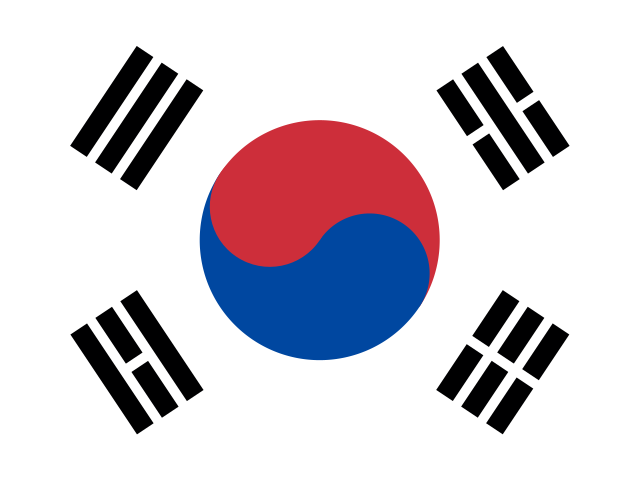
A white field with a red and blue taegeuk (yin-yang symbol) in the centre and four black trigrams in the corners. It's unlike any other national flag, so once you've seen it you won't forget it. The only thing it can be confused with is the flag of Japan, which is also white with a red centre, but Japan's is a plain red disc with no blue and no corner symbols.
A short history of South Korea
Korean history is usually traced back to the legendary kingdom of Gojoseon. In the first centuries AD, three kingdoms competed for the peninsula: Goguryeo in the north, Baekje in the south-west and Silla in the south-east. Silla, allied with Tang China, united most of the peninsula by the 670s, and its capital Gyeongju became one of the great cities of East Asia, with temples such as Bulguksa. The Goryeo dynasty, which followed from 918, gave the country its English name, Korea. In the 1200s Goryeo carvers produced the Tripitaka Koreana, more than 80,000 carved wooden printing blocks kept today at Haeinsa temple.
In 1392 the Joseon dynasty took power and ruled for more than five centuries from Hanyang, today's Seoul. Its rulers made Confucianism the basis of government and family life. King Sejong the Great created the Korean alphabet, Hangul, in the 1440s so that ordinary people could read and write. Joseon survived Japanese invasions in the 1590s, when Admiral Yi Sun-sin's armoured "turtle ships" became legendary, and later Manchu invasions. It then closed itself off so firmly that it became known as the "Hermit Kingdom".
In the late 1800s Japan, China and Russia competed for influence over Korea. Japan won, and annexed the country in 1910. Colonial rule brought railways and factories but also harsh repression, and later attempts to erase Korean language and names. The March 1st Movement of 1919 was a nationwide protest for independence. When Japan surrendered in 1945, the United States and the Soviet Union divided the peninsula at the 38th parallel, and two rival states were set up in 1948. North Korea's invasion in 1950 began the Korean War, which left millions dead and the border close to where it began.
South Korea was poor and ruled by authoritarian governments for decades. Under Park Chung-hee, who took power in 1961, the state drove rapid industrial growth, but democracy came only after mass protests in 1987. The 1988 Seoul Olympics showed the world a transformed country.
Today South Korea is a wealthy democracy and a world leader in electronics, shipbuilding, cars and popular culture.
Culture and daily life in South Korea
Korean is spoken across the peninsula, with differences between North and South that have grown over decades of separation. Hangul is admired by linguists for its logical design, and 9 October is celebrated as Hangul Day. Religious life is varied: many South Koreans follow no religion, while Protestant and Catholic Christians and Buddhists form large groups. Confucian values still show in respect for elders, family rituals and the importance placed on education. The national university entrance exam is so important that planes are briefly grounded to keep noise down during the listening tests.
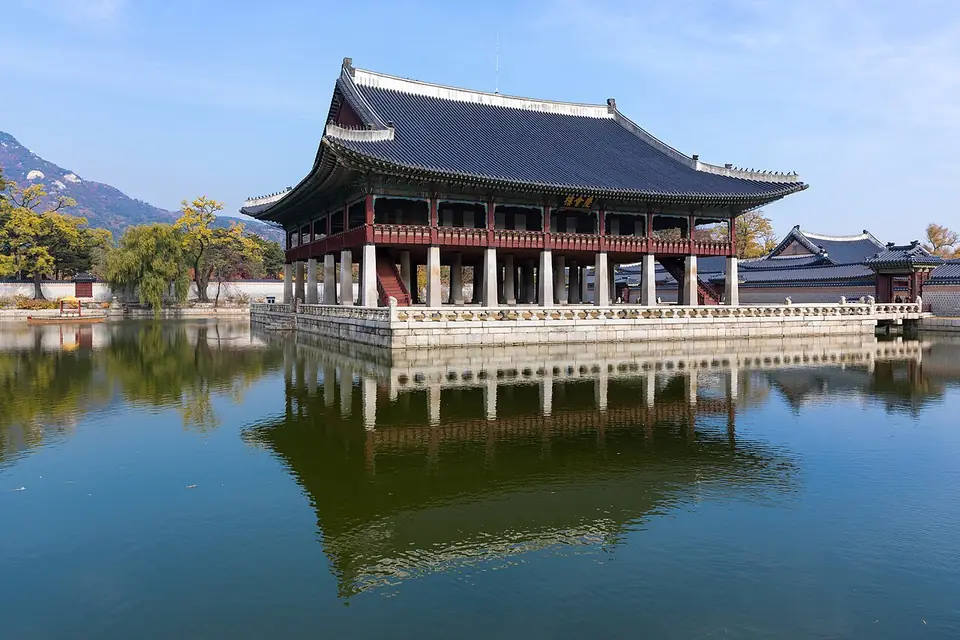
Traditional culture survives in hanbok, the flowing national dress, and in pansori, a form of sung storytelling with a drummer. Palaces such as Gyeongbokgung in Seoul show Joseon court life. Since the late 1990s, the "Korean Wave", or Hallyu, has carried K-pop, television dramas and films around the world. Groups such as BTS and BLACKPINK have topped global charts, and Bong Joon-ho's Parasite became the first non-English-language film to win the Oscar for Best Picture.
Taekwondo, a Korean martial art, is an Olympic sport, and baseball and football draw large crowds. Professional video gaming, or esports, also began to grow in South Korea earlier than almost anywhere else.
Five facts worth knowing
- Seoul's metropolitan area holds around half of South Korea's population, making it one of the largest urban areas in the world.
- South Korea and North Korea are technically still at war. The Korean War ended in 1953 with an armistice, not a peace treaty.
- The country is divided into 9 provinces plus a number of special and metropolitan cities, including Seoul, Busan and Jeju.
- South Korea has one of the fastest internet connections in the world and was an early leader in rolling out 5G.
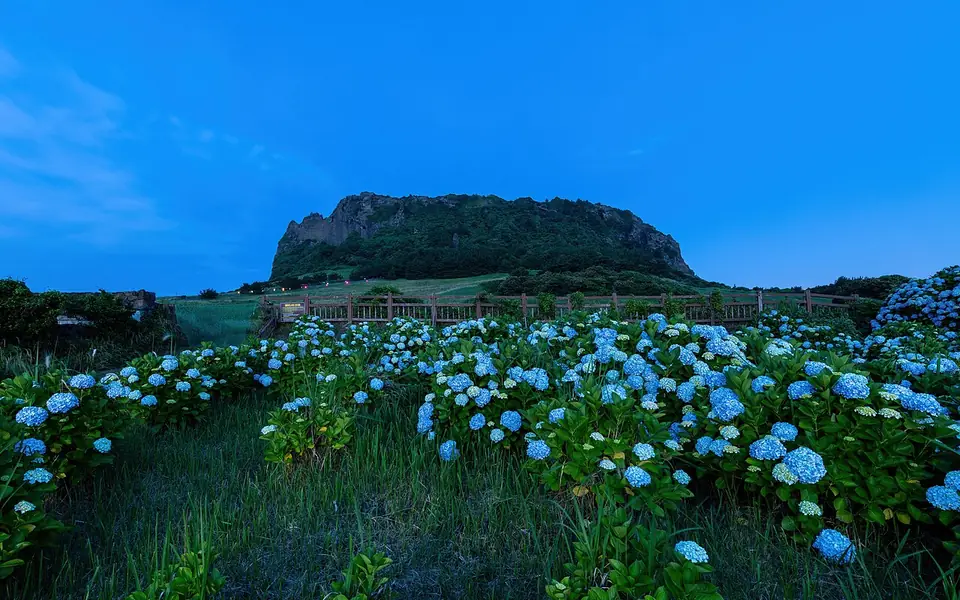
- Jeju Island is home to Hallasan, a dormant volcano and the highest mountain in South Korea at 1,947 metres.
Culture and traditions in South Korea
- Saying hello
A bow, sometimes with a handshake, and "Annyeonghaseyo" (hello).
- Food and drink
Kimchi, fermented spicy cabbage served with nearly every meal; bibimbap, a mixed rice bowl; Korean barbecue.
- Festivals and traditions
Seollal (Lunar New Year) and Chuseok, the autumn harvest festival, when families gather and honour ancestors.
- Everyday life
Shoes come off indoors, and people give and receive things with both hands. Elders are served first, and tipping isn't customary.
- Did you know?
Kimjang, the communal making of kimchi before winter, is on UNESCO's Intangible Cultural Heritage list.
Common mistakes
- Tapping North Korea, the upper half of the peninsula.
- Tapping Japan's Kyushu island, just across the strait.
- Picking the Japanese flag in the Flags quiz – white with red in the middle, but no blue and no trigrams.
- Placing Seoul in the centre of the country; it's in the north-west, within an hour's drive of the border.
Practise with South Korea
- East Asia quiz – South Korea is one of only a handful of countries, so the map zooms in and it's easy to find.
- Whole World quiz – harder, because the peninsula is small at world scale.
- Whole World flags – the taegeuk flag is one of the most distinctive on the site.
- Asia capitals quiz – Seoul.
- Mystery Country – the lower half of a peninsula with a ragged south coast; make sure you tap the right half.
Nearby countries
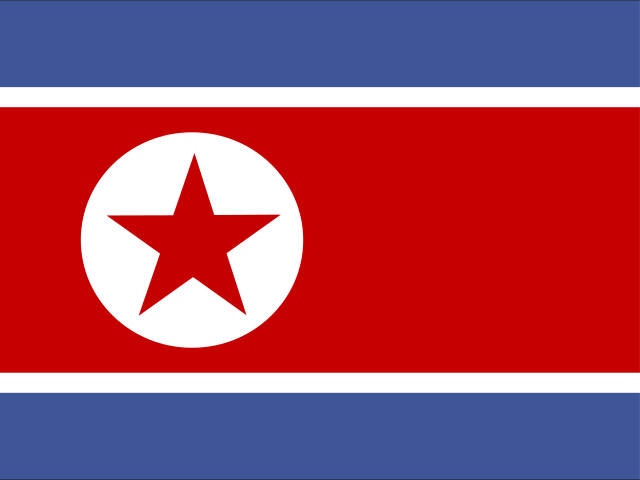 North KoreaPyongyang
Quick check: how well do you know South Korea?
3 questions, no sign-up. Tap an answer.
1. Which flag belongs to South Korea?
That's the flag of South Korea.
2. What is the capital of South Korea?
The capital of South Korea is Seoul.
3. Which of these countries borders South Korea?
North Korea borders South Korea.
Keep going on the Asia quiz – South Korea is one of 48 countries there.
More ways to practise: find South Korea on the blank map with no borders (hard mode), or play today's Globe and the other daily puzzles.
Frequently asked questions about South Korea
What language is spoken in South Korea?
Korean is the official language and is spoken by almost everyone. It is written in Hangul, an alphabet created in the 1440s under King Sejong, which is celebrated on Hangul Day each October. English is taught in all schools from primary level.
What currency does South Korea use?
South Korea uses the South Korean won, code KRW. Coins and notes are not divided into smaller units, so prices are in whole won, often running into thousands. The won floats freely and is not pegged to any other currency.
What time zone is South Korea in?
South Korea uses Korea Standard Time, UTC+9, the same as Japan. It does not observe daylight saving time, which it last used in 1988, the year Seoul hosted the Olympics.
Which side of the road do they drive on in South Korea?
South Korea drives on the right, unlike neighbouring Japan, which drives on the left. The country has an extensive motorway network, and high-speed KTX trains link Seoul with Busan in under three hours.
What is the highest point in South Korea?
Hallasan, a shield volcano on Jeju Island, is the highest point at about 1,947 metres. On the mainland the highest peak is Cheonwangbong in Jirisan National Park, at about 1,915 metres.
What is South Korea famous for?
South Korea is known for its technology firms, K-pop and films, and for food such as kimchi, whose communal making, kimjang, is on UNESCO's heritage list. It is one of the world's largest shipbuilders and among the most connected countries online.
Quizzes with South Korea
Often confused with
Guides that help with this
- Oceans, seas, rivers and mountainsThe physical map: seas around each continent, the big rivers and ranges.
- Flags that look alike (and how to tell them apart)Chad or Romania? Australia or New Zealand? The flag pairs that cost quiz points.
- The 25 hardest countries to find on a mapPacific islands, Caribbean islands and landlocked Africa – where they are.