North Korea
Capital: Pyongyang. North Korea is one of the 48 countries in the Asia quiz.
Quick answers: What is the capital of North Korea? · Which countries border North Korea?
Facts about North Korea
- CapitalPyongyang
- Population26.6 million
- Area120,538 km²
- RegionsAsia, East Asia
- LanguageKorean
- CurrencyNorth Korean won (KPW)
North Korea is the 21st most populous of the 48 countries in Asia and the 29th largest by area. Worldwide it ranks 56th by population and 97th by area.
Where is North Korea?
North Korea occupies the northern half of the Korean Peninsula in East Asia. China lies to the north along the Yalu and Tumen rivers, and there is a very short border with Russia in the far north-east. To the south, the Demilitarized Zone (DMZ) separates it from South Korea along roughly the 38th parallel. The Yellow Sea is to the west and the Sea of Japan (East Sea) to the east. Pyongyang, the capital, is in the west, inland from the Yellow Sea coast.
On a world map, find Japan and look west across the sea. The peninsula hanging down from China is Korea; the top half is North Korea.
How to find North Korea on the map
- Start from the Korean Peninsula. It hangs off north-east China, pointing towards Japan.
- Take the top half. North Korea is the part attached to China; South Korea is the part surrounded by sea.
- Check the Russian corner. Only North Korea touches Russia; South Korea does not.
- Don't confuse it with South Korea. The two are a similar size, but the north is the one with land borders.
Flag
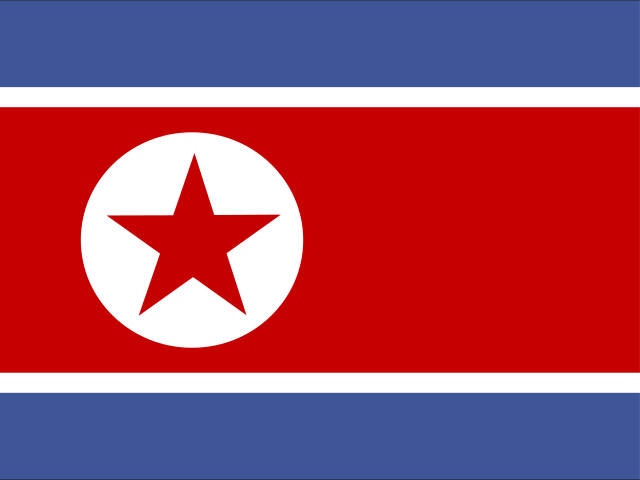
North Korea's flag has a wide red central band edged with thin white and blue stripes – blue at the top and bottom, white lines just inside them. Near the hoist, in the red band, is a white disc containing a red five-pointed star.
Nothing else in Asia looks like it. South Korea's flag is white with a red-and-blue circle and four black trigrams. If you see a red star in a white circle on a red band bordered by blue, it's North Korea.
A short history of North Korea
The history of North Korea is, for most of its length, the history of Korea as a whole. The ancient kingdom of Goguryeo ruled the north of the peninsula and much of Manchuria, and Pyongyang became its capital in the 400s. Later, the Goryeo dynasty, which gave Korea its English name, and then the Joseon dynasty ruled a united peninsula for centuries. Kaesong, now just north of the border, was Goryeo's capital.
Japan took control of Korea in 1910 and ruled it harshly for 35 years, suppressing the Korean language and drafting people into labour during the Second World War. When Japan surrendered in 1945, the United States and the Soviet Union agreed to divide the peninsula temporarily at the 38th parallel. Soviet troops occupied the north, American troops the south.
The division hardened. In 1948 two rival states were declared, each claiming to be the rightful government of all Korea. In the north, the Democratic People's Republic was led by Kim Il-sung, a former anti-Japanese guerrilla backed by Moscow. In June 1950 his forces invaded the south, starting the Korean War. United Nations forces led by the US pushed north almost to the Chinese border, then Chinese troops entered and drove them back. The fighting ended in 1953 close to where it began, after the deaths of millions.
Kim Il-sung built a tightly controlled state around the ideology of Juche, or self-reliance, and a cult of personality around his family. Power passed to his son Kim Jong-il in 1994 and then to his grandson. When the Soviet Union collapsed, its aid stopped, and in the 1990s a famine killed a large number of people. North Korea began testing nuclear weapons in 2006, leading to heavy international sanctions.
Today it is one of the most isolated countries on Earth, with a state-run economy and very limited contact with the outside world. China is its main trading partner.
Culture and daily life in North Korea
North and South Korea share the same language, written in the Hangul alphabet, but seventy years apart have left their mark. The North avoids many English loanwords that are common in Seoul and uses its own terms instead, and its standard is based on the Pyongyang accent.
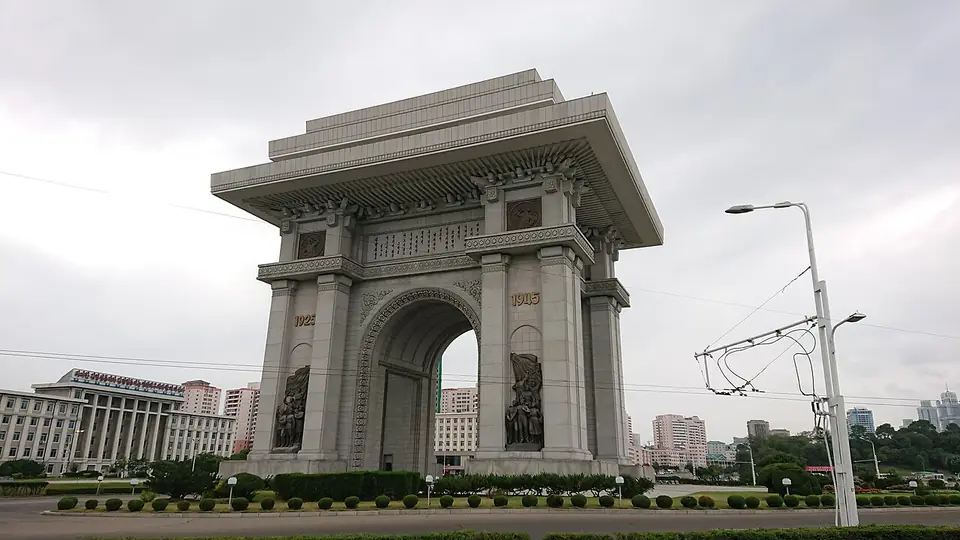
Culture is closely managed by the state. Art, film and music are expected to serve the nation and honour its leaders. Pyongyang is a showcase city of wide avenues and monuments, such as the 170-metre Juche Tower and the pyramid-shaped Ryugyong Hotel, which stood unfinished for decades. Statues and portraits of the leaders appear in every public space.
Religion is officially tolerated but strongly restricted. Old traditions survive in family life, from ancestral rites at Chuseok to folk games. Sport matters too: football, especially the women's team, has had real international success, and taekwondo, which has its own North Korean federation, is widely practised. The folk song Arirang is loved in both Koreas and is one of the few cultural threads that still clearly crosses the border. Daily life is highly organised: children join youth organisations, and adults take part in study sessions and group work through their workplaces.
Five facts worth knowing
- The official name is the Democratic People's Republic of Korea (DPRK), while South Korea is the Republic of Korea.
- The DMZ is about 250 km long and 4 km wide, and because it has been almost untouched since 1953, it has become an accidental wildlife reserve.
- The Korean War never formally ended – the 1953 armistice stopped the fighting, but no peace treaty was ever signed.
- Mount Paektu, on the Chinese border, is the highest peak on the peninsula at around 2,744 metres and is considered sacred in both Koreas.
- North Korea's border with Russia is only about 17 km long, one of the shortest international borders in Asia.
Culture and traditions in North Korea
- Saying hello
People bow slightly when greeting; "Annyeong hasimnikka" is the formal hello.
- Food and drink
Naengmyeon, cold buckwheat noodles from Pyongyang, and kimchi, served with most meals.
- Festivals and traditions
Chuseok (harvest festival) and Lunar New Year are traditional holidays; mass gymnastics performances are a known spectacle.
- Everyday life
Visitors can only travel with official guides. Bowing and using both hands to give things shows respect, as in Korean culture generally.
- Did you know?
Pyongyang-style naengmyeon is so famous that it is served at restaurants across the Korean peninsula.
Common mistakes
- Tapping South Korea – the most common error, because the two halves look alike at a glance.
- Tapping Liaoning or Jilin, the Chinese provinces across the Yalu River.
- Tapping Japan when the question asks for a Korea, since they face each other across the sea.
Practise with North Korea
- Asia quiz – find the peninsula off north-east China and tap the top half.
- East Asia quiz – a small map where the two Koreas sit side by side, so you have to pick the right half.
- Asia flags – the red band with a star in a white disc.
- Asia capitals quiz – Pyongyang.
- Chinese Provinces – context for the border: Liaoning and Jilin are the Chinese provinces next door.
- Mystery Country – the upper half of the peninsula, with a jagged west coast and a straighter east coast.
Nearby countries
 ChinaBeijing
 RussiaMoscow
 South KoreaSeoul
Quick check: how well do you know North Korea?
3 questions, no sign-up. Tap an answer.
1. Which flag belongs to North Korea?
That's the flag of North Korea.
2. What is the capital of North Korea?
The capital of North Korea is Pyongyang.
3. Which of these countries borders North Korea?
China, Russia and South Korea border North Korea.
Keep going on the Asia quiz – North Korea is one of 48 countries there.
More ways to practise: find North Korea on the blank map with no borders (hard mode), or play today's Globe and the other daily puzzles.
Frequently asked questions about North Korea
What language is spoken in North Korea?
Korean is the official and only widely spoken language, written in the Korean alphabet, called Chosŏn'gŭl in the North. North Korea officially stopped using Chinese characters in everyday writing in 1949, and Russian, Chinese and English are taught as foreign languages.
What currency does North Korea use?
North Korea uses the North Korean won (KPW), divided into 100 chon. The state controls exchange closely, the official rate differs greatly from the market rate, and foreign visitors have often been expected to pay in euros, Chinese yuan or US dollars.
What time zone is North Korea in?
North Korea is on UTC+9, the same as South Korea and Japan, and does not use daylight saving time. From 2015 to 2018 it used its own "Pyongyang Time" of UTC+8:30 before returning to match the South.
Which side of the road do they drive on in North Korea?
North Korea drives on the right, as does South Korea. Private cars are rare, and long-distance travel is mostly by train or bus; wide motorways often carry very little traffic.
What is the highest point in North Korea?
Mount Paektu, a volcano on the Chinese border, is the highest point at about 2,744 metres. Its summit crater holds Heaven Lake, and a massive eruption around the year 946 was one of the largest in recorded history.
What is Mount Kumgang?
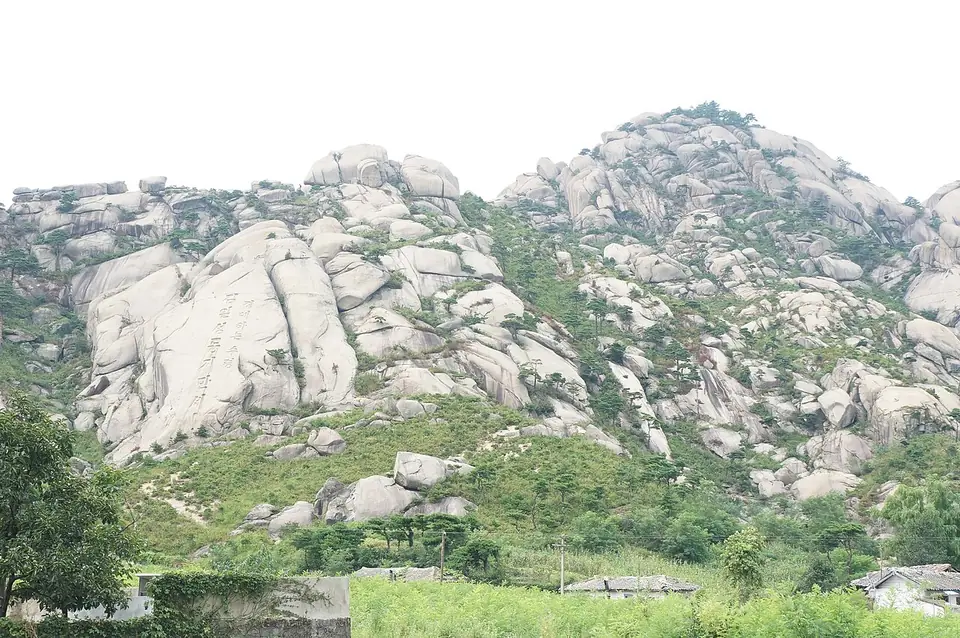
Mount Kumgang, the "Diamond Mountains", is a granite range near the east coast famous for its peaks, waterfalls and temples. From 1998 to 2008 it hosted a tourist resort that South Koreans could visit, one of the few places where people from both Koreas met.
Quizzes with North Korea
Often confused with
Guides that help with this
- Oceans, seas, rivers and mountainsThe physical map: seas around each continent, the big rivers and ranges.
- Flags that look alike (and how to tell them apart)Chad or Romania? Australia or New Zealand? The flag pairs that cost quiz points.
- The 25 hardest countries to find on a mapPacific islands, Caribbean islands and landlocked Africa – where they are.