St Vincent and the Grenadines
Capital: Kingstown. St Vincent and the Grenadines is one of the 23 countries in the North America quiz.
Quick answers: What is the capital of St Vincent and the Grenadines? · Which countries border St Vincent and the Grenadines?
Facts about St Vincent and the Grenadines
- CapitalKingstown
- Population99,924
- Area389 km²
- RegionsNorth America, The Caribbean
- LanguageEnglish
- CurrencyEast Caribbean dollar (XCD)
St Vincent and the Grenadines is the 20th most populous of the 23 countries in North America and the 21st largest by area. Worldwide it ranks 185th by population and 186th by area.
Where is St Vincent and the Grenadines?
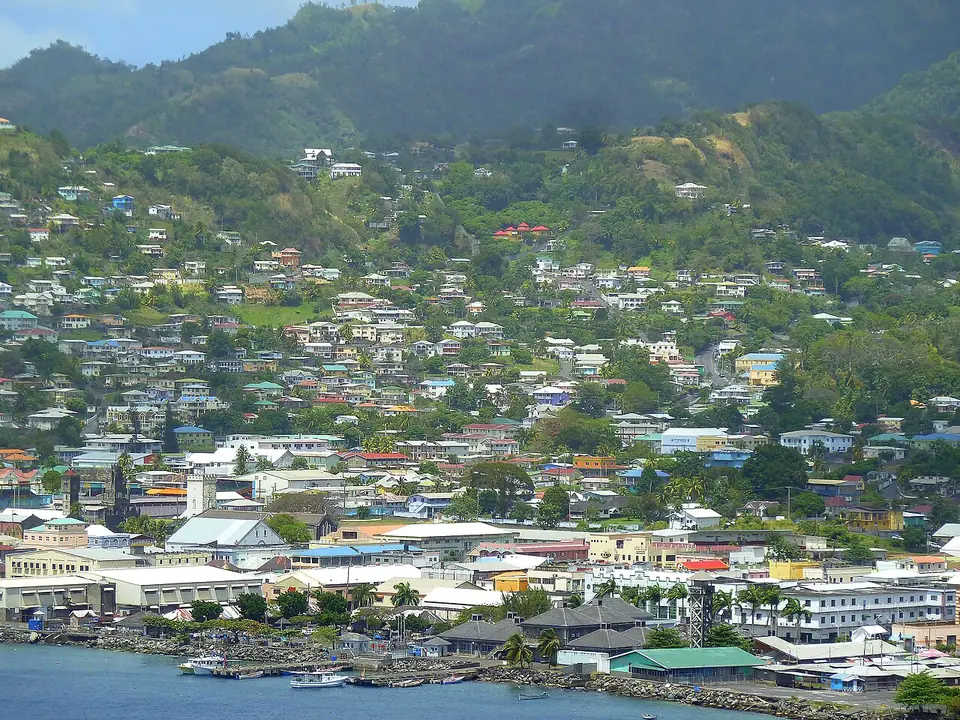
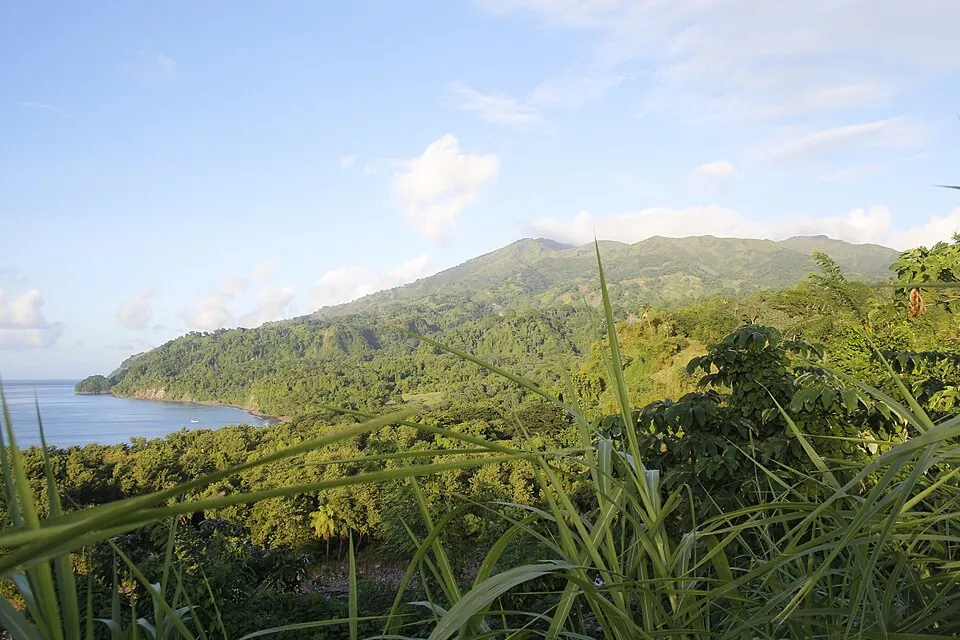
St Vincent and the Grenadines is a country in the southern Caribbean, part of the Windward Islands in the Lesser Antilles. The main island, St Vincent, is a volcanic island dominated by the La Soufrière volcano in the north. South of it, the Grenadines are a string of about 30 smaller islands and cays stretching towards Grenada; the best known are Bequia, Mustique, Canouan and Union Island.
The capital, Kingstown, is on the south-west coast of St Vincent. St Lucia lies to the north and Barbados is out to the east across open water.
How to find St Vincent and the Grenadines on the map
- Start from the lower end of the island chain. The Lesser Antilles bend towards South America at the bottom; St Vincent is near that bend, just above Grenada.
- Look for the island with a tail. The Grenadines trail south from St Vincent like a line of crumbs, and the country's outline includes most of them.
- Count down from Martinique. Martinique, St Lucia, St Vincent, Grenada – St Vincent is the third of the four.
- Don't confuse it with Grenada, which owns the southern Grenadines (including Carriacou), or St Lucia directly to the north.
Flag
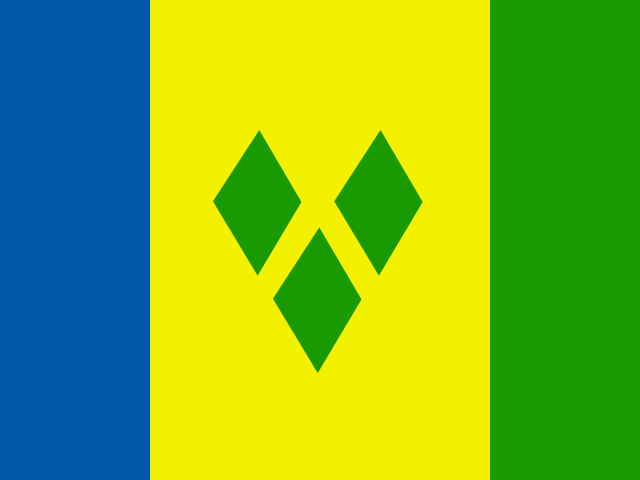
The flag is a vertical tricolour of blue, gold and green, with the gold middle band twice as wide as the others. In the centre are three green diamonds arranged in a V shape – V for Vincent – which have earned the flag the nickname "the Gems". Blue stands for the sky and sea, gold for the sunshine and the Grenadines, green for the vegetation.
The three diamonds are unique, so once you have seen them the flag is easy. The colours are close to those of Gabon (horizontal green, yellow, blue) and a few others, but no other flag uses the diamond V.
A short history of St Vincent and the Grenadines
The Kalinago called St Vincent Hairouna, "land of the blessed". Over time they mixed with Africans who had escaped slavery or survived shipwrecks, and a new people formed: the Garifuna, also known as Black Caribs. Protected by steep mountains and thick forest, they kept Europeans from settling the island long after most of the Caribbean had been colonised.
Britain gained the island under the Treaty of Paris in 1763 and began clearing land for sugar. France seized it during the American War of Independence and handed it back in 1783. Tension over land came to a head in the Second Carib War of 1795–96. The Garifuna leader Joseph Chatoyer was killed early in the fighting and is now the country's first National Hero. After their defeat, around 5,000 Garifuna were deported, and in 1797 the survivors were landed on Roatán, off Honduras. This is why Garifuna communities live today along the Caribbean coast of Honduras, Belize, Guatemala and Nicaragua.
Slavery was abolished in the 1830s, and planters then brought labourers from Madeira and India. Sugar declined, and St Vincent became the world's leading producer of arrowroot, a starch used in biscuits and medicine. A devastating eruption of La Soufrière in 1902 killed well over a thousand people in the north of the island.
The country became an associated state in 1969 and independent ten years later. Bananas sold to Britain were the mainstay for decades, until changes to European trade rules in the 1990s and 2000s cut prices. Argyle International Airport opened on the windward coast in 2017, and in 2020–21 the country became the smallest ever to sit on the UN Security Council.
Today tourism, especially yachting and luxury resorts in the Grenadines, works alongside farming, fishing and money sent home by Vincentians abroad.
Culture and daily life in St Vincent and the Grenadines
English is the official language, while everyday speech is Vincentian Creole. The Garifuna past is now honoured each March on National Heroes Day, and links have been rebuilt with Garifuna communities in Central America, whose language and dance are recognised by UNESCO. Most people are Christian – Anglican, Methodist, Pentecostal and Catholic – and the island is also home to the Spiritual Baptists, a faith blending Protestant worship with African traditions.
Music is a national strength. Vincentian soca artists compete fiercely at carnival time, and Kevin Lyttle's "Turn Me On" became a worldwide hit in 2003. String band music and quadrille survive in rural villages.
Life in the Grenadines revolves around the sea. Bequia has a long tradition of building wooden boats by hand, and local craftsmen are known for detailed model ships. Bequia is also one of the few places where a tiny number of humpback whales may be hunted each year under international rules, using traditional sailboats and hand-thrown harpoons. Cricket is followed closely at Arnos Vale in Kingstown, and arrowroot remains a source of pride, used in local cakes and puddings.
Five facts worth knowing
- La Soufrière erupted in April 2021, forcing thousands of people to evacuate from the north of St Vincent. It had previously erupted in 1979.
- Mustique is a privately managed island famous for its celebrity homeowners and holiday villas.
- The country became independent from Britain in 1979 and remains a Commonwealth realm.
- Kingstown's botanical garden, founded in 1765, is one of the oldest in the Western Hemisphere and holds a breadfruit tree descended from the plants Captain Bligh brought from Tahiti.
- The Grenadines are split between two countries: the northern ones belong to St Vincent, the southern ones (Carriacou and Petite Martinique) to Grenada.
Culture and traditions in St Vincent and the Grenadines
- Saying hello
A friendly "Good morning" or "Good afternoon" is expected before any conversation.
- Food and drink
Roasted breadfruit with fried jackfish, the national dish; callaloo soup is also popular.
- Festivals and traditions
Vincy Mas carnival (late June to early July) and Nine Mornings, a pre-dawn festival from 16 to 24 December.
- Everyday life
Life is laid-back, with lively local music and sailing culture around the Grenadines. Modest dress is preferred in towns.
- Did you know?
Wallilabou Bay on St Vincent was a filming location for the first Pirates of the Caribbean movie.
Common mistakes
- Tapping Grenada, the island immediately south with its own share of the Grenadines.
- Tapping St Lucia, immediately north.
- Mixing up the three "Saint" countries: St Kitts is far north, St Lucia and St Vincent are neighbours in the south.
Practise with St Vincent and the Grenadines
- Caribbean quiz – the zoomed map shows the Grenadines chain clearly, which is the easiest clue.
- North America quiz – aim for the bottom of the island arc, just above Grenada.
- North America flags – the three green diamonds on gold are a quick win.
- North America capitals quiz – Kingstown, not to be confused with Kingston in Jamaica.
- Mystery Country – one main island with a trail of dots to the south is the giveaway shape.
Quick check: how well do you know St Vincent and the Grenadines?
3 questions, no sign-up. Tap an answer.
1. Which flag belongs to St Vincent and the Grenadines?
That's the flag of St Vincent and the Grenadines.
2. What is the capital of St Vincent and the Grenadines?
The capital of St Vincent and the Grenadines is Kingstown.
3. Which is bigger by area?
United States (9,372,610 km²) is bigger than St Vincent and the Grenadines (389 km²).
Keep going on the North America quiz – St Vincent and the Grenadines is one of 23 countries there.
More ways to practise: find St Vincent and the Grenadines on the blank map with no borders (hard mode), or play today's Globe and the other daily puzzles.
Frequently asked questions about St Vincent and the Grenadines
What language is spoken in St Vincent and the Grenadines?
English is the official language and is used in government and education. Most people speak Vincentian Creole, an English-based creole, in everyday life. Garifuna, once spoken by the island's Black Carib people, has largely died out locally.
What currency does St Vincent and the Grenadines use?
The country uses the Eastern Caribbean dollar, code XCD, shared with seven other members of the Eastern Caribbean Currency Union. It is pegged to the US dollar at 2.70 EC dollars per US dollar.
What time zone is St Vincent and the Grenadines in?
St Vincent and the Grenadines uses Atlantic Standard Time, UTC−4, all year, the same as its neighbours St Lucia and Grenada. It does not observe daylight saving time.
Which side of the road do they drive on in St Vincent and the Grenadines?
Traffic drives on the left, a legacy of British rule. Many people get around in privately run minibuses, often painted with names and slogans and playing loud music.
What is the highest point in St Vincent and the Grenadines?
La Soufrière, the active volcano in the north of St Vincent, is the highest point at about 1,234 metres. Its crater has held a lake at times, and its eruptions have repeatedly reshaped the north of the island.
What is Mustique?
Mustique is a small privately managed island in the Grenadines, long known as a retreat for wealthy and famous visitors. Princess Margaret had a house there from the 1960s, and access and building are tightly controlled.
Quizzes with St Vincent and the Grenadines
Guides that help with this
- The 25 hardest countries to find on a mapPacific islands, Caribbean islands and landlocked Africa – where they are.
- All 50 US states on the map, region by regionThe ordering tricks that make the states stick.
- Flags that look alike (and how to tell them apart)Chad or Romania? Australia or New Zealand? The flag pairs that cost quiz points.