Canada
Capital: Ottawa. Canada is one of the 23 countries in the North America quiz.
Quick answers: What is the capital of Canada? · Which countries border Canada?
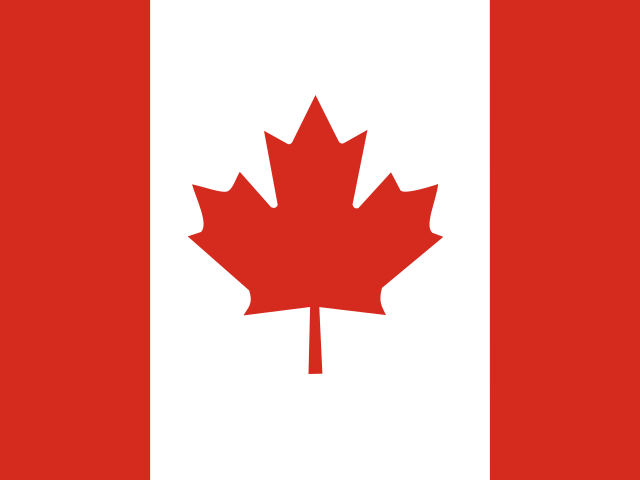
Facts about Canada
- CapitalOttawa
- Population41.7 million
- Area9,984,670 km²
- RegionNorth America
- LanguagesEnglish, French
- CurrencyCanadian dollar (CAD)
Canada is the 3rd most populous of the 23 countries in North America and the largest by area. Worldwide it ranks 38th by population and 2nd by area.
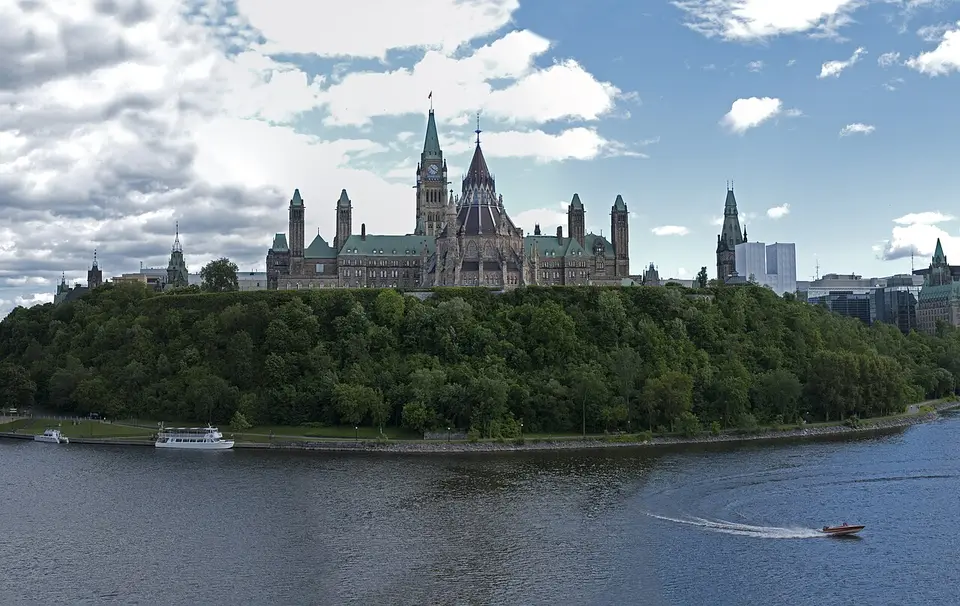
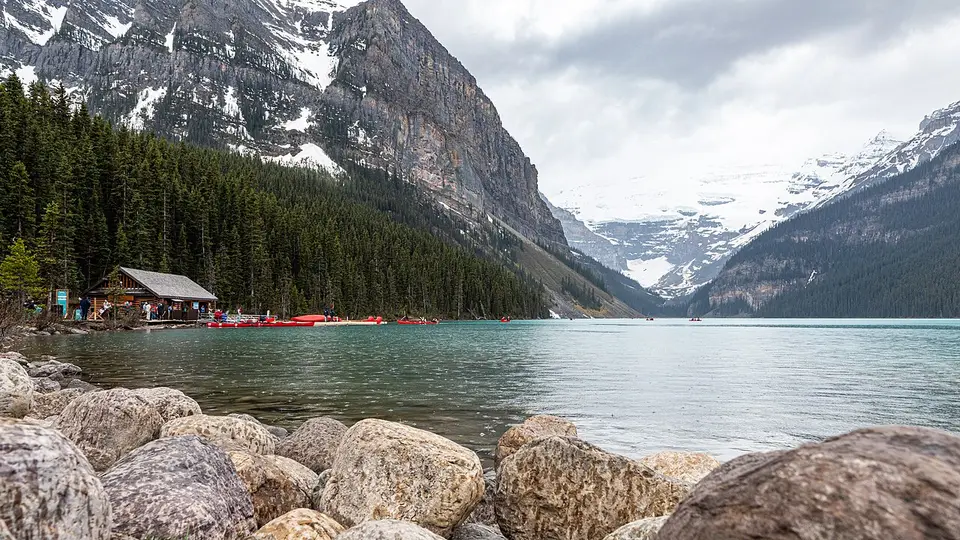
Where is Canada?
Canada is the northern half of North America. It is the second-largest country in the world by area, stretching from the Atlantic in the east to the Pacific in the west and up to the Arctic Ocean in the north. Its only land neighbour is the United States – along the long southern border and again in the north-west, where Alaska meets Yukon and British Columbia. Greenland, part of the Kingdom of Denmark, lies to the north-east across Baffin Bay, and the French islands of Saint Pierre and Miquelon sit just off Newfoundland. Ottawa, the capital, is in the south-east, on the Ontario–Quebec border.
How to find Canada on the map
- Start from the Great Lakes. Canada is the land north of them, and north of the long straight border that continues west to the Pacific.
- Look for the Arctic islands. The vast scatter of islands in the far north – Baffin, Victoria, Ellesmere – is all Canadian.
- Don't confuse it with Alaska. The big block in the far north-west belongs to the United States; Canada is everything between it and the Atlantic.
- Don't confuse it with Greenland. Greenland is the huge island to the north-east; it is not Canadian, despite being closer to Canada than to Denmark.
Flag
The Maple Leaf: a red 11-point maple leaf on a white square, with a broad red band on each side. It was adopted in 1965, replacing a red ensign that carried the Union Jack. The leaf has no official meaning in its number of points – it was simply the design that looked best in the wind.
Few flags resemble it. Peru is red-white-red in vertical bands but with a coat of arms in the centre. Austria is red-white-red horizontally. If the centre holds a red maple leaf, there is only one answer.
A short history of Canada
People have lived in what is now Canada for at least 14,000 years. First Nations developed very different ways of life, from the cedar-plank villages and totem poles of the Pacific coast to the farming Haudenosaunee (Iroquois) around the Great Lakes and the bison hunters of the plains. In the far north, the ancestors of the Inuit spread across the Arctic about a thousand years ago. Around the year 1000, Norse sailors briefly settled at L'Anse aux Meadows in Newfoundland, the only confirmed Viking site in the Americas.
Jacques Cartier claimed land for France in the 1530s, and Samuel de Champlain founded Quebec City in 1608. New France grew on the fur trade, which depended on alliances with Indigenous peoples. Britain, meanwhile, set up the Hudson's Bay Company in 1670 to trade furs across a vast northern area. The two empires fought for control until British forces won at Quebec in 1759, and France gave up New France in 1763. Britain allowed the French-speaking Catholics to keep their language, religion and civil law, which is why Quebec is French-speaking today. After the American Revolution, thousands of Loyalists moved north, and Canada fought off American invasions in the War of 1812.
Canada became a self-governing dominion through Confederation on 1 July 1867, joining Ontario, Quebec, Nova Scotia and New Brunswick. A railway to the Pacific helped bring in British Columbia and settle the prairies, often at great cost to Indigenous nations who signed treaties and lost much of their land. Many Indigenous children were sent to residential schools, a system now widely recognised as a deep injustice.
Canadian soldiers fought with distinction at Vimy Ridge in 1917 and on Juno Beach in 1944. Full control of its constitution came only in 1982. In 1980 and 1995 Quebec held referendums on independence, and the second was rejected by a very narrow margin.
Today Canada is a wealthy country built on natural resources, manufacturing and services, and it is known for welcoming large numbers of immigrants.
Culture and daily life in Canada
Many place names reveal the country's past. "Canada" itself probably comes from kanata, an Iroquoian word for a village, while Ottawa, Toronto and Saskatchewan are Indigenous names. Dozens of Indigenous languages are still spoken, and Inuktitut is official in Nunavut. Most Canadians are Christian or not religious, and large cities such as Toronto and Vancouver are among the most diverse in the world.
Ice hockey is the national winter sport and a source of national pride; Wayne Gretzky is often called the greatest player ever. Lacrosse, an Indigenous game, is the national summer sport. Canadian writers include Margaret Atwood, author of The Handmaid's Tale, and Alice Munro, who won the Nobel Prize in Literature in 2013. L.M. Montgomery's Anne of Green Gables made Prince Edward Island famous.
Canada has produced many world-famous musicians, from Joni Mitchell, Leonard Cohen and Neil Young to Céline Dion and Drake. Canadians often describe themselves by contrast with the United States, valuing public health care, politeness and a sense of the wild outdoors.
Five facts worth knowing
- Canada has 10 provinces and 3 territories, which have their own quiz. Quebec is the largest province; Nunavut, created in 1999, is the largest territory.
- Canada has the longest coastline of any country – over 200,000 km once the Arctic islands are counted.
- The capital is Ottawa, not Toronto, which is the largest city, and not Montreal, which was the capital for a few years in the 1840s.
- The border with the United States is the longest international land border in the world, about 8,900 km including the Alaska section.
- Canada has two official languages, English and French. Quebec is majority French-speaking; New Brunswick is the only officially bilingual province.
Culture and traditions in Canada
- Saying hello
A friendly "Hi" or "Bonjour" in Quebec, with a handshake.
- Food and drink
Poutine (fries with cheese curds and gravy) and maple syrup.
- Festivals and traditions
Canada Day on 1 July, and the Quebec Winter Carnival in February.
- Everyday life
Tipping 15–20% is expected in restaurants, and politeness and queuing are taken seriously.
- Did you know?
Canada produces around 70% of the world's maple syrup, most of it in Quebec.
Common mistakes
- Tapping Alaska as part of Canada, or Greenland as part of Canada.
- Typing "Toronto" in the Capitals quiz.
- Missing Newfoundland, the island off the east coast, which is Canadian.
Practise with Canada
- North America quiz – Canada is the big one at the top; find the Great Lakes and the border and you're there.
- Canadian Provinces – 10 provinces and 3 territories, from British Columbia to Newfoundland and Labrador.
- North America flags – the Maple Leaf is one of the easiest on the sheet.
- North America capitals quiz – Ottawa, not Toronto.
- Mystery Country – the outline is huge and ragged, with Hudson Bay cutting into the middle and the Arctic islands fanning out at the top.
Nearby countries
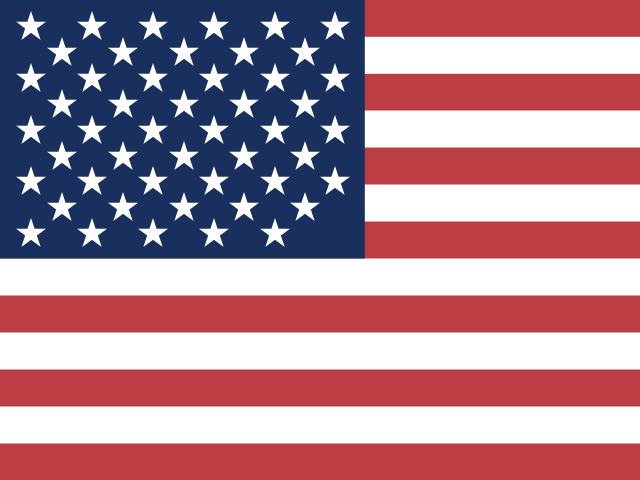 United StatesWashington D.C.
Quick check: how well do you know Canada?
3 questions, no sign-up. Tap an answer.
1. Which flag belongs to Canada?
That's the flag of Canada.
2. What is the capital of Canada?
The capital of Canada is Ottawa.
3. Which of these countries borders Canada?
United States borders Canada.
Keep going on the North America quiz – Canada is one of 23 countries there.
More ways to practise: find Canada on the blank map with no borders (hard mode), or play today's Globe and the other daily puzzles.
Frequently asked questions about Canada
What language is spoken in Canada?
English and French are the two official languages at federal level. English is the most widely spoken, while French is the majority language in Quebec and is common in parts of New Brunswick and Ontario. Many Indigenous languages, such as Cree and Inuktitut, are also spoken.
What currency does Canada use?
Canada uses the Canadian dollar (CAD). The one-dollar coin is nicknamed the "loonie" because it shows a loon, a water bird, and the two-dollar coin is called the "toonie". Canada stopped making the one-cent coin in 2012.
What time zone is Canada in?
Canada has six time zones, from UTC−8 on the Pacific coast to UTC−3:30 in Newfoundland, which uses an unusual half-hour offset. Most of the country uses daylight saving time in summer, though most of Saskatchewan does not.
Which side of the road do they drive on in Canada?
Canadians drive on the right. Some provinces, such as British Columbia and the Atlantic provinces, drove on the left until the 1920s, before switching to match the rest of North America.
What is the highest point in Canada?
The highest point is Mount Logan, about 5,959 metres, in the Saint Elias Mountains of Yukon, near the border with Alaska. It is the second-highest mountain in North America after Denali, and its massif is one of the largest of any mountain on Earth.
Why is Canada called Canada?
The name comes from kanata, an Iroquoian word meaning "village" or "settlement". In 1535 the French explorer Jacques Cartier heard it used for the village of Stadacona, now Quebec City, and later applied it to the wider region.
Quizzes with Canada
Often confused with
Guides that help with this
- The 25 hardest countries to find on a mapPacific islands, Caribbean islands and landlocked Africa – where they are.
- All 50 US states on the map, region by regionThe ordering tricks that make the states stick.
- Flags that look alike (and how to tell them apart)Chad or Romania? Australia or New Zealand? The flag pairs that cost quiz points.