Ecuador
Capital: Quito. Ecuador is one of the 12 countries in the South America quiz.
Quick answers: What is the capital of Ecuador? · Which countries border Ecuador?
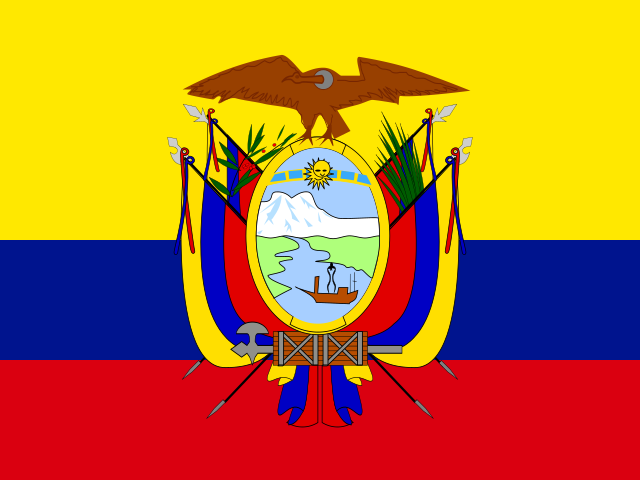
Facts about Ecuador
- CapitalQuito
- Population18.3 million
- Area276,841 km²
- RegionSouth America
- LanguageSpanish
- CurrencyUS dollar (USD)
Ecuador is the 7th most populous of the 12 countries in South America and the 9th largest by area. Worldwide it ranks 71st by population and 73rd by area.
Where is Ecuador?
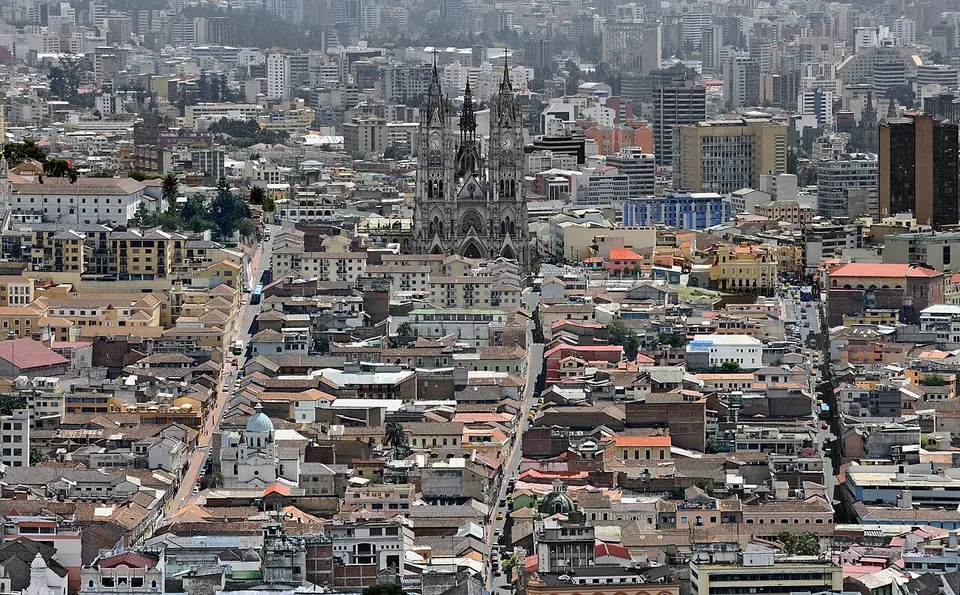
Ecuador is on the Pacific coast of South America, on the north-western side of the continent. Colombia lies to the north and Peru to the east and south. The country is named after the equator, which crosses it just north of the capital, Quito. The Galápagos Islands, around 1,000 kilometres out in the Pacific, are also part of Ecuador. The largest city and main port is Guayaquil, on the south-west coast.
On a world map, find the point where the equator meets the west coast of South America. The small country sitting on that spot is Ecuador.
How to find Ecuador on the map
- Start from the equator. Ecuador is the only South American country named for it and the line runs straight through it.
- Find Colombia. Ecuador is the smaller country directly south of Colombia on the Pacific side.
- Look for the Gulf of Guayaquil. This inlet notches the coast in the south-west of the country.
- Don't confuse it with Peru. Peru is far larger and stretches much further south along the coast.
Flag
Ecuador's flag has three horizontal bands – yellow, blue and red – with the yellow band twice as tall as the others, and the national coat of arms in the centre. The design dates from Gran Colombia, the short-lived union of the early 1800s, which is why Colombia and Venezuela use the same colours.
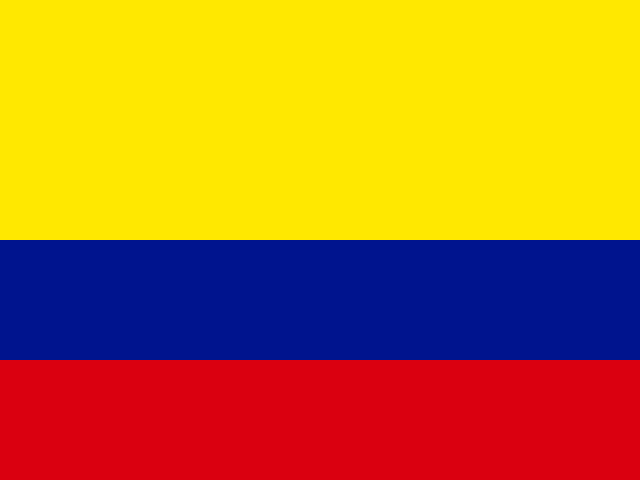
In the Flags quiz, the three are the classic trio. Colombia's flag has no emblem. Venezuela's has equal bands with an arc of stars on the blue. Ecuador's has the tall yellow band and the full coat of arms.
A short history of Ecuador
Some of the oldest pottery in the Americas comes from the Valdivia culture on Ecuador's coast, dating back more than 5,000 years. Over the following millennia many societies flourished here, including the Machalilla, the gold-working La Tolita people and the Cañari in the southern highlands, while the Quitu and Cara peoples lived around the Quito basin.
In the late 1400s the Inca Empire pushed north and conquered the region after fierce resistance. Quito became a major Inca city. When the emperor Huayna Capac died around 1527, a civil war broke out between his sons Atahualpa, based in Quito, and Huáscar in Cuzco. Atahualpa won just as the Spanish arrived, and Francisco Pizarro captured and executed him in 1533. Spanish forces took Quito the following year.
Under Spain, the region was governed as the Royal Audience of Quito, part of the Viceroyalty of Peru and later of New Granada. Indigenous people were forced to work on large estates and in textile workshops. Quito's churches, filled with gold leaf and carved by the city's famous school of artists, date from this period.
An uprising in Quito on 10 August 1809 was one of the first calls for independence in Spanish America. Independence was won in 1822 at the Battle of Pichincha, on the slopes above Quito, where Antonio José de Sucre defeated the royalists. The region joined Simón Bolívar's Gran Colombia, then broke away in 1830 as Ecuador, named after the equator. The 19th century was dominated by rivalry between conservative Quito and liberal, trading Guayaquil, and by the reforms of Eloy Alfaro, who built the railway linking the two.
A war with Peru in 1941 cost Ecuador a large stretch of Amazon territory, which explains why its outline is smaller than older maps show. A final border treaty was signed in 1998. Oil, discovered in the Amazon in the late 1960s, became the main export, alongside bananas, shrimp, cocoa and flowers.
Culture and daily life in Ecuador
Spanish is the main language, but Kichwa, a form of the Inca language Quechua, is spoken by many people in the highlands and the Amazon, and Shuar is also recognised. Market towns such as Otavalo, whose Indigenous weavers sell textiles across the world, show how strongly Andean traditions survive. Most Ecuadorians are Catholic, and processions during Holy Week in Quito, with purple-robed penitents, are among the most striking in South America.
The painter Oswaldo Guayasamín is the country's best-known artist, famous for his powerful images of Indigenous suffering. Andean music, played on panpipes, flutes and the charango, contrasts with the Afro-Ecuadorian marimba music of Esmeraldas on the coast, which is on UNESCO's heritage list.
Football is the leading sport, and the national team has qualified for several World Cups. Race walker Jefferson Pérez won the country's first Olympic gold in 1996. People often identify strongly with their region – the coast, the highlands, the Amazon or the Galápagos – and the friendly rivalry between Quiteños and Guayaquileños colours everyday conversation.
Five facts worth knowing
- The Galápagos Islands belong to Ecuador, and their unique wildlife helped Charles Darwin form his theory of evolution.
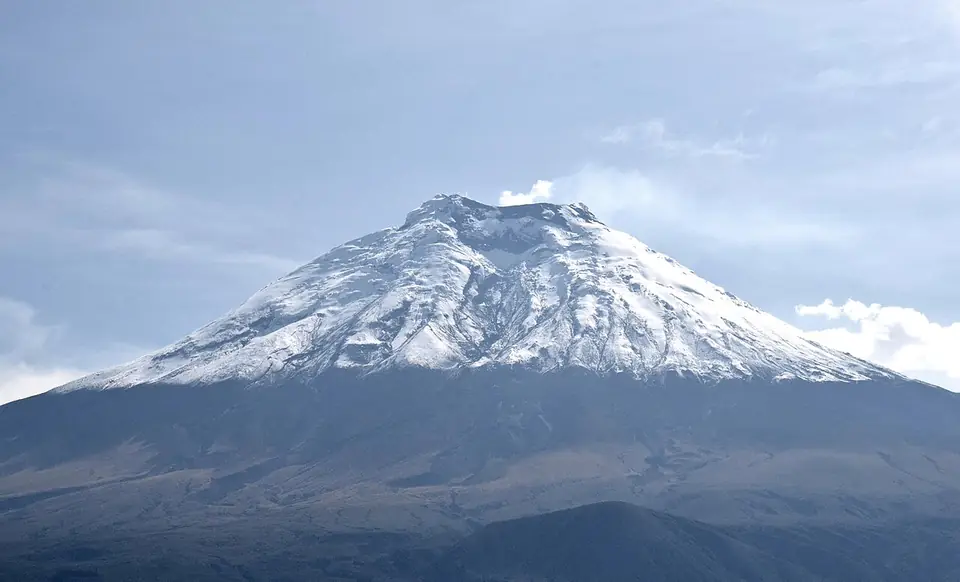
- Mount Chimborazo's summit is the farthest point from the centre of the Earth, further than Everest, because of the planet's bulge at the equator.
- Quito is one of the highest capital cities in the world, at around 2,850 metres above sea level, and its historic centre was among the first UNESCO World Heritage sites.
- Ecuador uses the US dollar as its official currency, adopted in 2000.
- The country is the world's largest exporter of bananas, grown in the lowlands near the coast.
Culture and traditions in Ecuador
- Saying hello
A single kiss on the cheek among friends, or a handshake.
- Food and drink
Ceviche and locro de papa, a creamy potato soup with cheese and avocado.
- Festivals and traditions
Inti Raymi, the Andean sun festival in June; on New Year's Eve people burn effigies called "anos viejos".
- Everyday life
The US dollar is the currency, and lunch is the main meal of the day.
- Did you know?
The Panama hat actually comes from Ecuador; its toquilla straw weaving is UNESCO-listed.
Common mistakes
- Tapping Peru, the larger neighbour to the south.
- Tapping Colombia to the north.
- Choosing the Colombian or Venezuelan flag.
- Forgetting the Galápagos, which appear far out to the west in the outline.
Practise with Ecuador
- South America quiz – find the equator on the Pacific coast and tap the small country there.
- North America flags – separate Ecuador, Colombia and Venezuela.
- South America capitals quiz – Quito, not Guayaquil.
- Mystery Country – a compact outline with the Galápagos islands as a separate cluster to the west.
- Mistake Bank – useful if you keep mixing up the Gran Colombia trio.
Nearby countries
Quick check: how well do you know Ecuador?
3 questions, no sign-up. Tap an answer.
1. Which flag belongs to Ecuador?
That's the flag of Ecuador.
2. What is the capital of Ecuador?
The capital of Ecuador is Quito.
3. Which of these countries borders Ecuador?
Colombia and Peru border Ecuador.
Keep going on the South America quiz – Ecuador is one of 12 countries there.
More ways to practise: find Ecuador on the blank map with no borders (hard mode), or play today's Globe and the other daily puzzles.
Frequently asked questions about Ecuador
What language is spoken in Ecuador?
Spanish is the official language. The constitution also recognises Kichwa and Shuar as official languages of intercultural relations, and they are used alongside other Indigenous languages in the highlands and the Amazon region.
What currency does Ecuador use?
Ecuador uses the US dollar (USD), which replaced the sucre in 2000 after a severe economic crisis. American banknotes circulate, but Ecuador also mints its own centavo coins, which are the same size and value as US coins.
What time zone is Ecuador in?
Mainland Ecuador uses UTC−5, the same as Colombia and Peru. The Galápagos Islands are one hour behind, at UTC−6. Neither uses daylight saving time. Sunrise and sunset change very little through the year.
Which side of the road do they drive on in Ecuador?
Ecuadorians drive on the right. The Pan-American Highway runs north to south through the Andean 'Avenue of the Volcanoes', past Cotopaxi and Chimborazo, linking Quito with the southern highlands.
What is the highest point in Ecuador?
Chimborazo, an inactive volcano in the central Andes, is Ecuador's highest mountain at about 6,260 metres above sea level. Its glaciers once supplied local ice merchants, who carried blocks down to markets.
What is Ecuador famous for?
Ecuador is famous for the Galápagos and the equator, but also for the so-called Panama hat, which is actually woven in Ecuador from toquilla straw; the weaving tradition is on UNESCO's intangible heritage list. It is also a major exporter of roses and cocoa.
Quizzes with Ecuador
Often confused with
Guides that help with this
- Oceans, seas, rivers and mountainsThe physical map: seas around each continent, the big rivers and ranges.
- Flags that look alike (and how to tell them apart)Chad or Romania? Australia or New Zealand? The flag pairs that cost quiz points.
- The 25 hardest countries to find on a mapPacific islands, Caribbean islands and landlocked Africa – where they are.