Peru
Capital: Lima. Peru is one of the 12 countries in the South America quiz.
Quick answers: What is the capital of Peru? · Which countries border Peru?
Facts about Peru
- CapitalLima
- Population34.6 million
- Area1,285,216 km²
- RegionSouth America
- LanguageSpanish
- CurrencyPeruvian sol (PEN)
Peru is the 4th most populous of the 12 countries in South America and the 3rd largest by area. Worldwide it ranks 48th by population and 19th by area.
Where is Peru?
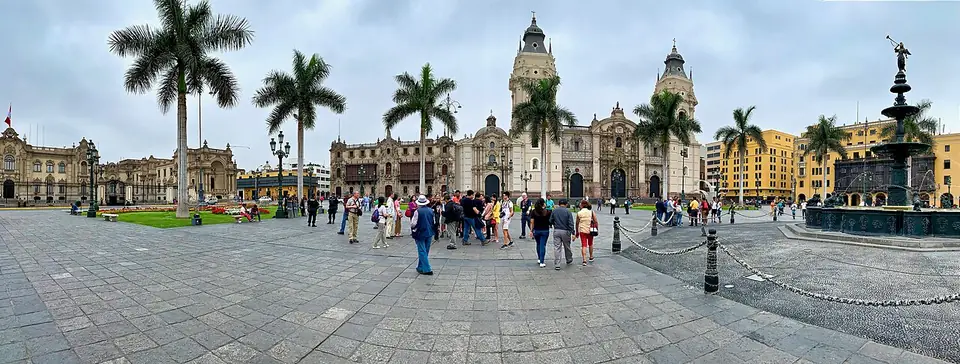
Peru is on the Pacific coast of South America, in the western part of the continent. Ecuador and Colombia lie to the north, Brazil to the east, Bolivia to the south-east and Chile to the south. The Andes run the length of the country from north-west to south-east, dividing a narrow, dry coastal strip from the Amazon rainforest that covers the eastern half. Lima, the capital, is on the coast, roughly halfway down.
On a world map, find the big bulge of Brazil and look at the Pacific side of the continent. Peru is the large country on that coast just below the equator, before the coastline narrows into Chile.
How to find Peru on the map
- Start from Brazil. Peru is the biggest country on Brazil's western border.
- Look for the bend in the coast. South America's Pacific coastline turns a corner at Peru, from running south-west to running south-east. Peru sits on that corner.
- Don't confuse it with Chile. Chile is the thin strip further south. Peru is wider and reaches deep into the Amazon.
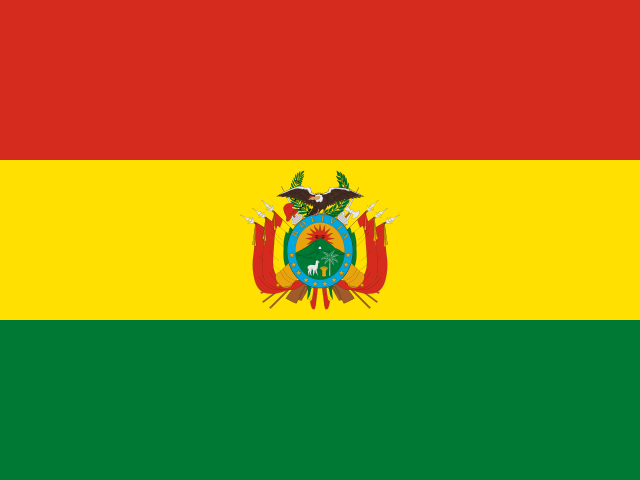
- Don't confuse it with Bolivia. Bolivia is landlocked and sits behind Peru; if the country touches the sea, it's not Bolivia.
Flag
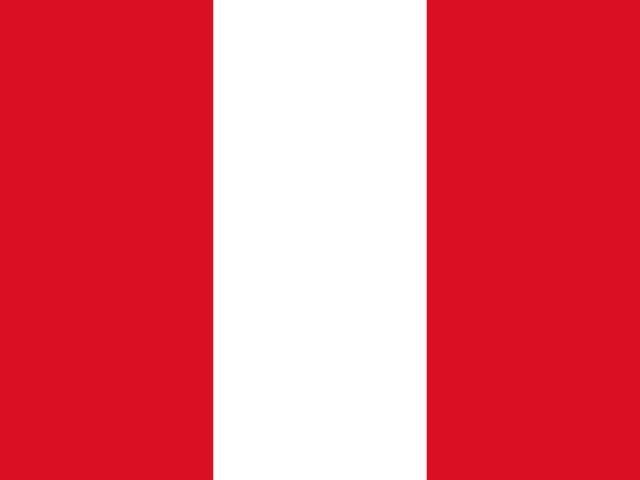
Peru's flag is three vertical bands – red, white, red – with the white band in the middle. The state version adds the coat of arms in the centre, but the plain civil flag is just the three stripes.
The layout is the same as Canada's, which also has red-white-red vertical bands, but Canada's white band is wider and carries a maple leaf. Austria uses red-white-red too, but horizontally. A vertical red-white-red with nothing in the middle is Peru.
A short history of Peru
Peru is one of the cradles of civilisation. At Caral, north of Lima, people built pyramids and plazas nearly 5,000 years ago, making it one of the oldest cities in the Americas. Later cultures followed one another along the coast and in the mountains. The Chavín left carved stone temples, the Moche of the north coast made remarkably lifelike pottery and buried their lords in great tombs such as that of the Lord of Sipán, and the Chimú built Chan Chan, a vast mud-brick capital near Trujillo.
The Incas began as a small kingdom around Cusco. In the 1400s they expanded quickly under rulers such as Pachacuti, and built an empire that stretched from today's Ecuador to central Chile. They held it together with a network of roads, relay runners, terraced farms and storehouses, and kept records on knotted cords called quipu.
In 1532 the Spanish conquistador Francisco Pizarro arrived while the empire was weakened by a civil war and European diseases. He captured the Inca ruler Atahualpa at Cajamarca and later had him executed. Pizarro founded Lima on the coast in 1535 because it was easier to reach by sea than Cusco, and it became the capital of the Viceroyalty of Peru, which ran most of Spanish South America. Silver from the Andes made Spain rich, while forced labour hit indigenous communities hard. In 1780 Túpac Amaru II led a major uprising, which was crushed.
Peru declared independence in 1821, though fighting continued until 1824. Its 19th century was marked by a guano boom and by the War of the Pacific (1879–84), in which Chile took Peru's southern nitrate lands. The 20th century brought military governments, land reform and, from 1980, a brutal conflict with the Shining Path guerrilla group that killed tens of thousands.
Today Peru is one of the world's largest producers of copper and silver, and tourism and farm exports such as avocados and blueberries are growing fast.
Culture and daily life in Peru
Spanish is the main language, but millions speak Quechua, the language of the Incas, and Aymara is spoken around Lake Titicaca. Both are official in the areas where they are common. Most Peruvians are Roman Catholic, and many festivals mix Catholic saints with Andean beliefs, such as offerings to Pachamama, Mother Earth.
Cusco itself tells the story: Spanish churches and mansions stand on top of perfectly fitted Inca stone walls. Andean weaving, with patterns passed down through generations, is still done on simple backstrap looms. Peru's writers include Mario Vargas Llosa, who won the Nobel Prize in Literature in 2010, and César Vallejo, one of the great poets in Spanish.
Peruvian food is a fusion of Andean, Spanish, African, Chinese and Japanese influences, seen in dishes like chifa (Chinese-Peruvian cooking) and Nikkei cuisine. Football is the most popular sport, and Peru's women's volleyball team once won Olympic silver. Afro-Peruvian music, centred on the coast south of Lima, gave the world the cajón, a wooden box drum now played in flamenco and pop. Andean bands with panpipes and the charango, a small stringed instrument, are heard at festivals in the highlands.
Five facts worth knowing
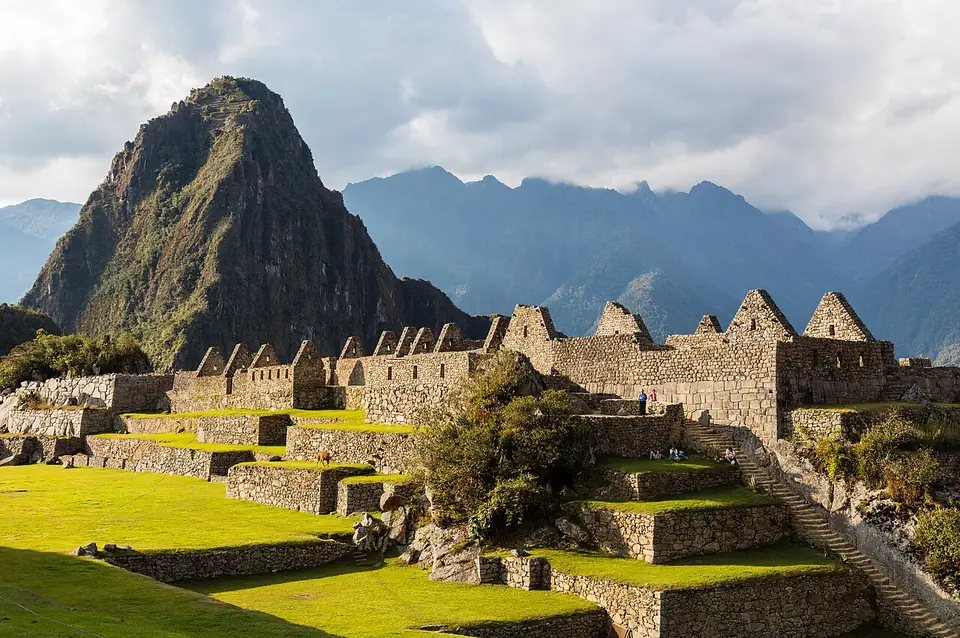
- Machu Picchu, the Inca citadel high above the Urubamba valley, is Peru's most famous site. Cusco, the old Inca capital, lies nearby in the southern Andes.
- Lake Titicaca, shared with Bolivia, is the highest navigable lake in the world, at about 3,800 metres above sea level.
- The Amazon River begins in the Peruvian Andes, and Iquitos, in the Peruvian rainforest, is one of the largest cities in the world that cannot be reached by road.
- Lima sits in a desert. The coast is kept dry by the cold Humboldt Current, and the capital gets almost no rain despite being on the ocean.
- The Nazca Lines, giant figures scratched into the desert floor in southern Peru, are best seen from the air.
Culture and traditions in Peru
- Saying hello
A handshake or a cheek kiss among friends; "Buenos días" is standard.
- Food and drink
Ceviche, raw fish marinated in lime, and lomo saltado, stir-fried beef; pisco sour is the national drink.
- Festivals and traditions
Inti Raymi, the Inca sun festival, on 24 June in Cusco; Independence Day on 28–29 July.
- Everyday life
Lunch is the main meal. Peruvians are proud of their food, and Lima is a top food destination.
- Did you know?
Peru has around 3,000 varieties of potato.
Common mistakes
- Tapping Bolivia – it sits right behind Peru and looks similar in size at world zoom.
- Tapping Ecuador or Colombia further up the coast.
- Picking the Canadian or Austrian flag in the Flags quiz.
Practise with Peru
- South America quiz – the country on the corner of the Pacific coast, between Ecuador and Chile.
- North America flags – the vertical red-white-red without a maple leaf.
- South America capitals quiz – Lima.
- Whole World quiz – a mid-sized target on the west side of the continent; easy to find once you have Brazil.
- Mystery Country – the outline has a long straight-ish coast and a big block reaching east into the Amazon.
Nearby countries
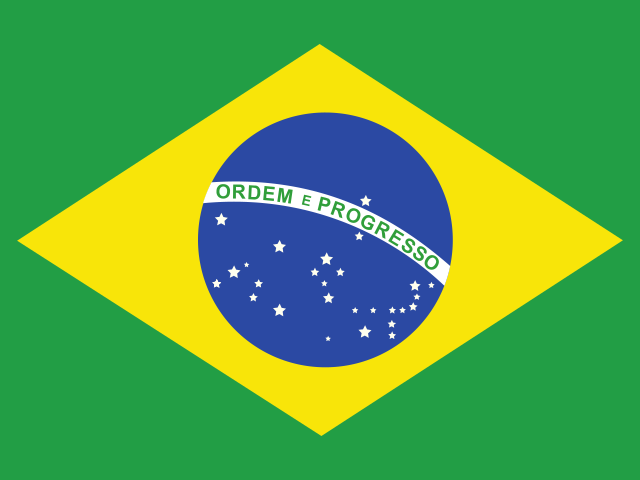
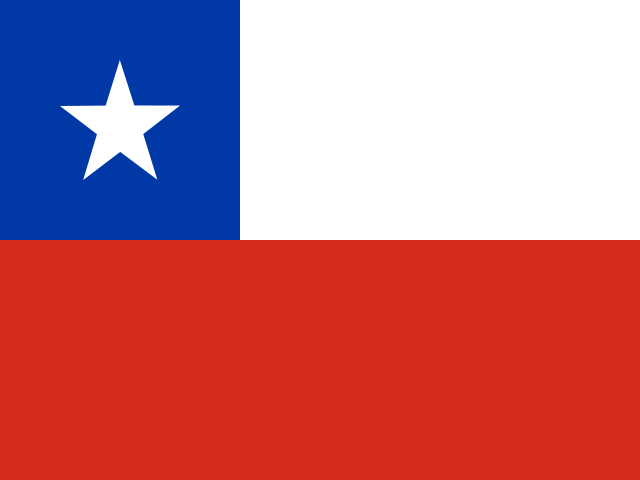
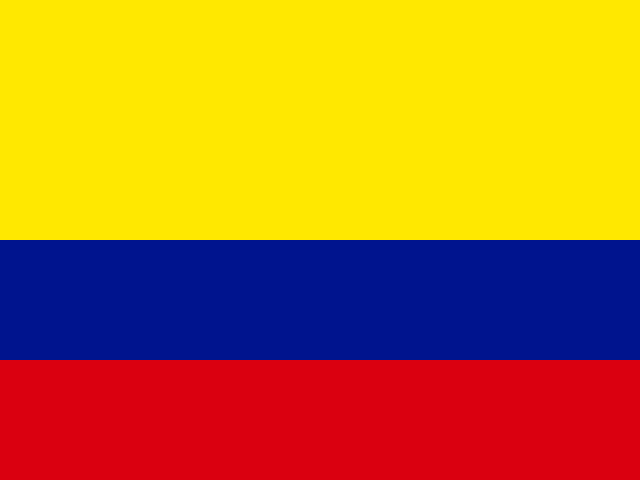
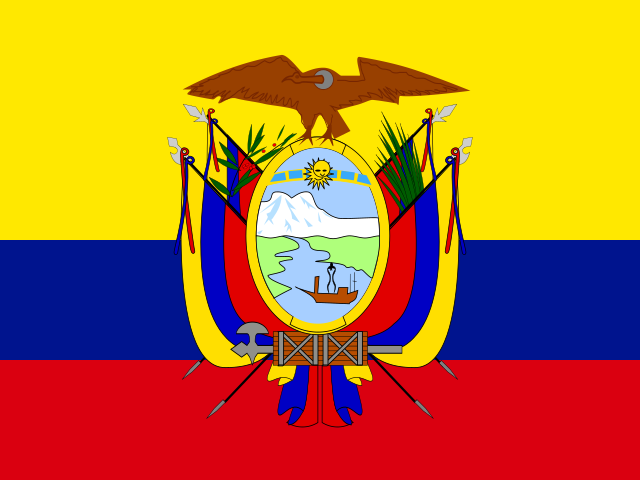
Quick check: how well do you know Peru?
3 questions, no sign-up. Tap an answer.
1. Which flag belongs to Peru?
That's the flag of Peru.
2. What is the capital of Peru?
The capital of Peru is Lima.
3. Which of these countries borders Peru?
Bolivia, Brazil, Chile, Colombia and Ecuador border Peru.
Keep going on the South America quiz – Peru is one of 12 countries there.
More ways to practise: find Peru on the blank map with no borders (hard mode), or play today's Globe and the other daily puzzles.
Frequently asked questions about Peru
What language is spoken in Peru?
Spanish is the main language and is spoken by most Peruvians. Quechua, the language of the Inca Empire, and Aymara, spoken around Lake Titicaca, are also official where they are widely used. Dozens of other Indigenous languages are spoken in the Amazon.
What currency does Peru use?
Peru uses the sol (PEN), divided into 100 céntimos. It replaced the inti in 1991 after hyperinflation, and its name means "sun" in Spanish, recalling the Inca sun god. The sol has been one of the most stable currencies in Latin America.
What time zone is Peru in?
Peru is on UTC−5 all year round and does not use daylight saving time. Its clocks match those of Colombia and Ecuador, and New York in winter.
Which side of the road do they drive on in Peru?
Peru drives on the right. The Pan-American Highway runs along the coastal desert, while roads into the Andes climb to some of the world's highest passes, above 4,800 metres.
What is the highest point in Peru?
Huascarán, in the Cordillera Blanca, is Peru's highest point at about 6,768 metres. It is the highest mountain in the world's tropics, and an earthquake-triggered avalanche from its slopes destroyed the town of Yungay in 1970.
What are the Nazca Lines?
The Nazca Lines are huge drawings scratched into the desert floor in southern Peru between about 500 BC and AD 500. They include straight lines and figures such as a monkey, a hummingbird and a spider, best seen from the air or nearby hills.
Quizzes with Peru
Often confused with
Guides that help with this
- Oceans, seas, rivers and mountainsThe physical map: seas around each continent, the big rivers and ranges.
- Flags that look alike (and how to tell them apart)Chad or Romania? Australia or New Zealand? The flag pairs that cost quiz points.
- The 25 hardest countries to find on a mapPacific islands, Caribbean islands and landlocked Africa – where they are.