Colombia
Capital: Bogotá. Colombia is one of the 12 countries in the South America quiz.
Quick answers: What is the capital of Colombia? · Which countries border Colombia?
Facts about Colombia
- CapitalBogotá
- Population53.4 million
- Area1,141,748 km²
- RegionSouth America
- LanguageSpanish
- CurrencyColombian peso (COP)
Colombia is the 2nd most populous of the 12 countries in South America and the 4th largest by area. Worldwide it ranks 28th by population and 25th by area.
Where is Colombia?
Colombia sits in the top-left corner of South America, where the continent joins Central America. It is the only South American country with coastlines on both the Caribbean Sea, to the north, and the Pacific Ocean, to the west. Panama touches it in the north-west, Venezuela lies to the east, Brazil to the south-east, and Peru and Ecuador to the south. Bogotá, the capital, is in the centre of the country, high in the Andes.
On a world map, follow the thin strip of Central America down from Mexico. Where it widens out into the main body of South America, that first big block of land is Colombia.
How to find Colombia on the map
- Start from Panama. Colombia is the country that Central America plugs into.
- Look for two coasts. It's the only country on the continent that touches both the Caribbean and the Pacific.
- Don't confuse it with Venezuela. Venezuela is to the east, with only a Caribbean coast. Colombia is the one that reaches the Pacific.
- Don't confuse it with Peru either. Peru is further south and much longer along the Pacific. Colombia sits above Ecuador, not below it.
Flag
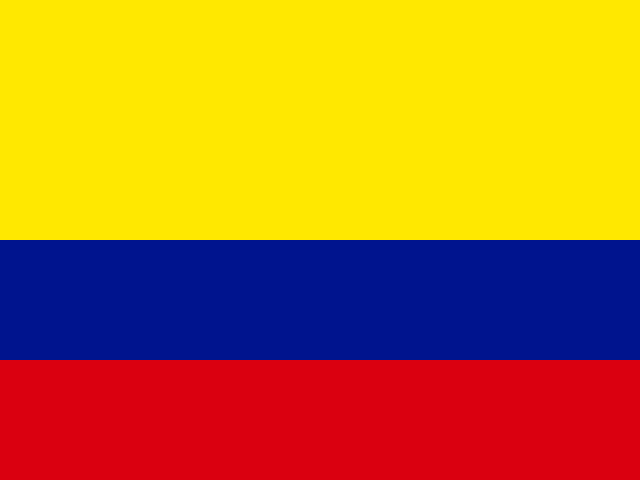
Colombia's flag is a horizontal tricolour of yellow, blue and red – but the yellow band takes up the top half of the flag, with blue and red sharing the bottom half. The yellow is usually said to stand for the country's gold, the blue for its two oceans and the red for the blood of those who fought for independence.
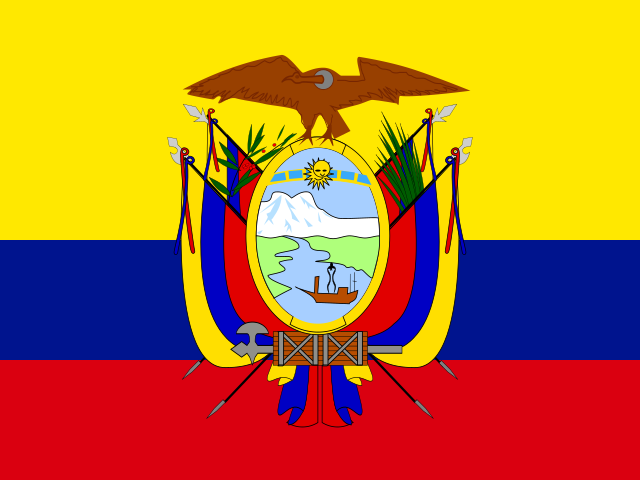
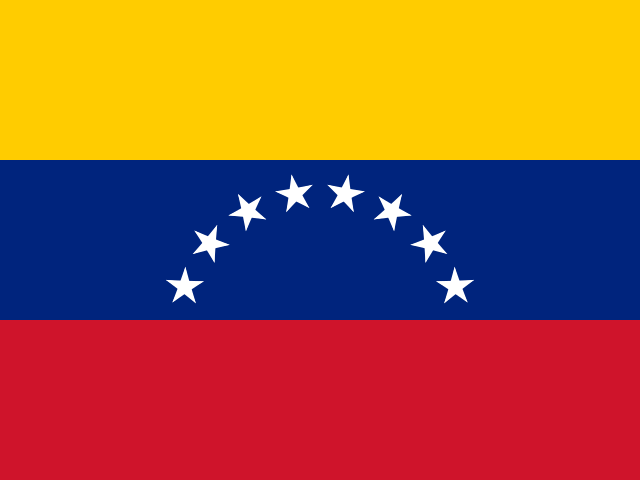
Two neighbours use almost the same flag. Ecuador has the same proportions with a coat of arms in the middle. Venezuela uses three equal bands with an arc of white stars on the blue. In the Flags quiz, a yellow-blue-red flag with a fat yellow stripe and nothing added is Colombia.
A short history of Colombia
Long before the Spanish arrived, Colombia was home to skilled goldsmiths and builders. In the highlands around Bogotá lived the Muisca, a farming people famous for a ceremony in which a new ruler, covered in gold dust, offered treasure to the gods in Lake Guatavita. This story gave rise to the legend of El Dorado. In the Sierra Nevada de Santa Marta, the Tairona built stone terraces and the Ciudad Perdida, or Lost City, while the San Agustín culture in the south carved hundreds of stone statues.
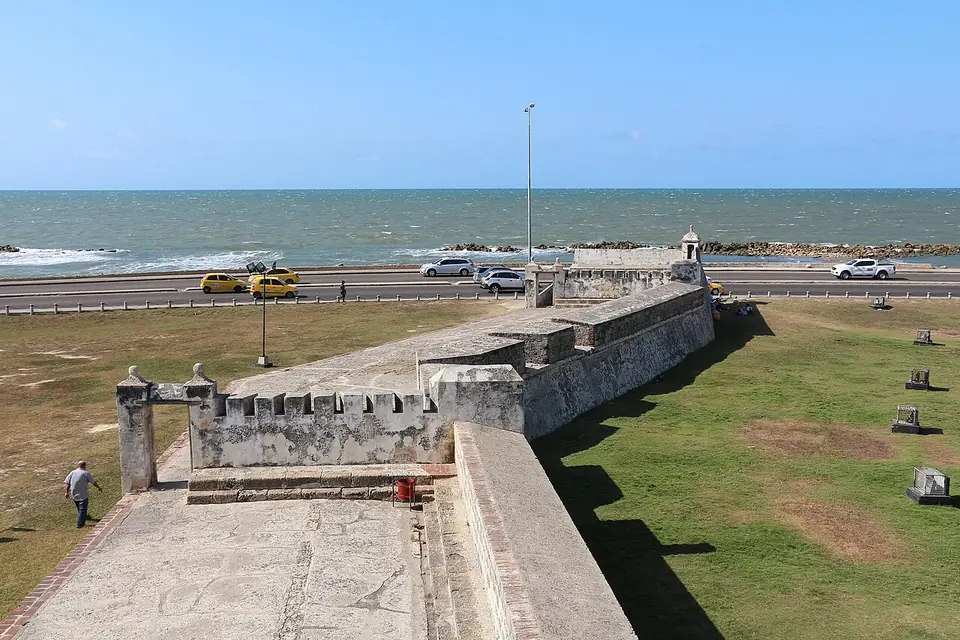
Spanish explorers reached the Caribbean coast around 1500. Santa Marta was founded in 1525 and Cartagena in 1533, and Gonzalo Jiménez de Quesada founded Bogotá in 1538 after conquering the Muisca. Cartagena became one of the most important ports in the Spanish Empire, protected by massive stone walls against pirates and English raids. In 1717 Bogotá became the capital of the Viceroyalty of New Granada, covering today's Colombia, Venezuela, Ecuador and Panama.
The fight for independence began in 1810. Simón Bolívar won the Battle of Boyacá in 1819, and the republic of Gran Colombia was formed. It broke apart in 1830, with Venezuela and Ecuador leaving. The rest of the 1800s brought repeated civil wars between Liberals and Conservatives. In 1903, with American support, Panama broke away so that the United States could build its canal, which is why Colombia today stops at the Darién.
The 20th century was marked by La Violencia, a bloody conflict between the two parties that began in 1948, and then by the rise of left-wing guerrilla groups such as the FARC in the 1960s. Drug cartels, especially in Medellín and Cali, made the 1980s and 1990s very violent. A peace agreement with the FARC was signed in 2016.
Colombia is now one of Latin America's larger economies, exporting oil, coal, coffee, flowers and bananas, and cities like Medellín have become symbols of recovery.
Culture and daily life in Colombia
Spanish is the main language, and Colombian Spanish, especially from Bogotá, is often praised for its clarity. Around 65 Indigenous languages are still spoken, and on the Caribbean islands of San Andrés many people speak an English-based Creole. Most people are Catholic. On the Caribbean coast, African heritage is strong, and San Basilio de Palenque, founded by escaped slaves, still speaks its own Creole language.
Colombia's most famous writer is Gabriel García Márquez, who won the Nobel Prize in Literature in 1982. His novel One Hundred Years of Solitude made the magical realism style famous worldwide. The painter and sculptor Fernando Botero is known for his round, oversized figures.
Music is a national pride. Cumbia was born on the Caribbean coast, mixing African, Indigenous and Spanish elements, while vallenato is played on accordion. Shakira, from Barranquilla, and reggaeton stars such as J Balvin have taken Colombian sound global. Football and cycling are the top sports, and Egan Bernal won the Tour de France in 2019.
Five facts worth knowing
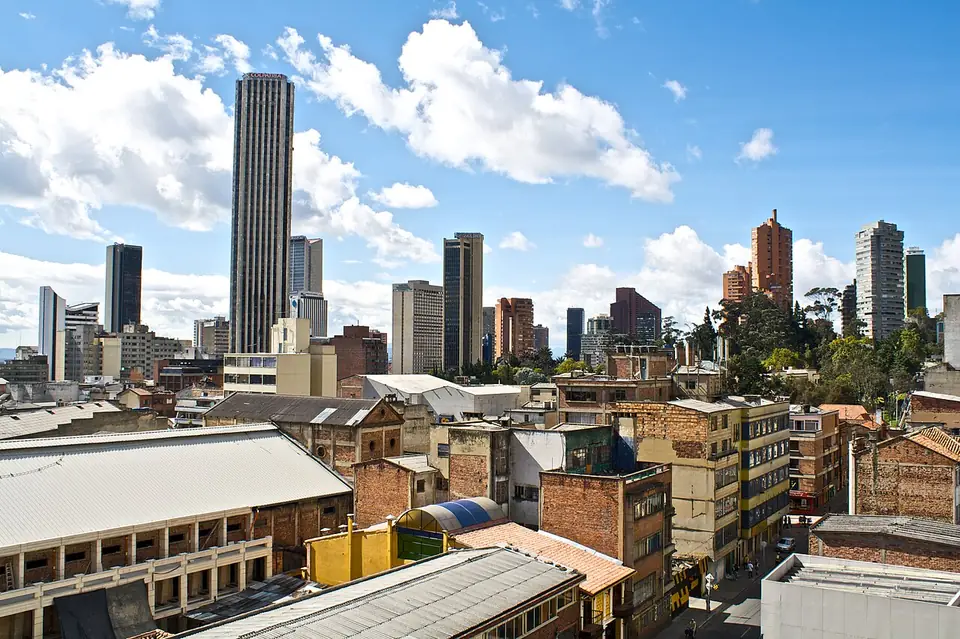
- Bogotá sits at about 2,600 metres above sea level, making it one of the highest capital cities in the world.
- The Andes split into three separate ranges inside Colombia, and most of the population lives in the valleys and plateaus between them rather than on the coast.
- Colombia is one of the most biodiverse countries on Earth, with more bird species than any other country.
- The country is named after Christopher Columbus, even though he never set foot on its mainland.
- The Darién Gap, on the border with Panama, is the only break in the Pan-American Highway – no road connects South America to Central America through the jungle there.
Culture and traditions in Colombia
- Saying hello
A handshake, or a single cheek kiss among friends.
- Food and drink
Bandeja paisa (beans, rice, meat, egg, plantain) and arepas; a small black coffee called tinto.
- Festivals and traditions
The Barranquilla Carnival before Lent (UNESCO-listed), and the Flower Festival in Medellin in August.
- Everyday life
Coffee is offered throughout the day, and people are warm and courteous, using formal "usted" often.
- Did you know?
Colombia is one of the world's leading sources of emeralds.
Common mistakes
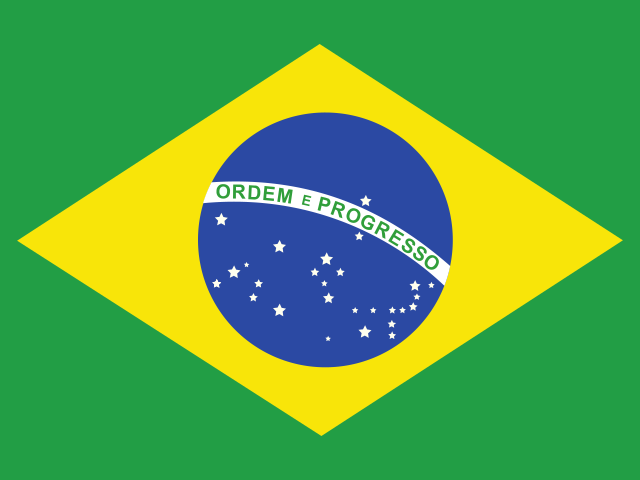
- Tapping Venezuela – it's next door, similar in size and shares the yellow-blue-red flag.
- Picking the Ecuadorian flag, which is nearly identical apart from the coat of arms.
- Tapping Peru when the quiz asks for Colombia, because both run along the Pacific.
Practise with Colombia
- South America quiz – the country at the top-left, where Panama joins on. Find it first and the rest of the continent falls into place.
- North America flags – learn to tell Colombia, Ecuador and Venezuela apart.
- South America capitals quiz – Bogotá.
- Mystery Country – the broad northern coast, the long Pacific edge and the point reaching toward Panama are all recognisable.
Nearby countries
Quick check: how well do you know Colombia?
3 questions, no sign-up. Tap an answer.
1. Which flag belongs to Colombia?
That's the flag of Colombia.
2. What is the capital of Colombia?
The capital of Colombia is Bogotá.
3. Which of these countries borders Colombia?
Brazil, Ecuador, Panama, Peru and Venezuela border Colombia.
Keep going on the South America quiz – Colombia is one of 12 countries there.
More ways to practise: find Colombia on the blank map with no borders (hard mode), or play today's Globe and the other daily puzzles.
Frequently asked questions about Colombia
What language is spoken in Colombia?
Spanish is the official language and is spoken by almost everyone. The constitution also makes the languages of ethnic groups official in their own territories, which covers around 65 Indigenous languages and two Creole languages, including the English-based Creole of San Andrés.
What currency does Colombia use?
Colombia uses the Colombian peso (COP). Because prices run into thousands of pesos for everyday items, shops often abbreviate amounts with 'mil' for thousand, and the 100,000-peso note is the largest in circulation.
What time zone is Colombia in?
Colombia uses UTC−5 all year and does not observe daylight saving time. Lying close to the equator, it has days and nights of almost equal length throughout the year.
Which side of the road do they drive on in Colombia?
Colombians drive on the right. In Bogotá and other cities, a 'pico y placa' system restricts private cars from driving at peak hours on certain days, based on the last digit of the number plate.
What is the highest point in Colombia?
The twin peaks Pico Cristóbal Colón and Pico Simón Bolívar, in the Sierra Nevada de Santa Marta, are Colombia's highest points at roughly 5,700 metres. The range rises straight from the Caribbean coast, making it one of the highest coastal mountain ranges in the world.
What is Colombia famous for?
Colombia is known for its mild arabica coffee, grown on Andean slopes, and is one of the world's largest coffee producers. It is also one of the world's top sources of emeralds and is a leading exporter of cut flowers, many sold abroad for Valentine's Day.
Quizzes with Colombia
Often confused with
Guides that help with this
- Oceans, seas, rivers and mountainsThe physical map: seas around each continent, the big rivers and ranges.
- Flags that look alike (and how to tell them apart)Chad or Romania? Australia or New Zealand? The flag pairs that cost quiz points.
- The 25 hardest countries to find on a mapPacific islands, Caribbean islands and landlocked Africa – where they are.