Eswatini
Capital: Mbabane. Eswatini is one of the 54 countries in the Africa quiz.
Quick answers: What is the capital of Eswatini? · Which countries border Eswatini?
Facts about Eswatini
- CapitalMbabane
- Population1.3 million
- Area17,364 km²
- RegionsAfrica, Southern Africa
- LanguagesEnglish, Swazi
- CurrencySwazi lilangeni (SZL)
Eswatini is the 48th most populous of the 54 countries in Africa and the 48th largest by area. Worldwide it ranks 157th by population and 154th by area.
Where is Eswatini?
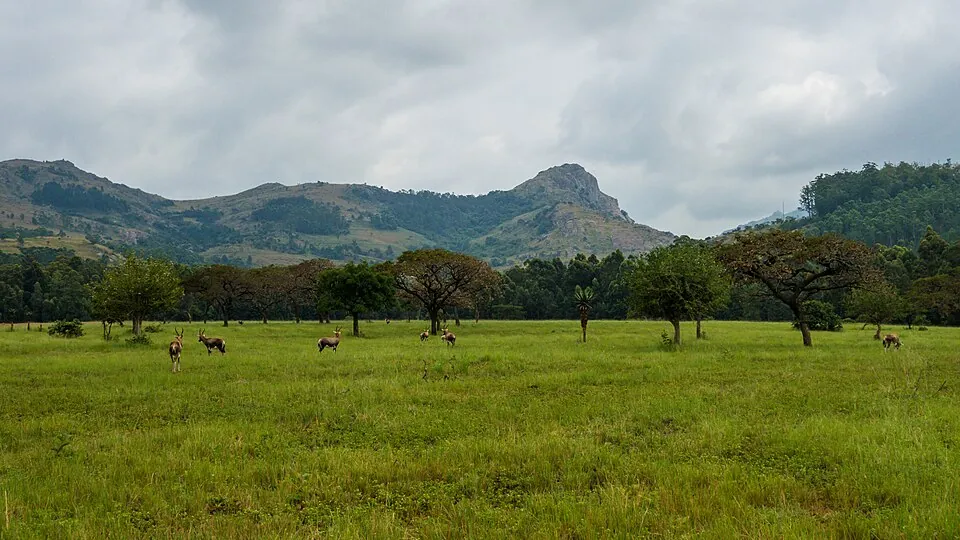
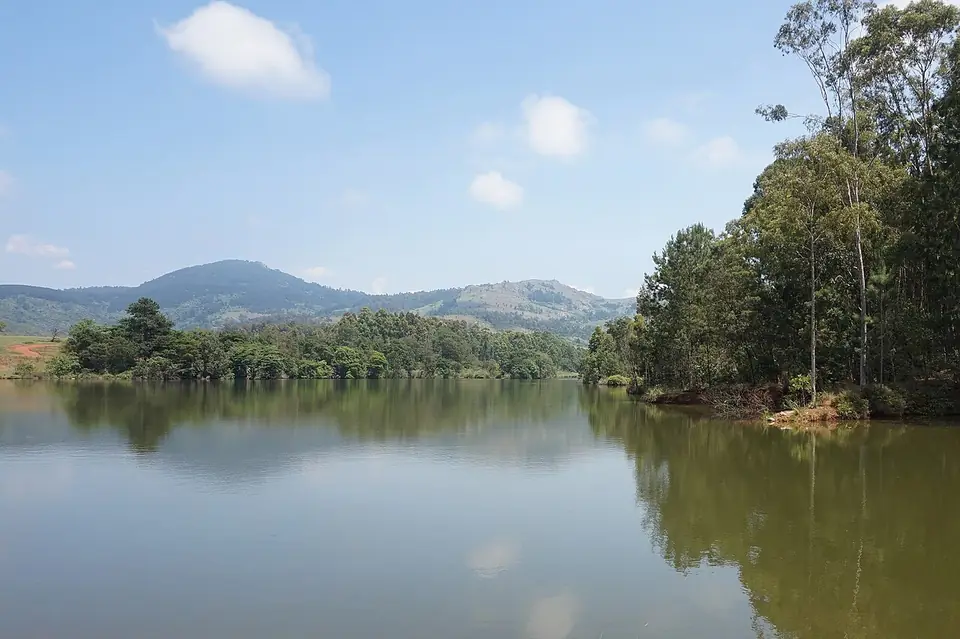
Eswatini is a small landlocked kingdom in southern Africa, tucked between South Africa and Mozambique. South Africa wraps around it on the north, west and south; Mozambique lies along its eastern edge. The country is roughly 17,000 square kilometres and drops from cool highlands in the west to hot lowveld in the east. It has two capitals: Mbabane, the administrative capital in the hills, and Lobamba, the royal and legislative seat a short drive away.
Until 2018 the country was called Swaziland. The king changed the name to Eswatini, "land of the Swazis" in siSwati, and most maps and quizzes now use the new name.
How to find Eswatini on the map
- Start from South Africa. Eswatini is one of two small countries inside South Africa's outline. The other is Lesotho.
- Pick the one on the edge. Lesotho is completely surrounded by South Africa. Eswatini sits on the border with Mozambique, so it touches two countries.
- Look north-east. Eswatini is near South Africa's north-eastern corner, just south of the Kruger National Park area. Lesotho is further south, near Durban.
- It's tiny. At world-map zoom it may be little more than a dot – zoom in to the Southern Africa quiz for a fair look.
Flag
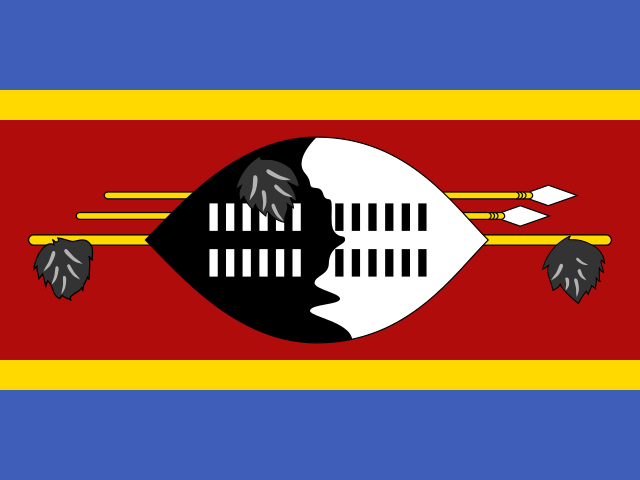
Eswatini's flag has five horizontal bands: blue, yellow, crimson, yellow, blue, with the crimson band much wider than the rest. In the centre is a black-and-white Nguni shield laid over two spears and a staff decorated with tassels. Blue stands for peace, yellow for resources, and crimson for past battles.
No other flag has that shield, so in the Flags quiz it's an easy spot: look for the wide red band with a shield and spears on it.
A short history of Eswatini
Southern Africa has a very long human history, and the Lion Cavern at Ngwenya, in the north-west of Eswatini, is thought to be one of the oldest known mines in the world, where people dug for red ochre tens of thousands of years ago. San hunter-gatherers lived in the area before Bantu-speaking farmers arrived.
The Swazi nation took shape in the 1700s and 1800s. The Dlamini clan, led by Ngwane III, settled near the Pongola River, and the country's traditional name, kaNgwane, honours him. Under King Sobhuza I, the Swazi moved north into the central hills to escape conflict with the Zulu and other neighbours. His son Mswati II, who ruled in the mid-1800s, expanded the kingdom and gave his name to the Swazi people.
In the late 1800s, Boer and British settlers obtained huge land and mineral concessions from King Mbandzeni, often on very unfair terms. After the Anglo-Boer War, Britain took over Swaziland as a protectorate in 1903. Much land had passed to settlers, and Swazis later worked to buy it back through a national fund. Because it was ruled separately from South Africa rather than being absorbed, the small kingdom kept its own borders and identity, which is why it appears as a separate country tucked between South Africa and Mozambique.
Swaziland became independent on 6 September 1968 as a constitutional monarchy under Sobhuza II, who had become king as an infant in 1899. In 1973 he suspended the constitution and banned political parties, ruling directly. He died in 1982 after one of the longest reigns in recorded history, and his son was crowned in 1986. A new constitution came into force in 2006, but political parties still cannot contest elections, and protests for reform, including serious unrest in 2021, have met a heavy response.
Eswatini's economy is closely tied to South Africa, using a currency pegged to the rand, and relies on sugar, soft-drink concentrate, forestry and remittances.
Culture and daily life in Eswatini
siSwati is a Nguni language, closely related to Zulu, and most people speak it at home. The kingdom is unusually uniform in language and culture compared with many African countries. Most people are Christian, especially in Zionist churches that blend Christianity with traditional practices, and belief in ancestors remains important.
Royal tradition shapes the year. The king and the Queen Mother share symbolic authority, and the royal village at Ludzidzini is the centre of national ceremonies. Many men wear the colourful printed cloth called the emahiya on formal occasions, and young men may carry traditional fighting sticks. Cattle remain a sign of wealth, and are still given as bride price, or lobola, in many marriages.
Crafts are an important source of income: grass baskets, candles from the Malkerns Valley and glassware made from recycled bottles are sold widely. Football is the most popular sport, and Mlilwane Wildlife Sanctuary, the country's first protected area, is a favourite place to see zebra and antelope on foot or by bike.
Five facts worth knowing
- Eswatini is one of the world's last absolute monarchies. King Mswati III has reigned since 1986 and holds executive power.
- The name change happened in 2018, announced by the king on the 50th anniversary of independence from Britain.
- The Umhlanga, or Reed Dance, is an annual ceremony in which thousands of young women present reeds to the Queen Mother at Lobamba.
- The country has two official languages: siSwati and English.
- Hlane Royal National Park is the largest protected area in Eswatini and home to lions, elephants and white rhino.
Culture and traditions in Eswatini
- Saying hello
People greet with "Sawubona" in siSwati, often shaking hands while supporting the right arm with the left hand as a sign of respect.
- Food and drink
Sishwala, a thick maize porridge served with meat or stew; emasi, a thick soured milk.
- Festivals and traditions
Umhlanga, the Reed Dance, held in late August or September; Incwala, the kingship ceremony around December and January.
- Everyday life
Respect for elders and traditional authority is central. Traditional dress is still widely worn for ceremonies and special occasions.
- Did you know?
The country officially changed its English name from Swaziland to Eswatini, meaning "land of the Swazi", in 2018.
Common mistakes
- Tapping Lesotho instead of Eswatini – remember that Eswatini is the one touching Mozambique.
- Still looking for "Swaziland" in alphabetical lists; it now appears under E.
- Missing it entirely on the world map because the outline is so small.
Practise with Eswatini
- Southern Africa quiz – the map zooms in, so Eswatini and Lesotho are properly visible.
- Africa quiz – a harder test; find South Africa first, then look at its north-eastern border.
- Africa flags – the shield and spears make this one of the more memorable African flags.
- Africa capitals quiz – Mbabane is the answer the quiz expects.
- Mistake Bank – if you keep swapping Eswatini and Lesotho, this will drill the pair until it sticks.
Nearby countries
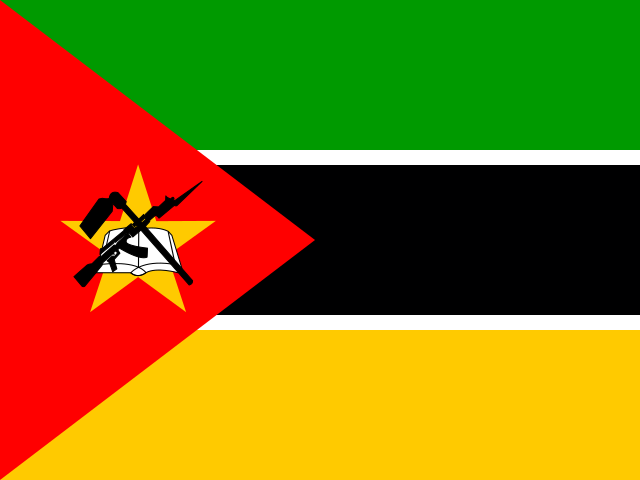 MozambiqueMaputo
 South AfricaPretoria
Quick check: how well do you know Eswatini?
3 questions, no sign-up. Tap an answer.
1. Which flag belongs to Eswatini?
That's the flag of Eswatini.
2. What is the capital of Eswatini?
The capital of Eswatini is Mbabane.
3. Which of these countries borders Eswatini?
Mozambique and South Africa border Eswatini.
Keep going on the Africa quiz – Eswatini is one of 54 countries there.
More ways to practise: find Eswatini on the blank map with no borders (hard mode), or play today's Globe and the other daily puzzles.
Frequently asked questions about Eswatini
What language is spoken in Eswatini?
Eswatini has two official languages: siSwati and English. Almost everyone speaks siSwati, a Nguni language closely related to Zulu. English is used in government, business and secondary education.
What currency does Eswatini use?
Eswatini's currency is the lilangeni (SZL), plural emalangeni. It is pegged one-to-one to the South African rand under the Common Monetary Area, and the rand is also accepted everywhere in the country.
What time zone is Eswatini in?
Eswatini uses South Africa Standard Time, UTC+2, all year. It does not use daylight saving time. It shares its clock with South Africa and Mozambique, which is two hours ahead of London in winter and one hour ahead in summer.
Which side of the road do they drive on in Eswatini?
Emaswati drive on the left, as in South Africa and Mozambique. The main highway runs east from the Ngwenya border post through Mbabane and Manzini towards Mozambique.
What is the highest point in Eswatini?
Emlembe, on the north-western border with South Africa, is the highest point at about 1,860 metres. The land falls from these western highlands to the hot, low-lying lowveld in the east.
Why did Swaziland change its name to Eswatini?
In 2018 the king renamed the country eSwatini, meaning 'land of the Swazis' in siSwati. The change marked 50 years of independence and dropped the colonial name, which mixed siSwati and English and was often confused with Switzerland.
Quizzes with Eswatini
Often confused with
Guides that help with this
- Learn all 54 African countries in a weekLearn the coastline in order, region by region.
- Flags that look alike (and how to tell them apart)Chad or Romania? Australia or New Zealand? The flag pairs that cost quiz points.
- The 25 hardest countries to find on a mapPacific islands, Caribbean islands and landlocked Africa – where they are.