Mozambique
Capital: Maputo. Mozambique is one of the 54 countries in the Africa quiz.
Quick answers: What is the capital of Mozambique? · Which countries border Mozambique?
Facts about Mozambique
- CapitalMaputo
- Population35.6 million
- Area801,590 km²
- RegionsAfrica, Southern Africa
- LanguagePortuguese
- CurrencyMozambican metical (MZN)
Mozambique is the 13th most populous of the 54 countries in Africa and the 16th largest by area. Worldwide it ranks 46th by population and 35th by area.
Where is Mozambique?
Mozambique runs down the south-eastern coast of Africa along the Indian Ocean, facing the island of Madagascar across the Mozambique Channel. It is a long country, stretching roughly 2,500 km of coastline from Tanzania in the north to South Africa in the south. Its other neighbours are Malawi and Zambia to the north-west, Zimbabwe to the west, and Eswatini and South Africa to the south-west. Maputo, the capital, is in the far south, close to the South African border.
On a world map, find Madagascar. The long stretch of mainland coast directly west of it is Mozambique.
How to find Mozambique on the map
- Start from Madagascar. Mozambique is the mainland country facing Madagascar across the channel.
- Follow the coast. Going north along the east coast from South Africa, Mozambique is the next country after the small Eswatini.
- Look for the shape. Mozambique is tall and narrow in the south, then widens into a broad block in the north that reaches round the south of Malawi.
- Don't confuse it with Tanzania. Tanzania is the coastal country north of Mozambique; the Ruvuma River separates them.
Flag
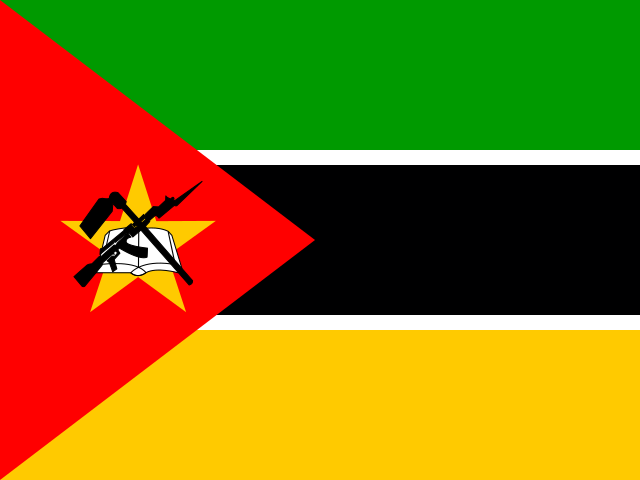
Mozambique's flag has three horizontal bands of green, black and yellow, separated by thin white stripes, with a red triangle at the hoist. Inside the triangle is a yellow star overlaid with an open book, a hoe and an AK-47 rifle.
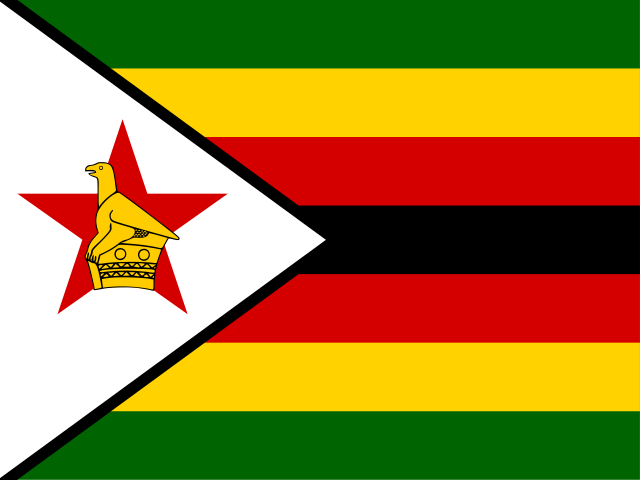
It is the only national flag in the world that features a modern assault rifle, which makes it unmistakable once you know to look for it. Zimbabwe's flag uses similar colours but has horizontal stripes of green, yellow, red and black with a bird on a white triangle.
A short history of Mozambique
Early hunter-gatherer peoples were joined from around the start of the first millennium AD by Bantu-speaking farmers, who brought iron-working and crops. Along the coast, Swahili and Arab merchants built trading towns such as Sofala, linking the interior to the Indian Ocean. Gold and ivory from the inland kingdoms, including Great Zimbabwe and later the Mutapa state, passed through these ports to Arabia, India and beyond.
Vasco da Gama reached the coast in 1498, and the Portuguese soon seized key ports to control the gold trade and supply ships bound for India. For centuries their hold was mostly limited to the coast and the Zambezi valley, where Portuguese landholders ran huge estates called prazos. From the 1700s the slave trade grew, and many thousands of people were shipped from Mozambique to Brazil and to French islands such as Mauritius.
Real control of the interior came only after the European "Scramble for Africa" in the 1880s. Portugal defeated the Gaza kingdom of Ngungunyane in 1895 and handed much of the country to private chartered companies. Forced labour was common, and many men worked in South Africa's mines. In 1898 the capital moved from Mozambique Island to Lourenço Marques, today's Maputo, a port close to South Africa and its mines.
In 1962 several groups merged to form FRELIMO, which launched an armed struggle against Portuguese rule two years later. After a military coup in Lisbon in 1974, Portugal agreed to leave, and Mozambique became independent in 1975 under Samora Machel. FRELIMO set up a one-party Marxist state. Almost at once a civil war began against RENAMO, a rebel movement backed first by Rhodesia and then by South Africa. Around a million people died before a peace deal was signed in Rome in 1992, and multi-party elections followed in 1994.
Today Mozambique has large reserves of natural gas, coal and rubies, but it remains one of the world's poorest countries, troubled by cyclones and an insurgency in the northern province of Cabo Delgado.
Culture and daily life in Mozambique
Although Portuguese is the official language, many Mozambicans speak it only as a second language. Dozens of Bantu languages, such as Emakhuwa, Xichangana and Cisena, are used at home. About half the population is Christian, with a large Muslim minority, especially in the north, where centuries of Swahili trade left a strong mark.
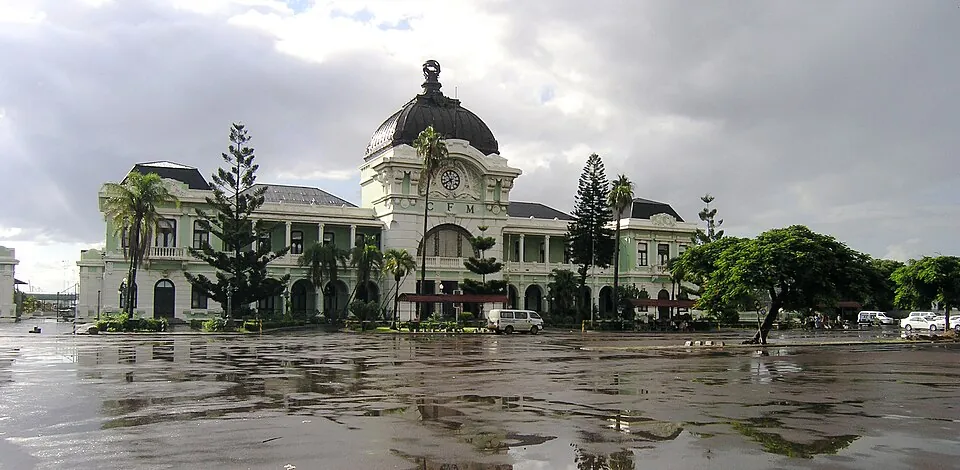
The Makonde people of the far north are celebrated for their ebony carvings, including tall sculptures of interlocking figures, and their mapiko masked dances. Maputo has an active art scene. The painter Malangatana Ngwenya became one of Africa's best-known artists, and the city's colonial buildings include a railway station often listed among the most beautiful in the world.
Mozambique has given the Portuguese-speaking world some major writers. Mia Couto, author of Sleepwalking Land, and the poet José Craveirinha are widely read. Marrabenta, a lively dance music born in the suburbs of Maputo, is the country's signature sound. In sport, the footballer Eusébio, born in Lourenço Marques, became a legend for Benfica and Portugal, and the runner Maria Mutola won Olympic gold in the 800 metres in 2000.
Five facts worth knowing
- Portuguese is the official language, because Mozambique was a Portuguese colony until independence in 1975.
- Mozambique is a member of the Commonwealth despite never having been a British colony – it joined in 1995, the first member with no British colonial history.
- The Zambezi River crosses the country on its way to the Indian Ocean, and the Cahora Bassa dam on it is one of Africa's largest hydroelectric schemes.
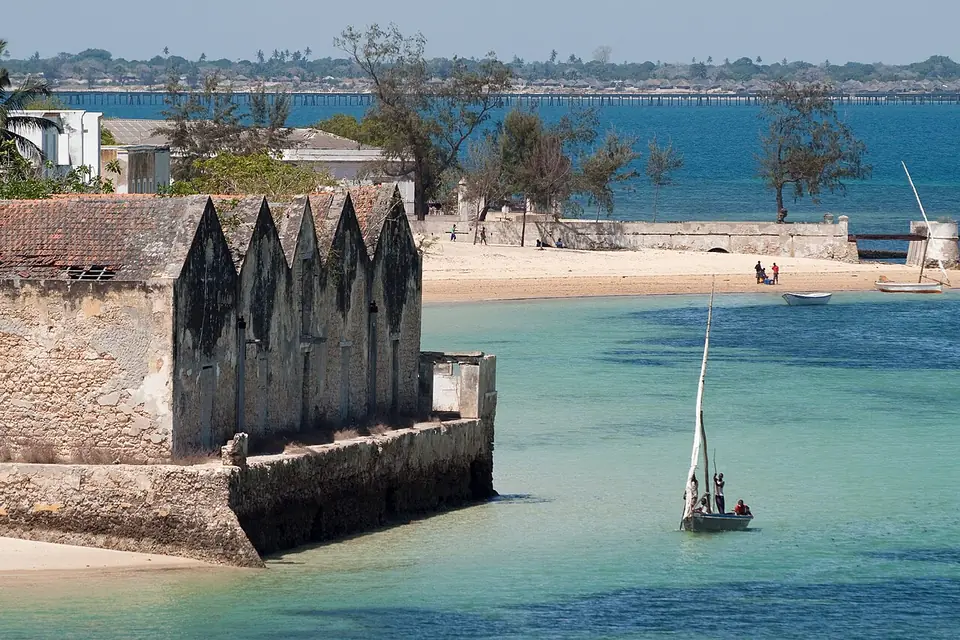
- The country is named after Mozambique Island, a small island off the northern coast that was the colonial capital and is now a UNESCO World Heritage site.
- Lake Malawi forms part of the north-western border, with the lake's eastern shore belonging to Mozambique.
Culture and traditions in Mozambique
- Saying hello
"Olá" or "Bom dia" in Portuguese, with a handshake; local languages have their own greetings.
- Food and drink
Piri-piri chicken and matapa, cassava leaves cooked with peanuts and coconut milk; seafood like prawns is famous.
- Festivals and traditions
Independence Day on 25 June; the Timbila music of the Chopi people is UNESCO-listed.
- Everyday life
Greeting people properly before business is important. Using both hands or touching the right forearm when giving something shows respect.
- Did you know?
Mozambique's flag is the only national flag featuring a modern rifle (an AK-47).
Common mistakes
- Tapping Tanzania – the two share a long coastline and a border in the north.
- Tapping Madagascar when asked for Mozambique, or the other way round, since they face each other.
- Confusing the flag with Zimbabwe's because of the shared green, yellow and black.
Practise with Mozambique
- Africa quiz – find Madagascar, then tap the mainland opposite it.
- Southern Africa quiz – a smaller map where Mozambique's long coast stands out.
- East Africa quiz – appears in the southern part of this set alongside Tanzania and Malawi.
- Africa flags – look for the rifle, book and hoe on the red triangle.
- Africa capitals quiz – Maputo.
- Mystery Country – a long outline with a wide northern block and a narrow southern tail.
Nearby countries
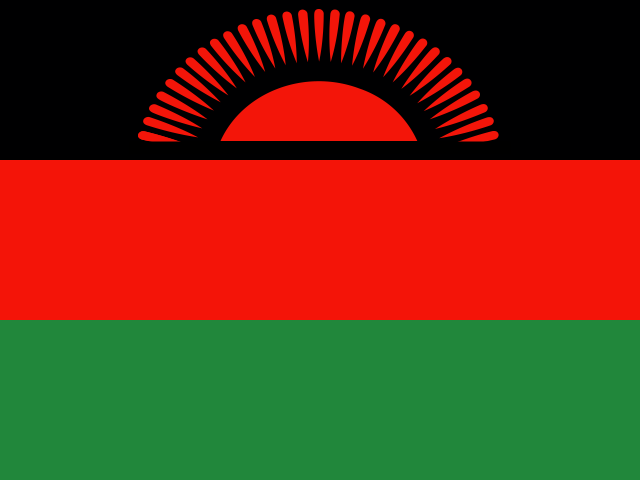
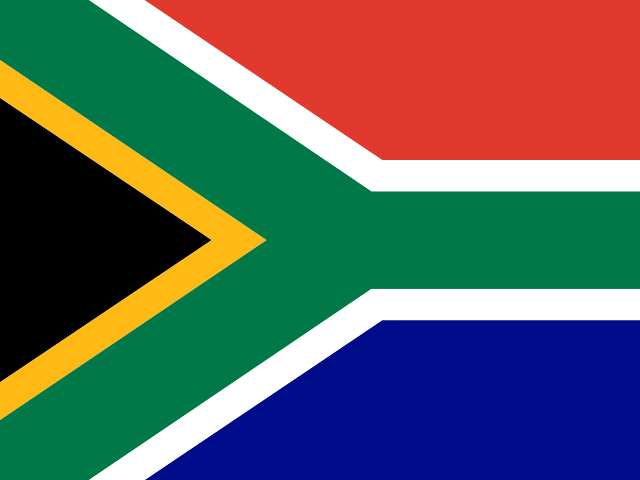
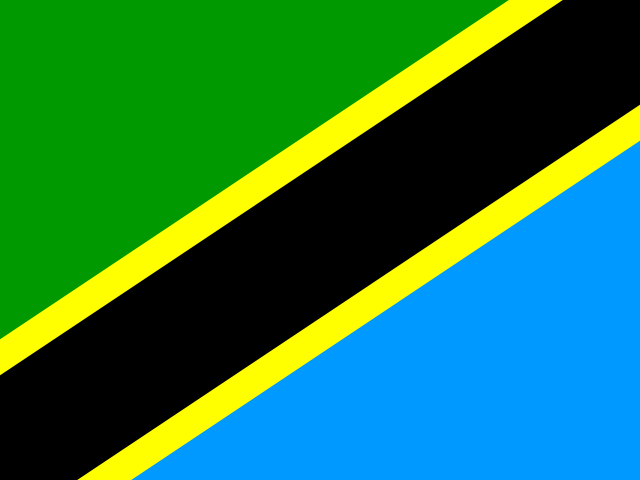
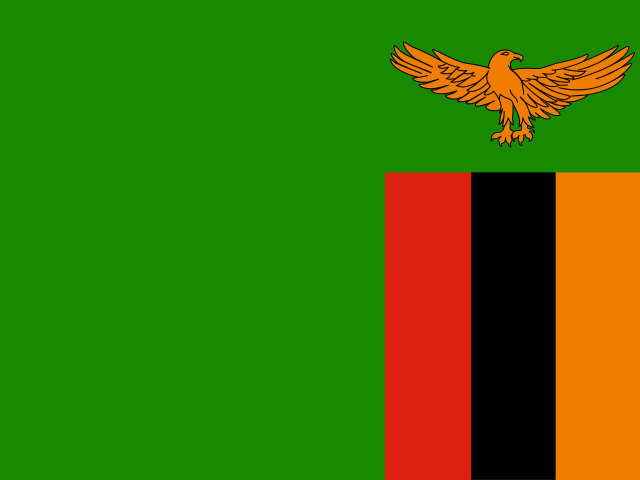
Quick check: how well do you know Mozambique?
3 questions, no sign-up. Tap an answer.
1. Which flag belongs to Mozambique?
That's the flag of Mozambique.
2. What is the capital of Mozambique?
The capital of Mozambique is Maputo.
3. Which of these countries borders Mozambique?
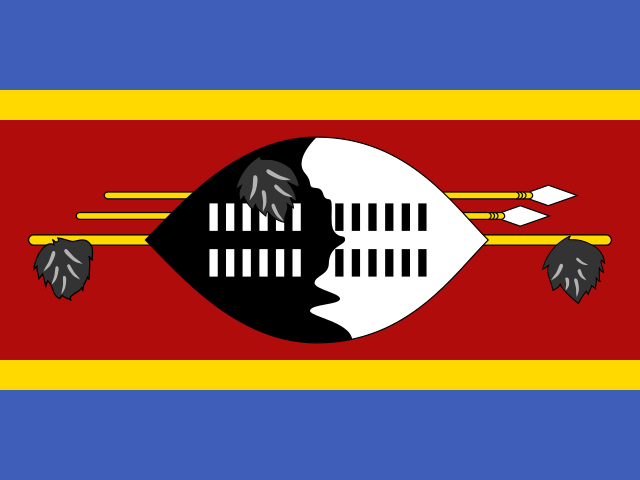
Eswatini, Malawi, South Africa, Tanzania, Zambia and Zimbabwe border Mozambique.
Keep going on the Africa quiz – Mozambique is one of 54 countries there.
More ways to practise: find Mozambique on the blank map with no borders (hard mode), or play today's Globe and the other daily puzzles.
Frequently asked questions about Mozambique
What language is spoken in Mozambique?
Portuguese is the official language, but only about half of Mozambicans speak it, and few as their first language. Most people grow up speaking Bantu languages such as Emakhuwa in the north and Xichangana in the south, and Swahili is spoken near the Tanzanian border.
What currency does Mozambique use?
Mozambique uses the metical (MZN), plural meticais, divided into 100 centavos. A new metical was introduced in 2006, replacing the old one at a rate of 1,000 to 1 after years of high inflation.
What time zone is Mozambique in?
Mozambique is on Central Africa Time, UTC+2, all year round. It does not use daylight saving time and shares its clock with South Africa, Zimbabwe and Malawi.
Which side of the road do they drive on in Mozambique?
Mozambique drives on the left, like its English-speaking neighbours, even though it was a Portuguese colony. The EN1 highway runs the length of the country from Maputo towards the north, but many rural roads are unpaved.
What is the highest point in Mozambique?
Monte Binga, in the Chimanimani Mountains on the border with Zimbabwe, is Mozambique's highest point at about 2,436 metres. The surrounding Chimanimani National Park protects rare plants and quartzite peaks.
What is the Bazaruto Archipelago?
The Bazaruto Archipelago is a group of islands off Mozambique's southern coast, protected as a national park since 1971. Its sea grass beds support one of the last viable populations of dugongs in the western Indian Ocean, as well as turtles and coral reefs.
Quizzes with Mozambique
Often confused with
Guides that help with this
- Learn all 54 African countries in a weekLearn the coastline in order, region by region.
- Flags that look alike (and how to tell them apart)Chad or Romania? Australia or New Zealand? The flag pairs that cost quiz points.
- The 25 hardest countries to find on a mapPacific islands, Caribbean islands and landlocked Africa – where they are.