Gabon
Capital: Libreville. Gabon is one of the 54 countries in the Africa quiz.
Quick answers: What is the capital of Gabon? · Which countries border Gabon?
Facts about Gabon
- CapitalLibreville
- Population2.6 million
- Area267,668 km²
- RegionAfrica
- LanguageFrench
- CurrencyCentral African CFA franc (XAF)
Gabon is the 43rd most populous of the 54 countries in Africa and the 30th largest by area. Worldwide it ranks 141st by population and 76th by area.
Where is Gabon?
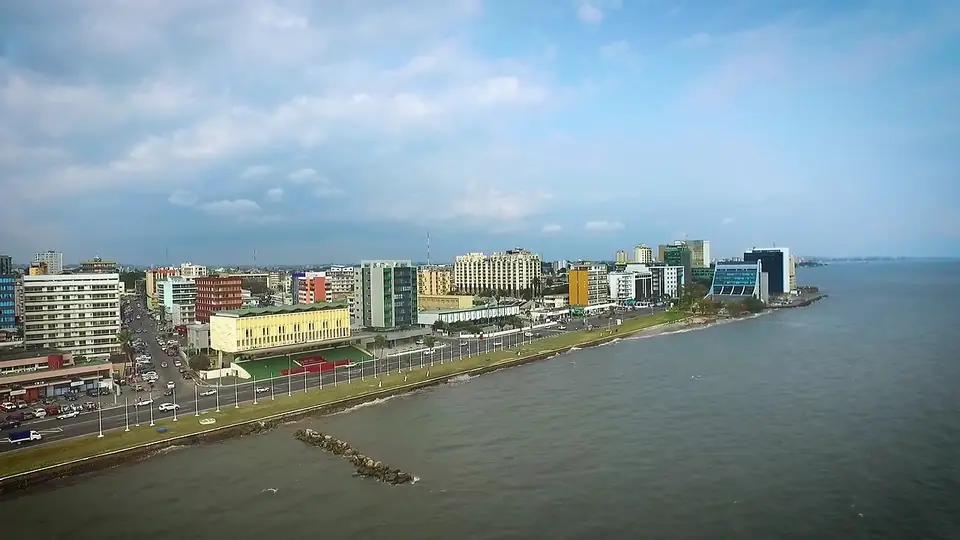
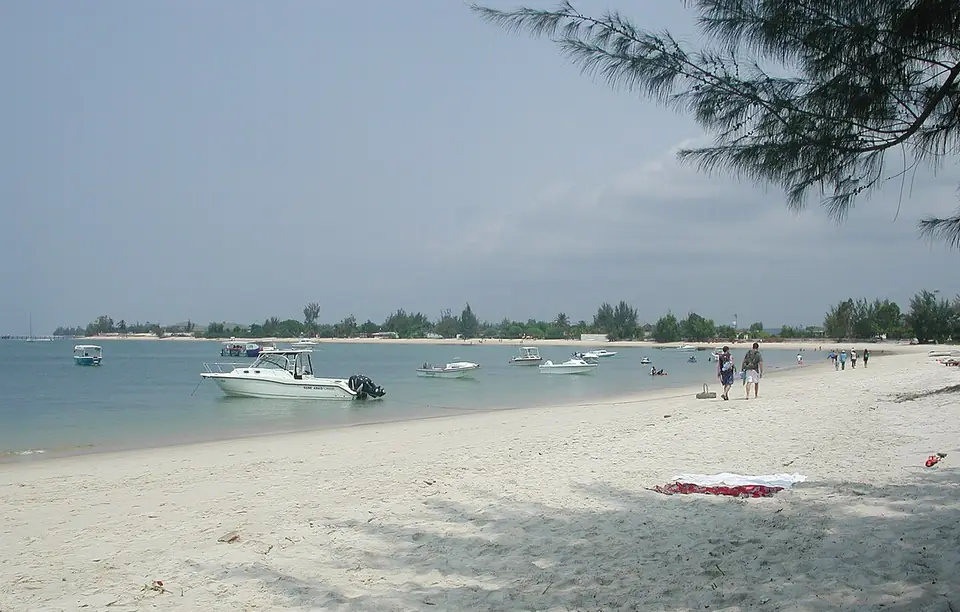
Gabon is on the Atlantic coast of Central Africa, sitting right on the equator. It is bordered by Equatorial Guinea and Cameroon to the north and by the Republic of the Congo to the east and south. Its western edge is the Gulf of Guinea. The capital, Libreville, is on the coast near the estuary of the Gabon River, in the north-west of the country.
Almost 90 per cent of Gabon is rainforest, and the country is sparsely populated.
How to find Gabon on the map
- Start from the equator. Follow it across Africa to the west coast. The country it passes through just before reaching the Atlantic is Gabon.
- Look under the "armpit". Where Africa's west coast turns south from the Gulf of Guinea, Gabon is the coastal country just below Cameroon.
- Don't confuse it with the Republic of the Congo. Congo wraps around Gabon's eastern and southern sides and reaches the coast further south.
- Equatorial Guinea is the small one above it. If the country you've tapped is tiny and has an island off the coast, that's Equatorial Guinea; Gabon is the much larger country beneath.
Flag
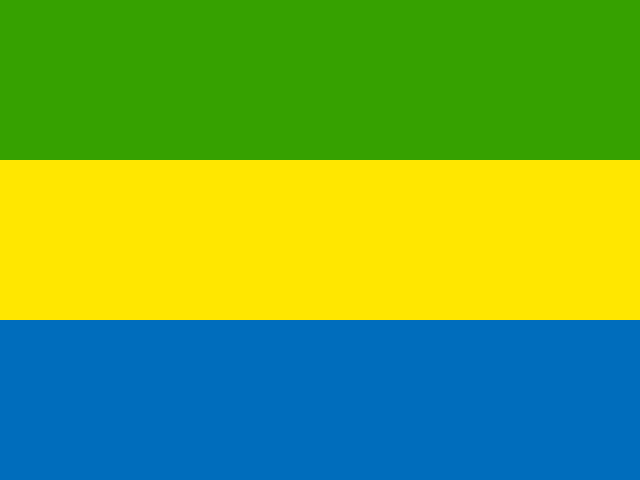
Gabon's flag is three horizontal bands of green, yellow and blue. Green represents the forest, yellow the equator and the sun, and blue the Atlantic. Adopted in 1960, it is unusual among African flags because it uses no red at all and none of the pan-African colour set.
The most similar flag is Sierra Leone's – green, white and blue. If the middle band is yellow rather than white, you're looking at Gabon.
A short history of Gabon
The first people of Gabon's rainforest were hunter-gatherer groups, such as the Baka and Babongo, whose ancestors lived there for thousands of years. Over many centuries Bantu-speaking farmers spread in from the north and east, bringing iron-working and new crops. The Fang, today the largest group, arrived relatively late, moving south into the region in the 1700s and 1800s.
Portuguese sailors reached the coast in the late 1400s. They named the Komo estuary gabão, a hooded sailor's cloak, because of its shape, and the country still carries the name. For the next three centuries the coast traded ivory, ebony and enslaved people with Portuguese, Dutch, British and French ships, while the interior stayed largely unknown to outsiders.
France signed treaties with coastal chiefs from the 1830s. In 1849 the French navy settled people freed from a captured slave ship on the estuary, and the settlement was named Libreville, "free town". Explorers then pushed inland along the Ogooué River, and in 1910 Gabon became one of the four territories of French Equatorial Africa, run largely through timber concessions and forced labour.
Gabon became independent in 1960. Its first president, Léon M'ba, died in 1967 and was succeeded by Omar Bongo, who ruled for 42 years until his death in 2009 – one of the longest reigns in modern Africa. His son then held power until a military coup in 2023 ended the family's rule. Throughout, Gabon kept unusually close ties with France, including a French military base near Libreville.
Oil, manganese and timber made Gabon wealthier per person than most of its neighbours, though that wealth has been unevenly shared. The Trans-Gabon Railway, finished in the 1980s, links the coast to the manganese mines of the south-east. In 2002 the country created a network of 13 national parks, and it now presents itself as a leader in protecting the Congo Basin rainforest.
Culture and daily life in Gabon
Gabon has around forty ethnic groups, and most people speak a local language at home alongside French. The majority are Christian, but many also follow older beliefs. The best known is Bwiti, a spiritual tradition of the Mitsogo and Fang in which initiates take iboga, a bitter root from the forest, during night-long ceremonies of music and dance led by the harp-like ngombi.
Beyond the Fang masks the world already knows, Gabon's sculptors produced the white-faced masks of the Punu and the copper-covered reliquary figures of the Kota, which once guarded bundles of ancestors' bones. Both are prized in museums across Europe and America. Singer and guitarist Pierre Akendengué blended traditional rhythms with poetry and became one of Central Africa's most respected musicians.
Most Gabonese now live in towns, especially Libreville and Port-Gentil, the oil city. Football is the great passion: Gabon co-hosted the Africa Cup of Nations in 2012 and hosted it alone in 2017, and striker Pierre-Emerick Aubameyang became one of the country's best-known faces abroad.
Five facts worth knowing
- The equator runs through Gabon, so the country has a hot, humid climate year-round with two rainy seasons.
- Loango National Park is famous for forest elephants and hippos on the beach, one of the few places where big mammals are seen on an Atlantic shore.
- Oil has been the backbone of the economy since the 1970s, giving Gabon one of the higher incomes per person in sub-Saharan Africa.
- Albert Schweitzer founded his hospital at Lambaréné, on the Ogooué River, in 1913; he later won the Nobel Peace Prize.
- Gabon joined the Commonwealth in 2022 despite having no British colonial history – it was a French colony until independence in 1960.
Culture and traditions in Gabon
- Saying hello
A handshake with "Bonjour" in French, the main language of daily life.
- Food and drink
Poulet nyembwe, chicken cooked in palm nut sauce; bâtons de manioc, cassava sticks wrapped in leaves.
- Festivals and traditions
Independence Day on 17 August with parades and festivities.
- Everyday life
Greetings and respect for elders are important. French is widely spoken alongside languages such as Fang, Myene and Punu.
- Did you know?
Fang masks and sculptures from the region inspired early 20th-century European artists, including Picasso.
Common mistakes
- Tapping the Republic of the Congo, which shares a long border and also reaches the Atlantic.
- Tapping Equatorial Guinea, the small country to the north.
- Choosing Sierra Leone's green-white-blue in the Flags quiz instead of Gabon's green-yellow-blue.
Practise with Gabon
- Africa quiz – find the equator on the west coast and Gabon is right there.
- Africa flags – a simple three-band flag that is easy to learn and easy to confuse with Sierra Leone.
- Africa capitals quiz – Libreville.
- Mystery Country – a compact, roughly square outline with a coast on the left.
- Mistake Bank – useful if you keep mixing up the countries around the Gulf of Guinea.
Nearby countries
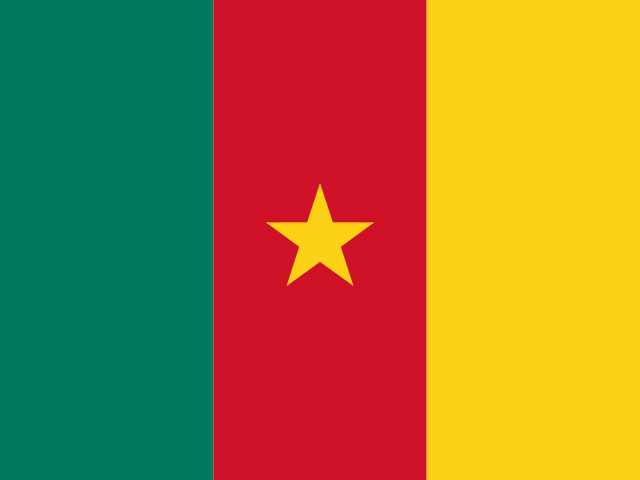 CameroonYaoundé
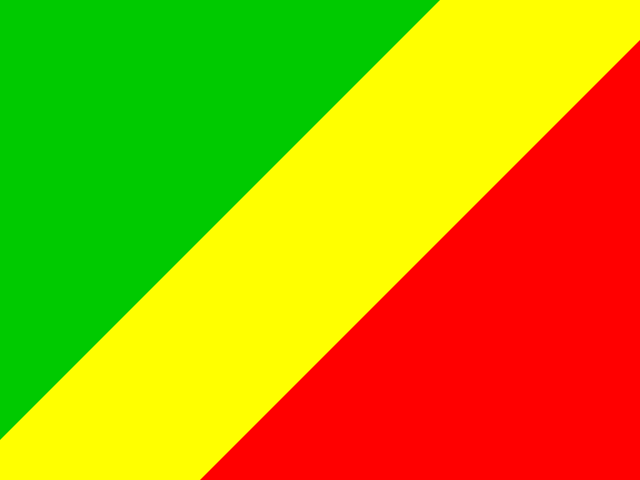 CongoBrazzaville
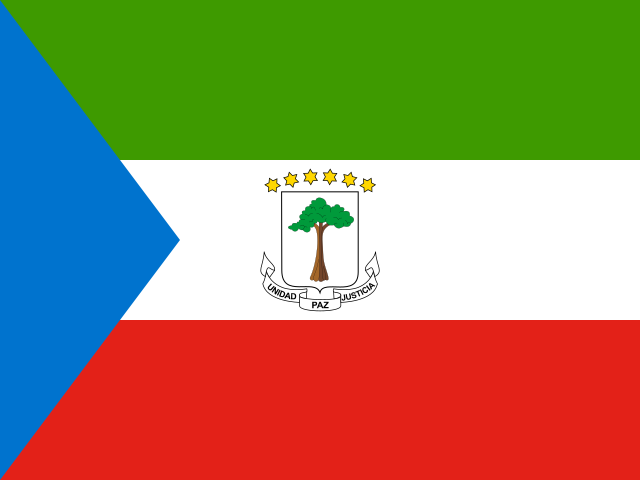 Equatorial GuineaMalabo
Quick check: how well do you know Gabon?
3 questions, no sign-up. Tap an answer.
1. Which flag belongs to Gabon?
That's the flag of Gabon.
2. What is the capital of Gabon?
The capital of Gabon is Libreville.
3. Which of these countries borders Gabon?
Cameroon, Congo and Equatorial Guinea border Gabon.
Keep going on the Africa quiz – Gabon is one of 54 countries there.
More ways to practise: find Gabon on the blank map with no borders (hard mode), or play today's Globe and the other daily puzzles.
Frequently asked questions about Gabon
What language is spoken in Gabon?
French is the official language and is spoken more widely in Gabon than in most former French colonies. About 40 Bantu languages are also spoken, with Fang the largest, followed by Myene, Punu and Nzebi.
What currency does Gabon use?
Gabon uses the Central African CFA franc (XAF). It shares this currency with five other countries in the region, and the franc is pegged to the euro at a fixed rate.
What time zone is Gabon in?
Gabon uses West Africa Time, UTC+1, all year. It does not use daylight saving time. Because the equator crosses Gabon, the length of the day stays close to 12 hours all year, so clock changes would bring little benefit.
Which side of the road do they drive on in Gabon?
Gabonese drive on the right. The road network is thin because of dense rainforest, so the Trans-Gabon Railway, finished in 1986, is a key link between Libreville and the interior.
What is the highest point in Gabon?
Mont Bengoué, in the north-east near the border with the Republic of the Congo, is the highest point at about 1,070 metres. Much of Gabon is low-lying rainforest.
How much of Gabon is covered by forest?
Rainforest covers around 88 per cent of Gabon, one of the highest proportions of any country. In 2002 Gabon created 13 national parks, protecting about a tenth of its land, including Lopé, a UNESCO World Heritage site.
Quizzes with Gabon
Guides that help with this
- Learn all 54 African countries in a weekLearn the coastline in order, region by region.
- Flags that look alike (and how to tell them apart)Chad or Romania? Australia or New Zealand? The flag pairs that cost quiz points.
- The 25 hardest countries to find on a mapPacific islands, Caribbean islands and landlocked Africa – where they are.