Congo
Capital: Brazzaville. Congo is one of the 54 countries in the Africa quiz.
Quick answers: What is the capital of Congo? · Which countries border Congo?
Facts about Congo
- CapitalBrazzaville
- Population6.5 million
- Area342,000 km²
- RegionAfrica
- LanguagesFrench, Lingala
- CurrencyCentral African CFA franc (XAF)
Congo is the 36th most populous of the 54 countries in Africa and the 27th largest by area. Worldwide it ranks 110th by population and 64th by area.
Where is Congo?
Congo – officially the Republic of the Congo and often called Congo-Brazzaville – is in Central Africa, on the west side of the Congo River. It should not be confused with its much larger neighbour, the Democratic Republic of the Congo. Gabon lies to the west, Cameroon and the Central African Republic to the north, the DR Congo to the east and south, and the Angolan exclave of Cabinda to the south-west. The country has a short Atlantic coastline. The capital, Brazzaville, sits on the north bank of the Congo River, directly across from Kinshasa.
On a world map, find the big bulge of the DR Congo in the middle of Africa. Congo is the narrower country on its north-western edge, between the DR Congo and the Atlantic.
How to find Congo on the map
- Start from the DR Congo. Congo is the smaller country wrapped around the DR Congo's north-western corner.
- Find the river. The Congo and Ubangi rivers form most of the border between the two Congos.
- Look for the coastline. Congo has a short stretch of Atlantic coast between Gabon and Cabinda.
- Don't confuse it with Gabon. Gabon is to the west, on the equator, with a longer coastline; Congo is the one touching the DR Congo.
Flag
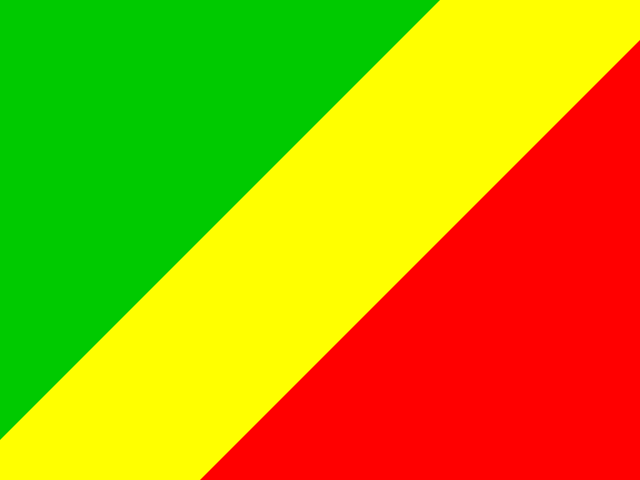
The flag is a diagonal design: a yellow band runs from the lower hoist corner to the upper fly corner, with a green triangle above it and a red triangle below. These are the pan-African colours, and the diagonal layout is shared with only a handful of flags worldwide.
In the Flags quiz, the diagonal yellow stripe sets it apart from the DR Congo's flag, which is sky blue with a diagonal red stripe and a yellow star. If you see green and red triangles split by yellow, it is Congo-Brazzaville.
A short history of Congo
The first inhabitants of Congo's forests were hunter-gatherer peoples, among them the Aka and Baka. Later, Bantu-speaking farmers spread through the region. By the 1300s and 1400s, several kingdoms had formed. Along the coast lay the Kingdom of Loango, rich from trade in copper, ivory and cloth. Further inland, the Teke (or Tio) kingdom controlled the plateaus north of the great river, and parts of the south fell under the powerful Kingdom of Kongo.
The Portuguese arrived on the coast in the late 1400s. Loango became a major centre of the Atlantic slave trade, sending large numbers of people to the Americas. In the 1880s the Italian-born French explorer Pierre Savorgnan de Brazza signed a treaty with the Teke king Makoko, placing the land north of the river under French protection. The settlement on the river bank was named Brazzaville after him. On the other side, Henry Morton Stanley claimed land for King Leopold II of Belgium. This rivalry is why two separate countries called Congo now face each other across the river.
Under French rule the colony was handed to concession companies that forced people to gather rubber, and many died building the Congo–Ocean Railway between Brazzaville and Pointe-Noire, finished in 1934. During the Second World War, Brazzaville became the capital of Free France for a time, and de Gaulle gave an important speech there in 1944.
Independence came in 1960. In 1969 the country became the People's Republic of the Congo, Africa's first self-declared Marxist–Leninist state, with close ties to the Soviet Union. Multi-party politics returned in 1991, but civil wars in the 1990s, especially in 1997, caused heavy damage in Brazzaville, and the leader who had ruled through the 1980s returned to power.
Congo's economy depends heavily on offshore oil, but much of the country is still covered by forest, and timber is an important export.
Culture and daily life in Congo
French is the official language, but most people use Lingala in the north and Brazzaville, and Kituba (Munukutuba) in the south. These two trade languages help connect dozens of ethnic groups, the largest being the Kongo. Most people are Christian, and churches range from Catholic and Protestant to local movements such as the Kimbanguist church.
Brazzaville has a long tradition of painting. The Poto-Poto School of Painting, founded in 1951, became famous for its stylised figures and bright colours. Music is shared with Kinshasa across the river, and the Congolese rumba of both capitals has been recognised by UNESCO. Writers such as Alain Mabanckou, author of Broken Glass, have found readers around the world.
Football is the favourite sport, and the national team won the Africa Cup of Nations in 1972. Daily life in the south is closely tied to the river, with fishing, river boats and busy markets along the banks. In the north, Odzala-Kokoua and Nouabalé-Ndoki national parks protect gorillas, chimpanzees and forest elephants.
Five facts worth knowing
- Brazzaville and Kinshasa are the closest pair of capital cities in the world, facing each other across the Congo River.
- The equator passes through the north of the country, so Congo has a hot, humid climate and large areas of rainforest.
- The Congo Basin rainforest is the second-largest tropical forest in the world after the Amazon, and Congo contains a sizeable part of it.
- Oil is the dominant export, produced mainly offshore near the port city of Pointe-Noire.
- Congo was a French colony and Brazzaville served as the capital of French Equatorial Africa; French is still the official language.
Culture and traditions in Congo
- Saying hello
"Mbote" in Lingala, or "Bonjour" in French.
- Food and drink
Saka-saka (pounded cassava leaves) and fish or chicken in moambe palm sauce.
- Festivals and traditions
Independence Day on 15 August, and FESPAM, the pan-African music festival in Brazzaville.
- Everyday life
Music and dance are central to social life, and people take pride in dressing well.
- Did you know?
La Sape is a famous dandy movement whose members, "sapeurs", dress in elegant designer suits.
Common mistakes
- Tapping the DR Congo, by far the most common error.
- Tapping Gabon to the west.
- Choosing the DR Congo's blue flag in the Flags quiz.
- Answering Kinshasa in the Capitals quiz instead of Brazzaville.
Practise with Congo
- Africa quiz – find the two Congos, then pick the smaller western one.
- Africa flags – the green, yellow and red diagonal.
- Africa capitals quiz – Brazzaville, the capital on the north bank of the river.
- Mystery Country – a long, irregular shape with a short coastline in the south-west.
- Mistake Bank – the two Congos appear here often; use it to drill the difference.
Nearby countries
 AngolaLuanda
 CameroonYaoundé
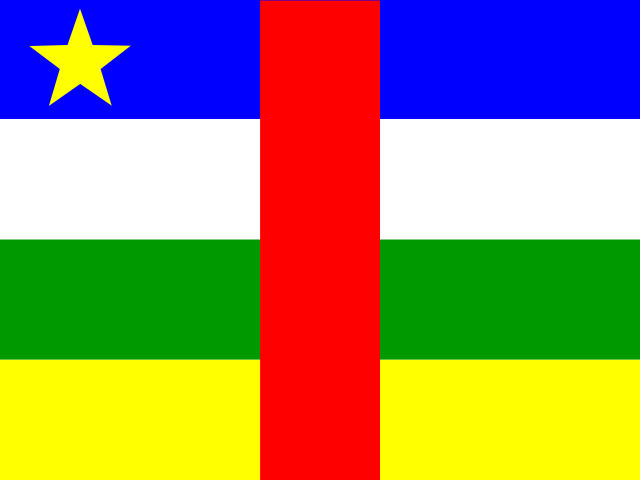 Central African RepublicBangui
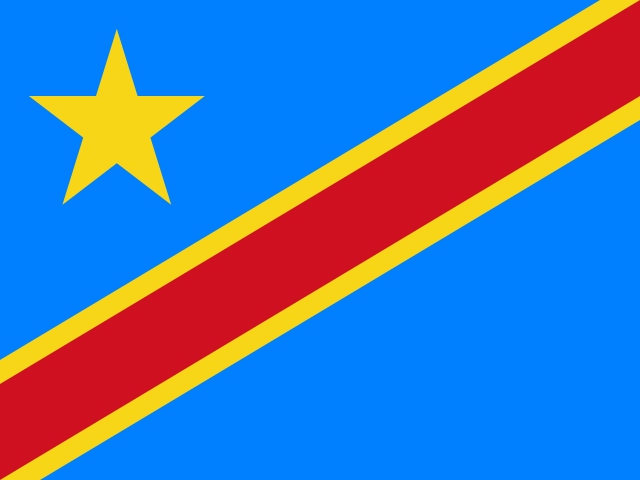 DR CongoKinshasa
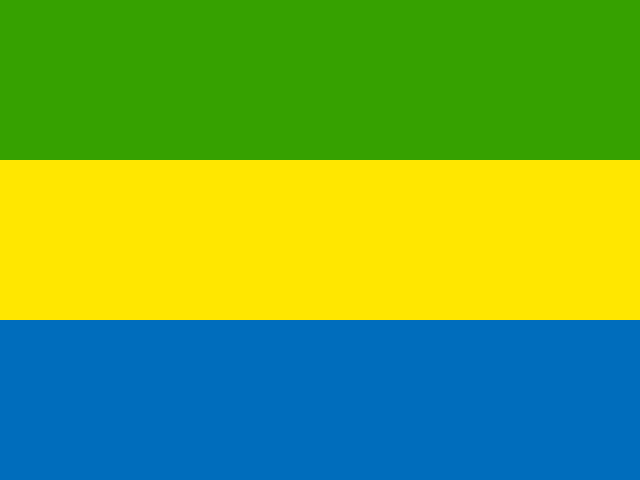 GabonLibreville
Quick check: how well do you know Congo?
3 questions, no sign-up. Tap an answer.
1. Which flag belongs to Congo?
That's the flag of Congo.
2. What is the capital of Congo?
The capital of Congo is Brazzaville.
3. Which of these countries borders Congo?
Angola, Cameroon, the Central African Republic, DR Congo and Gabon border Congo.
Keep going on the Africa quiz – Congo is one of 54 countries there.
More ways to practise: find Congo on the blank map with no borders (hard mode), or play today's Globe and the other daily puzzles.
Frequently asked questions about Congo
What language is spoken in Congo?
French is the official language of the Republic of the Congo. Lingala, spoken mostly in the north and in Brazzaville, and Kituba, spoken mostly in the south, are the national languages, and dozens of local languages are also spoken.
What currency does Congo use?
Congo uses the Central African CFA franc (XAF), shared with five other Central African countries. It is pegged to the euro at a fixed rate, so it is not the same currency as the Congolese franc used across the river in DR Congo.
What time zone is Congo in?
The Republic of the Congo uses West Africa Time, UTC+1, the same as Kinshasa across the river. It does not observe daylight saving time. Being on the equator, day length barely changes.
Which side of the road do they drive on in Congo?
Vehicles drive on the right in the Republic of the Congo. A paved highway now links Brazzaville to Pointe-Noire on the coast, a journey once made mainly by the Congo–Ocean railway.
What is the highest point in Congo?
The highest point is usually given as Mont Nabemba, at about 1,020 metres, a granite peak rising out of the rainforest in the far north-west, near the border with Cameroon.
What is the difference between Congo and DR Congo?
They are two separate countries on either side of the Congo River. The Republic of the Congo, capital Brazzaville, was a French colony and is much smaller. The Democratic Republic of the Congo, capital Kinshasa, was Belgian and is one of Africa's largest countries.
Quizzes with Congo
Often confused with
Guides that help with this
- Learn all 54 African countries in a weekLearn the coastline in order, region by region.
- Flags that look alike (and how to tell them apart)Chad or Romania? Australia or New Zealand? The flag pairs that cost quiz points.
- The 25 hardest countries to find on a mapPacific islands, Caribbean islands and landlocked Africa – where they are.