Haiti
Capital: Port-au-Prince. Haiti is one of the 23 countries in the North America quiz.
Quick answers: What is the capital of Haiti? · Which countries border Haiti?
Facts about Haiti
- CapitalPort-au-Prince
- Population11.9 million
- Area27,750 km²
- RegionsNorth America, The Caribbean
- LanguagesFrench, Haitian Creole
- CurrenciesHaitian gourde (HTG), US dollar (USD)
Haiti is the 5th most populous of the 23 countries in North America and the 11th largest by area. Worldwide it ranks 83rd by population and 144th by area.
Where is Haiti?
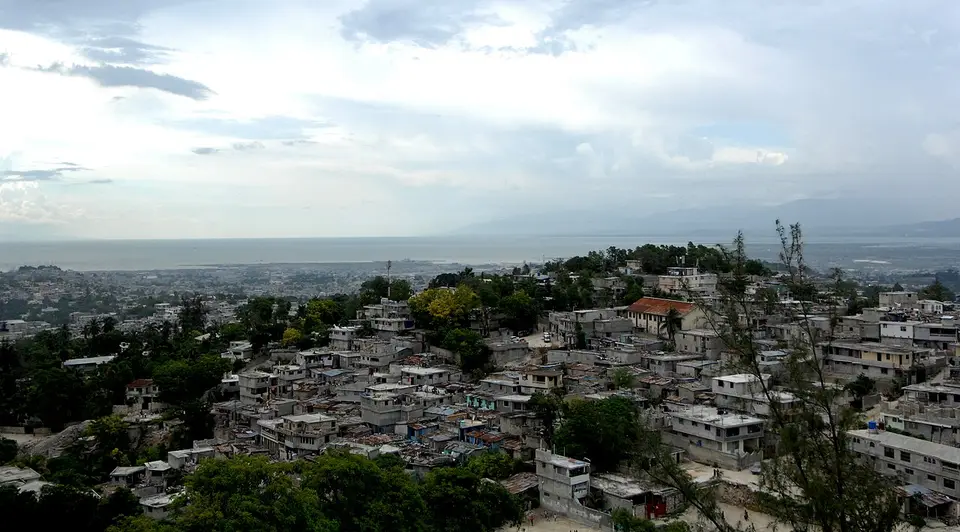
Haiti occupies the western third of the island of Hispaniola in the Caribbean, sharing the island with the Dominican Republic to the east. Cuba lies to the north-west across the Windward Passage, and Jamaica to the west. The capital, Port-au-Prince, sits at the end of a deep gulf on the west coast. Haiti also includes several smaller islands, notably La Gonâve in the gulf and Tortuga off the north coast.
The country is mountainous – the name comes from a Taíno word meaning "land of high mountains" – and most of its people live in the lowlands around the capital and the northern city of Cap-Haïtien.
How to find Haiti on the map
- Start from Cuba. Cuba is the long island at the top of the Caribbean. The next large island to its south-east is Hispaniola, and Haiti is the western end of it.
- Look for the claw. Haiti's two long peninsulas reach out west like a crab's claw, enclosing the Gulf of Gonâve.
- Take the smaller part. The Dominican Republic has about two-thirds of the island; Haiti is the smaller western third.
- Jamaica is a separate island. Don't tap the island to the west – Haiti is on Hispaniola.
Flag
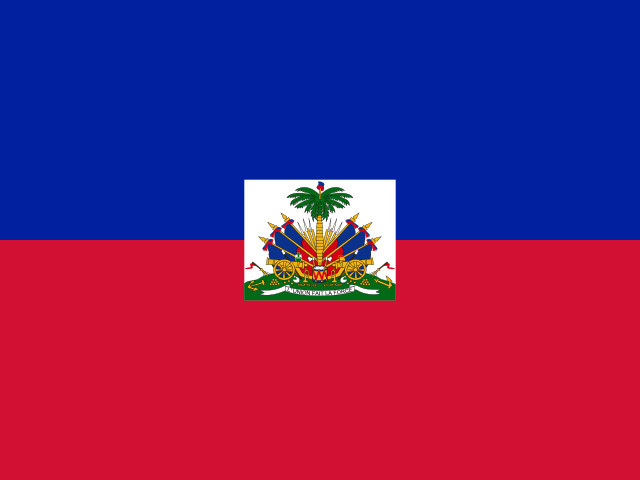
Haiti's flag is two horizontal bands, blue over red, with the coat of arms on a white panel in the centre. The arms show a palm tree topped with a cap of liberty, flanked by flags, cannons and drums, with the motto L'Union fait la force – unity makes strength.
The civil flag without the arms is identical to the flag of Liechtenstein, which was noticed at the 1936 Olympics; Liechtenstein added a crown to its flag the following year. In the Flags quiz, blue over red with a palm-tree emblem is Haiti.
A short history of Haiti
The Taíno people called their island Ayiti, often translated as "land of high mountains", and the modern country took that name back at independence. Christopher Columbus arrived in 1492, and his flagship, the Santa María, ran aground off the north coast. Within a few decades forced labour and European diseases had almost wiped out the Taíno.
Spain neglected the western end of the island, and French buccaneers based on the island of Tortuga moved in. In 1697 Spain formally ceded the western third to France, and that division is the origin of today's border with the Dominican Republic. The French colony of Saint-Domingue became the richest in the Caribbean, producing much of the world's sugar and coffee with the labour of around half a million enslaved Africans.
In 1791 a revolt began in the northern plain after a ceremony at Bois Caïman. Toussaint Louverture, a formerly enslaved man, emerged as the leading general and ruled the colony, but Napoleon sent an army to restore control, and Toussaint was captured and died in a French prison in 1803. His successor Jean-Jacques Dessalines defeated the French at the Battle of Vertières and declared independence at Gonaïves. In 1825 France demanded a huge indemnity in exchange for recognition, a debt that weighed on Haiti's economy for generations. Haiti also ruled the eastern side of the island from 1822 to 1844.
The United States occupied Haiti from 1915 to 1934. From 1957 to 1986 François Duvalier, "Papa Doc", and then his son ruled through fear, using a militia known as the Tontons Macoutes. Democratic elections in 1990 were followed by a coup, foreign interventions and long instability, and a president was assassinated in 2021.
Haiti today is the poorest country in the Americas, struggling with armed gangs and weak institutions. Its large diaspora in the United States, Canada and France sends home money that many families depend on.
Culture and daily life in Haiti
Haitian culture is a powerful blend of African and French roots. Most people are Christian, but Vodou, a religion with West African origins, is practised by many alongside Catholicism and was officially recognised in 2003. Its spirits, drumming and painted symbols run through Haitian art and music.
Haitian painting won international fame after the Centre d'Art opened in Port-au-Prince in 1944, launching artists such as Hector Hyppolite. In the town of Croix-des-Bouquets, metalworkers cut and hammer old oil drums into intricate sculptures. Literature is rich too, from Jacques Roumain's novel Masters of the Dew to the writers of the diaspora, Edwidge Danticat and Dany Laferrière.
Music ranges from kompa, a dance rhythm popularised by Nemours Jean-Baptiste in the 1950s, to rara, the street bands of the Easter season. Football is the favourite sport, and Haiti reached the World Cup in 1974. Haitians often say Ayiti cheri, "beloved Haiti", and proverbs such as Dèyè mòn gen mòn – "beyond the mountains, more mountains" – are part of everyday speech.
Five facts worth knowing
- Haiti became independent in 1804 after a successful slave revolution against France, making it the first independent Black republic in the world.
- French and Haitian Creole are both official languages, and Creole is spoken by almost everyone.
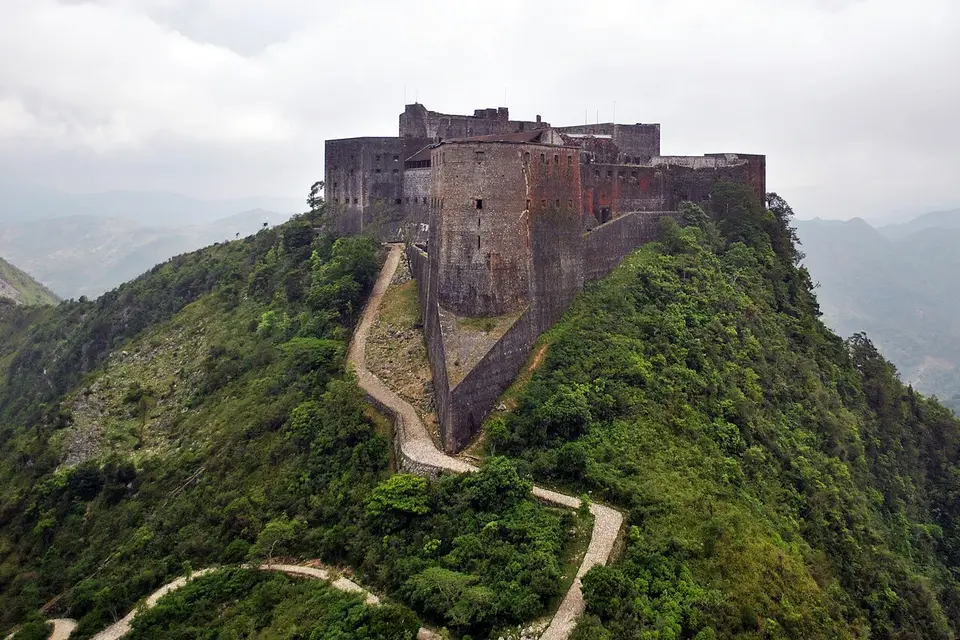
- The Citadelle Laferrière, a huge mountain fortress built after independence, is a UNESCO World Heritage site near Cap-Haïtien.
- A magnitude 7.0 earthquake in January 2010 devastated Port-au-Prince and killed well over a hundred thousand people.
- Haiti and the Dominican Republic are the only two countries sharing one Caribbean island – the border runs north to south across Hispaniola.
Culture and traditions in Haiti
- Saying hello
"Bonjou" with a handshake or cheek kiss; a casual Kreyòl greeting is "Sak pase?" answered with "N'ap boule".
- Food and drink
Griot, fried marinated pork with spicy pikliz; soup joumou, a pumpkin soup.
- Festivals and traditions
Kanaval (Carnival) before Lent; Independence Day on 1 January, celebrated with soup joumou.
- Everyday life
Haitian Creole is spoken by nearly everyone. Brightly painted tap-tap buses and vibrant art are part of daily life.
- Did you know?
Soup joumou was added to UNESCO's Intangible Cultural Heritage list in 2021.
Common mistakes
- Tapping the Dominican Republic, the other two-thirds of the same island.
- Tapping Jamaica or eastern Cuba.
- Choosing Liechtenstein's blue-over-red flag in the Flags quiz.
Practise with Haiti
- Caribbean quiz – the zoomed-in map makes the Hispaniola border clear.
- North America quiz – the Caribbean belongs here; find Cuba, then the island to its south-east.
- North America flags – learn the palm-tree emblem that separates Haiti from Liechtenstein.
- North America capitals quiz – Port-au-Prince.
- Mystery Country – the claw-shaped western end of Hispaniola is unmistakable.
Nearby countries
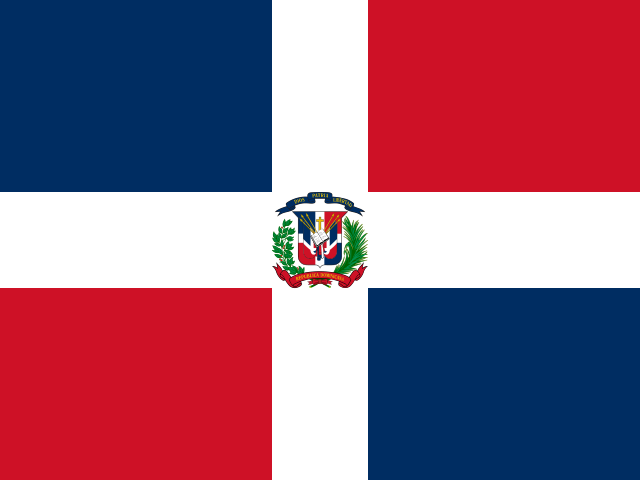 Dominican RepublicSanto Domingo
Quick check: how well do you know Haiti?
3 questions, no sign-up. Tap an answer.
1. Which flag belongs to Haiti?
That's the flag of Haiti.
2. What is the capital of Haiti?
The capital of Haiti is Port-au-Prince.
3. Which of these countries borders Haiti?
Dominican Republic borders Haiti.
Keep going on the North America quiz – Haiti is one of 23 countries there.
More ways to practise: find Haiti on the blank map with no borders (hard mode), or play today's Globe and the other daily puzzles.
Frequently asked questions about Haiti
What language is spoken in Haiti?
Haiti has two official languages, Haitian Creole and French, both recognised since 1987. Almost everyone speaks Creole, which grew from French and West African languages, while only a minority are fluent in French, which is used more in government, business and the press.
What currency does Haiti use?
Haiti's currency is the gourde (HTG). US dollars also circulate widely and are accepted for many larger payments. Haitians often quote prices in an informal unit called the Haitian dollar, worth five gourdes, which can confuse visitors.
What time zone is Haiti in?
Haiti's standard time is UTC−5, the same as Jamaica and the US East Coast in winter. In most recent years Haiti has also moved its clocks forward to UTC−4 in summer, though it has skipped daylight saving in some years.
Which side of the road do they drive on in Haiti?
Haitians drive on the right, as in neighbouring Dominican Republic and France. Many people travel in tap-taps, brightly painted pick-up trucks and buses that serve as shared taxis and are decorated with slogans, portraits and religious images.
What is the highest point in Haiti?
The highest point is Pic la Selle, about 2,680 metres, in the Massif de la Selle south-east of Port-au-Prince. It lies in La Visite National Park, one of the last areas of the country with significant pine forest.
What island is Haiti on?
Haiti occupies the western third of the island of Hispaniola, which it shares with the Dominican Republic to the east. Hispaniola is the second-largest island in the Caribbean after Cuba, and Haiti also includes smaller islands such as Gonâve and Tortuga.
Quizzes with Haiti
Often confused with
Guides that help with this
- The 25 hardest countries to find on a mapPacific islands, Caribbean islands and landlocked Africa – where they are.
- All 50 US states on the map, region by regionThe ordering tricks that make the states stick.
- Flags that look alike (and how to tell them apart)Chad or Romania? Australia or New Zealand? The flag pairs that cost quiz points.