Indonesia
Capital: Jakarta. Indonesia is one of the 48 countries in the Asia quiz.
Quick answers: What is the capital of Indonesia? · Which countries border Indonesia?
Facts about Indonesia
- CapitalJakarta
- Population285.7 million
- Area1,904,569 km²
- RegionsAsia, Southeast Asia
- LanguageIndonesian
- CurrencyIndonesian rupiah (IDR)
Indonesia is the 3rd most populous of the 48 countries in Asia and the 5th largest by area. Worldwide it ranks 4th by population and 14th by area.
Where is Indonesia?
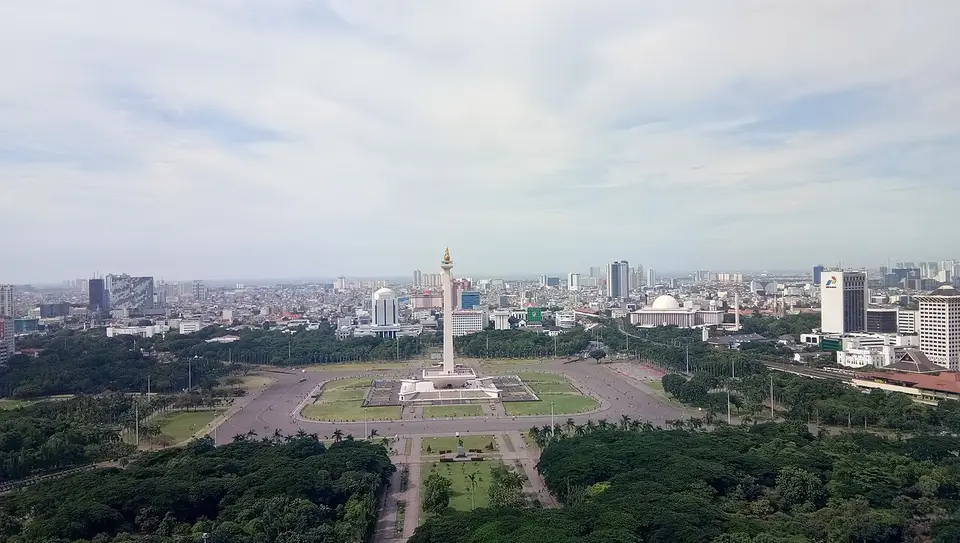
Indonesia is the long chain of islands strung along the equator between mainland Southeast Asia and Australia. It is the largest archipelago nation in the world, with more than 17,000 islands stretching about 5,000 km from west to east. The big ones are Sumatra in the west, Java to its south-east, Borneo (shared with Malaysia and Brunei), Sulawesi, and the western half of New Guinea. Jakarta, the capital, is on the north-west coast of Java.
On a world map, look for the scatter of islands directly north of Australia. Almost all of it is Indonesia.
How to find Indonesia on the map
- Start from Australia. Indonesia is the island chain directly to the north, with New Guinea at its eastern end.
- Follow the equator. The line runs right through Sumatra, Borneo and Sulawesi.
- Look for the shape of Sulawesi. The island looks like a letter K – once you spot it, you're in the middle of Indonesia.
- Don't confuse it with the Philippines or Malaysia. The Philippines is the compact cluster further north; Malaysia is the peninsula and the top strip of Borneo. Indonesia is everything below and around them.
Flag
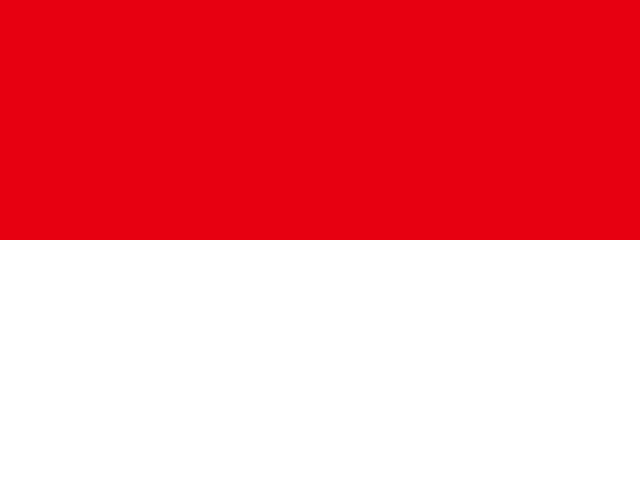
The Indonesian flag is two horizontal bands, red on top and white below. That's all – no emblem, no extra stripe. It is called the Sang Saka Merah-Putih, "the red and white".
Monaco's flag is also red over white, differing only in proportions. Poland is the exact reverse: white on top, red below. Singapore is red over white too, but with a white crescent and five stars in the corner. If it's plain red over white and the question is about Asia, it's Indonesia.
A short history of Indonesia
People have lived on these islands for a very long time. Fossils of Homo erectus, including the find known as Java Man, show that early humans lived here hundreds of thousands of years ago, and possibly well over a million. Much later, seafaring Austronesian peoples spread through the archipelago, growing rice and trading across the ocean.
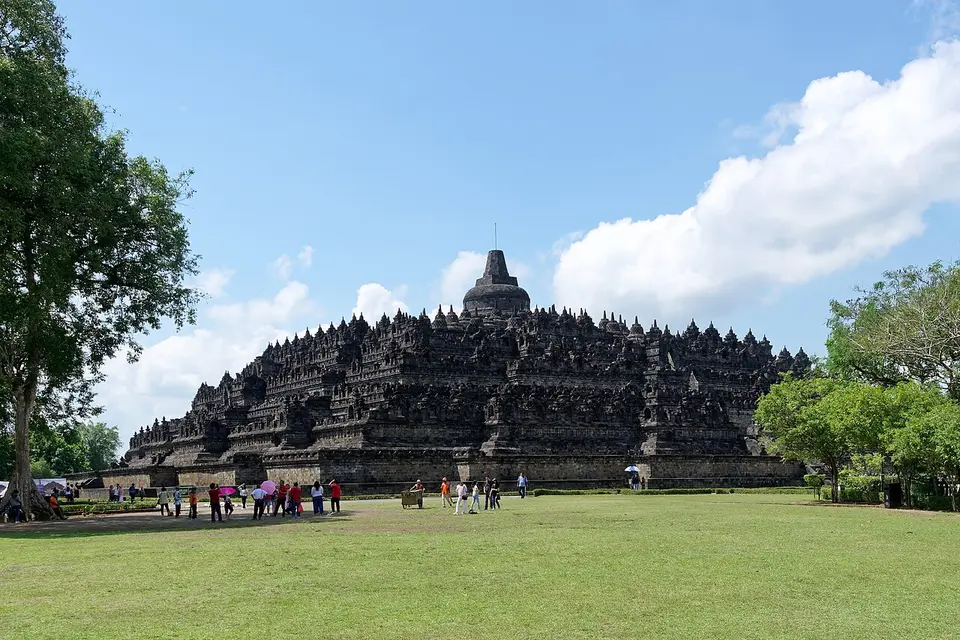
Great trading kingdoms grew rich from the sea lanes between India and China. Srivijaya, based in Sumatra, controlled the Strait of Malacca from the 600s and was a centre of Buddhist learning. In central Java, rulers built Borobudur, the world's largest Buddhist monument, in the 800s, followed by the Hindu temples of Prambanan. The Majapahit Empire of East Java dominated much of the archipelago in the 1300s. Islam arrived with Muslim merchants and spread from the 1200s onwards, as sultanates such as Aceh, Demak and Ternate rose.
The spices of Maluku, the original Spice Islands, drew Europeans. The Portuguese arrived in 1512, but the Dutch East India Company (VOC) took control of the trade and founded Batavia, now Jakarta, in 1619. Over three centuries the Dutch extended their rule across the islands. The map still shows the result: Indonesia's borders follow the old Dutch East Indies, which is why it shares Borneo with Malaysia, a former British territory, and New Guinea with Papua New Guinea.
Japan occupied the islands in 1942. Sukarno and Mohammad Hatta declared independence in 1945, and after four years of fighting and diplomacy the Netherlands recognised it in 1949. In 1965–66 the army, led by Suharto, took power amid mass killings of suspected communists, and Suharto's "New Order" lasted until 1998. Indonesia annexed East Timor in 1976; it became independent in 2002. Since 1998 the country has become a democracy with direct presidential elections.
Today Indonesia has the largest economy in Southeast Asia and is a member of the G20, exporting coal, palm oil and nickel.
Culture and daily life in Indonesia
Indonesia has more than 700 languages, but in 1928 young nationalists chose a form of Malay as the common language. Bahasa Indonesia, easy to learn and belonging to no single big group, now unites a nation where Javanese has more native speakers. The state ideology, Pancasila, opens with belief in one God, and the state officially recognises six religions: Islam, Protestantism, Catholicism, Hinduism, Buddhism and Confucianism.
Java and Bali are famous for gamelan, orchestras of bronze gongs and metallophones, and for wayang kulit, shadow-puppet plays that retell Hindu epics through the night. The kris, a wavy-bladed dagger, is a treasured heirloom. Pramoedya Ananta Toer, who wrote his Buru Quartet while a political prisoner, is the country's best-known novelist.
Customs vary enormously between islands. In the highlands of Sulawesi, the Toraja hold elaborate funerals that can last days. Badminton is the sport that brings Olympic medals: Susi Susanti won Indonesia's first gold in 1992. Martial arts are popular too, especially pencak silat, which UNESCO recognised in 2019.
Five facts worth knowing
- Indonesia is the fourth most populous country in the world, after India, China and the United States, with about 286 million people.
- Java is the most populous island on Earth. Well over half of all Indonesians live there, and the government is building a new capital, Nusantara, on Borneo to relieve Jakarta.
- It has the largest Muslim population of any country, though Bali is mostly Hindu and parts of the east are mostly Christian.
- Indonesia has more active volcanoes than any other country. The 1883 eruption of Krakatoa, between Java and Sumatra, was heard thousands of kilometres away.
- Komodo dragons live only here, on Komodo and a few neighbouring islands in the Lesser Sunda chain.
Culture and traditions in Indonesia
- Saying hello
A gentle handshake, sometimes followed by touching the hand to the heart; "Selamat pagi" means good morning.
- Food and drink
Nasi goreng, fried rice; rendang, slow-cooked spiced beef; satay skewers with peanut sauce.
- Festivals and traditions
Independence Day on 17 August with games and parades; Nyepi, Bali's Day of Silence, in March.
- Everyday life
Use the right hand for giving and eating, and remove shoes in homes. Batik clothing is widely worn.
- Did you know?
On Nyepi, Bali shuts down for 24 hours, even closing its international airport.
Common mistakes
- Tapping Malaysia – the two countries share the island of Borneo, and the peninsula is easy to mix up with Sumatra.
- Tapping Papua New Guinea – the eastern half of New Guinea is a separate country; only the western half is Indonesian.
- Forgetting East Timor, the small independent country at the eastern end of the Lesser Sunda Islands.
Practise with Indonesia
- Asia quiz – the biggest archipelago on the map, between the Indian Ocean and Australia.
- Southeast Asia quiz – zooms in on the islands, so you can sort Indonesia from Malaysia and the Philippines.
- Asia flags – red over white, with Singapore and Poland as the traps.
- Asia capitals quiz – Jakarta.
- Mystery Country – the sprawl of islands with Sulawesi in the middle is unmistakable once you've seen it.
Nearby countries
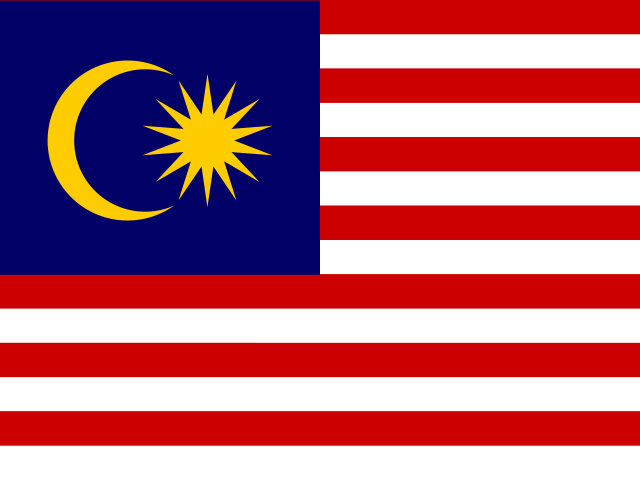 MalaysiaKuala Lumpur
 Papua New GuineaPort Moresby
 Timor-LesteDili
Quick check: how well do you know Indonesia?
3 questions, no sign-up. Tap an answer.
1. Which flag belongs to Indonesia?
That's the flag of Indonesia.
2. What is the capital of Indonesia?
The capital of Indonesia is Jakarta.
3. Which of these countries borders Indonesia?
Malaysia, Papua New Guinea and Timor-Leste border Indonesia.
Keep going on the Asia quiz – Indonesia is one of 48 countries there.
More ways to practise: find Indonesia on the blank map with no borders (hard mode), or play today's Globe and the other daily puzzles.
Frequently asked questions about Indonesia
What language is spoken in Indonesia?
The official language is Indonesian (Bahasa Indonesia), a standardised form of Malay that unites the country. Most Indonesians also speak a local language at home – more than 700 are spoken across the islands, and Javanese has the most native speakers.
What currency does Indonesia use?
Indonesia uses the Indonesian rupiah (IDR), issued by Bank Indonesia. Because one rupiah is worth very little, prices run into thousands and banknotes go up to 100,000 rupiah, so shops often write prices with a "k" for thousand.
What time zone is Indonesia in?
Indonesia spans three time zones: Western Indonesia Time (UTC+7) for Sumatra, Java and western Borneo, Central Indonesia Time (UTC+8) for Bali, Sulawesi and the rest of Borneo, and Eastern Indonesia Time (UTC+9) for Maluku and Papua. There is no daylight saving.
Which side of the road do they drive on in Indonesia?
Indonesia drives on the left, a practice often linked to the brief British occupation of Java in the early 1800s. Motorbikes vastly outnumber cars, and scooters carrying whole families are a common sight in cities.
What is the highest point in Indonesia?
The highest point is Puncak Jaya, also called the Carstensz Pyramid, about 4,884 metres, in the Sudirman Range of Papua. It is the highest mountain on any island in the world and the highest between the Himalaya and the Andes.
Is Indonesia a Muslim country?
Indonesia has more Muslims than any other country, around 87 per cent of the population. It is not an Islamic state, though: the state ideology recognises several religions, and Bali is mostly Hindu, while parts of Sulawesi, Papua and Nusa Tenggara are mainly Christian.
Quizzes with Indonesia
Often confused with
Guides that help with this
- Oceans, seas, rivers and mountainsThe physical map: seas around each continent, the big rivers and ranges.
- Flags that look alike (and how to tell them apart)Chad or Romania? Australia or New Zealand? The flag pairs that cost quiz points.
- The 25 hardest countries to find on a mapPacific islands, Caribbean islands and landlocked Africa – where they are.