Lebanon
Capital: Beirut. Lebanon is one of the 48 countries in the Asia quiz.
Quick answers: What is the capital of Lebanon? · Which countries border Lebanon?
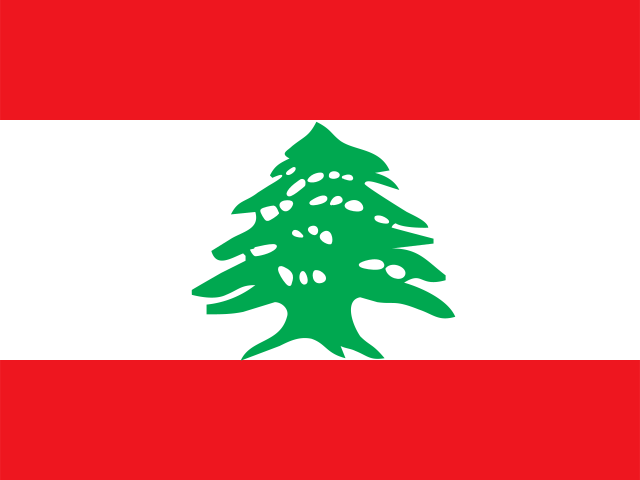
Facts about Lebanon
- CapitalBeirut
- Population5.8 million
- Area10,452 km²
- RegionsAsia, Middle East
- LanguagesArabic, French
- CurrencyLebanese pound (LBP)
Lebanon is the 36th most populous of the 48 countries in Asia and the 43rd largest by area. Worldwide it ranks 115th by population and 163rd by area.
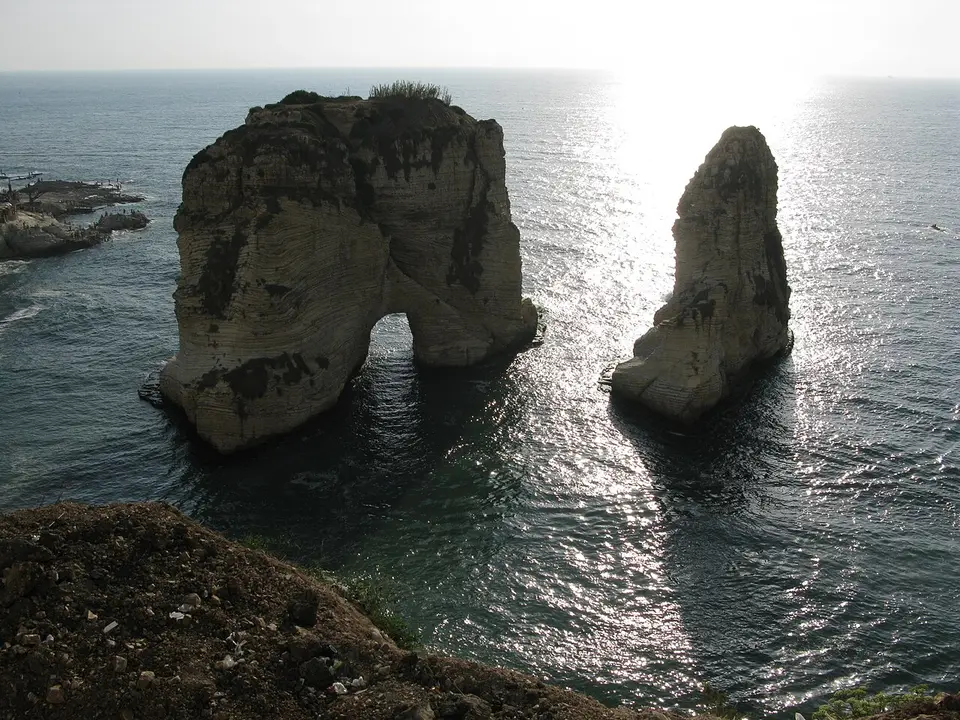
Where is Lebanon?
Lebanon is a small country on the eastern shore of the Mediterranean. Syria wraps around it to the north and east, and Israel lies to the south. The country is only about 225 km long and in places under 50 km wide, with two parallel mountain ranges running its full length and the Beqaa Valley between them. Beirut, the capital, is on the coast roughly halfway down.
On a world map, follow the Mediterranean east until the sea ends. The coast turns south there, and Lebanon is the thin strip just above Israel, below the bulk of Syria.
How to find Lebanon on the map
- Find the eastern end of the Mediterranean. Lebanon is on that coast, directly north of Israel.
- Look for a narrow sliver. Lebanon is one of the smallest countries in the Middle East.
- Start from Cyprus. The island is just offshore to the west; Lebanon is the mainland coast east of it.
- Don't confuse it with Israel. Israel runs much further south towards the Red Sea.
Flag
Lebanon's flag has two red horizontal bands, top and bottom, with a wider white band in the middle carrying a green cedar tree. The cedar has been a symbol of the country since antiquity. The red bands are said to represent sacrifice, the white peace and the mountain snows.
It is one of the few flags in the world with a tree on it. Just make sure the cedar is green – a red-white-red flag with no tree is Austria or Latvia.
A short history of Lebanon
The coastal cities of Lebanon – Byblos, Sidon and Tyre – are among the oldest continuously inhabited towns in the world. Byblos was trading with Egypt nearly 5,000 years ago, sending cedar wood for temples and ships. The Phoenicians who lived in these cities were the great sailors and merchants of the ancient Mediterranean. Over time the coast was ruled by the Assyrians, Babylonians, Persians, Alexander the Great and then Rome, when Berytus, now Beirut, had a famous school of law.
Arab Muslim armies arrived in the 630s. Lebanon's mountains, however, became a refuge for religious minorities. Maronite Christians settled in the north, and from the 1000s the Druze, followers of a faith that grew out of Islam, settled in the south of Mount Lebanon. Crusaders held the coast for nearly two centuries, and from 1516 the region was part of the Ottoman Empire, with local emirs enjoying a good deal of freedom in the mountains.
After fighting between Maronites and Druze in 1860, the Ottomans made Mount Lebanon a special self-governing area. When the empire collapsed after the First World War, France took control and in 1920 created Greater Lebanon, adding the coastal cities and the Beqaa Valley to the mountain. This gave the country its present shape, but also a mix of many religious groups.
Lebanon became independent in 1943. An unwritten National Pact shared power between religions: the president is a Maronite Christian, the prime minister a Sunni Muslim and the speaker of parliament a Shia Muslim. Tensions over this balance, the arrival of Palestinian armed groups and outside interference led to the civil war of 1975–1990. Israel occupied parts of the south from 1982 until 2000, and Syrian troops stayed until 2005.
Rebuilding brought Beirut back to life, but the country has faced repeated crises since, including a severe financial collapse from 2019 and the huge port explosion of August 2020. Its large diaspora, spread from Brazil to Australia, remains closely tied to home.
Culture and daily life in Lebanon
Lebanon officially recognises 18 religious communities, more than any other country in the region, and personal matters such as marriage are handled by each community's own courts. Arabic is the official language, while French – a legacy of the mandate – and English are widely spoken, making many Lebanese trilingual.
Beirut has long been a centre of Arab publishing, music and nightlife. The singer Fairuz, whose songs are played in the morning across the Arab world, is a national treasure, and the poet Khalil Gibran, born in the mountain town of Bsharri, wrote The Prophet, one of the best-selling books of the 20th century. The novelist Amin Maalouf and the film director Nadine Labaki, whose Capernaum was nominated for an Oscar, are also well known abroad.
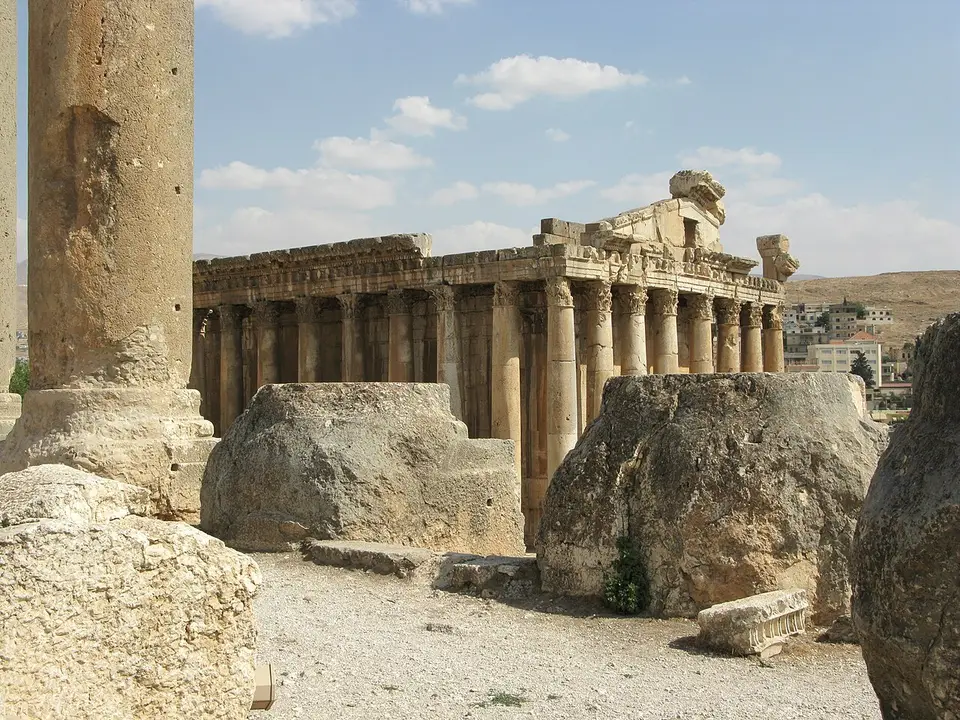
The Lebanese are famous for food and wine; wine has been made in the Beqaa Valley since ancient times, and Baalbek's temple of Bacchus is a reminder of it. The Cedars of God grove near Bsharri, a UNESCO site, protects some of the last ancient cedar trees. Basketball and football are the main sports.
Five facts worth knowing
- Lebanon has no desert, unlike most of its neighbours. Its mountains get winter snow, and skiing is possible within an hour of the beach.
- Beirut was once called the "Paris of the Middle East", a major banking and cultural centre before the 1975–1990 civil war.
- Baalbek, in the Beqaa Valley, has some of the largest Roman temple ruins anywhere, including the Temple of Jupiter.
- The ancient Phoenicians sailed from the Lebanese coast, founding Carthage and spreading the alphabet that Greek and Latin letters descend from.
- Lebanon is roughly the size of Cyprus or Jamaica, one of the smallest countries in Asia.
Culture and traditions in Lebanon
- Saying hello
"Marhaba" or "Ahlan"; friends often greet with three kisses on the cheeks.
- Food and drink
Mezze such as hummus, tabbouleh and kibbeh; arak, an anise spirit.
- Festivals and traditions
The Baalbeck International Festival in summer; Independence Day on 22 November.
- Everyday life
Hospitality is generous, and many people mix Arabic, French and English in one sentence, as in "Hi, kifak, ça va?"
- Did you know?
The Phoenician alphabet, developed on the Lebanese coast, is an ancestor of the Greek and Latin alphabets.
Common mistakes
- Tapping Israel – the two countries share a border and the same coast.
- Tapping Syria, which is much larger and surrounds Lebanon on two sides.
- Confusing the flag with other red-white-red designs that lack the cedar.
Practise with Lebanon
- Middle East quiz – the small country on the Mediterranean between Syria and Israel.
- Asia quiz – harder at this zoom; find the eastern end of the Mediterranean first.
- Asia flags – the green cedar is unmistakable.
- Asia capitals quiz – Beirut.
- Mystery Country – a slim, slightly curved outline with a straight sea edge on the left.
Nearby countries
Quick check: how well do you know Lebanon?
3 questions, no sign-up. Tap an answer.
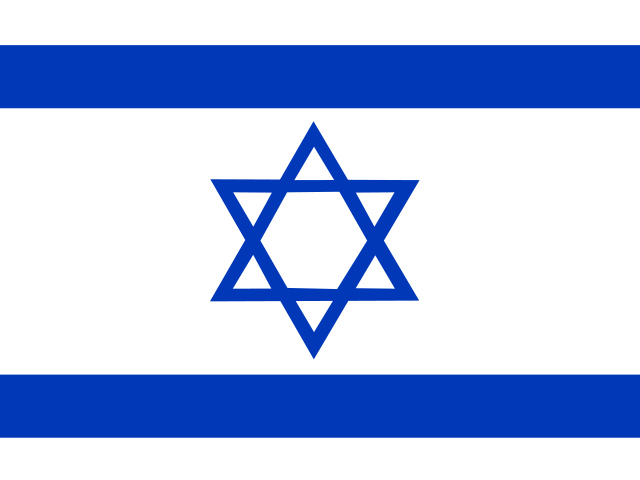
1. Which flag belongs to Lebanon?
That's the flag of Lebanon.
2. What is the capital of Lebanon?
The capital of Lebanon is Beirut.
3. Which of these countries borders Lebanon?
Israel and Syria border Lebanon.
Keep going on the Asia quiz – Lebanon is one of 48 countries there.
More ways to practise: find Lebanon on the blank map with no borders (hard mode), or play today's Globe and the other daily puzzles.
Frequently asked questions about Lebanon
What language is spoken in Lebanon?
Arabic is the official language, and most people speak a Lebanese form of Levantine Arabic. French is widely used in education and business, a legacy of the mandate era, and English is increasingly common. Armenian is spoken by a large community.
What currency does Lebanon use?
Lebanon's currency is the Lebanese pound or lira (LBP). It was pegged at about 1,500 to the US dollar from 1997, but the peg collapsed in the financial crisis that began in 2019, and the pound lost most of its value. US dollars are now used for many payments.
What time zone is Lebanon in?
Lebanon is on UTC+2 in winter and UTC+3 in summer, with daylight saving usually running from the last Sunday of March to the last Sunday of October. Its clocks normally match those of Cyprus and Greece.
Which side of the road do they drive on in Lebanon?
Lebanon drives on the right. The main coastal highway runs from Tripoli in the north through Beirut to Sidon and Tyre in the south, while the Beirut–Damascus road climbs over Mount Lebanon to the Beqaa Valley.
What is the highest point in Lebanon?
The highest point is Qurnat as Sawda', about 3,088 metres, in the northern Mount Lebanon range above the Qadisha Valley. Snow covers the higher slopes for months, and ski resorts such as The Cedars operate within sight of the sea.
What does the name Lebanon mean?
The name comes from the Semitic root lbn, meaning "white", a reference to the snow on Mount Lebanon. The mountain gave its name to the country and is mentioned many times in the Bible, especially for its cedars.
Quizzes with Lebanon
Often confused with
Guides that help with this
- Oceans, seas, rivers and mountainsThe physical map: seas around each continent, the big rivers and ranges.
- Flags that look alike (and how to tell them apart)Chad or Romania? Australia or New Zealand? The flag pairs that cost quiz points.
- The 25 hardest countries to find on a mapPacific islands, Caribbean islands and landlocked Africa – where they are.