Mexico
Capital: Mexico City. Mexico is one of the 23 countries in the North America quiz.
Quick answers: What is the capital of Mexico? · Which countries border Mexico?
Facts about Mexico
- CapitalMexico City
- Population131.9 million
- Area1,964,375 km²
- RegionsNorth America, Central America
- LanguageSpanish
- CurrencyMexican peso (MXN)
Mexico is the 2nd most populous of the 23 countries in North America and the 3rd largest by area. Worldwide it ranks 11th by population and 13th by area.
Where is Mexico?
Mexico is the southern end of North America, the wide funnel of land between the United States and Central America. The US border runs along the whole northern edge; Guatemala and Belize are the only neighbours to the south. The Pacific Ocean lies to the west and the Gulf of Mexico to the east, with the Caribbean touching the tip of the Yucatán peninsula. Mexico City sits inland, high in the mountains in the middle of the country. Two peninsulas give the outline its shape: Baja California, the long finger hanging down the west coast, and Yucatán, the blunt thumb pointing northeast.
How to find Mexico on the map
- Start from the United States. Mexico is the country directly below it; the border follows the Rio Grande for much of its length.
- Look for the two peninsulas. Baja California on the west and Yucatán on the east are the giveaway.
- Don't confuse it with Central America. Guatemala, Honduras and the rest are the thin strip below Mexico – Mexico is far larger.
- Baja California is not a separate country. It looks detached, but it's part of Mexico.
Flag
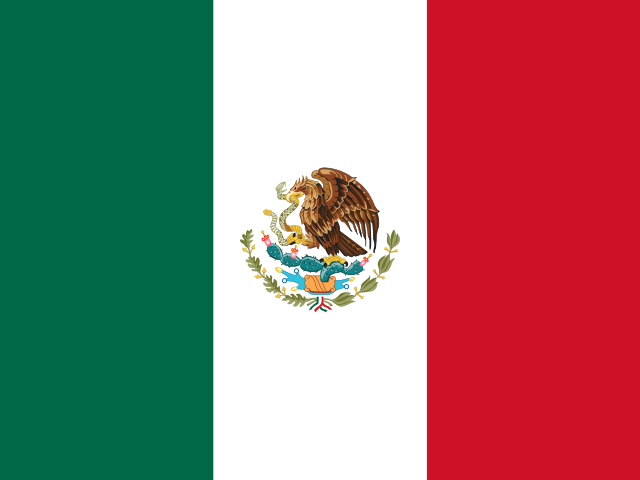
A green, white and red vertical tricolour with the national coat of arms in the centre: an eagle perched on a cactus, eating a snake. The one it gets mixed up with is Italy, which uses the same three colours in the same order but has no emblem. If there's an eagle in the middle, it's Mexico. Mexico's flag is also wider than Italy's (a 4:7 ratio rather than 2:3), and its green is a darker shade.
A short history of Mexico
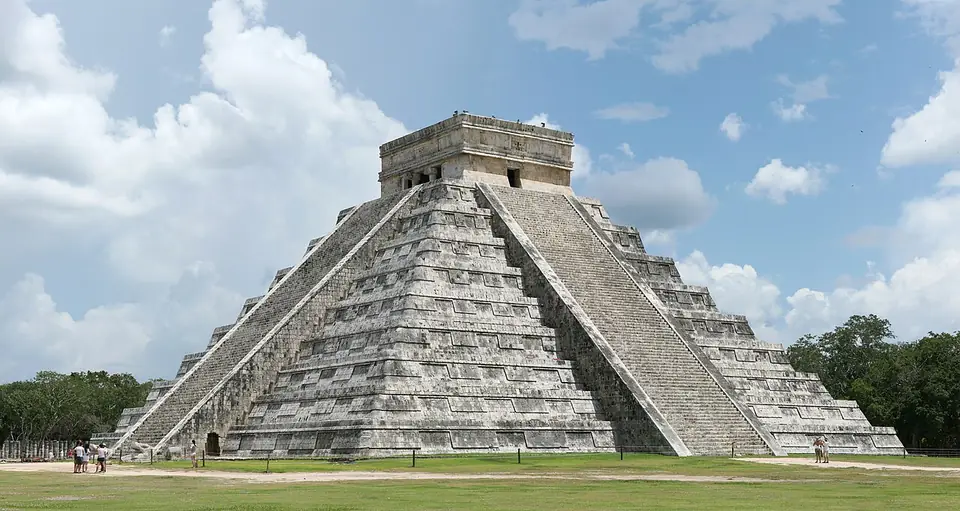
Mexico was the cradle of some of the Americas' oldest civilisations. The Olmecs on the Gulf coast carved colossal stone heads over 3,000 years ago. Later, the great city of Teotihuacan near today's capital grew to perhaps 100,000 people or more, and the Maya built city-states such as Palenque and Chichén Itzá across the south and the Yucatán. By the 1400s the Aztecs, or Mexica, ruled a powerful empire from Tenochtitlan, collecting tribute from peoples across central Mexico.
In 1519 Hernán Cortés landed with a few hundred Spaniards. Helped by indigenous allies who resented Aztec rule, and by smallpox, which killed vast numbers, he took Tenochtitlan in 1521. Spain built Mexico City on its ruins and ruled New Spain for three centuries. Silver from mines such as Zacatecas and Guanajuato made the colony one of the richest in the Spanish empire.
On 16 September 1810 the priest Miguel Hidalgo called for revolt, and after a long war Mexico won independence in 1821. The young country was unstable. Texas broke away in 1836, and after the war with the United States in 1846–48 Mexico lost roughly half its territory, including California and the American south-west – the main reason the border runs where it does. France later installed an Austrian archduke, Maximilian, as emperor, but Benito Juárez defeated him in 1867.
The long rule of Porfirio Díaz brought railways and foreign investment but deep inequality. The Mexican Revolution broke out in 1910, with leaders such as Emiliano Zapata and Pancho Villa, and produced the 1917 constitution. One party, later called the PRI, then governed for over seventy years. In 1938 the oil industry was nationalised. The 1994 trade agreement with the US and Canada tied the economies closely, and in 2000 an opposition candidate finally won the presidency.
Mexico is now a major manufacturing country, a leading producer of cars and electronics and one of the largest economies in Latin America.
Culture and daily life in Mexico
Mexican art reached the world in the 20th century through the muralists Diego Rivera, José Clemente Orozco and David Alfaro Siqueiros, who painted the country's history on public walls. Frida Kahlo's self-portraits are now among the most recognised paintings anywhere. In literature, Octavio Paz won the Nobel Prize, and Juan Rulfo's short novel Pedro Páramo influenced a generation of Latin American writers.
Music is everywhere. Mariachi, from the state of Jalisco, with violins, trumpets and guitars, is the best-known sound, but each region has its own, from the son jarocho of Veracruz to norteño accordion music in the north. Tequila comes from agave grown around the town of the same name in Jalisco.
Most Mexicans are Catholic, and the Virgin of Guadalupe is the country's most important religious symbol; her basilica in Mexico City is one of the most visited Catholic shrines in the world. Football is the leading sport, and the Estadio Azteca has hosted two World Cup finals. Lucha libre, masked professional wrestling, is a beloved spectacle, and the country's crafts range from Talavera pottery in Puebla to the woven textiles of Oaxaca and Chiapas.
Five facts worth knowing
- Mexico has the largest Spanish-speaking population in the world – more than Spain itself.
- Mexico City is built on a drained lake. The Aztec capital Tenochtitlan stood on an island in Lake Texcoco, and the modern city is slowly sinking into the old lakebed.
- The country is divided into 32 federal entities – 31 states plus Mexico City – all of which appear in the Mexican States quiz.
- Mexico recognises 68 indigenous languages alongside Spanish, including Nahuatl and Maya.
- The US–Mexico border is over 3,000 km long, one of the most crossed borders in the world.
Culture and traditions in Mexico
- Saying hello
A handshake is standard; friends and family often greet with one cheek kiss.
- Food and drink
Tacos al pastor, spit-roasted pork with pineapple, and mole poblano, a rich sauce with chillies and chocolate.
- Festivals and traditions
Día de Muertos (1–2 November) honours loved ones with altars and marigolds; Independence Day is 16 September.
- Everyday life
Lunch (comida) is the main meal, often eaten mid-afternoon. Tipping around 10–15% in restaurants is customary.
- Did you know?
Mexican cuisine was named UNESCO Intangible Cultural Heritage in 2010.
Common mistakes
- Tapping Guatemala or Belize when zoomed out – they're small and tucked under the Yucatán.
- Tapping Texas or the south-western US states on a world map.
- Putting the capital on the coast. Mexico City is inland and over 2,200 metres up.
- Thinking the eagle flag is Italy in the Flags quiz.
Practise with Mexico
- Whole World quiz – Mexico is large and distinctive, a good early win.
- Mexican States – all 32 states and Mexico City, from Baja California to Quintana Roo.
- North America capitals quiz – Mexico City is an easy one to remember.
- Whole World flags – practise telling the Mexican tricolour from the Italian one.
- Mystery Country – the two peninsulas make Mexico's outline one of the easiest in the Americas.
Nearby countries
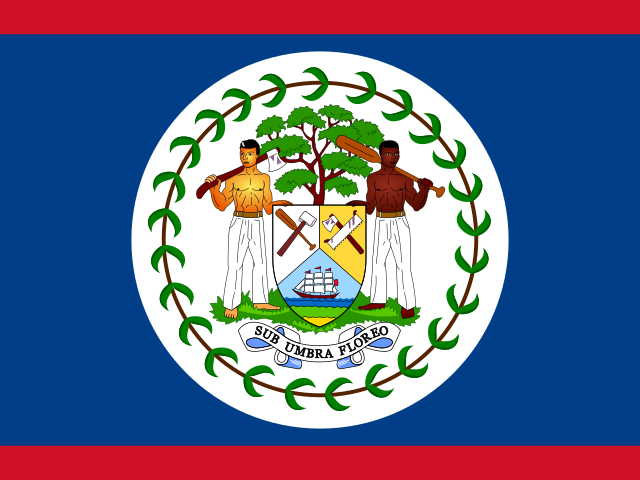 BelizeBelmopan
 GuatemalaGuatemala City
 United StatesWashington D.C.
Quick check: how well do you know Mexico?
3 questions, no sign-up. Tap an answer.
1. Which flag belongs to Mexico?
That's the flag of Mexico.
2. What is the capital of Mexico?
The capital of Mexico is Mexico City.
3. Which of these countries borders Mexico?
Belize, Guatemala and the United States border Mexico.
Keep going on the North America quiz – Mexico is one of 23 countries there.
More ways to practise: find Mexico on the blank map with no borders (hard mode), or play today's Globe and the other daily puzzles.
Frequently asked questions about Mexico
What language is spoken in Mexico?
Spanish is spoken by the vast majority and used in government, though Mexican law gives no single language official status. Mexico has more Spanish speakers than any other country. The state also recognises 68 Indigenous languages as national languages, of which Nahuatl, Maya and Tzeltal have the most speakers.
What currency does Mexico use?
Mexico uses the Mexican peso (MXN), divided into 100 centavos. It descends from the Spanish silver dollar, or peso de ocho, which circulated across the world, and today it is one of the most traded currencies of any emerging economy.
What time zone is Mexico in?
Most of Mexico, including the capital, is on UTC−6 all year after daylight saving was abolished for most of the country in 2022. Quintana Roo, home of Cancún, uses UTC−5, the Pacific states use UTC−7, and Baja California uses UTC−8, with some border areas still changing clocks alongside the United States.
Which side of the road do they drive on in Mexico?
Mexicans drive on the right. The country has a large network of toll motorways, called cuotas, alongside free roads, or libres, which are usually slower and pass through towns.
What is the highest point in Mexico?
Pico de Orizaba, also called Citlaltépetl, is Mexico's highest point at about 5,636 metres. A dormant volcano on the border of Puebla and Veracruz, it is the highest peak in North America after Denali and Mount Logan.
What is Mexico famous for?
Mexico gave the world maize, chillies, tomatoes, chocolate and vanilla, and its cuisine is on UNESCO's list of intangible heritage. It is also famous for the Day of the Dead, mariachi music, Maya and Aztec ruins, and has more UNESCO World Heritage sites than any other country in the Americas.
Quizzes with Mexico
Often confused with
Guides that help with this
- The 25 hardest countries to find on a mapPacific islands, Caribbean islands and landlocked Africa – where they are.
- All 50 US states on the map, region by regionThe ordering tricks that make the states stick.
- Flags that look alike (and how to tell them apart)Chad or Romania? Australia or New Zealand? The flag pairs that cost quiz points.