Nigeria
Capital: Abuja. Nigeria is one of the 54 countries in the Africa quiz.
Quick answers: What is the capital of Nigeria? · Which countries border Nigeria?
Facts about Nigeria
- CapitalAbuja
- Population237.5 million
- Area923,768 km²
- RegionsAfrica, West Africa
- LanguageEnglish
- CurrencyNigerian naira (NGN)
Nigeria is the most populous of the 54 countries in Africa and the 14th largest by area. Worldwide it ranks 6th by population and 31st by area.
Where is Nigeria?
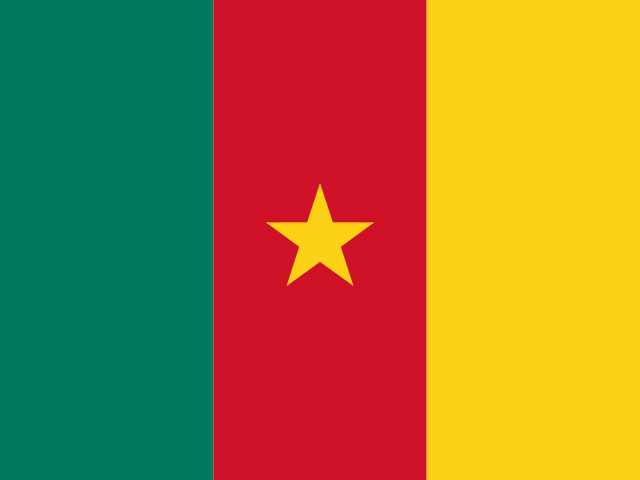
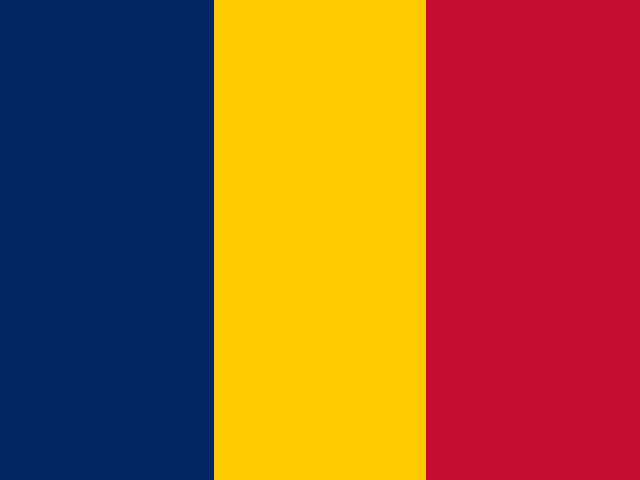
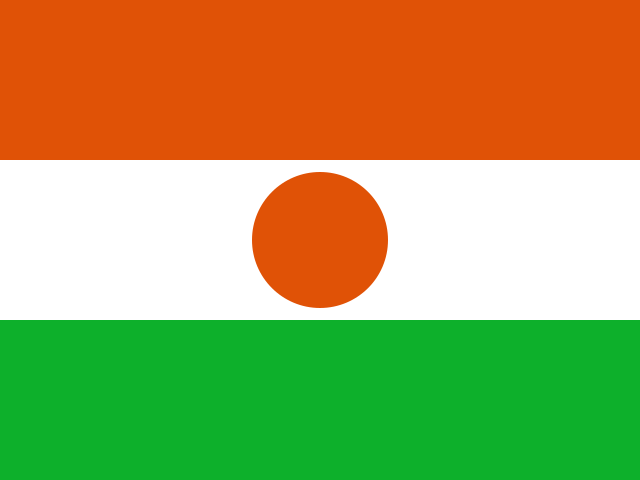
Nigeria is on the south coast of West Africa, in the inner corner of the Gulf of Guinea where the African coastline turns from running east-west to running north-south. Benin lies to the west, Niger to the north, Chad touches the far north-east corner at Lake Chad, and Cameroon is to the east. The Atlantic coast to the south includes the Niger Delta, where the Niger River, after a long loop through West Africa, reaches the sea. Abuja, the capital since 1991, is in the middle of the country; Lagos, the former capital and largest city, is on the coast in the south-west.
How to find Nigeria on the map
- Start from the Gulf of Guinea. Nigeria is the large country in the corner where the coast bends.
- Don't confuse it with Niger, the much larger desert country directly north – Niger is landlocked, Nigeria is on the coast.
- Look for Cameroon. Nigeria is the wide country to the west of Cameroon's tall, narrow shape.
- Count from Ghana. Going east along the coast: Ghana, Togo, Benin, Nigeria. The two small ones in between are thin strips.
Flag
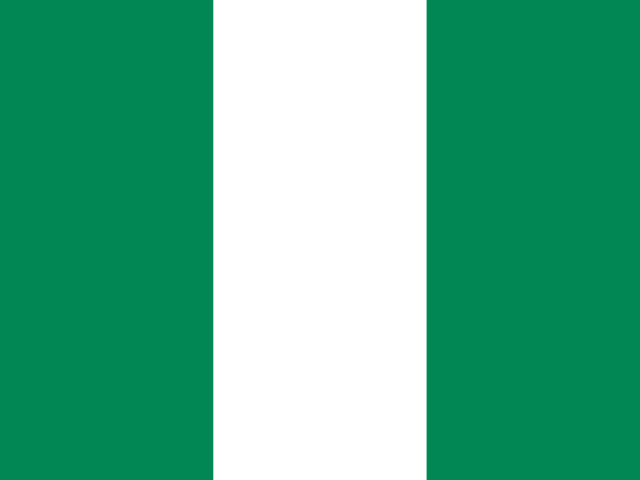
Three vertical bands: green, white, green. The green stands for the country's forests and farmland, the white for peace. It can be mistaken for Ireland or Italy at a glance, but both of those have three different colours. No other national flag uses just green and white in vertical bands, so the layout is Nigeria's alone. In the Flags quiz, two greens around a white centre, with no emblem, is Nigeria.
A short history of Nigeria
The land that became Nigeria was home to some of West Africa's oldest cultures. The Nok culture, which flourished more than 2,000 years ago in the centre of the country, left behind striking terracotta heads and was among the first in the region to work iron. Later, the city of Ife produced lifelike bronze and terracotta sculptures, and the Kingdom of Benin, in the south, became famous for its brass plaques and its walled capital.
In the north, Hausa city-states such as Kano and Katsina grew rich from trans-Saharan trade, and Islam arrived along the same routes. In the early 1800s, the scholar Usman dan Fodio led a jihad that united much of the north into the Sokoto Caliphate. In the south-west, the Oyo Empire dominated Yoruba lands. Along the coast, the Atlantic slave trade carried huge numbers of people to the Americas, especially through ports like Lagos and Bonny.
Britain annexed Lagos in 1861 and gradually extended its control inland. In 1914 the northern and southern protectorates were joined into a single colony called Nigeria, a name taken from the Niger River. This merger is why the country brings together a mainly Muslim north and a mainly Christian south.
Nigeria became independent in 1960 and a republic in 1963. Tensions between regions soon boiled over. After coups in 1966, the south-east declared itself the Republic of Biafra, and the civil war that followed (1967–70) caused a devastating famine before Biafra was defeated. Military governments ruled for most of the next three decades, creating more states to weaken old regional rivalries and moving the capital to Abuja, a planned city chosen partly because it lay between the major ethnic regions.
Civilian rule returned in 1999 and has lasted since. Nigeria is now one of Africa's largest economies, driven by oil from the Niger Delta, and a cultural powerhouse whose music and films reach audiences worldwide.
Culture and daily life in Nigeria
Nigeria's literature is among the most celebrated in Africa. Chinua Achebe's novel Things Fall Apart is read in schools around the world, Wole Soyinka became the first African to win the Nobel Prize in Literature in 1986, and Chimamanda Ngozi Adichie is one of today's best-known writers. Nigerian Pidgin, a mix of English and local languages, is spoken across ethnic lines as an everyday common tongue.
Music is everywhere. Fela Kuti created Afrobeat in the 1970s, blending highlife, jazz and funk with sharp political lyrics. His legacy lives on in Afrobeats, the modern pop sound of stars like Burna Boy and Wizkid, which fills clubs far beyond Africa.
Religion is roughly split between Islam and Christianity, with traditional beliefs still woven into both. Football is the national passion, and Nigeria won the Olympic football gold in 1996. Clothing is a strong form of expression too, from the flowing agbada robes of the Yoruba to the bright wax-print fabrics worn at weddings, where guests often dress in matching colours.
Five facts worth knowing
- Nigeria is the most populous country in Africa, with well over 200 million people, and is projected to be among the three most populous in the world by 2050.
- More than 500 languages are spoken in Nigeria. The three largest are Hausa, Yoruba and Igbo; English is the official language.
- Nigeria is divided into 36 states plus the Federal Capital Territory around Abuja. All of them are in the Nigerian States quiz.
- Lagos is one of the largest cities in Africa and has grown from a lagoon-side port into a metropolitan area of well over 15 million people.
- Nigeria's film industry, Nollywood, is one of the biggest in the world by number of films produced each year.
Culture and traditions in Nigeria
- Saying hello
Greetings are respectful; younger Yoruba may kneel or bow to elders, and people commonly ask "How is your family?"
- Food and drink
Jollof rice, spiced tomato rice, and pounded yam with egusi (melon seed) soup.
- Festivals and traditions
The Osun-Osogbo Festival (August) is UNESCO-listed; the Argungu Fishing Festival and Durbar horse festivals are well known.
- Everyday life
Respect for elders is central, and greeting everyone in a room is polite. Nigerians are known for lively music and fashion.
- Did you know?
Nigeria's film industry, Nollywood, is one of the world's largest by number of films produced.
Common mistakes
- Tapping Niger, the big country to the north with the similar name.
- Tapping Cameroon, the neighbour to the east.
- Answering "Lagos" in the Capitals quiz. The capital is Abuja.
- Tapping Ghana, two countries further west along the coast.
Practise with Nigeria
- West Africa quiz – Nigeria is the largest country on the coast in this region.
- Nigerian States – all 36 states and the Federal Capital Territory.
- Africa quiz – 54 countries; Nigeria is the anchor for the whole Gulf of Guinea coast.
- Whole World flags – green-white-green.
- Africa capitals quiz – Abuja, not Lagos.
- Mystery Country – a blocky shape with a wide top and the delta bulge at the bottom.
Nearby countries
Quick check: how well do you know Nigeria?
3 questions, no sign-up. Tap an answer.
1. Which flag belongs to Nigeria?
That's the flag of Nigeria.
2. What is the capital of Nigeria?
The capital of Nigeria is Abuja.
3. Which of these countries borders Nigeria?
Benin, Cameroon, Chad and Niger border Nigeria.
Keep going on the Africa quiz – Nigeria is one of 54 countries there.
More ways to practise: find Nigeria on the blank map with no borders (hard mode), or play today's Globe and the other daily puzzles.
Frequently asked questions about Nigeria
What language is spoken in Nigeria?
English is the official language of government and education. Hausa, Yoruba and Igbo are the largest regional languages, and Nigerian Pidgin, an English-based creole, is a common language across ethnic lines, especially in cities and the south. Hundreds of smaller languages are spoken across the country.
What currency does Nigeria use?
Nigeria uses the naira (NGN), divided into 100 kobo. It replaced the Nigerian pound in 1973. The naira has lost much of its value in recent years, especially after the central bank let the exchange rate float in 2023.
What time zone is Nigeria in?
Nigeria is on West Africa Time, UTC+1, all year round and does not use daylight saving time. Its clocks match those of Cameroon, Niger and Benin.
Which side of the road do they drive on in Nigeria?
Nigeria drives on the right. It switched from the left, inherited from British rule, in 1972, so that it matched its French-speaking neighbours. Lagos is known for some of the heaviest traffic jams in Africa.
What is the highest point in Nigeria?
Chappal Waddi, on the Mambilla Plateau in Taraba State near the Cameroon border, is Nigeria's highest point at about 2,419 metres. The name is often translated from Fulfulde as "mountain of death".
What is Nollywood?
Nollywood is Nigeria's film industry, centred on Lagos. It produces thousands of films a year, making it one of the largest film industries in the world by output. It grew in the 1990s from low-budget films sold on video and is now popular across Africa.
Quizzes with Nigeria
Often confused with
Guides that help with this
- Learn all 54 African countries in a weekLearn the coastline in order, region by region.
- Flags that look alike (and how to tell them apart)Chad or Romania? Australia or New Zealand? The flag pairs that cost quiz points.
- The 25 hardest countries to find on a mapPacific islands, Caribbean islands and landlocked Africa – where they are.