Portugal
Capital: Lisbon. Portugal is one of the 46 countries in the Europe quiz.
Quick answers: What is the capital of Portugal? · Which countries border Portugal?
Facts about Portugal
- CapitalLisbon
- Population10.8 million
- Area92,090 km²
- RegionEurope
- LanguagePortuguese
- CurrencyEuro (EUR)
Portugal is the 13th most populous of the 46 countries in Europe and the 18th largest by area. Worldwide it ranks 90th by population and 109th by area.
Where is Portugal?
Portugal is the westernmost country on the European mainland, a tall rectangle running down the Atlantic coast of the Iberian Peninsula. It has only one land neighbour, Spain, to the north and east. The Atlantic lies to the west and south. Lisbon, the capital, is on the coast about halfway down, where the River Tagus meets the sea.
On a world map, find the big square of the Iberian Peninsula at Europe's south-western corner. The strip along its left-hand edge is Portugal; the rest is Spain.
How to find Portugal on the map
- Start from Spain. Portugal is the slice cut off Spain's western side.
- Look for the Atlantic. Portugal faces only the Atlantic; it has no Mediterranean coast at all.
- Check the proportions. Portugal is much smaller than Spain and roughly twice as tall as it is wide.
Flag
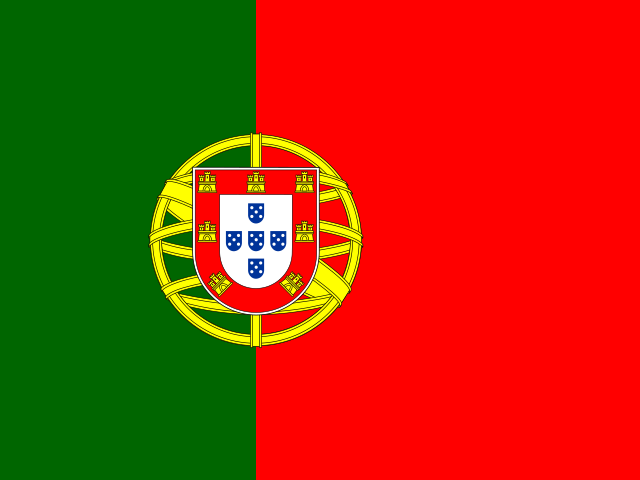
The Portuguese flag is divided vertically into green and red, with the narrower green band at the hoist. Over the dividing line sits the national coat of arms on an armillary sphere, a navigational instrument from the age of exploration. Green and red replaced the old blue and white when Portugal became a republic in 1910.
No other European flag uses a vertical green-red split, so the colours alone give it away.
A short history of Portugal
Long before Portugal existed, Celtic and other peoples lived in hill forts called castros in the north. The Romans conquered the region, which they called Lusitania, and left the Latin that grew into Portuguese, along with roads, bridges and the temple at Évora. After Rome fell, Germanic Suebi and Visigoths ruled until Muslim armies crossed from North Africa in 711. For centuries, much of the south was part of al-Andalus, which explains Arabic-rooted place names such as the Algarve.
Portugal was born during the Christian reconquest. Afonso Henriques, Count of Portugal, declared himself king in 1139 and was recognised as such in 1143. He took Lisbon from the Moors in 1147, and the kingdom reached the Algarve coast by 1249. Portugal's borders have changed very little since, making them among the oldest in Europe.
Facing the ocean, Portugal led Europe's Age of Discovery. Prince Henry the Navigator sponsored voyages down the African coast, and Bartolomeu Dias rounded the Cape of Good Hope in 1488. Vasco da Gama reached India by sea in 1498, and Pedro Álvares Cabral reached Brazil in 1500. Portugal built a trading empire of ports from Africa to Macau, growing rich on spices, gold and, tragically, the Atlantic slave trade.
In 1580 Spain's king took the Portuguese crown, until a revolt restored independence in 1640. In 1755 a huge earthquake and tsunami destroyed much of Lisbon, which was rebuilt with a neat grid of streets in the Baixa. During Napoleon's invasion the royal court fled to Brazil, which became independent in 1822. The monarchy fell in 1910. From the 1930s, António de Oliveira Salazar ran the authoritarian Estado Novo and fought long wars to keep African colonies. In 1974 the bloodless Carnation Revolution ended the dictatorship, and the colonies soon became independent.
Portugal joined the European Community in 1986. Today its economy relies on tourism, services, exports and a growing tech sector, with Lisbon and Porto attracting visitors from around the world.
Culture and daily life in Portugal
Portuguese sounds quite different from Spanish, with softer, swallowed vowels, and its spread around the globe follows the routes of the old empire. Most Portuguese are Roman Catholic, and the shrine at Fátima, where three children reported visions of the Virgin Mary in 1917, is one of the world's largest pilgrimage sites.
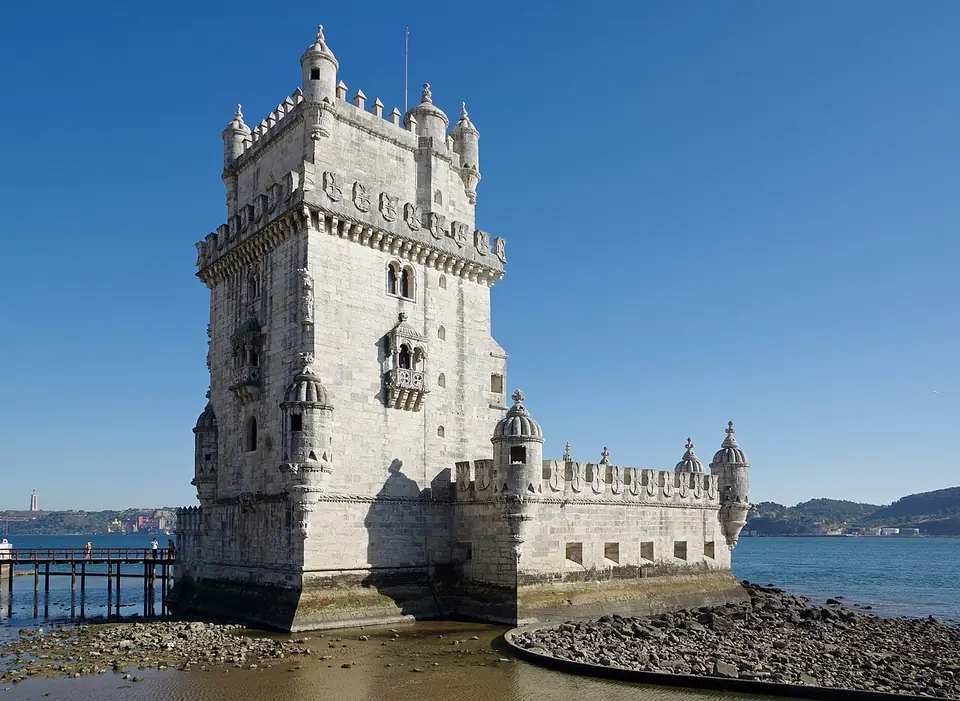
The soulful song style fado, born in Lisbon's old neighbourhoods, is about longing and loss, a feeling captured in the word saudade. Its greatest voice was Amália Rodrigues. Painted blue-and-white tiles called azulejos cover churches, stations and house fronts, and the ornate Manueline style, seen at the Jerónimos Monastery, celebrates the sea with carved ropes and shells. Luís de Camões wrote the national epic, The Lusiads, and José Saramago won the Nobel Prize in 1998.
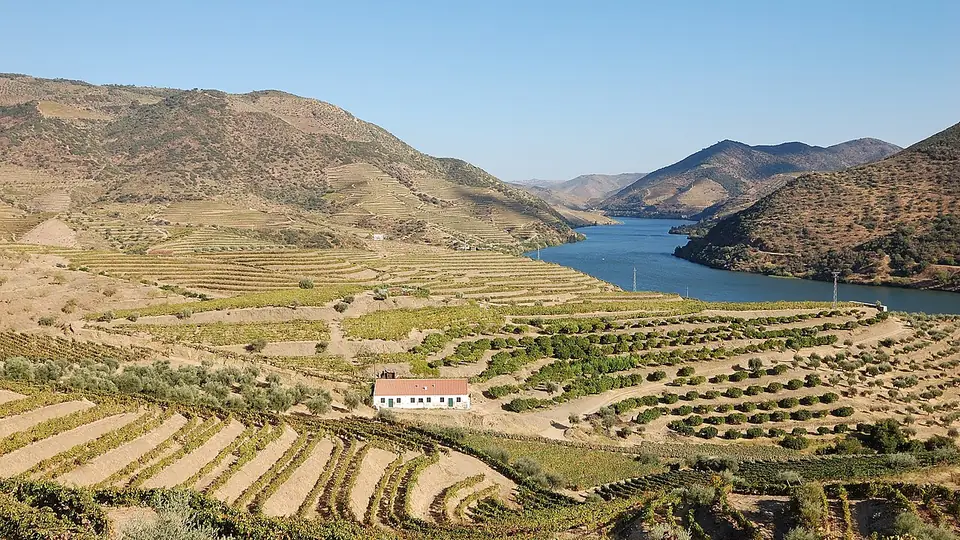
Football is a passion, from the rivalry of Benfica, Sporting and Porto to Cristiano Ronaldo, one of the greatest players of all time. Port wine comes from the terraced vineyards of the Douro valley, the first wine region in the world to have its boundaries legally fixed, in 1756.
Five facts worth knowing
- Cabo da Roca, west of Lisbon, is the westernmost point of mainland Europe. The Azores and Madeira, two autonomous island groups in the Atlantic, are also Portuguese.
- Portugal's highest mountain is not on the mainland. Mount Pico, a volcano in the Azores, reaches 2,351 metres, well above the mainland's Serra da Estrela at 1,993 metres.
- Portuguese is spoken by more than 250 million people worldwide, most of them in Brazil, along with Angola, Mozambique and other former colonies.
- The alliance between Portugal and England, signed in 1386, is the oldest alliance still in force between two countries.
- Portugal is the world's largest producer of cork, from the cork oak forests of the Alentejo.
Culture and traditions in Portugal
- Saying hello
A handshake, or two cheek kisses between friends; "Bom dia".
- Food and drink
Bacalhau, salted cod with hundreds of recipes, and pastel de nata, a custard tart.
- Festivals and traditions
The Festas de Santo António in Lisbon (June) and São João in Porto (23–24 June).
- Everyday life
Meals are long and social. Coffee is usually a quick espresso (bica) at the counter.
- Did you know?
Portugal and England share the world's oldest active diplomatic alliance, dating to 1386.
Common mistakes
- Tapping Spain – or tapping the wrong side of the Iberian Peninsula and landing on the Mediterranean coast.
- Answering Porto or Madrid in the Capitals quiz. Lisbon is the capital.
- Confusing Portugal with Galicia, the Spanish region directly north of it, which has a similar coast.
- Forgetting the Azores and Madeira in quizzes that include outlying islands.
Practise with Portugal
- Europe quiz – the western edge of the Iberian Peninsula.
- Europe flags – the green and red split with the armillary sphere.
- Europe capitals quiz – Lisbon.
- Mystery Country – a tall, narrow outline with a straight eastern border and the Tagus estuary notched into the coast.
- Spanish Regions – see Portugal's neighbours Galicia, Extremadura and Andalusia from the other side of the border.
Nearby countries
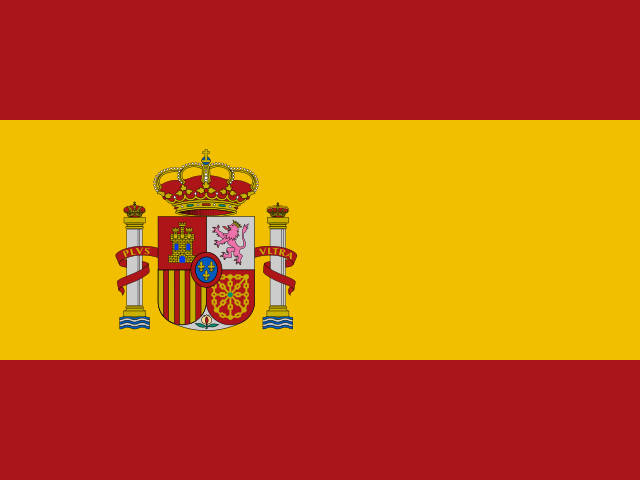 SpainMadrid
Quick check: how well do you know Portugal?
3 questions, no sign-up. Tap an answer.
1. Which flag belongs to Portugal?
That's the flag of Portugal.
2. What is the capital of Portugal?
The capital of Portugal is Lisbon.
3. Which of these countries borders Portugal?
Spain borders Portugal.
Keep going on the Europe quiz – Portugal is one of 46 countries there.
More ways to practise: find Portugal on the blank map with no borders (hard mode), or play today's Globe and the other daily puzzles.
Frequently asked questions about Portugal
What language is spoken in Portugal?
Portuguese is the official language and is spoken by virtually everyone. Mirandese, a small language related to Leonese and spoken around Miranda do Douro in the north-east, also has official recognition. English is widely understood in cities and tourist areas.
What currency does Portugal use?
Portugal uses the euro, code EUR, shared with the other eurozone countries. It was one of the first members of the euro, adopting it in 1999, with notes and coins replacing the Portuguese escudo in 2002.
What time zone is Portugal in?
Mainland Portugal and Madeira use Western European Time, UTC+0, the same as the UK, moving to UTC+1 in summer. The Azores are an hour behind, on UTC−1 in winter and UTC+0 in summer.
Which side of the road do they drive on in Portugal?
Portugal drives on the right, like neighbouring Spain. The country switched from driving on the left in 1928, bringing it into line with most of continental Europe.
What is the highest point in Portugal?
The highest point is Mount Pico, a volcano in the Azores, at about 2,351 metres. On the mainland the highest summit is Torre, in the Serra da Estrela range, at about 1,993 metres.
What is Portugal famous for?
Portugal is famous for port wine from the Douro valley, fado music, which UNESCO recognised in 2011, and glazed azulejo tiles on buildings. It is also the world's largest producer of cork, harvested from cork oak forests in the south.
Quizzes with Portugal
Often confused with
Guides that help with this
- All 46 European capitals, with a memory trick for eachCapitals grouped by region, with hooks for the ones people forget.
- Flags that look alike (and how to tell them apart)Chad or Romania? Australia or New Zealand? The flag pairs that cost quiz points.
- The 25 hardest countries to find on a mapPacific islands, Caribbean islands and landlocked Africa – where they are.