Spain
Capital: Madrid. Spain is one of the 46 countries in the Europe quiz.
Quick answers: What is the capital of Spain? · Which countries border Spain?
Facts about Spain
- CapitalMadrid
- Population49.4 million
- Area505,992 km²
- RegionEurope
- LanguagesSpanish, Basque, Catalan, Galician, Occitan
- CurrencyEuro (EUR)
Spain is the 6th most populous of the 46 countries in Europe and the 4th largest by area. Worldwide it ranks 32nd by population and 51st by area.
Where is Spain?
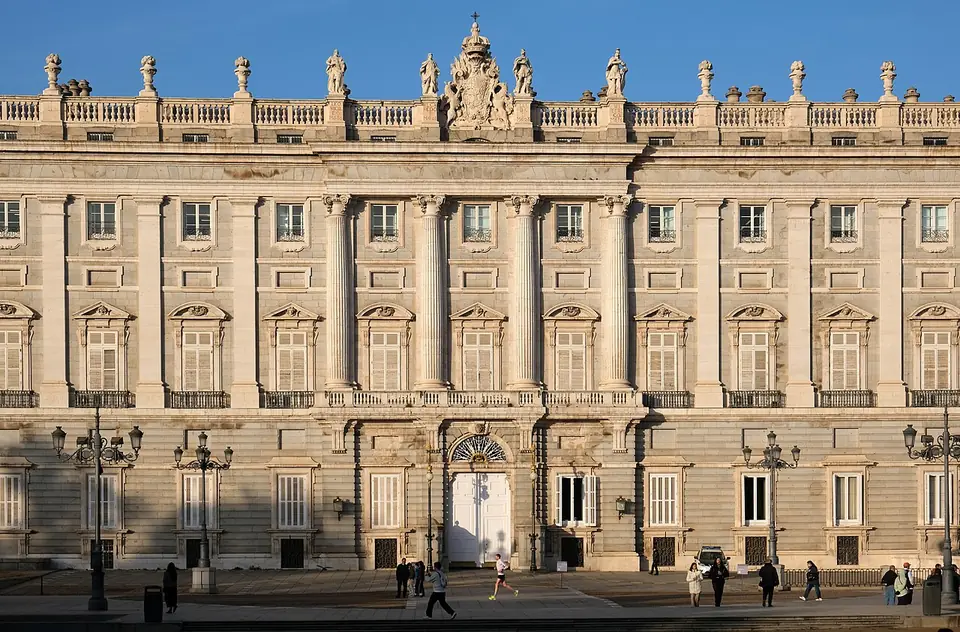
Spain takes up most of the Iberian Peninsula, the square block of land in the far south-west of Europe. Portugal occupies the western strip of the peninsula; France and tiny Andorra lie across the Pyrenees mountains to the north-east. The Mediterranean Sea is to the east and south, the Atlantic to the north-west, and across the narrow Strait of Gibraltar lies Morocco in Africa. Madrid is almost exactly in the centre of the country. Spain also includes the Balearic Islands in the Mediterranean and the Canary Islands off the coast of West Africa, plus two small cities, Ceuta and Melilla, on the North African coast.
How to find Spain on the map
- Start from France. Spain is the large square country directly south-west of it, over the Pyrenees.
- Look for the peninsula. Iberia is the big block hanging off the bottom-left corner of Europe. Spain is most of it.
- Don't confuse it with Portugal. Portugal is the narrow strip along the western edge; Spain is everything else.
- The Canary Islands are Spanish, even though they sit far south near Morocco and Western Sahara.
Flag
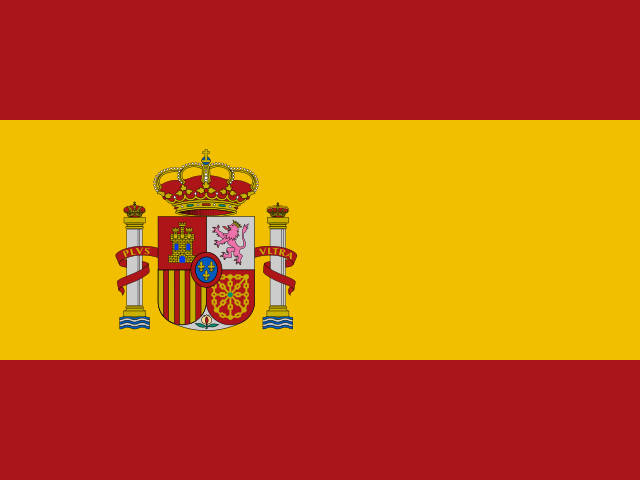
Three horizontal bands: red, a wider yellow band in the middle, and red again, with the national coat of arms placed left of centre in the yellow. The flag it most resembles is that of Catalonia (red and yellow stripes), though that isn't a country. In the Flags quiz, red-yellow-red with a crest is Spain. Watch out for the civil version used on buildings and boats, which has no crest; the quiz uses the version with the coat of arms.
A short history of Spain
People have lived in Iberia for a very long time. The cave of Altamira in Cantabria holds some of the finest Ice Age paintings in the world, with bison drawn in red and black. Later, Iberians and Celts settled the peninsula, while Phoenicians founded Cádiz, one of the oldest cities in western Europe, and Greeks and Carthaginians set up trading posts along the coast. Rome conquered Hispania over two centuries, leaving Latin, roads, the aqueduct of Segovia and emperors such as Trajan and Hadrian, both born there.
After Rome fell, the Visigoths ruled from Toledo until 711, when Muslim armies crossed from North Africa and took most of the peninsula within a few years. Muslim Spain, al-Andalus, became one of the most advanced societies in medieval Europe. Córdoba was among the largest cities of its time, and scholars there translated and studied Greek learning. From small Christian kingdoms in the north, the long Reconquista slowly pushed south. In 1469 Isabella of Castile married Ferdinand of Aragon, and in 1492 they captured Granada, the last Muslim kingdom, and expelled Spain's Jews. In the same year Columbus, sailing for the Catholic Monarchs, reached the Americas.
The 1500s were Spain's Golden Age. Its empire spread across the Americas and to the Philippines, and silver from Mexico and Peru made it the strongest power in Europe. Over the 1600s, costly wars and economic problems led to decline. Napoleon's invasion in 1808 sparked the Peninsular War and helped trigger independence movements in Latin America, and by 1898 Spain had lost Cuba, Puerto Rico and the Philippines.
The 1900s brought deep division. The Spanish Civil War of 1936–39, between the elected Republic and Nationalist rebels led by General Francisco Franco, cost hundreds of thousands of lives. Franco then ruled as a dictator until his death in 1975. King Juan Carlos I oversaw a return to democracy, and the constitution of 1978 created the autonomous communities. Spain joined the European Community in 1986 and hosted the Barcelona Olympics in 1992. Separatist violence by ETA in the Basque Country ended in 2011, and a Catalan independence referendum in 2017 caused a political crisis.
Today Spain is a major EU economy, strong in tourism, farming, car manufacturing and renewable energy.
Culture and daily life in Spain
Spain's languages reflect the old kingdoms. Spanish, or Castilian, is spoken everywhere, but Catalan, Galician and Basque are co-official in their regions. Basque, or Euskara, is not related to any other known language and is probably older than the arrival of Latin. Most Spaniards are Catholic by tradition, and Holy Week processions in Seville and other cities are among the most dramatic in the world, even as church attendance has fallen.
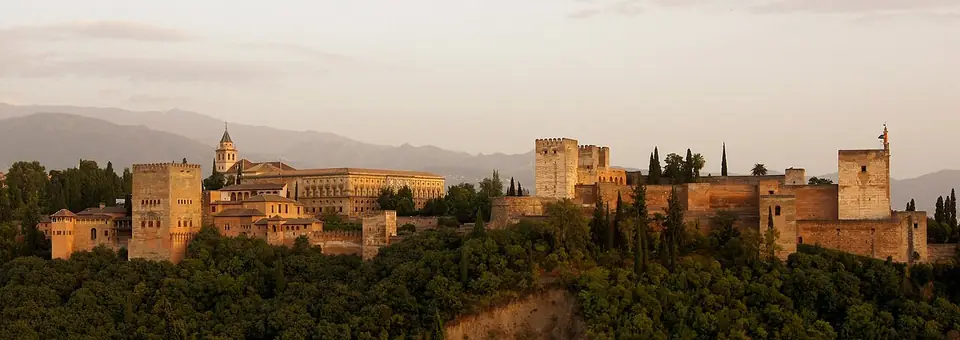
Spain's art is world famous, from Velázquez's Las Meninas in the Prado to Goya, Picasso, Dalí and Miró. Moorish buildings such as the Alhambra in Granada and the Great Mosque of Córdoba stand beside Gaudí's Sagrada Família in Barcelona. Cervantes' Don Quixote, published in the early 1600s, is often called the first modern novel.
Flamenco, rooted in Andalusia's Romani communities, combines singing, guitar and dance. Football is a passion, with Real Madrid and Barcelona among the most famous clubs on Earth, and the national team won the World Cup in 2010. Rafael Nadal's record at the French Open made him a national hero.
Five facts worth knowing
- Spain is the second most visited country in the world, behind only France, with more than 80 million tourists a year before the pandemic.
- Spanish is the second most spoken native language in the world after Mandarin, with most speakers living in Latin America rather than Spain.
- Spain is divided into 17 autonomous communities plus the two autonomous cities Ceuta and Melilla. The Spanish Regions quiz covers them all.
- Mount Teide on Tenerife, in the Canary Islands, is the highest peak in Spain at 3,715 metres – higher than anything on the mainland.
- Madrid is the highest capital in the European Union, at about 650 metres above sea level.
Culture and traditions in Spain
- Saying hello
Two kisses on the cheeks among friends, or a handshake; "¡Hola!" or "Buenos días".
- Food and drink
Paella, a rice dish from Valencia; tapas, small shared plates; jamón ibérico, cured ham.
- Festivals and traditions
San Fermín in Pamplona (July), Las Fallas in Valencia (March) and La Tomatina tomato fight in Buñol (late August).
- Everyday life
Meals are late: lunch around 2 pm and dinner often after 9 pm. Many shops close in the afternoon in smaller towns.
- Did you know?
On New Year's Eve, Spaniards eat 12 grapes, one at each stroke of midnight, for luck in the coming year.
Common mistakes
- Tapping Portugal, the thin country on the western side of the peninsula.
- Tapping Morocco when the map is zoomed out – the Strait of Gibraltar is very narrow.
- Forgetting the Balearic Islands (Mallorca, Menorca, Ibiza) are Spanish when drawing a region quiz.
- Placing Madrid on the coast; it's right in the middle of the country.
Practise with Spain
- Europe quiz – Spain is big and square, one of the first to tick off.
- Spanish Regions – all 17 autonomous communities, from Galicia to the Canary Islands.
- Europe flags – red-yellow-red with a crest.
- Europe capitals quiz – Madrid, in the dead centre.
- Mystery Country – the Iberian square with Portugal cut out is easy to recognise once you've seen it.
Nearby countries
Quick check: how well do you know Spain?
3 questions, no sign-up. Tap an answer.
1. Which flag belongs to Spain?
That's the flag of Spain.
2. What is the capital of Spain?
The capital of Spain is Madrid.
3. Which of these countries borders Spain?
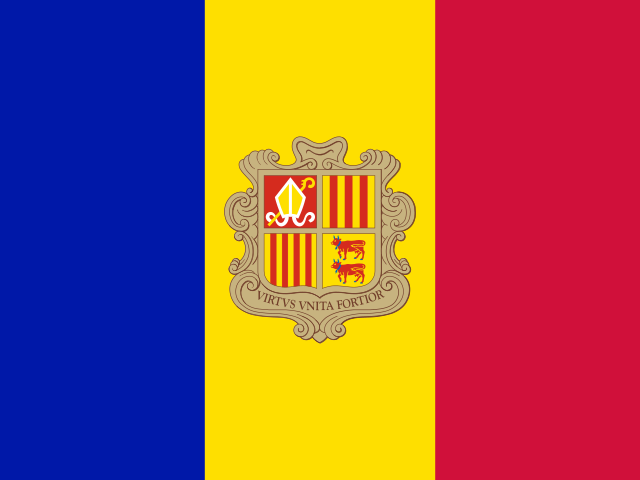
Andorra, France and Portugal border Spain.
Keep going on the Europe quiz – Spain is one of 46 countries there.
More ways to practise: find Spain on the blank map with no borders (hard mode), or play today's Globe and the other daily puzzles.
Frequently asked questions about Spain
What language is spoken in Spain?
Spanish, also called Castilian, is the official language throughout Spain. Catalan, Galician and Basque are co-official in their own regions, and Aranese, a form of Occitan, is official in Catalonia's Aran Valley. Around a fifth of Spaniards speak one of these as well as Spanish.
What currency does Spain use?
Spain uses the euro, code EUR, which replaced the peseta. It joined the euro at its launch in 1999, and euro notes and coins came into use in 2002.
What time zone is Spain in?
Mainland Spain and the Balearic Islands use Central European Time, UTC+1, and UTC+2 in summer. The Canary Islands are an hour behind, on UTC+0 in winter and UTC+1 in summer. Spain has kept this zone since 1940, despite lying mostly west of Greenwich.
Which side of the road do they drive on in Spain?
Spain drives on the right. It has the longest motorway network in Europe, and much of it is toll-free. Its high-speed AVE rail network is the largest in Europe too.
What is the highest point in Spain?
Mount Teide, a volcano on Tenerife in the Canary Islands, is Spain's highest point at about 3,715 metres. The highest peak on the mainland is Mulhacén, in the Sierra Nevada of Andalusia, at about 3,479 metres.
Why do Spaniards eat so late?
Lunch in Spain is often eaten from about 2 pm and dinner from 9 pm or later. One common explanation is that Spain's clocks are set an hour ahead of its natural sun time, so meals follow daylight rather than the clock.
Quizzes with Spain
Often confused with
Guides that help with this
- All 46 European capitals, with a memory trick for eachCapitals grouped by region, with hooks for the ones people forget.
- Flags that look alike (and how to tell them apart)Chad or Romania? Australia or New Zealand? The flag pairs that cost quiz points.
- The 25 hardest countries to find on a mapPacific islands, Caribbean islands and landlocked Africa – where they are.