San Marino
Capital: San Marino. San Marino is one of the 46 countries in the Europe quiz.
Quick answers: What is the capital of San Marino? · Which countries border San Marino?
Facts about San Marino
- CapitalSan Marino
- Population34,109
- Area61 km²
- RegionEurope
- LanguageItalian
- CurrencyEuro (EUR)
San Marino is the 45th most populous of the 46 countries in Europe and the 44th largest by area. Worldwide it ranks 193rd by population and 193rd by area.
Where is San Marino?
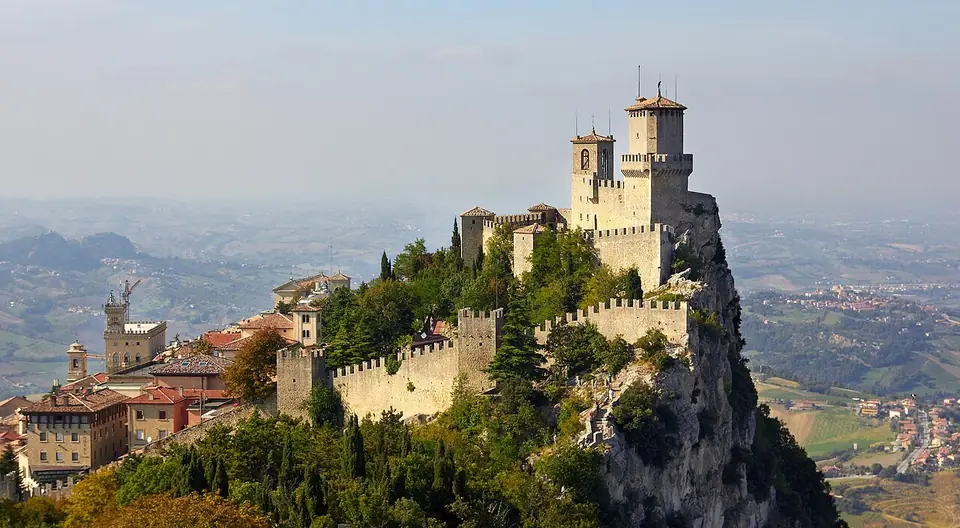
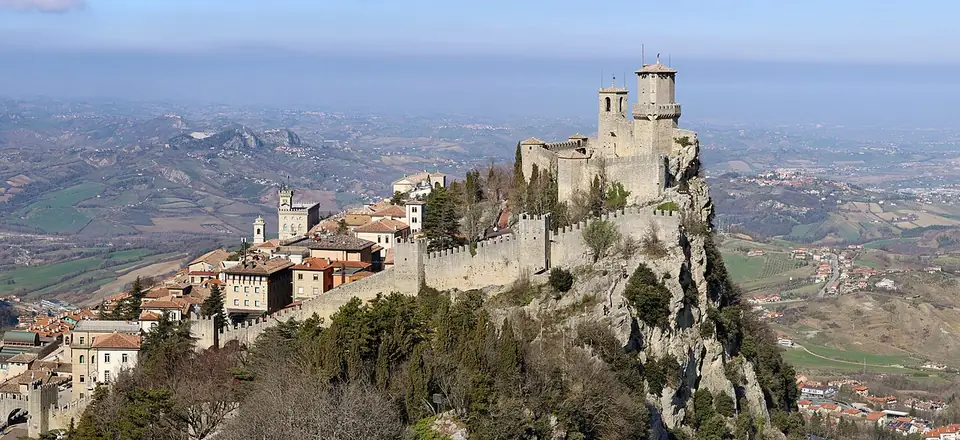
San Marino is a microstate completely surrounded by Italy. It sits in the north-east of the Italian peninsula, inland from the Adriatic resort of Rimini, on the slopes of Monte Titano in the Apennine foothills. At about 61 square kilometres it is one of the smallest countries in the world, and it claims to be the oldest surviving republic, with a founding traditionally dated to the year 301.
The capital, also called San Marino, is perched on top of Monte Titano with its three medieval towers. Most of the population, however, lives lower down in towns such as Serravalle and Borgo Maggiore.
How to find San Marino on the map
- Start from Italy's east coast. Find the Adriatic Sea and follow the Italian coastline north from the "spur" of the boot until you are roughly level with Florence on the other side of the peninsula.
- Step a few kilometres inland from Rimini. San Marino is just behind the coast, never touching the sea.
- It is a dot, not a shape. At Europe zoom, San Marino is a single point on the Adriatic side of north-central Italy.
- Don't confuse it with Vatican City, the other microstate inside Italy. The Vatican is inside Rome, far to the south-west.
Flag
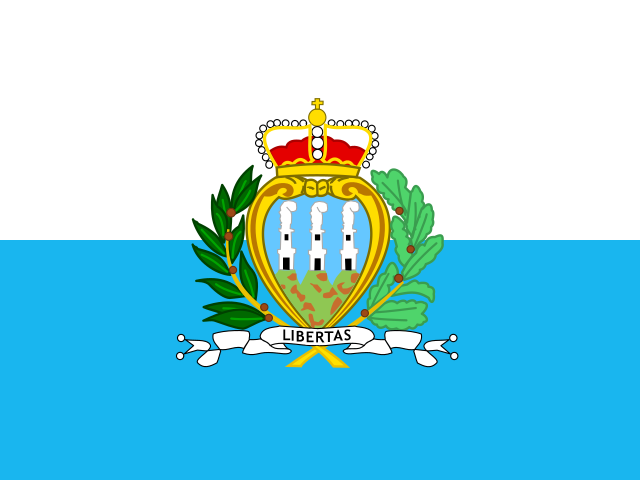
San Marino's flag is two horizontal bands, white on top and light blue below, with the national coat of arms in the centre. The white stands for the snow of Monte Titano and the blue for the sky. The coat of arms shows three towers on three peaks, a crown above them, and the motto Libertas ("liberty").
The plain white-and-blue version without the arms is nearly identical to a few other flags, so in the Flags quiz look for the coat of arms with the three towers – that is the giveaway.
A short history of San Marino
According to tradition, the republic began with a stonemason named Marinus, who came from the island of Rab on the Dalmatian coast to work in Rimini. To escape the persecution of Christians under the Roman emperor Diocletian, he withdrew to the rocky top of Monte Titano and founded a small religious community there. Over the following centuries that community grew into a self-governing town, protected by its steep cliffs and by its own walls.
In the Middle Ages San Marino survived as one of many small communes in central Italy, surrounded by the lands of powerful families such as the Malatesta of Rimini and, later, by the Papal States. It was occupied only briefly. Cesare Borgia seized it in 1503 for a few months, and in 1739 Cardinal Alberoni took over the town, but the Pope restored its independence in February 1740. The republic's written statutes, collected in 1600, still form the basis of its constitution, one of the oldest in the world still in force.
San Marino's real test came with the rise of modern Italy. In 1797 Napoleon offered to enlarge its territory, and the republic politely refused, fearing that extra land would bring trouble later. In 1849 it gave shelter to Giuseppe Garibaldi and his followers as they fled Austrian troops. When Italy was unified, the grateful new kingdom allowed San Marino to stay independent, and a treaty of friendship was signed in 1862. That is why a tiny sovereign state still sits inside Italy today – unification simply flowed around it.
During the Second World War San Marino declared itself neutral and took in tens of thousands of refugees, far more than its own population. It was still bombed by mistake in 1944. After the war it was governed for over a decade by a coalition of communists and socialists, an unusual sight in Western Europe at the time. Women gained the vote in 1960, and the republic joined the Council of Europe in 1988 and the United Nations in 1992.
Today San Marino lives mainly from tourism, banking, small industry and the sale of its stamps and coins to collectors, with very close economic ties to Italy.
Culture and daily life in San Marino
Everyday life in San Marino is Italian in almost every way, but with a strong sense of being a separate people. Alongside standard Italian, older residents still use the Romagnol dialect of the surrounding countryside. Most people are Roman Catholic, and the relics of Saint Marinus are kept in the neoclassical Basilica di San Marino near the top of the mountain.
Politics and ceremony are woven into national identity. The Great and General Council, a parliament of 60 members, meets in the Palazzo Pubblico, a grey stone town hall rebuilt in the 1890s in medieval style. Twice a year the installation of the Captains Regent is marked by a procession in historic dress. The ancient sport of crossbow shooting is kept alive by a federation of crossbowmen, who compete in costume and give displays for visitors.
Sport gives the republic a lovable underdog reputation. The national football team has won only a handful of official matches in its history, yet every rare goal is celebrated as a national event. Motor racing fans will know the name from the San Marino Grand Prix, although those races have actually been held at circuits in Italy, such as Imola and Misano. Stamp collecting is another quiet point of pride – San Marino has issued its own stamps since 1877.
Five facts worth knowing
- San Marino is landlocked and surrounded entirely by Italy, one of only three countries enclosed by a single neighbour (the others are Vatican City and Lesotho).
- It is governed by two heads of state at once. The Captains Regent are elected every six months and serve together.
- The three towers on Monte Titano – Guaita, Cesta and Montale – are the symbol of the country and appear on its flag and coat of arms.
- San Marino is not in the European Union, but it uses the euro under an agreement with the EU and mints its own euro coins.
- The Monte Titano historic centre is a UNESCO World Heritage Site, listed in 2008.
Culture and traditions in San Marino
- Saying hello
A handshake with "Buongiorno"; Italian is the main language.
- Food and drink
Torta Tre Monti, a layered wafer cake, and piadina, a flatbread; the region also makes local wine.
- Festivals and traditions
The Feast of Saint Marinus on 3 September; the Medieval Days festival in July.
- Everyday life
Life is similar to central Italy, with long lunches and coffee culture.
- Did you know?
San Marino claims to be the world's oldest republic, founded in 301 AD.
Common mistakes
- Tapping Vatican City or the Rome area – wrong microstate, wrong end of Italy.
- Tapping Monaco, which is on the French Riviera, not in Italy at all.
- Placing San Marino on the coast. It is close to Rimini but a few kilometres inland.
Practise with San Marino
- Europe quiz – San Marino is a single point on the Adriatic side of Italy; zoom in before tapping.
- Europe flags – learn to spot the three-tower coat of arms on a white-and-blue field.
- Europe capitals quiz – the capital shares the country's name.
- Italian Regions – San Marino sits on the border between Emilia-Romagna and Marche.
- Mystery Country – at this size it is about position, not outline.
Nearby countries
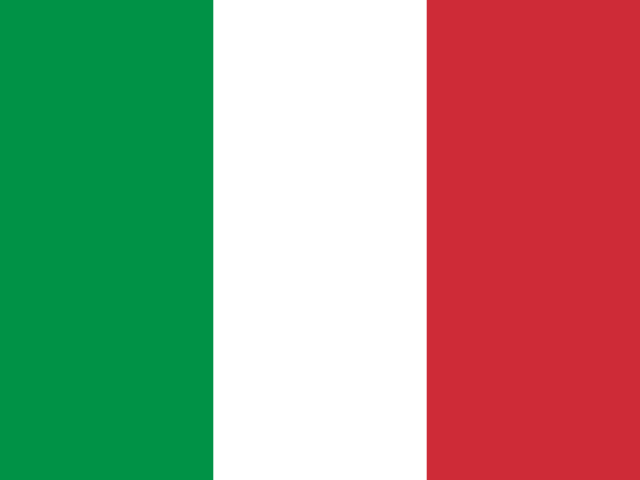 ItalyRome
Quick check: how well do you know San Marino?
3 questions, no sign-up. Tap an answer.
1. Which flag belongs to San Marino?
That's the flag of San Marino.
2. What is the capital of San Marino?
The capital of San Marino is San Marino.
3. Which of these countries borders San Marino?
Italy borders San Marino.
Keep going on the Europe quiz – San Marino is one of 46 countries there.
More ways to practise: find San Marino on the blank map with no borders (hard mode), or play today's Globe and the other daily puzzles.
Frequently asked questions about San Marino
What language is spoken in San Marino?
Italian is the official language and is spoken by everyone. Many older people also speak Romagnol, the local dialect shared with the surrounding Italian region of Emilia-Romagna, though it is heard less among younger generations.
What currency does San Marino use?
San Marino uses the euro, code EUR. Before 2002 it used the Italian lira and issued its own lira coins. Its euro coins show Sammarinese designs such as the Three Towers and are prized by collectors because so few are minted.
What time zone is San Marino in?
San Marino follows Italy on Central European Time, UTC+1. In summer it moves to Central European Summer Time, UTC+2, from the last Sunday of March to the last Sunday of October.
Which side of the road do they drive on in San Marino?
San Marino drives on the right, the same as Italy. Its main road, the Superstrada, climbs from the Italian border towards the capital on Monte Titano, and cars carry their own Sammarinese number plates.
What is the highest point in San Marino?
Monte Titano is the highest point at about 739 metres. Its steep limestone cliffs face east towards the Adriatic, and the capital and its three towers sit along the ridge.
Do you need a passport to visit San Marino?
There are no border checks between Italy and San Marino, so visitors simply drive or take a bus in from Rimini. San Marino is not formally part of the Schengen area, but in practice everyone arrives through Italy.
Quizzes with San Marino
Guides that help with this
- All 46 European capitals, with a memory trick for eachCapitals grouped by region, with hooks for the ones people forget.
- Flags that look alike (and how to tell them apart)Chad or Romania? Australia or New Zealand? The flag pairs that cost quiz points.
- The 25 hardest countries to find on a mapPacific islands, Caribbean islands and landlocked Africa – where they are.