Sierra Leone
Capital: Freetown. Sierra Leone is one of the 54 countries in the Africa quiz.
Quick answers: What is the capital of Sierra Leone? · Which countries border Sierra Leone?
Facts about Sierra Leone
- CapitalFreetown
- Population8.8 million
- Area71,740 km²
- RegionsAfrica, West Africa
- LanguageEnglish
- CurrencySierra Leonean leone (SLE)
Sierra Leone is the 33rd most populous of the 54 countries in Africa and the 40th largest by area. Worldwide it ranks 101st by population and 117th by area.
Where is Sierra Leone?
Sierra Leone is on the Atlantic coast of West Africa, on the south-western edge of the continent's great bulge. Guinea wraps around it to the north and east, and Liberia lies to the south-east. The capital, Freetown, is on a mountainous peninsula at the mouth of the Sierra Leone River, which forms one of the largest natural harbours in Africa.
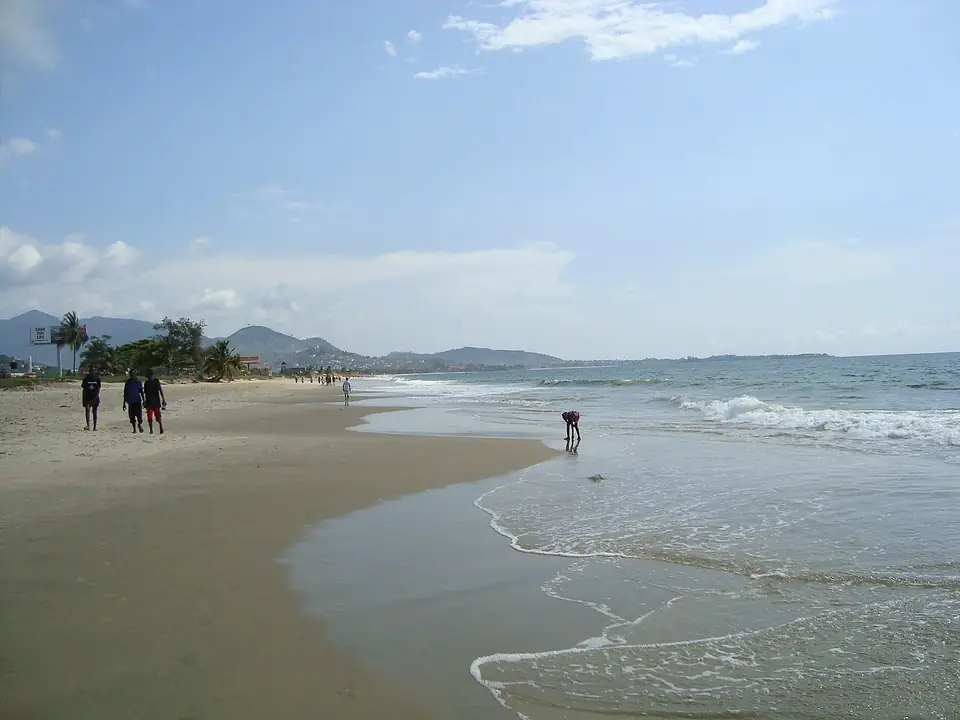
The country is roughly circular and small – about 72,000 square kilometres, a little smaller than Scotland – with a coastline of beaches and mangrove swamps backed by hills inland.
How to find Sierra Leone on the map
- Start from the bulge's underside. Follow the West African coast south-east from Senegal. After Guinea-Bissau and Guinea's short coastline, the next country is Sierra Leone.
- Look for the small round country between Guinea and Liberia. Guinea curls around it from the north; Liberia continues along the coast to the south-east.
- Freetown faces west. The capital's peninsula sticks out into the Atlantic on the country's northern coast.
- Don't confuse it with Liberia. The two are similar in size and both sit on this stretch of coast. Sierra Leone is the northern one, closer to Guinea; Liberia is further along towards Ivory Coast.
Flag
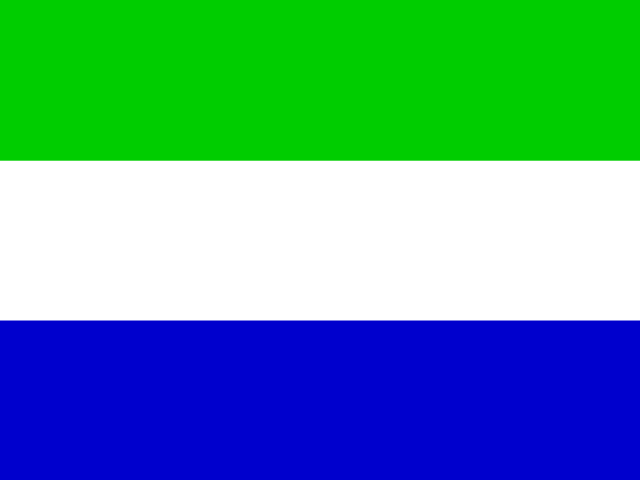
Sierra Leone's flag is a simple horizontal tricolour: green on top, white in the middle, blue at the bottom. Green stands for agriculture and the mountains, white for unity and justice, blue for the sea and Freetown's harbour.
Its simplicity is both a help and a trap. There is no emblem to look for, so remember the order – green, white, blue, top to bottom. It is sometimes confused with the flags of Lesotho (blue, white, green with a hat emblem) or Gabon (green, yellow, blue). If it's green over white over blue with nothing else, it's Sierra Leone.
A short history of Sierra Leone
Before Europeans arrived, the forests and coast of Sierra Leone were home to many peoples, among them the Temne, Mende, Limba, Sherbro and Kono, who lived in small chiefdoms rather than one great kingdom. In the 1500s, groups known to the Portuguese as the Mane moved in from the east, and Fula and Mandinka traders from the north brought Islam and links with the Sahel.
From the 1500s the coast became a hunting ground for the Atlantic slave trade. Bunce Island, in the Sierra Leone River, was a British slave fort from the 1670s, and many of the people shipped from there ended up on rice plantations in South Carolina and Georgia, where their skills were highly valued. That link still shapes the Gullah culture of the American south-east.
The settlement at Freetown gave the colony a very different identity. Alongside the Black Loyalists from Nova Scotia came free Black people from London, Jamaican Maroons in 1800, and – after Britain banned the slave trade in 1807 – tens of thousands of "liberated Africans" freed by the Royal Navy from captured slave ships. Freetown became a Crown colony in 1808. The mixed community that grew there, the Krio, became traders, clergy and teachers across West Africa. Fourah Bay College, founded in 1827, was the first Western-style university college in the region, earning Freetown the nickname "the Athens of West Africa". Britain declared a protectorate over the interior in 1896, and a tax on houses led to the Hut Tax War of 1898, led in the north by Bai Bureh.
Sierra Leone became independent in 1961 under Milton Margai. Military coups and later one-party rule followed, and the country grew poorer despite its diamonds. The civil war from 1991 devastated the country before British troops and a large UN mission helped bring it to an end in 2002. A special court later tried leaders from the war, including Charles Taylor, the former president of neighbouring Liberia. The Ebola epidemic of 2014–2016 was another heavy blow.
Today Sierra Leone is a peaceful democracy rebuilding its economy around mining, farming and fishing, with tourism slowly growing along its beaches.
Culture and daily life in Sierra Leone
Krio, an English-based creole that grew among the Freetown settlers, is the language that ties the country together, even though only a minority speak it as their mother tongue. Mende is the main language in the south and east, Temne in the north. Religious harmony is a real source of pride: Muslims form the majority and Christians a large minority, and mixed families are common, with both faiths celebrating each other's holidays.
Secret societies play a big role in rural life. The Sande society for women and the Poro society for men guide young people through coming of age, and Sande masks – shiny black wooden helmets carved for women's dances – are among the few masks in Africa worn by women. Lantern parades, Krio weddings and street masquerades known as devils bring colour to Freetown.
Music runs from traditional styles to the palm-wine guitar music of S. E. Rogie and the modern Afropop heard on every minibus. Football is the national passion, and the Leone Stars are followed closely. Sengbe Pieh, the Mende man who led the 1839 revolt on the slave ship Amistad, is honoured as a national hero.
Five facts worth knowing
- Freetown was founded in 1792 as a settlement for freed slaves, many of them Black Loyalists who had fought for Britain in the American Revolution. The name means exactly what it says.
- The country's name comes from Portuguese: Serra Leoa, "lion mountains", a 15th-century description of the hills around Freetown.
- Sierra Leone is a major source of diamonds, and the civil war of 1991–2002 was partly financed by them – the origin of the phrase "blood diamonds".
- Mount Bintumani, in the Loma Mountains, is the highest peak in West Africa west of Cameroon at around 1,945 metres.
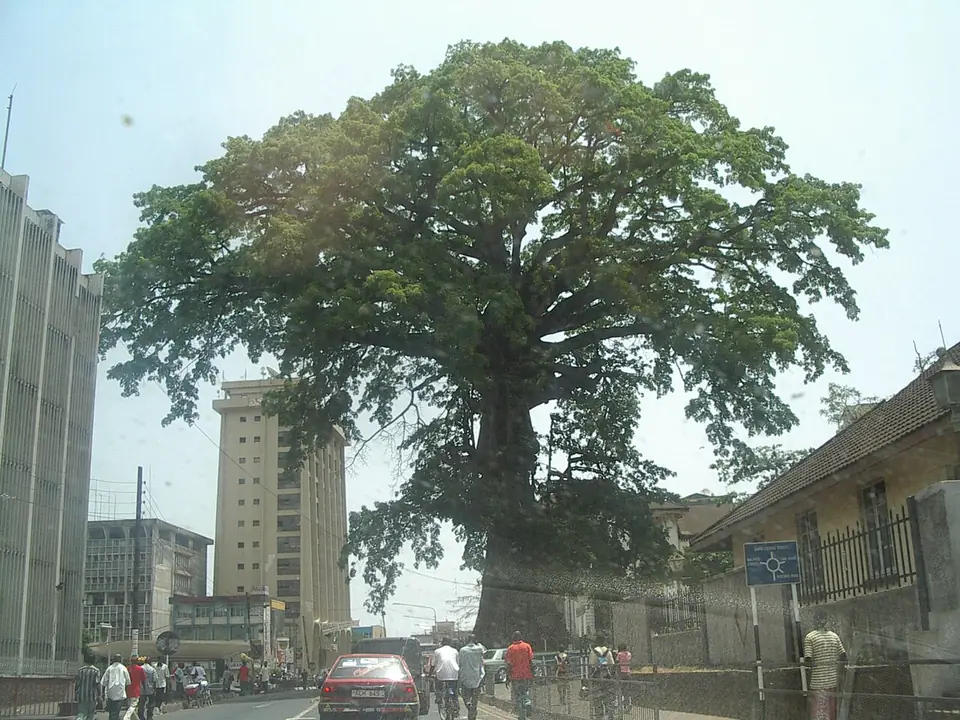
- The Cotton Tree in central Freetown was a national symbol for centuries until it fell during a storm in 2023.
Culture and traditions in Sierra Leone
- Saying hello
A friendly "Kushé" (hello) in Krio, often with a handshake and questions about family.
- Food and drink
Cassava leaf stew with rice, the national favourite; groundnut (peanut) stew is also widely loved.
- Festivals and traditions
Independence Day on 27 April; Freetown's lantern parade is a colourful tradition at the end of Ramadan.
- Everyday life
Rice is eaten at almost every main meal, and greeting elders respectfully is important. Krio is the shared everyday language.
- Did you know?
Freetown was founded in 1792 as a settlement for formerly enslaved people, which is how the capital got its name.
Common mistakes
- Tapping Liberia, its slightly larger neighbour to the south-east.
- Tapping Guinea, which surrounds Sierra Leone on two sides.
- Mixing up the flag order – some learners remember "blue, white, green" and pick Lesotho by accident.
Practise with Sierra Leone
- West Africa quiz – the region zooms in on the bulge, which separates Sierra Leone clearly from Liberia and Guinea.
- Africa quiz – the small coastal country tucked under Guinea.
- Africa flags – a plain tricolour; learn the green-white-blue order and you'll never miss it.
- Africa capitals quiz – Freetown.
- Mystery Country – a compact, nearly round outline with a short coastline on the south-west side.
Nearby countries
Quick check: how well do you know Sierra Leone?
3 questions, no sign-up. Tap an answer.
1. Which flag belongs to Sierra Leone?
That's the flag of Sierra Leone.
2. What is the capital of Sierra Leone?
The capital of Sierra Leone is Freetown.
3. Which of these countries borders Sierra Leone?
Guinea and Liberia border Sierra Leone.
Keep going on the Africa quiz – Sierra Leone is one of 54 countries there.
More ways to practise: find Sierra Leone on the blank map with no borders (hard mode), or play today's Globe and the other daily puzzles.
Frequently asked questions about Sierra Leone
What language is spoken in Sierra Leone?
English is the official language, used in government and education. Krio, an English-based creole, is the common language most people share. The largest local languages are Mende in the south and east and Temne in the north.
What currency does Sierra Leone use?
Sierra Leone uses the leone, code SLE. In 2022 a new leone replaced the old one, knocking three zeros off prices to make everyday sums easier to handle. The currency floats and is not pegged.
What time zone is Sierra Leone in?
Sierra Leone uses Greenwich Mean Time, UTC+0, all year round, like its neighbours Guinea and Liberia. It does not use daylight saving time, so it matches London in winter and is an hour behind in summer.
Which side of the road do they drive on in Sierra Leone?
Sierra Leone drives on the right, even though it was a British colony. It switched from the left in 1971, bringing it into line with its French-speaking neighbour Guinea and most of West Africa.
What is the highest point in Sierra Leone?
Mount Bintumani, also called Loma Mansa, is the highest point at about 1,945 metres. It rises in the Loma Mountains in the north-east, an area of montane forest that is protected as a national park.
What is Sierra Leone famous for?
Sierra Leone is known for its diamonds, whose trade helped fund the civil war of 1991 to 2002. Its wildlife includes the rare pygmy hippopotamus, found around Tiwai Island, and the Tacugama sanctuary near Freetown cares for rescued chimpanzees.
Quizzes with Sierra Leone
Guides that help with this
- Learn all 54 African countries in a weekLearn the coastline in order, region by region.
- Flags that look alike (and how to tell them apart)Chad or Romania? Australia or New Zealand? The flag pairs that cost quiz points.
- The 25 hardest countries to find on a mapPacific islands, Caribbean islands and landlocked Africa – where they are.