Liberia
Capital: Monrovia. Liberia is one of the 54 countries in the Africa quiz.
Quick answers: What is the capital of Liberia? · Which countries border Liberia?
Facts about Liberia
- CapitalMonrovia
- Population5.7 million
- Area111,369 km²
- RegionsAfrica, West Africa
- LanguageEnglish
- CurrencyLiberian dollar (LRD)
Liberia is the 37th most populous of the 54 countries in Africa and the 39th largest by area. Worldwide it ranks 116th by population and 102nd by area.
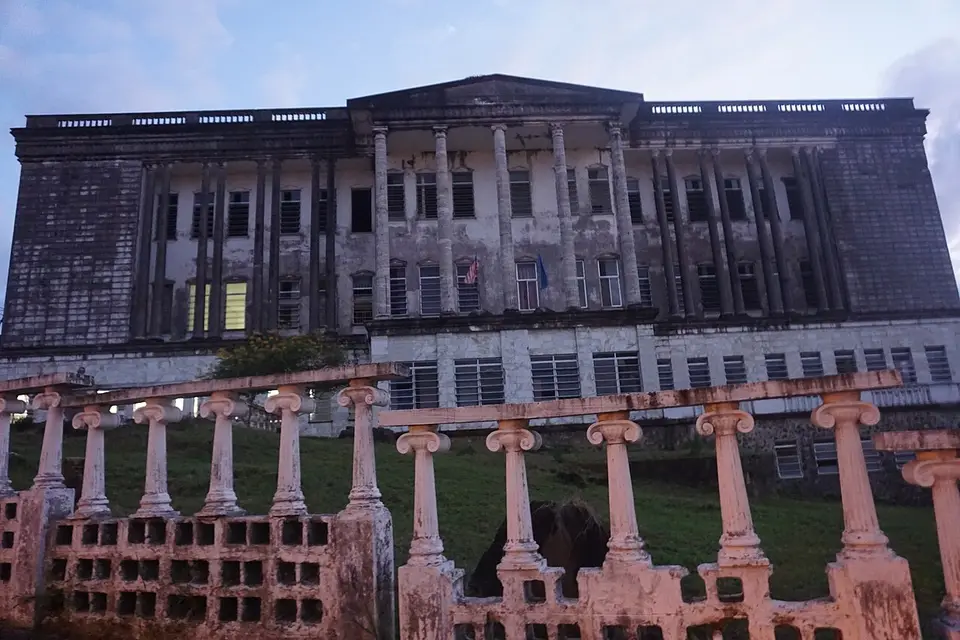
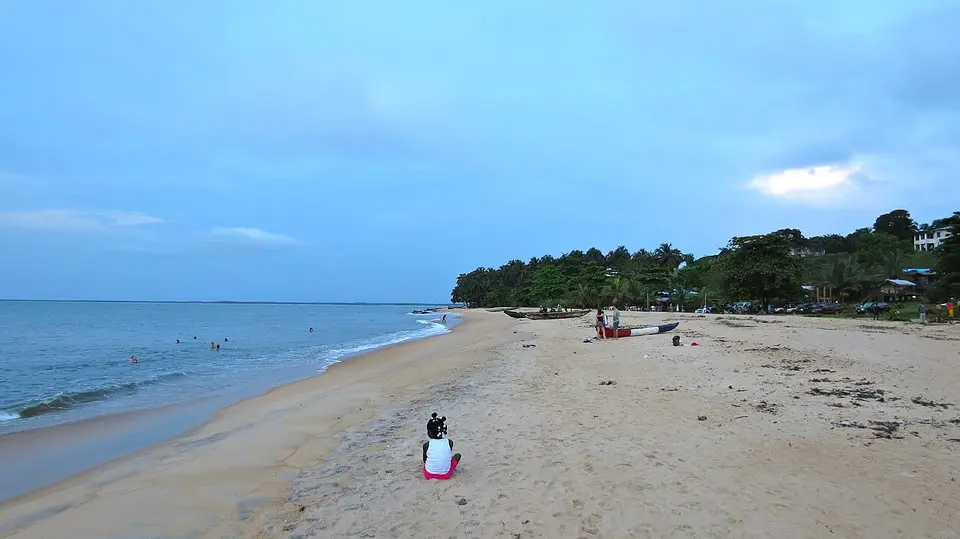
Where is Liberia?
Liberia is on the Atlantic coast of West Africa, where the continent's western bulge turns east towards the Gulf of Guinea. Sierra Leone is to the north-west, Guinea to the north and Ivory Coast to the east. The capital, Monrovia, is on the coast in the north-west of the country.
On a world map, find the westernmost point of Africa and follow the coast south. After Senegal, Guinea and Sierra Leone, the coastline swings east. Liberia is on that corner, just before Ivory Coast.
How to find Liberia on the map
- Start from Sierra Leone. Liberia is the next country along the coast to the south-east.
- Find the corner of West Africa. The coast changes direction from running south to running east roughly at Liberia.
- Count from Ivory Coast. If you know Ivory Coast, Liberia is its western neighbour on the sea.
- Don't confuse it with Sierra Leone. Both are small coastal countries with capitals on the sea. Sierra Leone is the one further north-west.
Flag
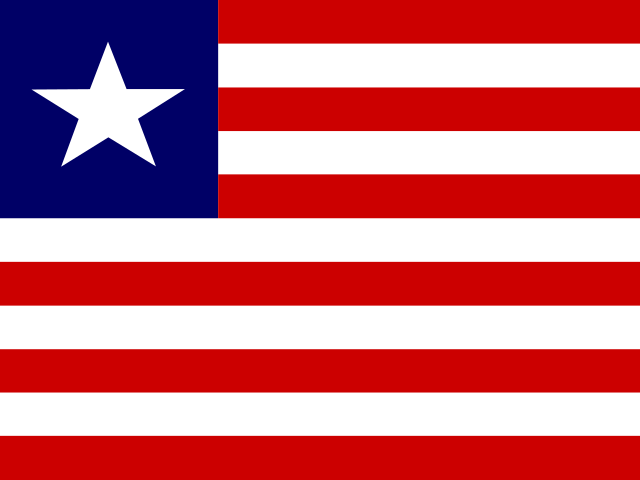
Liberia's flag looks like a simplified United States flag: eleven horizontal stripes of red and white, with a single white star on a blue square in the top-left corner. The resemblance is deliberate. Liberia was founded in the 1820s as a settlement for freed African-Americans; the eleven stripes stand for the eleven signatories of its 1847 declaration of independence, and the lone star for the first independent republic in Africa.
In the Flags quiz, count the stars. One star is Liberia, fifty is the USA, and Malaysia has a crescent and sun instead.
A short history of Liberia
Long before the country had its name, the forests and coast of today's Liberia were home to many African peoples, among them the Kpelle, Bassa, Gio, Mano, Kru, Grebo, Vai and Gola. Many had moved in from the inland savanna over the centuries. The Kru became famous as skilled sailors who worked on European ships, and Portuguese traders in the 1400s called this stretch the Grain Coast, after the melegueta pepper, or "grains of paradise", sold here.
In 1816 a group of white Americans formed the American Colonization Society to send freed Black Americans to Africa. Its motives were mixed: some members opposed slavery, while others simply wanted free Black people out of the United States. The first settlers landed at Cape Mesurado in 1822 and founded the settlement that became Monrovia. Other colonies along the coast later joined it, and in 1847 the settlers declared the Republic of Liberia, with a constitution modelled on the American one.
For more than a century the country was dominated by the Americo-Liberians, the settlers and their descendants, who were only a small share of the population. Indigenous Liberians were often excluded from power, and most could not vote until the mid-1900s. Britain and France took slices of territory claimed by Liberia, shaping its borders with Sierra Leone and Guinea. In 1926 the Firestone company leased a vast area for rubber plantations, which became the backbone of the economy. Under President William Tubman, from 1944 to 1971, iron ore and foreign investment brought growth.
In 1980 a coup led by Samuel Doe, from the Krahn people, ended Americo-Liberian rule. A rebellion launched by Charles Taylor in 1989 began two civil wars that lasted, with a pause, until 2003 and killed a quarter of a million people. Liberian women, led by activists including Leymah Gbowee, helped force the peace talks. Taylor was later convicted by an international court for crimes in neighbouring Sierra Leone.
Since 2003 Liberia has held peaceful elections and survived the Ebola outbreak of 2014–2016. Rubber, iron ore and gold remain key exports.
Culture and daily life in Liberia
English is the official language, but more than 20 African languages are spoken, from Kpelle, the largest, to Bassa and Kru. The Vai people of the north-west are famous for having invented their own syllabic script in the 1830s, one of the few writing systems created in Africa in modern times. Most Liberians are Christian, with a significant Muslim minority, especially among the Mandingo and Vai.
Secret societies, the Poro for men and the Sande for women, have long trained young people in local law, crafts and adulthood among many peoples of the interior. The masks used in their ceremonies are among the finest wood carvings in West Africa, especially those of the Dan people.
Football is the national passion, and George Weah, who grew up in a Monrovia slum, became the only African to win the Ballon d'Or, in 1995. Weekends are full of church choirs, gospel and hipco, a local rap style performed in Liberian English. Cookshops serving rice and soup are the centre of street life in Monrovia.
Five facts worth knowing
- Liberia is Africa's oldest republic, independent since 1847, and was never colonised by a European power.
- Monrovia is named after James Monroe, the fifth US President, who supported the settlement of freed slaves there.
- Liberia has one of the largest ship registries in the world, with thousands of merchant vessels flying its flag of convenience.
- Ellen Johnson Sirleaf, elected in 2005, was the first woman elected head of state in Africa, and shared the 2011 Nobel Peace Prize.
- Monrovia is one of the rainiest capitals in the world, with most rain falling between May and October.
Culture and traditions in Liberia
- Saying hello
The famous Liberian handshake ends with both people snapping each other's middle finger.
- Food and drink
Jollof rice; palm butter soup with rice; cassava leaf stew.
- Festivals and traditions
Independence Day on 26 July with parades and celebrations.
- Everyday life
Liberian English is the everyday language, and greeting everyone warmly is important.
- Did you know?
The capital, Monrovia, is named after US President James Monroe, as the country was founded by freed African Americans in the 1800s.
Common mistakes
- Tapping Sierra Leone, its near-twin on the coast to the north-west.
- Tapping Ivory Coast, the larger neighbour to the east.
- Picking the US or Malaysian flag without counting the stars.
Practise with Liberia
- West Africa quiz – the map zooms in on the bulge, so the coastal corner is clear.
- Africa quiz – find the westernmost tip of the continent and work down the coast.
- Africa flags – one star, eleven stripes.
- Africa capitals quiz – Monrovia.
- Mystery Country – a compact, roughly rectangular outline with a straight-ish Atlantic edge.
Nearby countries
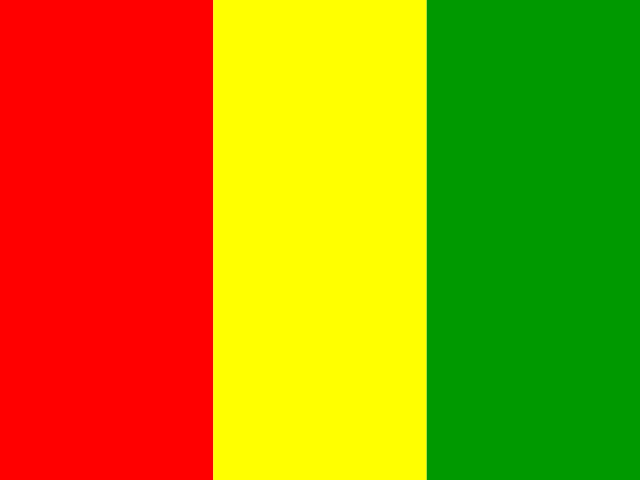 GuineaConakry
 Ivory CoastYamoussoukro
 Sierra LeoneFreetown
Quick check: how well do you know Liberia?
3 questions, no sign-up. Tap an answer.
1. Which flag belongs to Liberia?
That's the flag of Liberia.
2. What is the capital of Liberia?
The capital of Liberia is Monrovia.
3. Which of these countries borders Liberia?
Guinea, Ivory Coast and Sierra Leone border Liberia.
Keep going on the Africa quiz – Liberia is one of 54 countries there.
More ways to practise: find Liberia on the blank map with no borders (hard mode), or play today's Globe and the other daily puzzles.
Frequently asked questions about Liberia
What language is spoken in Liberia?
English is the official language, and most Liberians also speak Liberian English, sometimes called Kolokwa. Around two dozen indigenous languages are spoken too, including Kpelle, the most widespread, Bassa, Grebo, Vai and Kru.
What currency does Liberia use?
Liberia's currency is the Liberian dollar (LRD). The US dollar also circulates widely and is used for many larger payments, rents and salaries, so most Liberians handle both. The Liberian dollar floats against the US dollar.
What time zone is Liberia in?
Liberia is on UTC+0, Greenwich Mean Time, throughout the year and does not use daylight saving. It used a unique offset of 44 minutes and 30 seconds behind GMT until 1972.
Which side of the road do they drive on in Liberia?
Liberia drives on the right, like the United States and its West African neighbours. Many roads outside Monrovia are unpaved and can become impassable during the long rainy season.
What is the highest point in Liberia?
The highest point is Mount Wuteve, about 1,440 metres, in the Wologizi range in Lofa County in the north-west, near the border with Guinea. Much of the surrounding area is still covered in tropical forest.
Why is Liberia called Liberia?
Liberia's name comes from the Latin liber, "free". It was founded in the 1820s as a home for freed African Americans and declared independence in 1847, and its motto is "The love of liberty brought us here".
Quizzes with Liberia
Guides that help with this
- Learn all 54 African countries in a weekLearn the coastline in order, region by region.
- Flags that look alike (and how to tell them apart)Chad or Romania? Australia or New Zealand? The flag pairs that cost quiz points.
- The 25 hardest countries to find on a mapPacific islands, Caribbean islands and landlocked Africa – where they are.