Uruguay
Capital: Montevideo. Uruguay is one of the 12 countries in the South America quiz.
Quick answers: What is the capital of Uruguay? · Which countries border Uruguay?
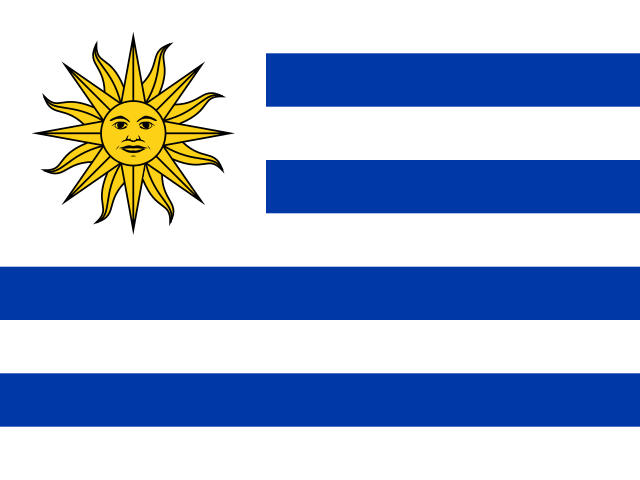
Facts about Uruguay
- CapitalMontevideo
- Population3.4 million
- Area181,034 km²
- RegionSouth America
- LanguageSpanish
- CurrencyUruguayan peso (UYU)
Uruguay is the 10th most populous of the 12 countries in South America and the 11th largest by area. Worldwide it ranks 133rd by population and 89th by area.
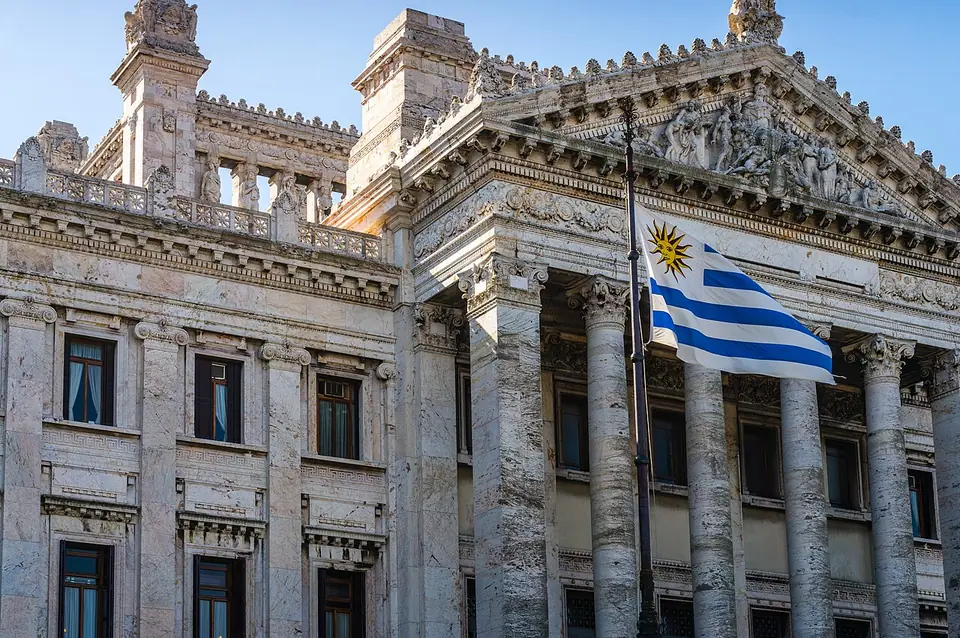
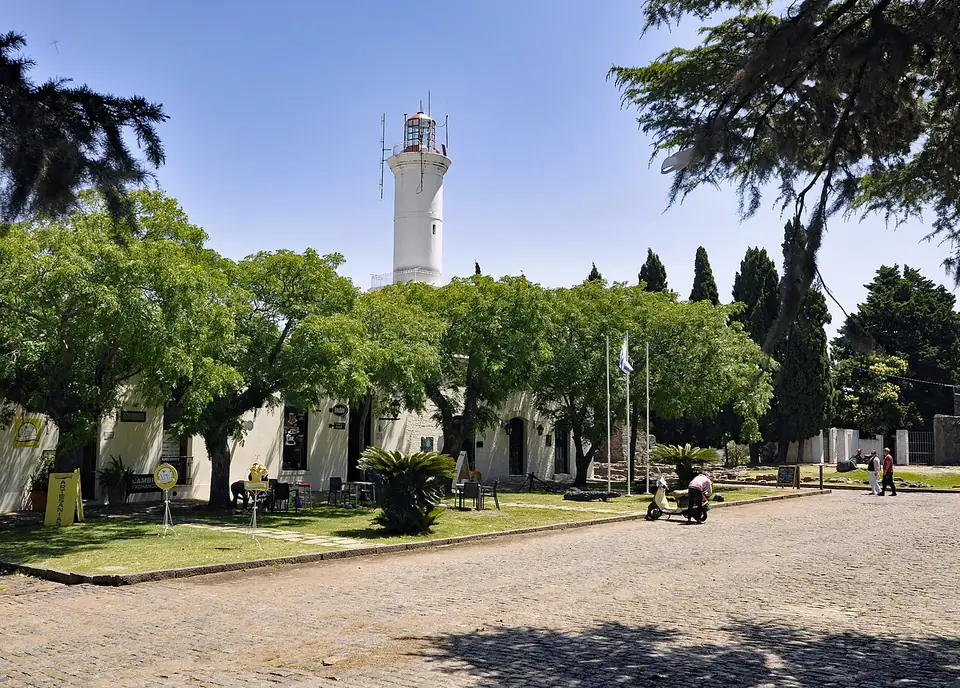
Where is Uruguay?
Uruguay is a small country on the Atlantic coast of South America, wedged between two giants: Brazil to the north-east and Argentina to the west, across the Uruguay River. Its southern coast faces the Río de la Plata, the wide estuary it shares with Argentina. The capital, Montevideo, sits on that estuary and is home to around a third of the population.
On a world map, find the enormous funnel-shaped estuary on the east coast of South America, where Buenos Aires is. Uruguay is the country on the northern bank.
How to find Uruguay on the map
- Start from Argentina. Uruguay is the small country just across the river from Buenos Aires, on the opposite shore of the Río de la Plata.
- Look for the gap between the giants. Brazil and Argentina almost meet on the Atlantic; Uruguay is the modest wedge keeping them apart.
- Follow the coast south from Brazil. When the Brazilian coastline ends, the next country is Uruguay.
- Don't confuse it with Paraguay. The names rhyme but Paraguay is landlocked and further north-west; Uruguay has a long Atlantic coastline.
Flag
Uruguay's flag has nine horizontal stripes alternating white and blue, with a white canton in the upper hoist containing the Sun of May – a golden sun with a face and sixteen rays, alternately straight and wavy. The nine stripes stand for the nine original departments; the sun is shared with Argentina's flag and recalls the independence movement of May 1810.
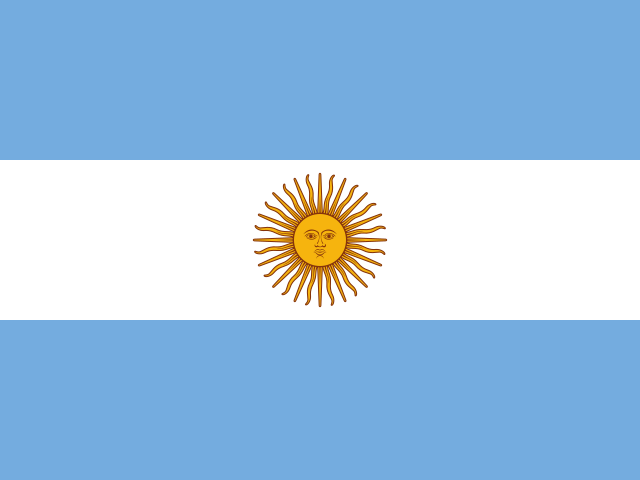
In the Flags quiz, the sun links it to Argentina, but Argentina's flag has only three broad horizontal bands with the sun in the middle. Greece also has blue-and-white stripes, but with a cross in the canton instead of a sun.
A short history of Uruguay
Before Europeans arrived, the grasslands north of the Río de la Plata were home to the Charrúa and other small groups of hunters and fishers. The Spanish explorer Juan Díaz de Solís sailed into the estuary in 1516, but the land offered no gold and few settlers came at first. Instead, cattle let loose in the 1600s multiplied on the open plains, creating the herds that would shape the country's future.
Spain and Portugal fought over this land for more than a century. The Portuguese founded Colonia del Sacramento in 1680, opposite Buenos Aires, and the Spanish answered by building Montevideo as a fortified port in the 1720s. The region became known as the Banda Oriental, the "eastern bank" of the Uruguay River – which is why the country's official name is the Oriental Republic of Uruguay.
When Spain's empire collapsed, José Gervasio Artigas led the fight for independence and federal self-rule, and he is still the national hero. Brazil then occupied the territory, and in 1825 a band of exiles called the Thirty-Three Orientals landed to rebel. Britain helped broker a peace in 1828 that created Uruguay as an independent buffer state between Argentina and Brazil, and its first constitution followed in 1830. The rest of the 1800s was marked by civil wars between two parties, the Blancos and the Colorados, which still exist today. In the 1860s Uruguay also fought alongside Brazil and Argentina in the bloody War of the Triple Alliance against Paraguay.
In the early 1900s President José Batlle y Ordóñez introduced an eight-hour working day, free schooling, divorce rights and a strong welfare state, earning Uruguay the nickname "the Switzerland of South America". Economic decline and the Tupamaro guerrilla movement led to a military dictatorship from 1973 to 1985. Since democracy returned, Uruguay has become one of Latin America's most stable countries, exporting beef, soya, rice, wood pulp and dairy products.
Culture and daily life in Uruguay
Uruguayans speak Spanish with a Río de la Plata accent, using "vos" instead of "tú", much like Argentines. Most are descended from Spanish and Italian immigrants, and Italian influence shows up in words, surnames and the love of pizza and pasta. Uruguay is the most secular country in Latin America: church and state were formally separated in the early 1900s, and Holy Week is officially called "Tourism Week".
Writers include Juan Carlos Onetti and Eduardo Galeano, whose Open Veins of Latin America is read across the continent. The tango was shaped on both sides of the river, and its most famous tune, La Cumparsita, was written in Montevideo. Candombe, an Afro-Uruguayan drum rhythm born among the descendants of enslaved Africans, is recognised by UNESCO.
The gaucho, the cowboy of the pampas, is a national symbol, celebrated during Tourism Week at the Criolla del Prado rodeo in Montevideo. Football is close to a religion, and players such as Luis Suárez and Diego Forlán are heroes.
Five facts worth knowing
- Uruguay hosted and won the first FIFA World Cup in 1930, and won it again in 1950 by beating Brazil in Rio de Janeiro.
- It is the second-smallest country in South America by area, after Suriname.
- The name comes from the Uruguay River, which forms the entire western border with Argentina; it is usually translated as "river of the painted birds".
- Uruguay was the first country to legalise recreational cannabis nationwide, in 2013.
- Almost all of its electricity comes from renewable sources, mainly wind, hydro and biomass.
Culture and traditions in Uruguay
- Saying hello
A single kiss on the cheek, even between new acquaintances, and "Hola".
- Food and drink
Asado, slow-grilled beef; chivito, a hearty steak sandwich; mate, a herbal tea sipped through a metal straw.
- Festivals and traditions
Carnival lasts about 40 days (January to March), with candombe drumming and murga street theatre.
- Everyday life
People carry a thermos and mate gourd almost everywhere and share mate with friends.
- Did you know?
Uruguay hosted and won the first FIFA World Cup in 1930.
Common mistakes
- Tapping Paraguay because of the similar name.
- Tapping the Argentine side of the Río de la Plata.
- Mixing up the flag with Argentina's or Greece's in the Flags quiz.
Practise with Uruguay
- South America quiz – the small wedge between Brazil and Argentina on the Atlantic.
- North America flags – blue-and-white stripes with the Sun of May in the corner.
- South America capitals quiz – Montevideo, across the estuary from Buenos Aires.
- Whole World quiz – a small target but easy once you've found the Río de la Plata.
- Mystery Country – a rounded, almost triangular outline with a flat river border on the west.
Nearby countries
Quick check: how well do you know Uruguay?
3 questions, no sign-up. Tap an answer.
1. Which flag belongs to Uruguay?
That's the flag of Uruguay.
2. What is the capital of Uruguay?
The capital of Uruguay is Montevideo.
3. Which of these countries borders Uruguay?
Argentina and Brazil border Uruguay.
Keep going on the South America quiz – Uruguay is one of 12 countries there.
More ways to practise: find Uruguay on the blank map with no borders (hard mode), or play today's Globe and the other daily puzzles.
Frequently asked questions about Uruguay
What language is spoken in Uruguay?
Spanish is the official language, spoken with a Rioplatense accent much like that of Buenos Aires. Near the Brazilian border, many people speak Portuñol, a mix of Spanish and Portuguese, and Uruguayan Sign Language is also legally recognised.
What currency does Uruguay use?
Uruguay uses the Uruguayan peso (UYU), introduced in 1993 when three zeros were removed from the old new peso. It floats freely. Prices for property and cars are often quoted in US dollars, which many people also hold in savings.
What time zone is Uruguay in?
Uruguay is on UTC−3 all year, the same as Argentina and Brasília time. It used daylight saving time for many years but dropped it in 2015.
Which side of the road do they drive on in Uruguay?
Uruguay drives on the right. It switched from the left in 1945, the same year as Argentina, bringing it into line with Brazil. Its main highways fan out from Montevideo along the coast and into the interior.
What is the highest point in Uruguay?
The highest point is Cerro Catedral, at only about 515 metres, in the gently rolling hills of Maldonado department. Uruguay is one of the flattest countries in South America, with no true mountains.
What is Uruguay famous for?
Uruguay is famous for football, having won the first World Cup, and for beef – it has far more cattle than people. Mate tea, drunk from a gourd through a metal straw, is everywhere, and the beach resort of Punta del Este draws visitors from across the region.
Quizzes with Uruguay
Often confused with
Guides that help with this
- Oceans, seas, rivers and mountainsThe physical map: seas around each continent, the big rivers and ranges.
- Flags that look alike (and how to tell them apart)Chad or Romania? Australia or New Zealand? The flag pairs that cost quiz points.
- The 25 hardest countries to find on a mapPacific islands, Caribbean islands and landlocked Africa – where they are.