Argentina
Capital: Buenos Aires. Argentina is one of the 12 countries in the South America quiz.
Quick answers: What is the capital of Argentina? · Which countries border Argentina?
Facts about Argentina
- CapitalBuenos Aires
- Population45.9 million
- Area2,780,400 km²
- RegionSouth America
- LanguageSpanish
- CurrencyArgentine peso (ARS)
Argentina is the 3rd most populous of the 12 countries in South America and the 2nd largest by area. Worldwide it ranks 35th by population and 8th by area.
Where is Argentina?
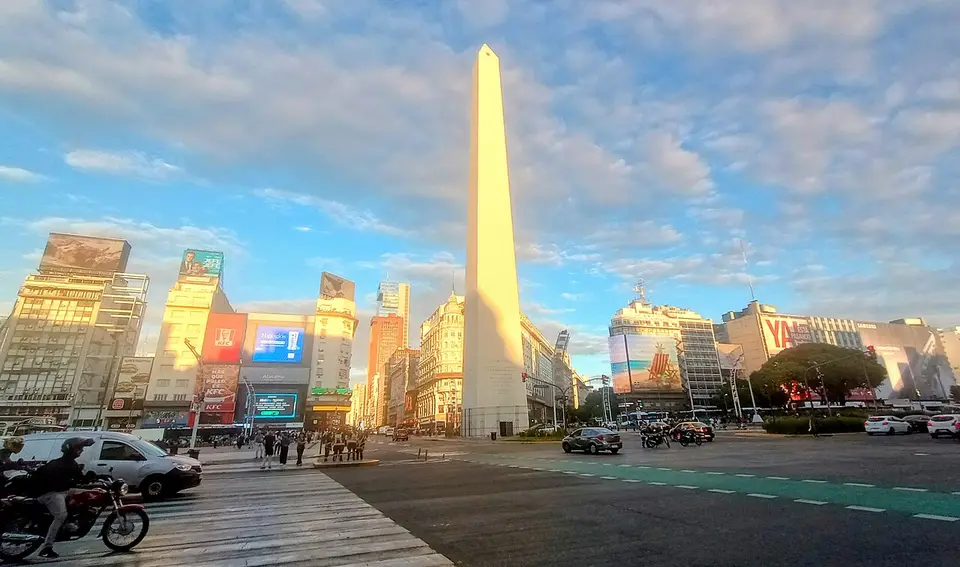
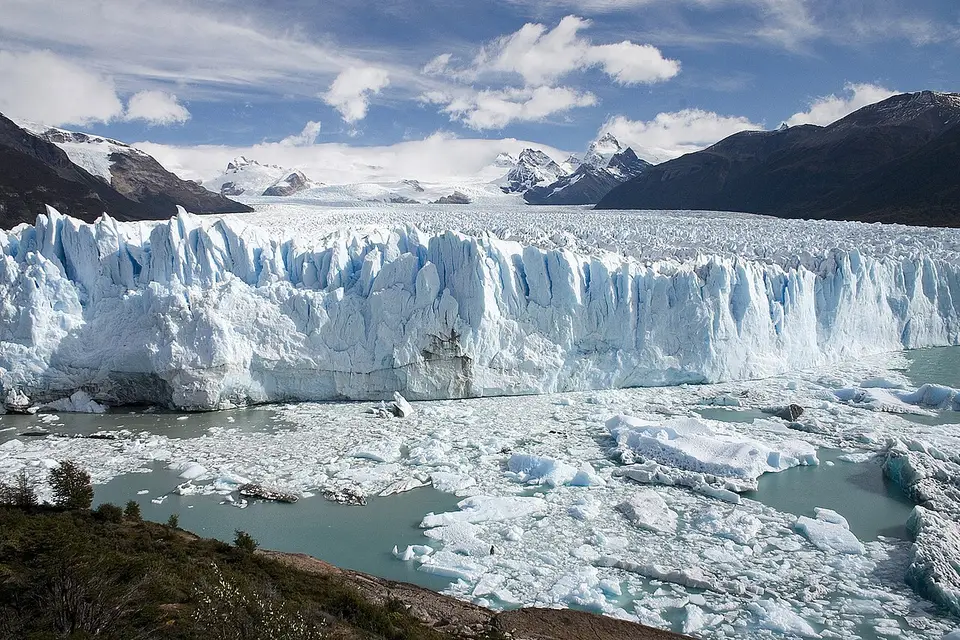
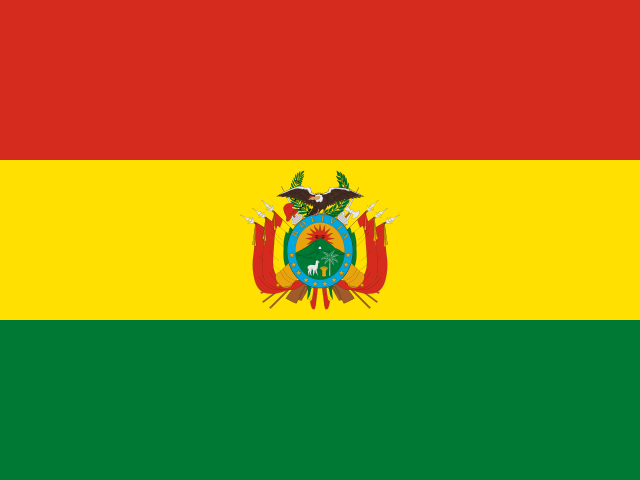
Argentina fills the south-eastern part of South America, a long wedge that narrows from the subtropical north down to the tip of the continent at Tierra del Fuego. The Andes mountains form its entire western border with Chile; the Atlantic Ocean is to the east. To the north and north-east it borders Bolivia, Paraguay, Brazil and Uruguay. Buenos Aires sits on the western bank of the Río de la Plata estuary, directly across the water from Uruguay. The Falkland Islands, off the southern coast, are a British territory that Argentina claims as the Malvinas.
How to find Argentina on the map
- Start from the bottom of South America. Argentina is the wide eastern side of the southern cone; Chile is the thin strip on the west.
- Look for the Andes. Argentina is everything east of the mountains, south of Bolivia.
- Don't confuse it with Chile. Chile is long and extremely narrow along the Pacific; Argentina is the bulk behind it.
- Uruguay is the small country across the river from Buenos Aires – an easy one to tap by accident.
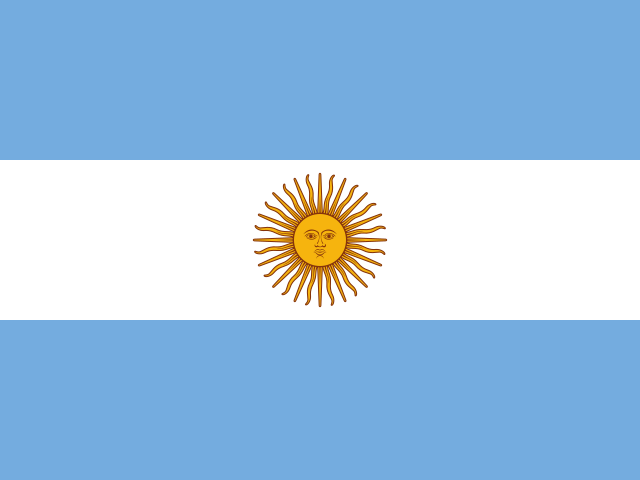
Flag
Three horizontal bands – light blue, white, light blue – with a golden Sun of May in the centre of the white band. It's most easily confused with Uruguay, which uses the same light blue and white and a very similar sun, but as nine stripes with the sun in the top-left corner. El Salvador and Nicaragua also use blue-white-blue but with darker blue and a coat of arms. In the Flags quiz, light blue with a sun in the middle is Argentina; stripes with the sun in the corner is Uruguay.
A short history of Argentina
Before Europeans arrived, Argentina was home to many peoples. Farming communities such as the Diaguita lived in the dry north-west, which the Inca Empire reached in the late 1400s. Guaraní people lived in the subtropical north-east, and hunters such as the Tehuelche roamed the Pampas and Patagonia.
Spanish explorers came up the Río de la Plata in the early 1500s, hoping it led to silver. Buenos Aires was first founded in 1536, abandoned, and founded again in 1580. For two centuries it was a small smuggling port, because Spain forced trade to go through Lima. In 1776 Spain made it the capital of a new Viceroyalty of the Río de la Plata. Local militias drove off two British invasions in 1806 and 1807, which boosted confidence, and the May Revolution of 1810 set up a local government. Independence was declared in Tucumán on 9 July 1816. General José de San Martín then led an army across the Andes to help free Chile and Peru.
Decades of conflict between Buenos Aires and the provinces followed before a constitution was agreed in 1853. In the 1870s and 1880s, military campaigns known as the Conquest of the Desert seized Patagonia and the southern Pampas from indigenous peoples. Millions of European immigrants, mostly from Italy and Spain, then poured in, and by the early 1900s Argentina was one of the richest countries in the world, exporting beef and grain.
The 20th century was turbulent. Juan Perón, elected in 1946, and his wife Eva built a powerful movement that still shapes politics. Military coups came again and again. The dictatorship of 1976–83 killed or "disappeared" thousands of people, and in 1982 it invaded the Falkland Islands, which Argentina claims as the Malvinas and Britain holds. Defeat in that war brought back democracy in 1983.
Argentina has since faced repeated economic crises, including a severe collapse in 2001. It remains a major exporter of soya, beef and wheat, with growing lithium mining.
Culture and daily life in Argentina
Argentine Spanish is easy to recognise. People say vos instead of tú, and the sing-song intonation of Buenos Aires owes a lot to Italian immigrants, as does the local slang, lunfardo. Most Argentines are Catholic, and Pope Francis, the first pope from the Americas, came from Buenos Aires.
The gaucho, the cowboy of the Pampas, is the national folk hero, celebrated in José Hernández's long poem Martín Fierro. Argentina has also produced some of the most admired writers in Spanish, above all Jorge Luis Borges, along with Julio Cortázar. The cartoonist Quino created Mafalda, a sharp-tongued little girl loved across the Spanish-speaking world. Folk music such as the chacarera and zamba was carried abroad by the singer Mercedes Sosa, and Buenos Aires's Teatro Colón is one of the world's great opera houses.
Football aside, Argentina dominates world polo, has a strong rugby team known as Los Pumas, and produced basketball star Manu Ginóbili. Family life matters a great deal, and Sunday often means a long lunch with relatives. Sweet tooths reach for dulce de leche and alfajores.
Five facts worth knowing
- Argentina is the second-largest country in South America after Brazil and the eighth largest in the world.
- Aconcagua, on the Chilean border, is the highest mountain outside Asia at 6,961 metres.
- Argentina is divided into 23 provinces plus the autonomous city of Buenos Aires. All of them are in the Argentine Provinces quiz.
- Ushuaia in Tierra del Fuego is often called the southernmost city in the world, and is the main departure point for cruises to Antarctica.
- Argentina has won the FIFA World Cup three times – 1978, 1986 and 2022 – and has produced Maradona and Messi.
Culture and traditions in Argentina
- Saying hello
One kiss on the right cheek, even between male friends.
- Food and drink
Asado (barbecued beef) and empanadas, with mate, a herbal tea sipped from a gourd.
- Festivals and traditions
Carnival in February; the Buenos Aires Tango Festival is held each August.
- Everyday life
Dinner rarely starts before 9 or 10 pm, and sharing mate from one gourd is a sign of friendship.
- Did you know?
Tango was born in the working-class neighbourhoods around the Rio de la Plata and is on UNESCO's heritage list.
Common mistakes
- Tapping Chile, the thin strip along the Pacific coast.
- Tapping Uruguay when aiming for Buenos Aires – it's just across the river.
- Picking Uruguay's flag in the Flags quiz; check whether the sun is in the middle or the corner.
- Tapping southern Brazil or Paraguay in the north, where the borders are less obvious.
Practise with Argentina
- South America quiz – only 12 countries, so Argentina is one of the first you'll learn.
- Argentine Provinces – all 23 provinces and the city of Buenos Aires, from Jujuy to Tierra del Fuego.
- Whole World flags – learn to tell Argentina from Uruguay.
- South America capitals quiz – Buenos Aires.
- Mystery Country – the long tapering wedge with Chile sliced off the west side is easy to recognise.
Nearby countries
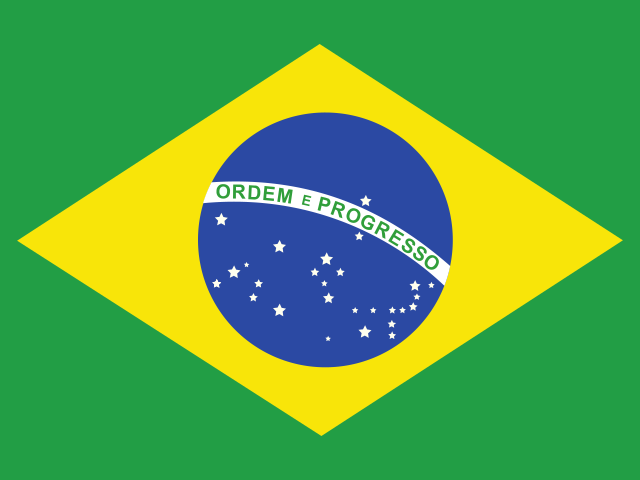
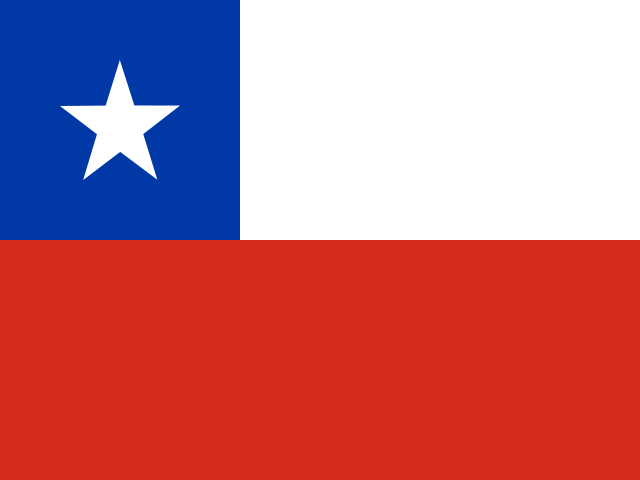
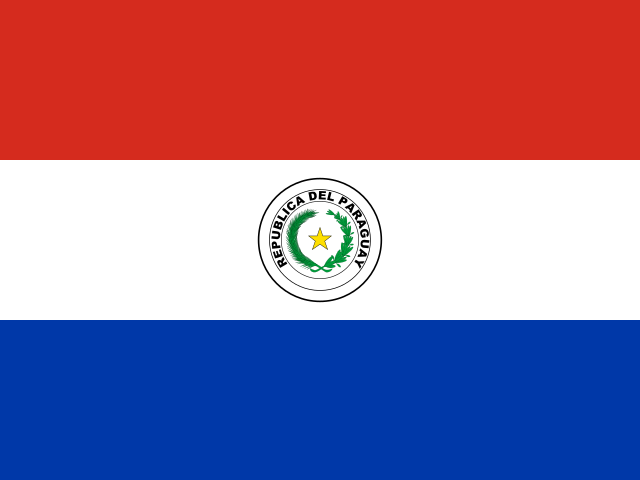
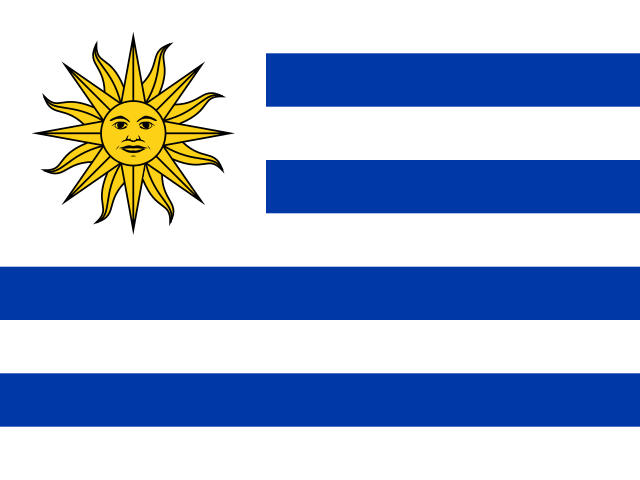
Quick check: how well do you know Argentina?
3 questions, no sign-up. Tap an answer.
1. Which flag belongs to Argentina?
That's the flag of Argentina.
2. What is the capital of Argentina?
The capital of Argentina is Buenos Aires.
3. Which of these countries borders Argentina?
Bolivia, Brazil, Chile, Paraguay and Uruguay border Argentina.
Keep going on the South America quiz – Argentina is one of 12 countries there.
More ways to practise: find Argentina on the blank map with no borders (hard mode), or play today's Globe and the other daily puzzles.
Frequently asked questions about Argentina
What language is spoken in Argentina?
Spanish is the national language, spoken with a distinctive accent and the use of vos instead of tú. Guaraní is co-official in Corrientes Province, and Italian immigration has strongly influenced Argentine speech, especially in Buenos Aires.
What currency does Argentina use?
Argentina uses the Argentine peso (ARS). The currency has suffered repeated bouts of high inflation and several redenominations, and many Argentines save in US dollars, so exchange rates are a constant topic of conversation.
What time zone is Argentina in?
Argentina uses UTC−3 throughout the country and does not observe daylight saving time. Because the country stretches so far west, this means late sunsets in western provinces such as Mendoza.
Which side of the road do they drive on in Argentina?
Argentines drive on the right. Until 1945 the country drove on the left, partly because British companies built much of its railway network, and the switch took place nationally on 10 June 1945.
What is the highest point in Argentina?
The highest point is Aconcagua, about 6,961 metres, in Mendoza Province near the Chilean border. It is the highest mountain in both the Western and Southern Hemispheres and a popular climb, as its normal route needs no technical skill.
Is Argentina the largest Spanish-speaking country?
By area, yes. At about 2.78 million square kilometres, Argentina is the largest Spanish-speaking country in the world, bigger than Mexico. By population, Mexico is far larger.
Quizzes with Argentina
Often confused with
Guides that help with this
- Oceans, seas, rivers and mountainsThe physical map: seas around each continent, the big rivers and ranges.
- Flags that look alike (and how to tell them apart)Chad or Romania? Australia or New Zealand? The flag pairs that cost quiz points.
- The 25 hardest countries to find on a mapPacific islands, Caribbean islands and landlocked Africa – where they are.