Andorra
Capital: Andorra la Vella. Andorra is one of the 46 countries in the Europe quiz.
Quick answers: What is the capital of Andorra? · Which countries border Andorra?
Facts about Andorra
- CapitalAndorra la Vella
- Population82,904
- Area468 km²
- RegionEurope
- LanguageCatalan
- CurrencyEuro (EUR)
Andorra is the 42nd most populous of the 46 countries in Europe and the 41st largest by area. Worldwide it ranks 187th by population and 181st by area.
Where is Andorra?
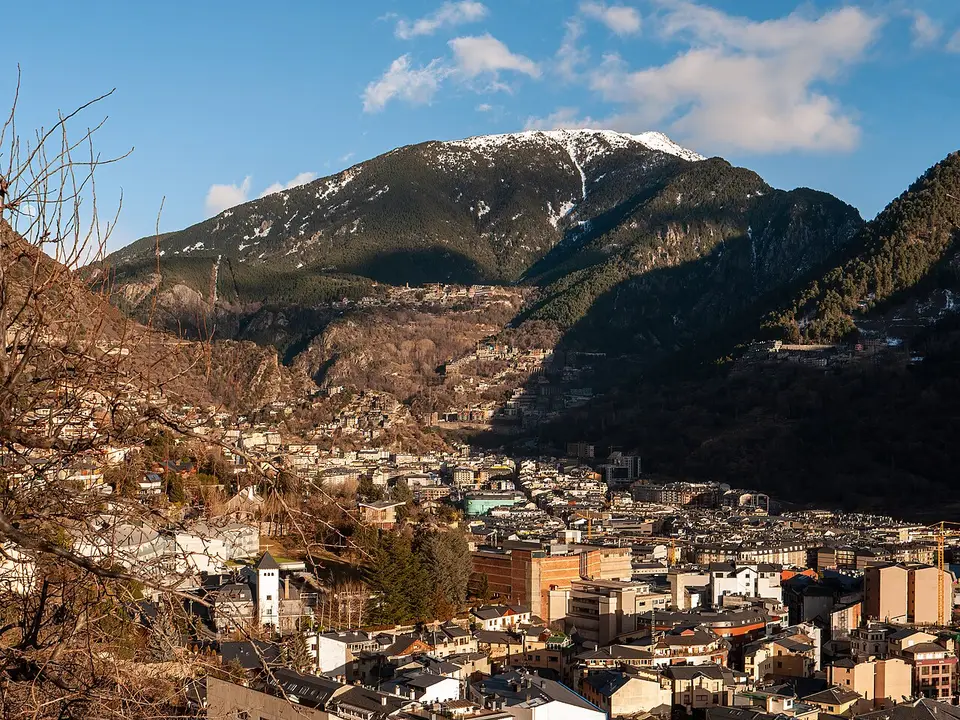
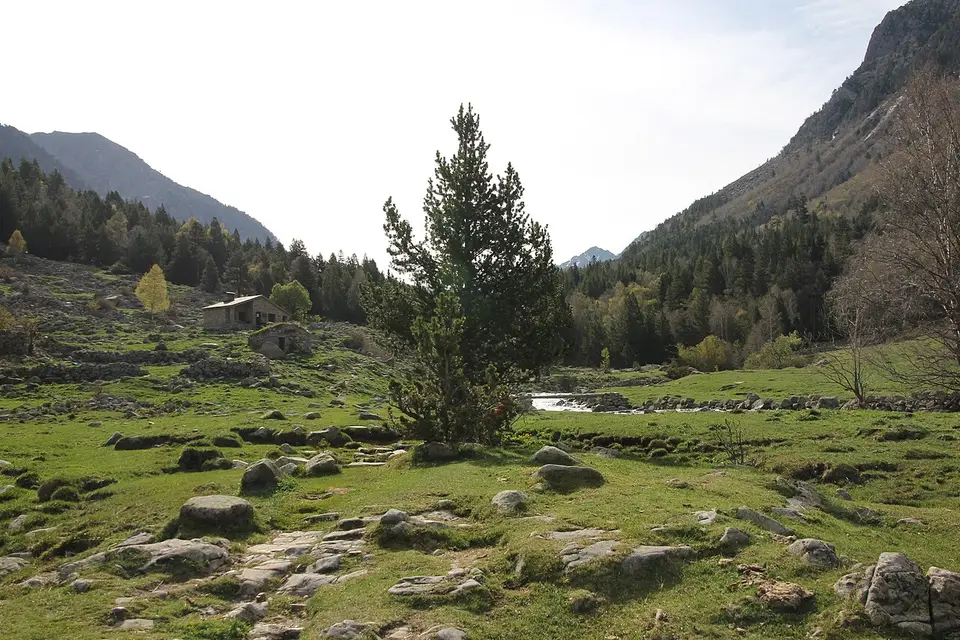
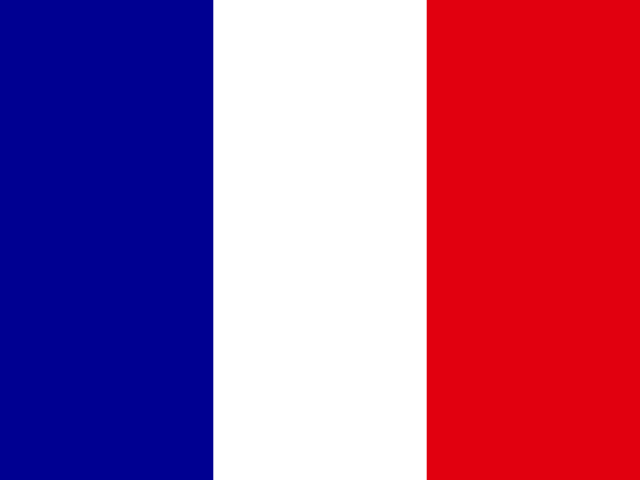
Andorra is a tiny landlocked country in the Pyrenees, squeezed between France to the north and Spain to the south. At around 470 square kilometres it is one of the smallest countries in Europe, and it sits entirely in high mountain valleys. The capital, Andorra la Vella, is one of the highest capitals in Europe at just over 1,000 metres.
On a world map it is almost invisible. Find the France–Spain border along the Pyrenees. Andorra is a dot on that line, closer to the Mediterranean end than the Atlantic end.
How to find Andorra on the map
- Start from the France–Spain border. Andorra is the only country on that line.
- Go towards the Mediterranean. Andorra sits in the eastern half of the Pyrenees, not far from Barcelona on the Spanish side.
- Aim carefully. At Europe-map scale Andorra is a speck.
- Don't confuse it with Monaco. Monaco is also tiny and next to France, but it is on the coast near Italy, not in the mountains.
Flag
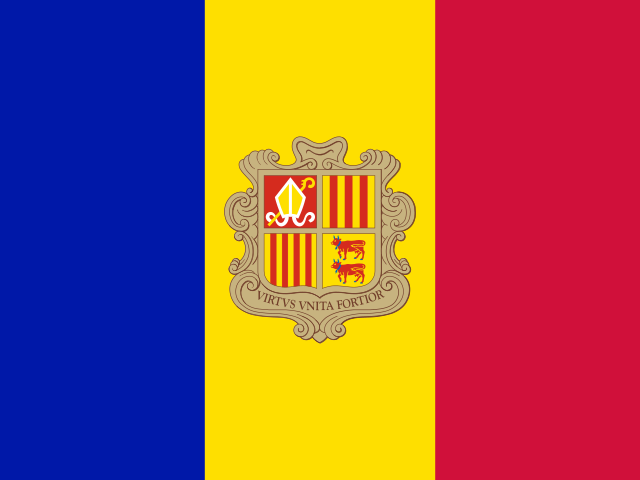
Andorra's flag is a vertical tricolour of blue, yellow and red with the coat of arms in the centre of the yellow band. The colours are said to combine the blue and red of France with the yellow and red of Spain.
The problem for quiz players is that Romania and Moldova use the same layout. Romania's flag has no emblem. Moldova's has an eagle holding a shield. Andorra's has a shield with a mitre and two cows, and its yellow band is slightly wider than the others. Chad uses blue-yellow-red too, with a darker blue.
A short history of Andorra
People have lived in these Pyrenean valleys since prehistoric times, but Andorra's story as a separate country begins in the Middle Ages. A popular legend says Charlemagne granted the valleys their freedom in return for help against the Moors. What is certain is that by the 9th century the valleys belonged to the Counts of Urgell, who later handed rights over them to the Bishop of Urgell.
Over the following centuries the bishops and the French Counts of Foix quarrelled over who controlled Andorra. A medieval agreement settled the matter by giving both of them joint authority, which is the origin of the co-princes. The Foix rights passed by inheritance to the kings of Navarre and then, through Henry IV, to the French crown and eventually to the French head of state. In 1419 Andorrans won the right to their own assembly, the forerunner of today's parliament, the Consell General. The country is still divided into parishes, a pattern that goes back to medieval times.
For most of its history Andorra was poor and isolated. Families lived from sheep, cattle and small fields, and later from growing tobacco and smuggling goods between France and Spain. The country stayed out of both world wars and the Spanish Civil War, although its mountain paths became escape routes for refugees.
Change came with roads. From the mid-20th century, cars, ski lifts and low taxes brought visitors in rising numbers, and the valleys filled with hotels and shops. In 1993 Andorrans approved their first written constitution, which turned the old arrangement into a modern parliamentary co-principality, and the country joined the United Nations the same year.
Today Andorra is wealthy, with an economy built on tourism, retail and banking. Under international pressure it ended strict banking secrecy and moved closer to European tax standards.
Culture and daily life in Andorra
Andorra is unusual in that Andorran citizens make up less than half of the people living there. Many residents come from Spain, Portugal and France, so Spanish, Portuguese and French are heard as often as Catalan in shops and cafes. Citizenship is hard to get, which keeps the number of Andorran nationals small.
The country is traditionally Roman Catholic, and its greatest artistic treasure is a set of small Romanesque churches from the 11th and 12th centuries, with stone bell towers and faded wall paintings. Santa Coloma, with its unusual round tower, and Sant Joan de Caselles are two of the best known. The Madriu-Perafita-Claror valley, a high glacial valley with old shepherds' huts and terraces, is a UNESCO World Heritage Site.
Folk traditions are shared with neighbouring Catalonia, including the sardana circle dance. Daily life follows the seasons: ski resorts such as Grandvalira are busy in winter, while summer brings hikers and cyclists. The Caldea thermal spa in Escaldes-Engordany, a glass spire beside the river, is a modern landmark.
Five facts worth knowing
- Andorra has two heads of state at once – the President of France and the Bishop of Urgell in Spain are co-princes, a system dating back to 1278.
- Andorra is not in the European Union but uses the euro under a special agreement.
- Catalan is the official language – the only country where this is the case.
- Tourism and shopping drive the economy – ski resorts and duty-free prices draw millions of visitors a year to a country of around 80,000 people.
- Andorra has no airport and no railway. You get in by road from France or Spain.
Culture and traditions in Andorra
- Saying hello
"Bon dia" in Catalan, with two kisses on the cheeks among friends.
- Food and drink
Escudella (hearty meat and vegetable stew) and trinxat (cabbage and potato with bacon).
- Festivals and traditions
Meritxell Day, the national day, on 8 September; summer brings village festes majors.
- Everyday life
Catalan is the official language, lunches are long, and the mountains draw skiers in winter and hikers in summer.
- Did you know?
Andorra has two heads of state at once: the Bishop of Urgell in Spain and the President of France.
Common mistakes
- Tapping the wrong part of the Pyrenees – Andorra is in the east, towards the Mediterranean.
- Tapping Monaco, Liechtenstein or San Marino, the other European microstates.
- Picking Romania or Moldova in the Flags quiz because of the identical colours.
Practise with Andorra
- Europe quiz – the dot on the France–Spain border; aim carefully.
- Europe flags – learn to separate the blue-yellow-red flags: Andorra, Romania, Moldova, Chad.
- Europe capitals quiz – Andorra la Vella.
- Mistake Bank – microstates are easy to miss, so Andorra may show up here often.
Nearby countries
Quick check: how well do you know Andorra?
3 questions, no sign-up. Tap an answer.
1. Which flag belongs to Andorra?
That's the flag of Andorra.
2. What is the capital of Andorra?
The capital of Andorra is Andorra la Vella.
3. Which of these countries borders Andorra?
France and Spain border Andorra.
Keep going on the Europe quiz – Andorra is one of 46 countries there.
More ways to practise: find Andorra on the blank map with no borders (hard mode), or play today's Globe and the other daily puzzles.
Frequently asked questions about Andorra
What language is spoken in Andorra?
Catalan is the only official language. Because many residents come from Spain, Portugal and France, Spanish is very widely spoken, and Portuguese and French are also common. Andorra is the only country in the world where Catalan is the sole official language.
What currency does Andorra use?
Andorra uses the euro (EUR), although it is not in the EU. It had no currency of its own before the euro, and the French franc and Spanish peseta circulated side by side. Since 2014 it has minted its own euro coins under an agreement with the EU.
What time zone is Andorra in?
Andorra uses Central European Time, UTC+1, and moves to UTC+2 for daylight saving time in summer, the same as France and Spain. Its clocks therefore always match those of both neighbours.
Which side of the road do they drive on in Andorra?
Andorrans drive on the right, like their neighbours France and Spain. Roads are the only way in, since the country has no airport or railway, and the main routes cross high mountain passes such as the Port d'Envalira, at about 2,400 metres.
What is the highest point in Andorra?
The highest point is Coma Pedrosa, about 2,942 metres, in the north-west of the country. Andorra is one of the most mountainous countries in Europe, with almost all of its land lying above 1,000 metres.
Is Andorra in the EU?
No. Andorra is not a member of the European Union or the Schengen Area. It has a customs union with the EU for industrial goods, and travellers enter through France or Spain, which means most visitors pass through the Schengen Area first.
Quizzes with Andorra
Often confused with
Guides that help with this
- All 46 European capitals, with a memory trick for eachCapitals grouped by region, with hooks for the ones people forget.
- Flags that look alike (and how to tell them apart)Chad or Romania? Australia or New Zealand? The flag pairs that cost quiz points.
- The 25 hardest countries to find on a mapPacific islands, Caribbean islands and landlocked Africa – where they are.