France
Capital: Paris. France is one of the 46 countries in the Europe quiz.
Quick answers: What is the capital of France? · Which countries border France?
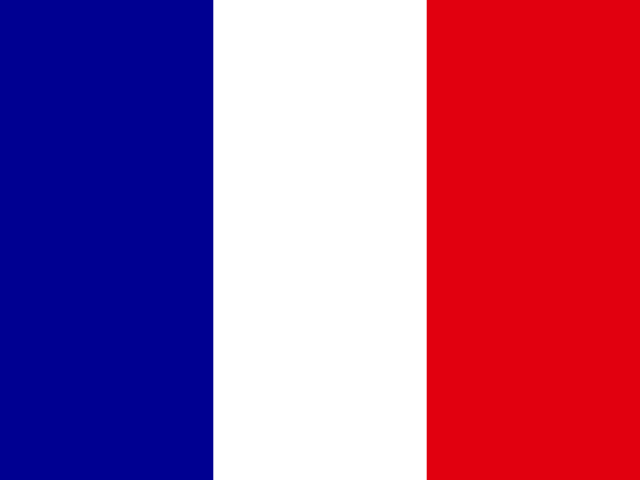
Facts about France
- CapitalParis
- Population68.7 million
- Area551,695 km²
- RegionEurope
- LanguageFrench
- CurrencyEuro (EUR)
France is the 4th most populous of the 46 countries in Europe and the 3rd largest by area. Worldwide it ranks 23rd by population and 48th by area.
Where is France?
France occupies the western end of mainland Europe. It has three separate coastlines: the English Channel in the north, facing the United Kingdom; the Atlantic Ocean in the west, along the Bay of Biscay; and the Mediterranean in the south. Spain and Andorra lie beyond the Pyrenees to the south-west, Italy and Switzerland beyond the Alps to the east, and Germany, Luxembourg and Belgium to the north-east. Monaco is a tiny enclave on the Mediterranean coast. Paris, the capital, is in the north, on the River Seine.
The island of Corsica, in the Mediterranean north of Sardinia, is French too and is included in the outline.
How to find France on the map
- Start from Spain. France is the large country directly north of the Iberian peninsula, across the Pyrenees.
- Look for the hexagon. The French call their country l'Hexagone, and at world-map zoom it really does have six roughly straight sides.
- Find the Channel. The narrow strip of water between France and England is the northern edge.
- Don't confuse it with Spain. Spain is squarer and further south-west; France is the one touching Germany.
Flag
The Tricolore is three vertical bands of blue, white and red, with blue at the hoist. It dates from the French Revolution, combining the red and blue of Paris with the white of the monarchy, and it inspired most of the vertical tricolours in the world.
Three flags are easily mistaken for it. The Netherlands uses the same colours but horizontally, red on top. Italy has the same layout with green instead of blue. Ireland, likewise, with green and orange around the white. Luxembourg is a horizontal red-white-light blue. If the first stripe at the pole is blue and the bands are vertical, it's France.
A short history of France
Two thousand years ago the land was called Gaul, home to Celtic tribes who built hill forts and traded with the Greeks of Marseille. Julius Caesar conquered it in the 50s BC, and five centuries of Roman rule left roads, towns and the Latin that later became French. As Rome collapsed, a Germanic people called the Franks took over. Their king Clovis converted to Christianity around 500, and in 800 Charlemagne was crowned emperor of a realm stretching into Germany and Italy. When his grandsons split it in 843, the western share grew into the kingdom of France.
Medieval kings slowly pulled the regions together from their base around Paris. The Hundred Years' War with England (1337–1453), in which Joan of Arc became a heroine, ended with the English driven out of all of France except Calais. By the 1600s Louis XIV ruled as an absolute monarch from his vast palace at Versailles, and France was the leading power in Europe.
The Revolution of 1789 swept the monarchy away. A republic was declared in 1792, but by 1804 Napoleon Bonaparte had made himself emperor and conquered much of the continent before his final defeat at Waterloo in 1815. The 1800s brought kings, another emperor and finally the Third Republic, after France lost Alsace and part of Lorraine to Germany in 1871. In the same century France built a colonial empire across North and West Africa and Indochina, which is why French is still spoken from Senegal to Vietnam.
The two world wars were fought largely on or over French soil. Alsace-Lorraine returned in 1918, but in 1940 Germany occupied the north while a collaborating regime governed from Vichy, until liberation in 1944. Charles de Gaulle founded the Fifth Republic in 1958, and Algeria won independence in 1962 after a bitter war. France was a founding member of what became the European Union.
Today France has one of the world's largest economies, a permanent seat on the UN Security Council and a nuclear-powered electricity grid, and it is consistently among the most visited countries on Earth.
Culture and daily life in France
French grew from the Latin of Roman Gaul, but the country was never linguistically uniform. Breton, Basque, Occitan, Alsatian and Corsican survive in the regions, a reminder of how recently Paris imposed one standard language through schools. Catholicism shaped the calendar and the landscape of Gothic cathedrals such as Chartres, yet a 1905 law separating church and state made laïcité, or secularism, a core public value.
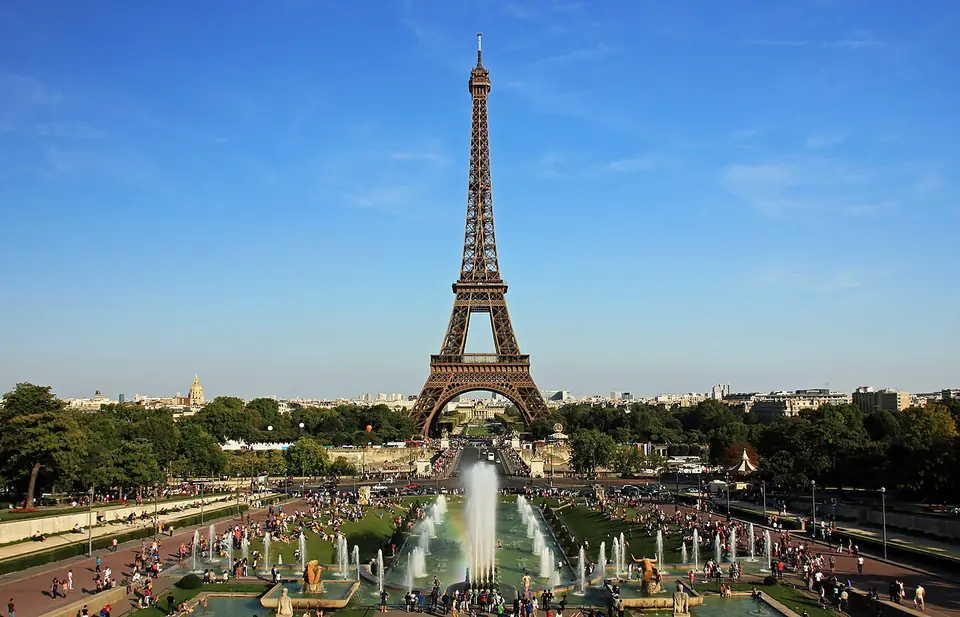
Few countries have shaped Western culture so widely. Molière's comedies, Victor Hugo's Les Misérables and Albert Camus's The Stranger are read worldwide. Monet and the Impressionists changed painting in the 1870s, the Louvre holds the Mona Lisa, and the Lumière brothers held one of the first public film screenings in Paris in 1895. The Eiffel Tower, built for the 1889 World's Fair, was meant to be temporary.
Sport is followed passionately. The Tour de France cycling race has run each summer since 1903, apart from war years, and the national football team won the World Cup in 1998 and 2018. Regional pride runs deep, from Breton crêpes to Provençal markets, while the Académie française, founded in 1635, still issues rulings on the vocabulary of the national language.
Five facts worth knowing
- France has 13 regions in Europe since a 2016 reform merged the old 22, plus five overseas regions: Guadeloupe, Martinique, French Guiana, Réunion and Mayotte.
- Because of those overseas regions, France borders Brazil and Suriname – French Guiana, on the north coast of South America, is fully part of France and uses the euro.
- Mont Blanc, on the border with Italy, is the highest peak in the Alps at just over 4,800 metres.
- France is the largest country in the European Union by area, ahead of Spain and Sweden.
- Corsica is French, Sardinia is Italian. The two islands sit end to end in the Mediterranean; the northern one is France.
Culture and traditions in France
- Saying hello
"Bonjour" is essential; friends greet with la bise, light kisses on the cheeks.
- Food and drink
Fresh baguette with cheese; classics like coq au vin and croissants, often with a glass of wine.
- Festivals and traditions
Bastille Day on 14 July with fireworks; Fête de la Musique on 21 June, with free music in the streets.
- Everyday life
Always say bonjour when entering a shop. Meals are long and social, and service is included in restaurant bills.
- Did you know?
The French gastronomic meal was added to UNESCO's Intangible Cultural Heritage list in 2010.
Common mistakes
- Tapping Spain – the two countries share the Pyrenees and both face the Atlantic.
- Picking the Dutch or Italian flag in the Flags quiz.
- Forgetting Corsica, so the outline in Mystery Country looks "wrong" when the island appears.
Practise with France
- Europe quiz – the hexagon between Spain and Germany, hard to miss once you've found the Channel.
- French Regions – the 13 metropolitan regions, from Brittany to Provence-Alpes-Côte d'Azur.
- Europe flags – sort out the vertical tricolours: France, Italy, Ireland, Belgium.
- Europe capitals quiz – Paris.
- Mystery Country – the six-sided outline with Brittany sticking out to the west and Corsica below.
Nearby countries
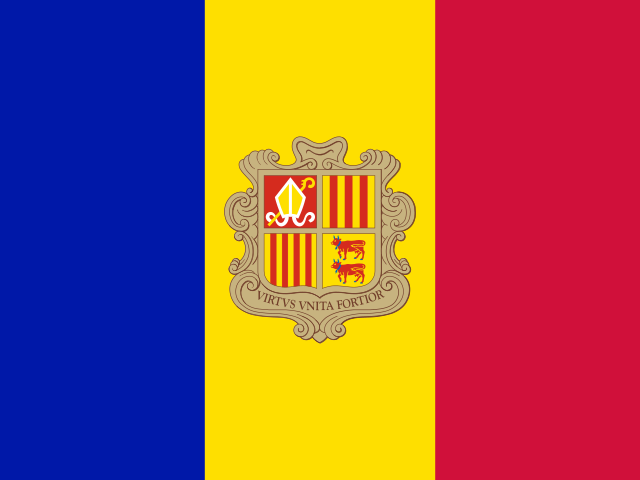 AndorraAndorra la Vella
 BelgiumBrussels
 BrazilBrasília
 GermanyBerlin
 ItalyRome
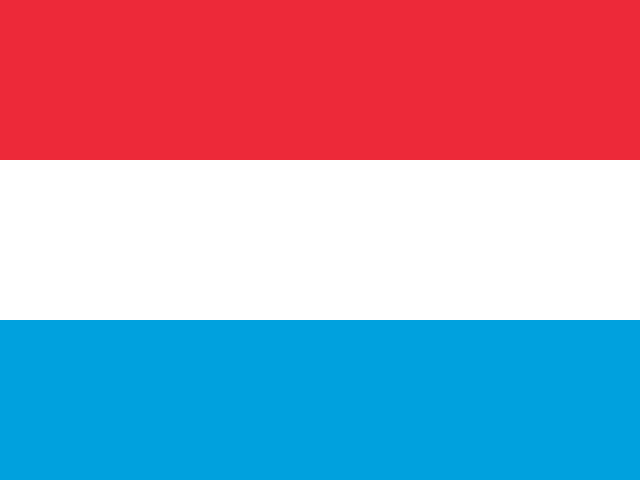 LuxembourgLuxembourg
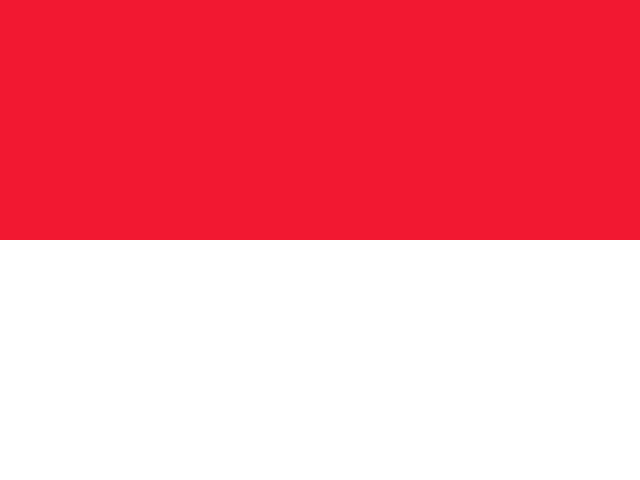 MonacoMonaco
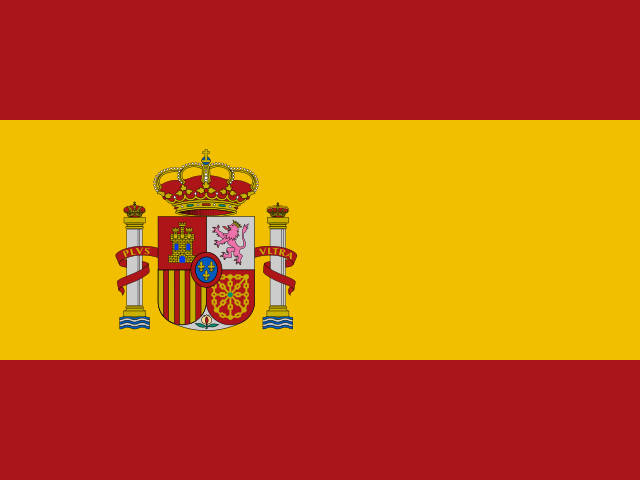 SpainMadrid
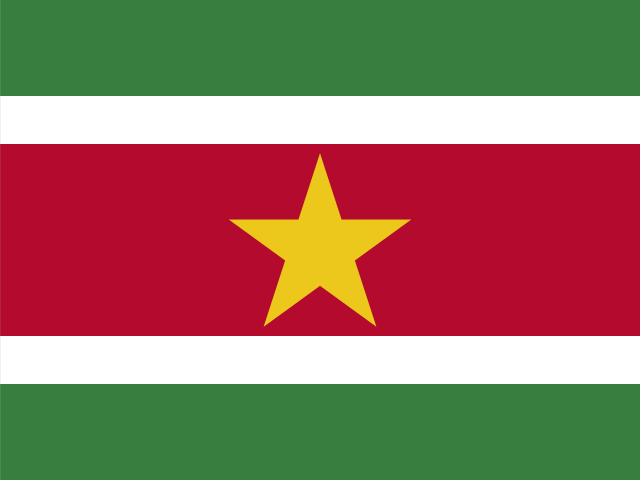 SurinameParamaribo
 SwitzerlandBern
Quick check: how well do you know France?
3 questions, no sign-up. Tap an answer.
1. Which flag belongs to France?
That's the flag of France.
2. What is the capital of France?
The capital of France is Paris.
3. Which of these countries borders France?
Andorra, Belgium, Brazil, Germany, Italy, Luxembourg, Monaco, Spain, Suriname and Switzerland border France.
Keep going on the Europe quiz – France is one of 46 countries there.
More ways to practise: find France on the blank map with no borders (hard mode), or play today's Globe and the other daily puzzles.
Frequently asked questions about France
What language is spoken in France?
French is the only official language. Regional languages such as Occitan, Breton, Basque, Alsatian, Corsican and Catalan are still spoken by minorities. In the overseas regions, French-based Creoles are widely used in daily life.
What currency does France use?
France uses the euro (EUR), which replaced the French franc in 2002. France's overseas territories in the Pacific, such as New Caledonia and French Polynesia, use the CFP franc, which is pegged to the euro.
What time zone is France in?
Metropolitan France uses Central European Time, UTC+1, and moves to UTC+2 for summer time. Including its overseas territories, France spans 12 time zones, more than any other country.
Which side of the road do they drive on in France?
The French drive on the right. Motorways, or autoroutes, mostly charge tolls, and the default rule of 'priorité à droite' means that at some junctions traffic coming from the right has right of way.
What is the highest point in France?
Mont Blanc, on the border with Italy, is the highest point in France and Western Europe. Its height varies slightly with the snow cap but is around 4,805 metres, and the summit's exact border position is disputed.
Is France the most visited country in the world?
Yes. France has been the world's most visited country for decades, with around 100 million international visitors a year. Paris, the Côte d'Azur, the Loire châteaux and the Alps are among its main draws.
Quizzes with France
Guides that help with this
- All 46 European capitals, with a memory trick for eachCapitals grouped by region, with hooks for the ones people forget.
- Flags that look alike (and how to tell them apart)Chad or Romania? Australia or New Zealand? The flag pairs that cost quiz points.
- The 25 hardest countries to find on a mapPacific islands, Caribbean islands and landlocked Africa – where they are.