Angola
Capital: Luanda. Angola is one of the 54 countries in the Africa quiz.
Quick answers: What is the capital of Angola? · Which countries border Angola?
Facts about Angola
- CapitalLuanda
- Population39 million
- Area1,246,700 km²
- RegionsAfrica, Southern Africa
- LanguagePortuguese
- CurrencyAngolan kwanza (AOA)
Angola is the 11th most populous of the 54 countries in Africa and the 7th largest by area. Worldwide it ranks 39th by population and 22nd by area.
Where is Angola?
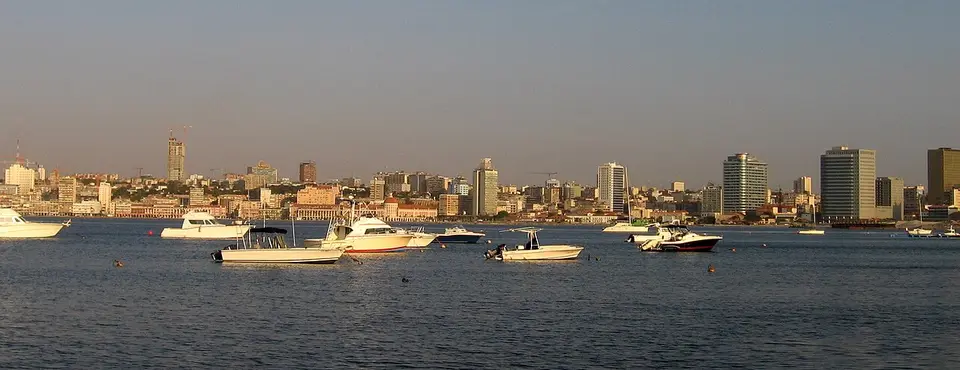
Angola is a large country on the Atlantic coast of south-western Africa. Namibia lies to the south, Zambia to the east, and the Democratic Republic of the Congo to the north and north-east. A small separate piece of Angola, the Cabinda exclave, sits further up the coast, cut off by a strip of DR Congo. Luanda, the capital, is on the coast in the north-west.
On a world map, follow Africa's Atlantic coast south from the Gulf of Guinea. After the two Congos, the next big country is Angola.
How to find Angola on the map
- Start from Namibia. Angola is the country directly north of Namibia on the Atlantic coast.
- Look for the Cabinda exclave. A small detached block of Angola sits above the mouth of the Congo River, separated from the main country.
- It's on the west coast. Zambia, to the east, is landlocked.
- Don't confuse it with Mozambique. Both are large former Portuguese colonies, but Mozambique is on the Indian Ocean side.
Flag
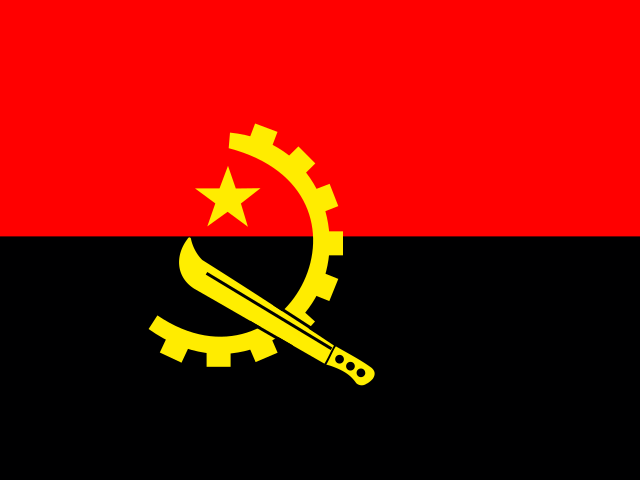
Angola's flag is two horizontal bands, red on top and black below, with a yellow emblem in the centre: half a cog wheel crossed by a machete, with a star above. The design echoes the hammer and sickle, reflecting the ruling party's history. Red stands for blood shed in the independence struggle, black for Africa.
In the Flags quiz, no other flag has a yellow machete and cog on red and black.
A short history of Angola
Bantu-speaking farmers and ironworkers spread into this region over many centuries, joining older hunter-gatherer peoples. By the 1400s the powerful Kingdom of Kongo ruled the north, while the Mbundu kingdom of Ndongo lay further south. Its rulers held the title ngola, and the Portuguese turned that word into the name Angola.
Portuguese sailors under Diogo Cão reached the mouth of the Congo River in the early 1480s. Kongo's kings converted to Christianity and traded with Portugal, but the relationship soon centred on enslaved people. Luanda was founded in 1576, and over the following centuries Angola became one of the largest sources of the Atlantic slave trade, with a huge share of captives shipped to Brazil. In the 1600s Queen Nzinga of Ndongo and Matamba resisted the Portuguese for decades and is now a national heroine. The Dutch even held Luanda for a few years in the 1640s.
For a long time Portugal controlled little beyond the coast. Only after European powers carved up Africa in the 1880s did it push inland and fix the borders. Armed revolt began in 1961, led by three rival movements: the MPLA, the FNLA and UNITA. When a revolution in Lisbon in 1974 ended Portugal's dictatorship, the colony quickly won independence, but the rivals turned on one another.
The civil war became part of the Cold War. Cuban troops and Soviet weapons backed the MPLA government, while South Africa and the United States supported UNITA. One of Africa's largest battles since the Second World War was fought at Cuito Cuanavale in 1987–88. The war finally ended after UNITA leader Jonas Savimbi was killed in 2002, leaving millions displaced and the countryside full of landmines.
Since peace, Angola has rebuilt roads, railways and cities, much of it paid for by oil. Diamonds are another important export, and the country is trying to grow farming and other industries.
Culture and daily life in Angola
Portuguese is the language of government and the cities, but many Angolans also speak African languages such as Umbundu, Kimbundu and Kikongo, each linked to one of the old kingdoms and peoples. Most people are Christian, divided between Catholic and Protestant churches, often mixed with older beliefs.
Music is everywhere. Besides older styles, Luanda produced kuduro in the 1990s, a fast, energetic electronic dance music with acrobatic moves. Bonga is one of the country's most loved singers, known for songs full of longing. Literature grew alongside the independence struggle: the first president, Agostinho Neto, was also a poet, and the novelist Pepetela wrote Mayombe about guerrilla life in the forest.
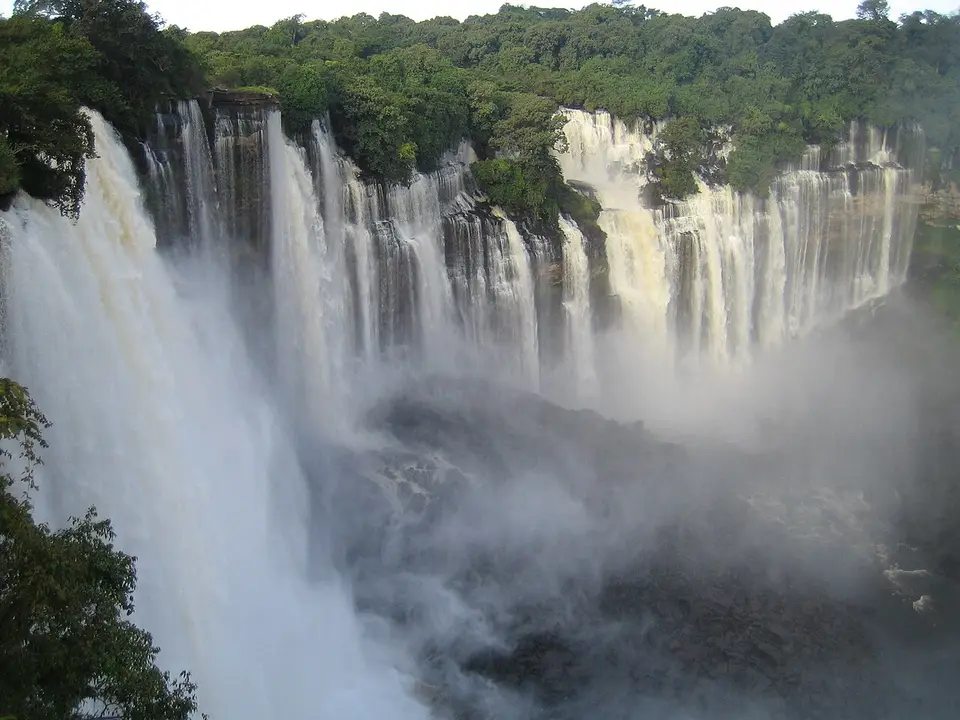
The Chokwe people of the north-east are famous for wood carving, and a small seated figure called O Pensador (The Thinker) has become a symbol of Angolan art. In sport, basketball is a point of pride, as Angola has won the African championship more often than any other country. Natural landmarks include the Kalandula Falls and the dramatic Tundavala gap near Lubango.
Five facts worth knowing
- Angola was a Portuguese colony for about 400 years and became independent in 1975. Portuguese is still the official language.
- A civil war followed independence and lasted until 2002, one of the longest conflicts in Africa.
- Angola is one of Africa's largest oil producers, and crude oil dominates its exports.
- The Cabinda exclave is cut off by DR Congo's short Atlantic coastline at the mouth of the Congo River.
- Luanda has repeatedly been ranked among the most expensive cities in the world for expatriates.
Culture and traditions in Angola
- Saying hello
A handshake and "Bom dia" in Portuguese; greeting elders first is a sign of respect.
- Food and drink
Muamba de galinha (chicken stew with palm oil) served with funge, a cassava or maize porridge.
- Festivals and traditions
The Luanda Carnival in February or March features music, dance and colourful parades.
- Everyday life
Family gatherings are central to social life, and music and dancing are part of most celebrations.
- Did you know?
The popular dances semba and kizomba both originated in Angola.
Common mistakes
- Tapping Namibia, which is the long coastal country just south of Angola.
- Tapping Zambia or DR Congo, both large inland neighbours.
- Forgetting Cabinda, so the outline in Mystery Country looks like it has an extra piece.
Practise with Angola
- Africa quiz – the big country on the Atlantic coast above Namibia.
- Southern Africa quiz – a closer map of the Angola–Namibia–Zambia corner.
- Africa flags – red over black with a yellow cog and machete.
- Africa capitals quiz – Luanda.
- Mystery Country – a boxy outline with the small detached Cabinda piece sitting above it.
Nearby countries
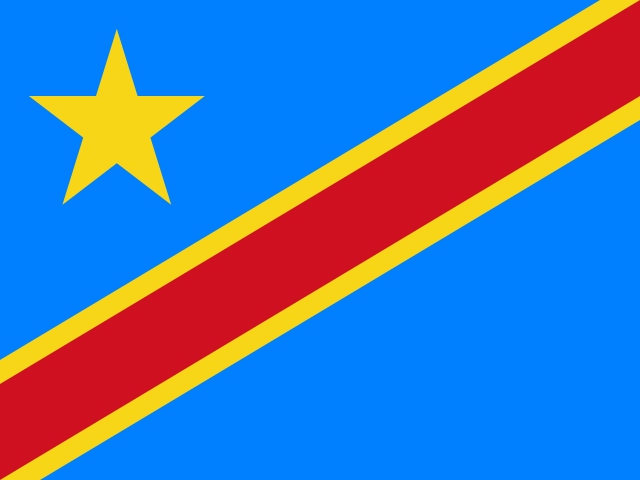
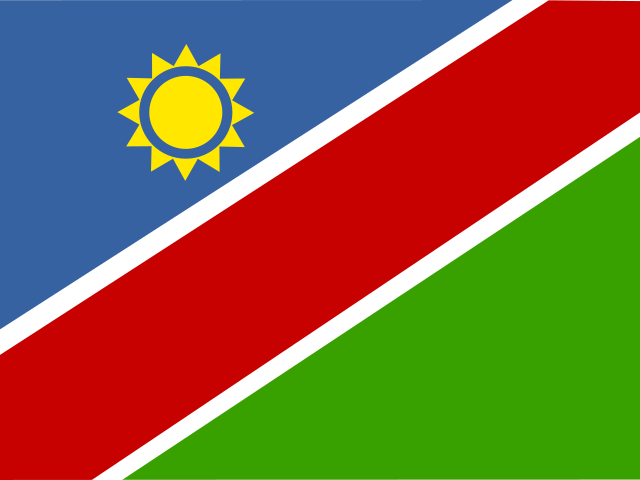
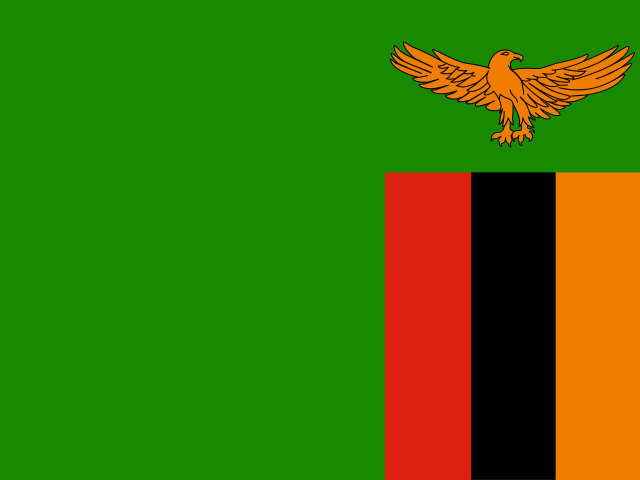
Quick check: how well do you know Angola?
3 questions, no sign-up. Tap an answer.
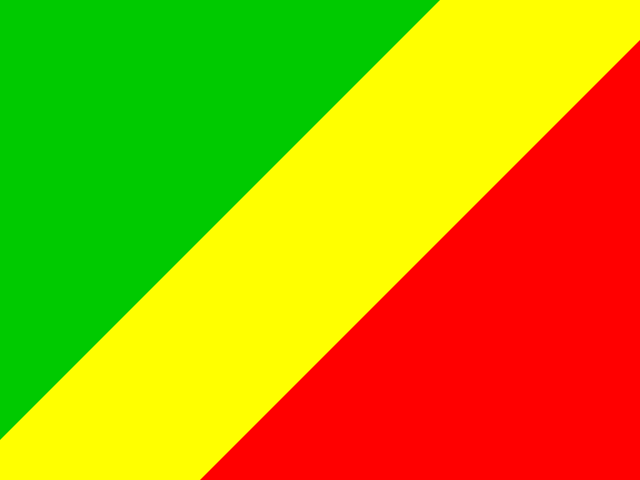
1. Which flag belongs to Angola?
That's the flag of Angola.
2. What is the capital of Angola?
The capital of Angola is Luanda.
3. Which of these countries borders Angola?
Congo, DR Congo, Namibia and Zambia border Angola.
Keep going on the Africa quiz – Angola is one of 54 countries there.
More ways to practise: find Angola on the blank map with no borders (hard mode), or play today's Globe and the other daily puzzles.
Frequently asked questions about Angola
What language is spoken in Angola?
Portuguese is the official language and is spoken by most Angolans, especially in the cities, where it is often the first language. Many Bantu languages are also widely spoken, including Umbundu, Kimbundu and Kikongo.
What currency does Angola use?
Angola uses the kwanza (AOA), named after the Kwanza River, the longest river entirely within the country. The currency was introduced in 1977 to replace the Angolan escudo and has been reformed several times since.
What time zone is Angola in?
Angola is on West Africa Time, UTC+1, all year round and does not use daylight saving time. Cabinda, the exclave in the north, uses the same time.
Which side of the road do they drive on in Angola?
Angolans drive on the right, as in Portugal and most of the former Portuguese colonies in Africa. Mozambique, surrounded by left-driving neighbours, is the main exception.
What is the highest point in Angola?
The highest point is Morro do Moco, about 2,620 metres, in the central highlands of Huambo Province. Its slopes hold some of the last remnants of Angola's montane forest.
Why is Angola called Angola?
The name comes from ngola, the title of the kings of Ndongo, a Kimbundu-speaking kingdom inland from Luanda. Portuguese traders in the 1500s used the ruler's title for the land itself, and the name stuck for the whole colony.
Quizzes with Angola
Guides that help with this
- Learn all 54 African countries in a weekLearn the coastline in order, region by region.
- Flags that look alike (and how to tell them apart)Chad or Romania? Australia or New Zealand? The flag pairs that cost quiz points.
- The 25 hardest countries to find on a mapPacific islands, Caribbean islands and landlocked Africa – where they are.