Zambia
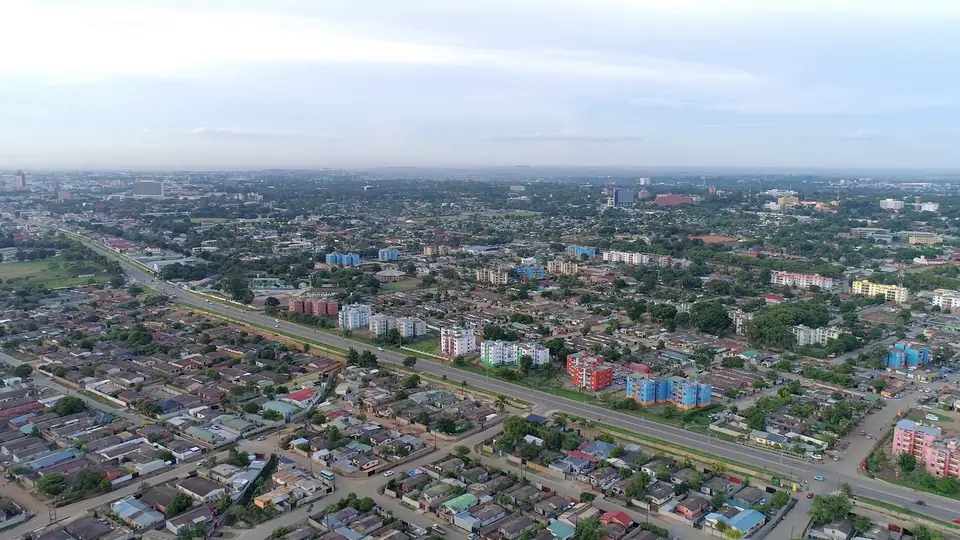
Capital: Lusaka. Zambia is one of the 54 countries in the Africa quiz.
Quick answers: What is the capital of Zambia? · Which countries border Zambia?
Facts about Zambia
- CapitalLusaka
- Population21.9 million
- Area752,612 km²
- RegionsAfrica, Southern Africa
- LanguageEnglish
- CurrencyZambian kwacha (ZMW)
Zambia is the 22nd most populous of the 54 countries in Africa and the 17th largest by area. Worldwide it ranks 62nd by population and 38th by area.
Where is Zambia?
Zambia is a landlocked country in south-central Africa, shaped a little like a butterfly with its wings spread. It has eight neighbours: DR Congo to the north, Tanzania to the north-east, Malawi to the east, Mozambique to the south-east, Zimbabwe and Botswana to the south, Namibia to the south-west and Angola to the west. The Zambezi River forms the southern border and gives the country its name. The capital, Lusaka, is in the south-centre.
On a world map, find the southern part of Africa and look for the country one step north of Zimbabwe. Zambia is wedged between the Congo basin and the countries of Southern Africa.
How to find Zambia on the map
- Start from Zimbabwe. Zambia is the larger country directly above it, across the Zambezi.
- Look for the butterfly. Zambia's western and eastern "wings" are joined by a narrow waist where DR Congo's Katanga province pushes down from the north.
- Find Lake Tanganyika. Zambia's north-eastern tip touches the southern end of the lake.
- Don't confuse it with Zimbabwe. Both begin with Z and share the Zambezi, but Zimbabwe is the smaller, rounder country to the south.
Flag
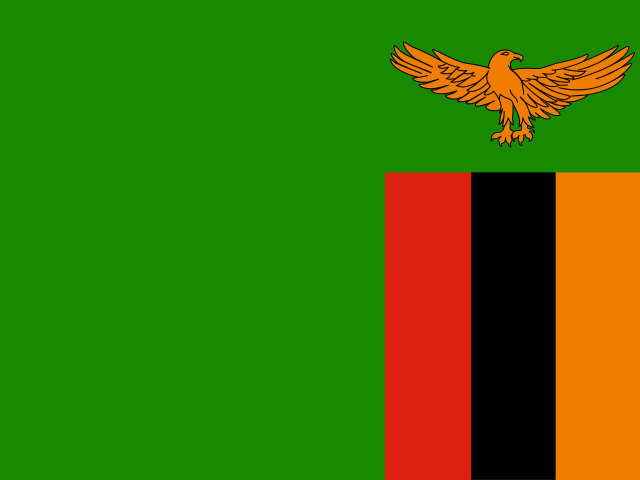
Zambia's flag is green, with three vertical stripes of red, black and orange in the lower fly corner and an orange eagle in flight above them. Green stands for the land, red for the struggle for freedom, black for the people and orange for copper, the country's main mineral wealth. The eagle represents the ability to rise above problems.
In the Flags quiz, the off-centre design is the giveaway – almost all flags centre their emblems, but Zambia puts everything in the bottom right.
A short history of Zambia
Zambia has one of the longest human records in Africa. A fossil skull found at Kabwe in 1921, known as Broken Hill Man, belongs to an early human species that lived perhaps 300,000 years ago. For thousands of years the land was home to hunter-gatherers related to the San. Bantu-speaking farmers and ironworkers arrived from the north around 2,000 years ago, and later, between about the 1500s and 1800s, new groups moved in from the Congo basin and elsewhere and founded kingdoms. The Lozi built a kingdom on the Zambezi floodplain in the west, the Bemba dominated the north-east, and the Lunda of Kazembe controlled the Luapula valley.
In the 1800s more change came from the south. The Kololo, fleeing wars in southern Africa, briefly conquered the Lozi, and Ngoni warriors settled in the east. Arab and Swahili traders reached the region seeking ivory and slaves. The Scottish missionary David Livingstone crossed the country in the 1850s and named Victoria Falls; he died near Lake Bangweulu in 1873.
At the end of the century the British South Africa Company of Cecil Rhodes took control through treaties and force, and the land became known as Northern Rhodesia. Britain took over direct rule in 1924. Huge copper deposits were developed in the 1920s and 1930s, drawing workers into the mining towns. From 1953 to 1963 the territory was joined with Southern Rhodesia and Nyasaland in the Central African Federation, which many Africans opposed because it favoured white settlers.
Kenneth Kaunda led the country to independence and ruled for 27 years, from 1972 under a one-party state. Zambia supported liberation movements in its white-ruled neighbours and built the TAZARA railway to Dar es Salaam with Chinese help in the 1970s to avoid routes through Rhodesia. Multi-party democracy returned in 1991, and power has since changed hands peacefully through elections. Copper remains the backbone of the economy.
Culture and daily life in Zambia
Zambia has more than 70 ethnic groups and languages. English is the official language, while Bemba, Nyanja, Tonga and Lozi are the most widely spoken. Nyanja is common in Lusaka and the east, and Bemba dominates the Copperbelt, a result of workers moving from the north to the mines. Zambia was declared a Christian nation in its constitution, and most people belong to Catholic, Protestant or Pentecostal churches, often alongside traditional beliefs.
Traditional ceremonies are a major part of life. The Ngoni hold the N'cwala harvest festival each February, and the Lunda celebrate Mutomboko in July. The Makishi masquerade, in which masked dancers mark the end of boys' initiation among peoples of the north-west, is recognised by UNESCO.
In the 1970s a rock style called Zamrock mixed psychedelic guitars with local rhythms, and bands such as WITCH are now admired worldwide. Football unites the country: in 1993 most of the national team died in a plane crash, and the rebuilt side won the Africa Cup of Nations in 2012 in Gabon, close to the crash site.
Five facts worth knowing
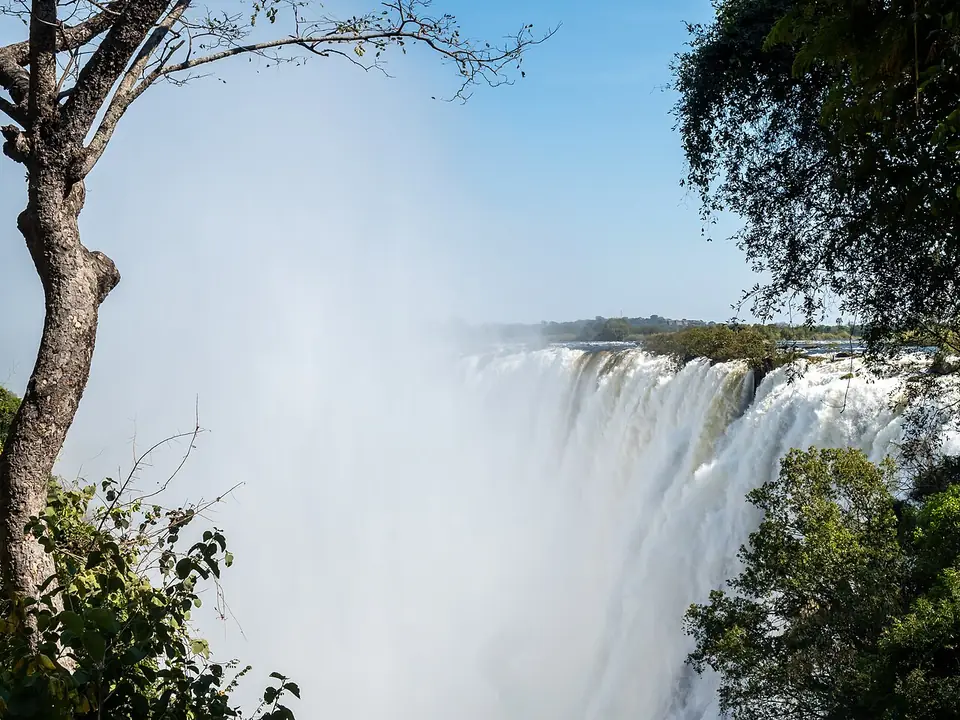
- Victoria Falls, on the Zambezi, sits on the Zambia–Zimbabwe border. The falls are known locally as Mosi-oa-Tunya, "the smoke that thunders".
- Zambia is one of the world's largest copper producers, with most of the mines in the Copperbelt region near the Congolese border.
- It was called Northern Rhodesia under British rule and became Zambia at independence in 1964.
- Lake Kariba, on the Zambezi between Zambia and Zimbabwe, is one of the largest artificial lakes in the world by volume, created by a dam built in the 1950s.
- Zambia touches four of Africa's great rivers or lakes: the Zambezi, Lake Tanganyika, Lake Mweru and Lake Bangweulu, the last two entirely or partly within its borders.
Culture and traditions in Zambia
- Saying hello
A handshake, often with gentle clapping of the hands to show respect and thanks.
- Food and drink
Nshima, a thick maize porridge eaten by hand with relishes such as vegetables, beans or fish.
- Festivals and traditions
The Kuomboka ceremony of the Lozi (around March/April), when the king travels by royal barge to higher ground.
- Everyday life
Respect for elders is important, and greetings come before any request. Meals are often eaten with the right hand.
- Did you know?
Victoria Falls is known locally as Mosi-oa-Tunya, meaning "The Smoke That Thunders".
Common mistakes
- Tapping Zimbabwe – the shared Z and the shared river make this the classic mix-up.
- Tapping Angola or Mozambique, the neighbours on either side.
- Forgetting the narrow waist, so the butterfly shape looks like two countries in Mystery Country.
Practise with Zambia
- Africa quiz – the butterfly north of Zimbabwe.
- Southern Africa quiz – a zoomed map where the Zambezi border is easy to see.
- Africa flags – green with the eagle and stripes in the corner.
- Africa capitals quiz – Lusaka.
- Mystery Country – the butterfly outline with DR Congo's pedicle pinching the middle.
Nearby countries
 AngolaLuanda
 BotswanaGaborone
 DR CongoKinshasa
 MalawiLilongwe
 MozambiqueMaputo
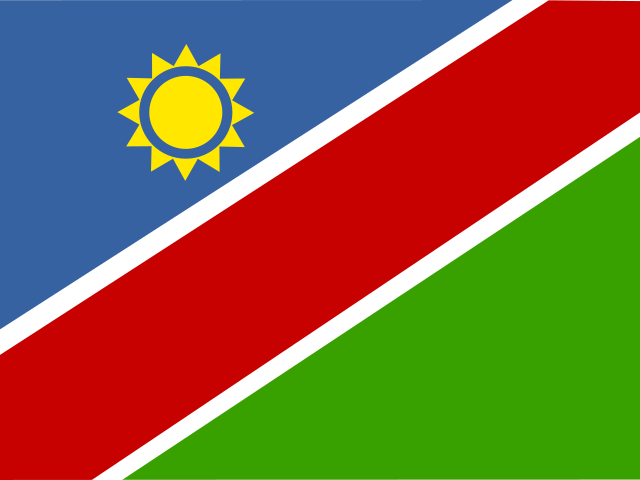 NamibiaWindhoek
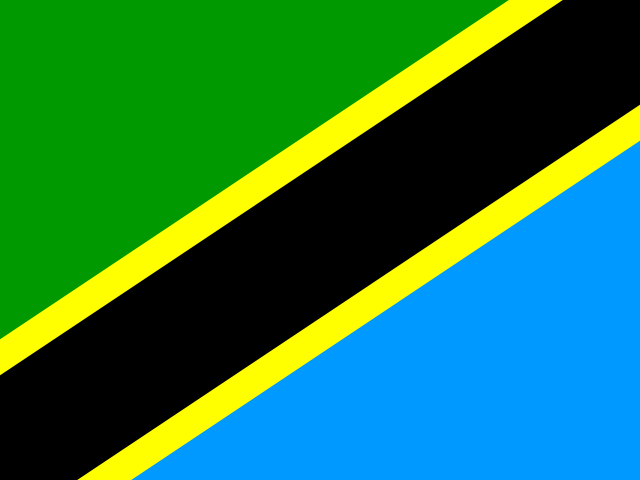 TanzaniaDodoma
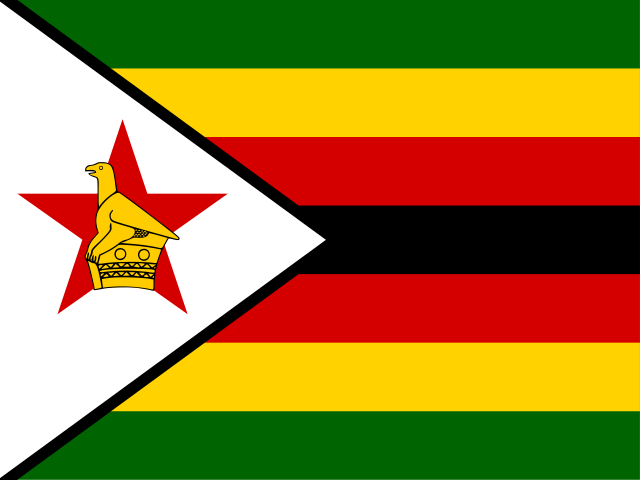 ZimbabweHarare
Quick check: how well do you know Zambia?
3 questions, no sign-up. Tap an answer.
1. Which flag belongs to Zambia?
That's the flag of Zambia.
2. What is the capital of Zambia?
The capital of Zambia is Lusaka.
3. Which of these countries borders Zambia?
Angola, Botswana, DR Congo, Malawi, Mozambique, Namibia, Tanzania and Zimbabwe border Zambia.
Keep going on the Africa quiz – Zambia is one of 54 countries there.
More ways to practise: find Zambia on the blank map with no borders (hard mode), or play today's Globe and the other daily puzzles.
Frequently asked questions about Zambia
What language is spoken in Zambia?
English is the official language, used in government, the courts and schools. More than 70 languages and dialects are spoken, and Bemba, Nyanja, Tonga and Lozi are the most widely used; Nyanja is the common language of Lusaka.
What currency does Zambia use?
Zambia uses the Zambian kwacha (ZMW), meaning "dawn" in Nyanja and Bemba. It was rebased in 2013, when three zeros were removed, and it floats freely.
What time zone is Zambia in?
Zambia is on Central Africa Time, UTC+2, all year, the same as Zimbabwe, Malawi and South Africa. It does not use daylight saving time. That puts it two hours ahead of London in winter and one in summer.
Which side of the road do they drive on in Zambia?
Zambia drives on the left, like most of southern Africa. The Kazungula Bridge, opened in 2021, crosses the Zambezi to Botswana at a point where four countries almost meet.
What is the highest point in Zambia?
The highest point is in the Mafinga Hills, at about 2,300 metres, on the border with Malawi in the north-east. Most of Zambia is a high plateau between 1,000 and 1,500 metres above sea level.
Is Victoria Falls in Zambia or Zimbabwe?
Both. The Victoria Falls lie on the Zambezi River, which forms the border, so the falls are shared. Zambia sees the eastern part, and its local name is Mosi-oa-Tunya, "the smoke that thunders".
Quizzes with Zambia
Often confused with
Guides that help with this
- Learn all 54 African countries in a weekLearn the coastline in order, region by region.
- Flags that look alike (and how to tell them apart)Chad or Romania? Australia or New Zealand? The flag pairs that cost quiz points.
- The 25 hardest countries to find on a mapPacific islands, Caribbean islands and landlocked Africa – where they are.