DR Congo
Capital: Kinshasa. DR Congo is one of the 54 countries in the Africa quiz.
Quick answers: What is the capital of DR Congo? · Which countries border DR Congo?
Facts about DR Congo
- CapitalKinshasa
- Population112.8 million
- Area2,344,858 km²
- RegionAfrica
- LanguagesFrench, Lingala, Kongo, Swahili, Luba-Katanga
- CurrencyCongolese franc (CDF)
DR Congo is the 4th most populous of the 54 countries in Africa and the 2nd largest by area. Worldwide it ranks 15th by population and 11th by area.
Where is DR Congo?
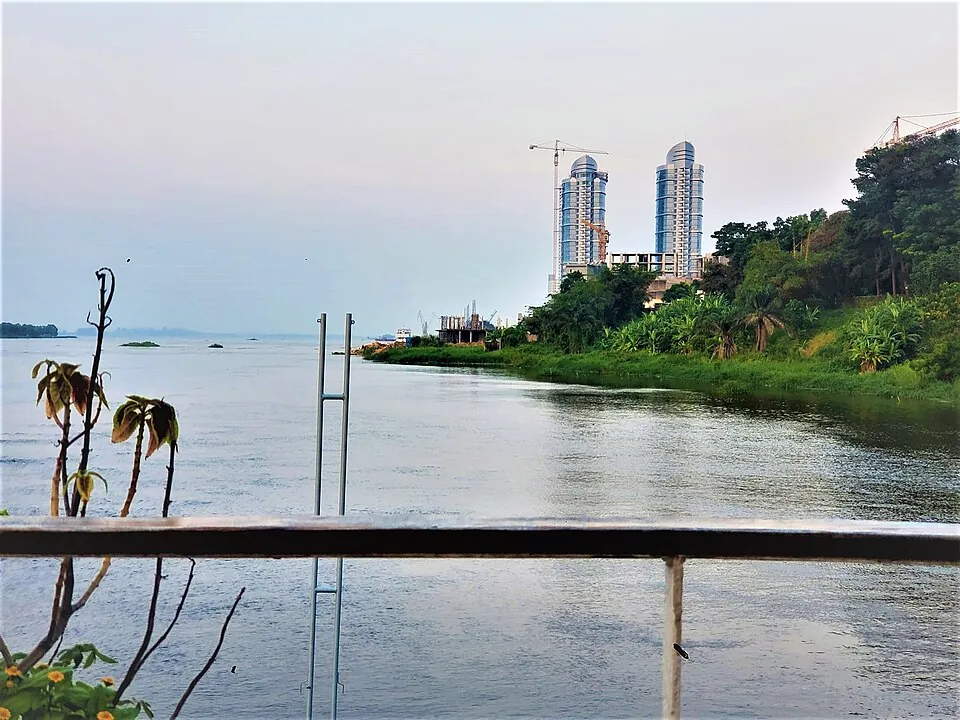
The Democratic Republic of the Congo – DR Congo, or Congo-Kinshasa – is the giant of Central Africa. It fills the middle of the continent, bordering nine countries: the Republic of the Congo to the west, the Central African Republic and South Sudan to the north, Uganda, Rwanda, Burundi and Tanzania to the east, and Zambia and Angola to the south. It has only a tiny Atlantic coastline at the mouth of the Congo River. The capital, Kinshasa, is in the far west, on the south bank of the river facing Brazzaville.
On a world map, look for the biggest country in the centre of Africa, the one that stretches from the Atlantic almost to the Great Lakes.
How to find DR Congo on the map
- Start from the centre. DR Congo is the large country in the geographic middle of Africa.
- Find the Great Lakes. Lakes Albert, Edward, Kivu and Tanganyika form its eastern edge.
- Look for the narrow outlet. A thin corridor reaches the Atlantic between Angola and the Angolan exclave of Cabinda.
- Don't confuse it with Congo. The Republic of the Congo is the smaller country to the north-west; DR Congo is the big one.
Flag
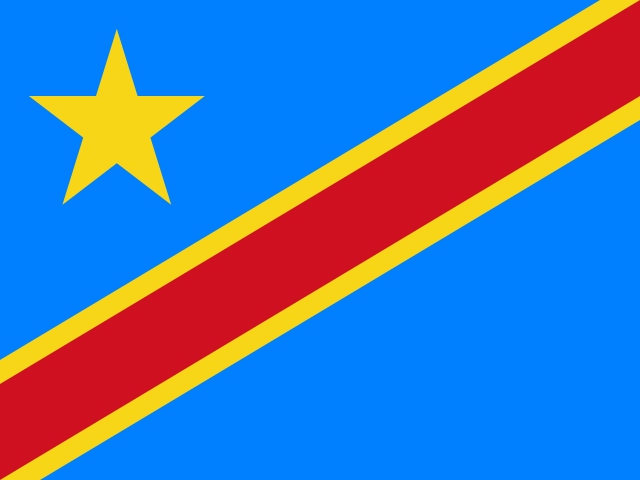
The flag is sky blue with a red diagonal stripe, edged in yellow, running from the lower hoist to the upper fly, and a yellow five-pointed star in the upper hoist corner. Blue represents peace, red the blood of the country's martyrs, yellow its wealth, and the star a radiant future.
In the Flags quiz, do not mix it up with the Republic of the Congo, whose flag is green and red triangles split by a yellow diagonal. If the field is light blue with one star, it is DR Congo.
A short history of DR Congo
The Congo basin has been inhabited for tens of thousands of years, first by forest peoples often grouped under the name Twa or Mbuti, and later by Bantu-speaking farmers who spread through the region from around 3,000 years ago, bringing iron-working and new crops. Powerful states grew up on the savannas south of the forest. The Kingdom of Kongo, near the river's mouth, converted to Christianity after Portuguese contact in the late 1400s, and the Luba and Lunda kingdoms ruled large areas of the south.
From the 1500s the Atlantic slave trade took huge numbers of people from the Congo coast. In the 1800s Arab-Swahili traders pushed in from the east, seeking ivory and slaves. At the Berlin Conference of 1884–85, European powers recognised King Leopold II of Belgium's claim to the region as his personal property, the Congo Free State. His agents forced people to collect wild rubber under brutal conditions, and millions are thought to have died. International outrage led Belgium to take over the colony in 1908 as the Belgian Congo. The narrow strip of land reaching the Atlantic exists because the borders were drawn to give the colony an outlet at the river's mouth.
Independence came on 30 June 1960. The first prime minister, Patrice Lumumba, was overthrown and killed within months, and the mineral-rich province of Katanga tried to break away. In 1965 Joseph-Désiré Mobutu took power. He renamed the country Zaire, ruled for over thirty years and became notorious for corruption.
After the Rwandan genocide of 1994, conflict spilled across the border. Mobutu was overthrown in 1997, and a wider war from 1998 drew in armies from several neighbouring countries. It formally ended in 2003, but violence by armed groups has continued in the eastern provinces, causing huge loss of life.
DR Congo is enormously rich in minerals, including copper and cobalt, which are vital for batteries, yet most of its people remain poor.
Culture and daily life in DR Congo
More than 200 languages are spoken, but four national languages tie the country together: Lingala in Kinshasa and along the river, Swahili in the east, Kikongo in the west and Tshiluba in the south-centre. Lingala spread largely through the army and through music. Most Congolese are Christian, with Catholic and Protestant churches alongside the home-grown Kimbanguist church and many independent congregations.
Congolese music has shaped the whole continent. Stars such as Franco Luambo, Papa Wemba and Koffi Olomide made the guitar-driven Congolese rumba famous across Africa, and its faster offshoot, soukous, filled dance floors from Nairobi to Paris. Kinshasa is also known for la Sape, a movement of elegant, flamboyant dressers.
Wood carving and masks from peoples such as the Kuba and Luba fill museum collections worldwide, and Kinshasa's colourful popular painting is internationally collected. Football is followed passionately, and the national team, the Leopards, won the Africa Cup of Nations in 1968 and 1974. The same year, the "Rumble in the Jungle" boxing match between Muhammad Ali and George Foreman was held in Kinshasa.
Five facts worth knowing
- DR Congo is the second-largest country in Africa by area, after Algeria, and the largest in sub-Saharan Africa.
- The Congo River is the deepest river in the world and second only to the Amazon in volume of water discharged.
- French is the official language, but Kinshasa is the largest French-speaking city in the world, ahead of Paris by population.
- Virunga National Park in the east is Africa's oldest national park and home to mountain gorillas.
- The country changed its name in 1997, having been called Zaire between 1971 and 1997.
Culture and traditions in DR Congo
- Saying hello
"Mbote" in Lingala, or "Bonjour" in French.
- Food and drink
Moambe chicken (in palm nut sauce) served with fufu, a cassava dough.
- Festivals and traditions
Independence Day on 30 June.
- Everyday life
Music fills daily life, and greeting people properly is an important courtesy.
- Did you know?
Congolese rumba, shared with the Republic of Congo, is on UNESCO's intangible heritage list.
Common mistakes
- Tapping the Republic of the Congo, the smaller neighbour.
- Tapping Angola, Zambia or the Central African Republic along the long borders.
- Choosing the green and red Congo-Brazzaville flag.
- Answering Brazzaville instead of Kinshasa in the Capitals quiz.
Practise with DR Congo
- Africa quiz – the big country in the middle, hard to miss but easy to confuse with its neighbour.
- Africa flags – light blue with a red diagonal and a star.
- Africa capitals quiz – Kinshasa.
- Mystery Country – a vast rounded outline with a thin tail reaching the Atlantic in the west.
- Mistake Bank – the two Congos appear here often; use it to drill the difference.
Nearby countries
 AngolaLuanda
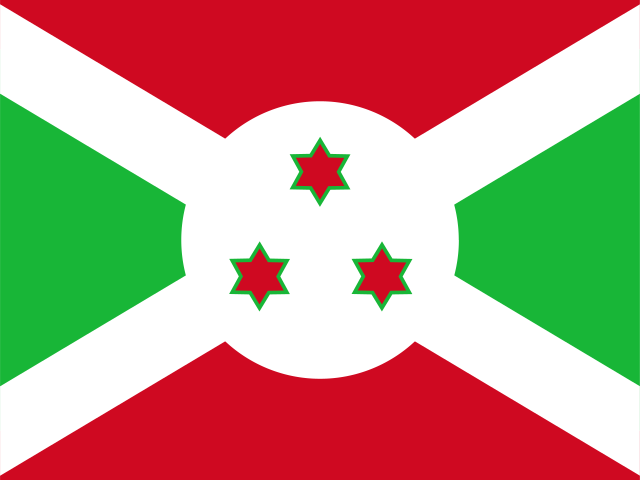 BurundiGitega
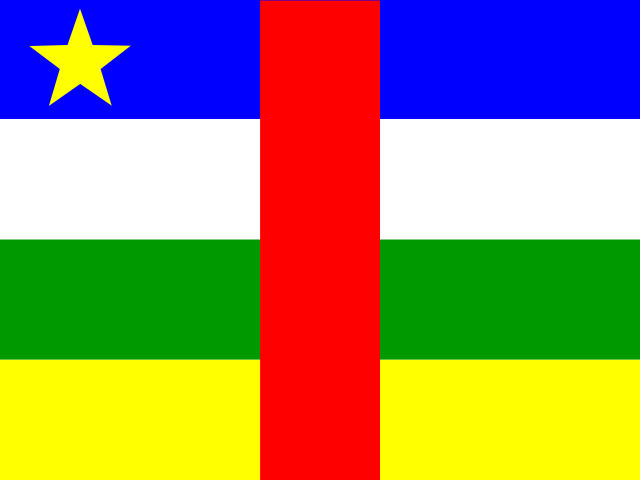 Central African RepublicBangui
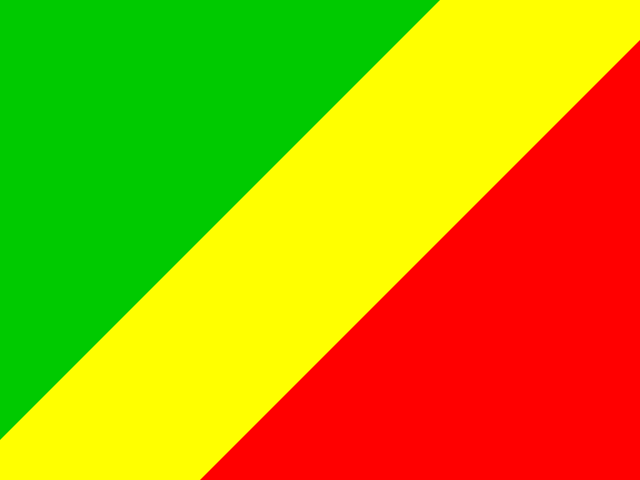 CongoBrazzaville
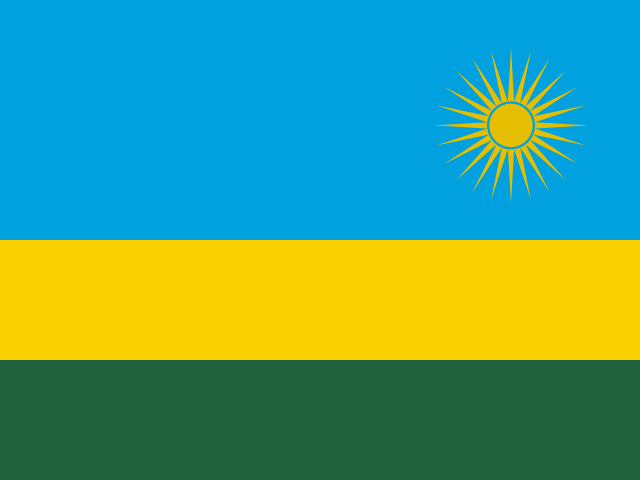 RwandaKigali
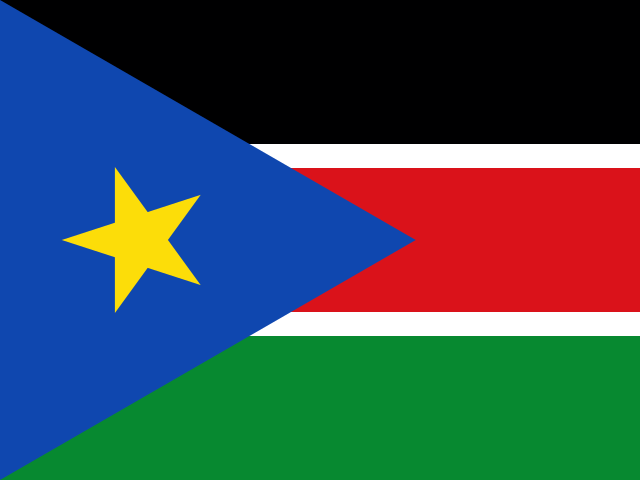 South SudanJuba
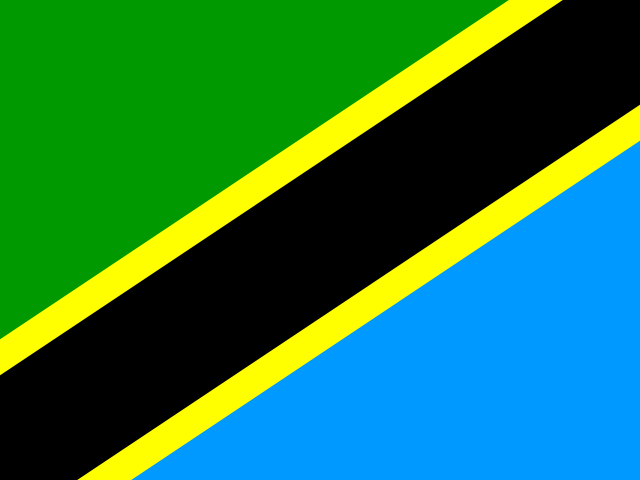 TanzaniaDodoma
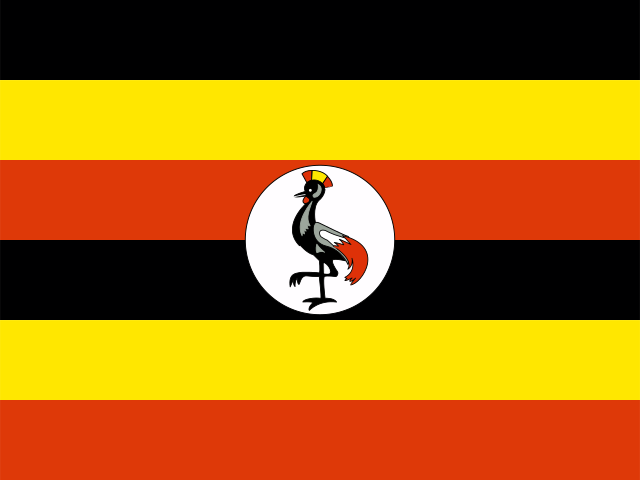 UgandaKampala
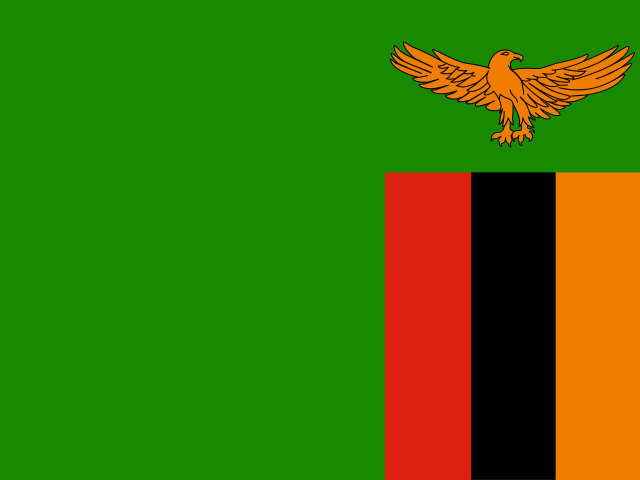 ZambiaLusaka
Quick check: how well do you know DR Congo?
3 questions, no sign-up. Tap an answer.
1. Which flag belongs to DR Congo?
That's the flag of DR Congo.
2. What is the capital of DR Congo?
The capital of DR Congo is Kinshasa.
3. Which of these countries borders DR Congo?
Angola, Burundi, the Central African Republic, Congo, Rwanda, South Sudan, Tanzania, Uganda and Zambia border DR Congo.
Keep going on the Africa quiz – DR Congo is one of 54 countries there.
More ways to practise: find DR Congo on the blank map with no borders (hard mode), or play today's Globe and the other daily puzzles.
Frequently asked questions about DR Congo
What language is spoken in DR Congo?
French is the official language, making DR Congo one of the largest French-speaking countries in the world. Four national languages are also recognised: Lingala, Kikongo, Swahili and Tshiluba, each dominant in a different region. More than 200 languages are spoken in total.
What currency does DR Congo use?
DR Congo uses the Congolese franc (CDF). It floats freely and has lost much of its value over the years, so the US dollar is also widely used, especially for larger purchases.
What time zone is DR Congo in?
DR Congo has two time zones. The west, including Kinshasa, uses UTC+1, while the east, including Lubumbashi and Goma, uses UTC+2. Neither uses daylight saving time.
Which side of the road do they drive on in DR Congo?
Traffic drives on the right. The road network is very limited for such a huge country, so the Congo River and its tributaries remain vital routes, with boats carrying goods and passengers for weeks at a time.
What is the highest point in DR Congo?
Margherita Peak on Mount Stanley, in the Rwenzori Mountains on the border with Uganda, is the highest point at about 5,110 metres. It is the third-highest peak in Africa and carries some of the continent's last glaciers.
How big is DR Congo?
DR Congo covers about 2.3 million square kilometres, making it the second-largest country in Africa after Algeria and the largest in sub-Saharan Africa. It is roughly the size of Western Europe and has only about 40 kilometres of Atlantic coast.
Quizzes with DR Congo
Often confused with
Guides that help with this
- Learn all 54 African countries in a weekLearn the coastline in order, region by region.
- Flags that look alike (and how to tell them apart)Chad or Romania? Australia or New Zealand? The flag pairs that cost quiz points.
- The 25 hardest countries to find on a mapPacific islands, Caribbean islands and landlocked Africa – where they are.