Burkina Faso
Capital: Ouagadougou. Burkina Faso is one of the 54 countries in the Africa quiz.
Quick answers: What is the capital of Burkina Faso? · Which countries border Burkina Faso?
Facts about Burkina Faso
- CapitalOuagadougou
- Population24.1 million
- Area272,967 km²
- RegionsAfrica, West Africa
- LanguagesMooré, Dioula, Fula
- CurrencyWest African CFA franc (XOF)
Burkina Faso is the 20th most populous of the 54 countries in Africa and the 29th largest by area. Worldwide it ranks 59th by population and 74th by area.
Where is Burkina Faso?
Burkina Faso is a landlocked country in the heart of West Africa, just below the great bend of the Niger River. Mali wraps around it to the north and west, Niger lies to the east, and four coastal countries – Benin, Togo, Ghana and Ivory Coast – line up along its southern border. The capital, Ouagadougou, is almost exactly in the centre of the country.
On a world map, look at the bulge of West Africa and go inland from the Gulf of Guinea. Burkina Faso is the roughly oval country that touches the top of Ghana and Togo but never reaches the sea.
How to find Burkina Faso on the map
- Start from Ghana. Burkina Faso is the country sitting directly on top of Ghana's northern border.
- Count the coastal neighbours. It is the only country in Africa that borders Ivory Coast, Ghana, Togo and Benin all at once.
- Look for Mali's curve. Mali's southern border bends around Burkina Faso like a cupped hand.
- Don't confuse it with Niger. Niger is far larger and stretches deep into the Sahara; Burkina Faso is compact and stays in the Sahel.
Flag
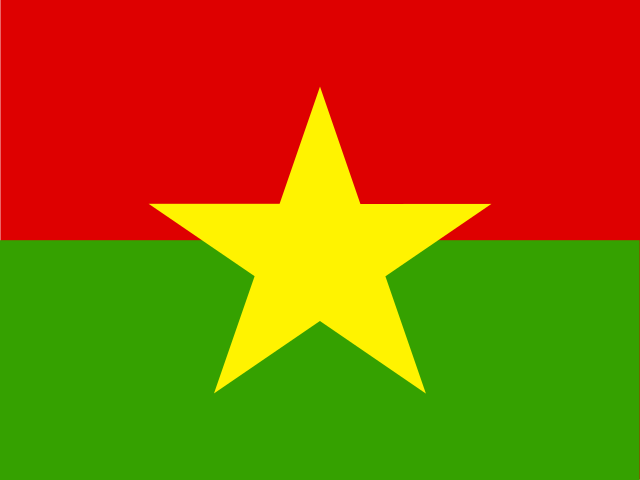
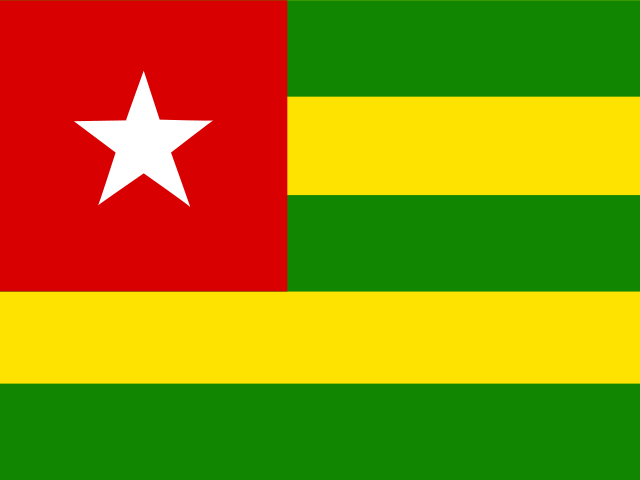
The flag has two horizontal bands, red above green, with a yellow five-pointed star in the centre. These are the pan-African colours, adopted in 1984 when the country changed its name from Upper Volta to Burkina Faso. Red stands for the revolution, green for the country's natural wealth, and the star for the guiding light of that revolution.
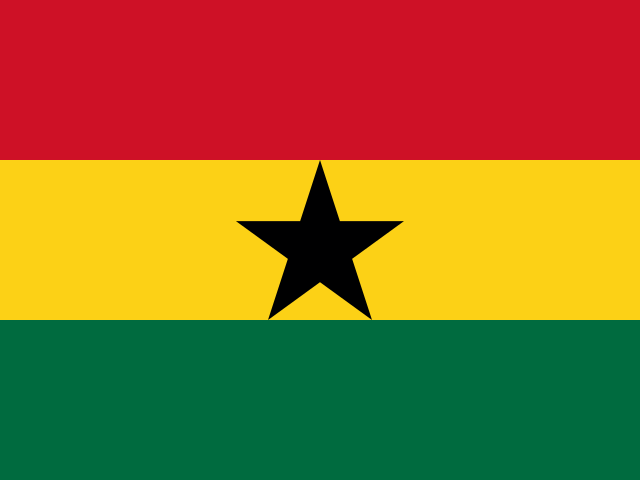
In the Flags quiz, remember that Ghana's flag also uses red, yellow and green with a star, but Ghana has three stripes and a black star. Burkina Faso has only two stripes and a yellow star.
A short history of Burkina Faso
The Mossi people have shaped this land for centuries. From around the 1400s, horsemen founded several Mossi kingdoms in the Volta basin, the most important centred on Ouagadougou and Yatenga. Their ruler, the Mogho Naba, sat at the head of a well-organised court with ministers and provincial chiefs. The Mossi kingdoms were strong enough to resist the great Sahel empires of Mali and Songhai, and they stayed largely outside the spread of Islam for a long time. Other peoples, among them the Bobo, Lobi, Gurunsi and Fulani, lived in the west, south and north.
France conquered the region in the 1890s, taking Ouagadougou in 1896. In 1919 it created the colony of Upper Volta, but in 1932 the colony was abolished and its land divided between Ivory Coast, French Sudan (now Mali) and Niger. The main aim was to send Mossi labourers to plantations and building projects in Ivory Coast. Upper Volta was put back together in 1947, with almost the same borders as before.
Independence came in 1960. The young country soon fell into a cycle of military coups. In 1983 a young army captain, Thomas Sankara, took power and launched an ambitious revolution. He renamed the country, vaccinated millions of children, planted trees against the advancing desert and campaigned for women's rights. Sankara was killed in a coup in 1987, and his former comrade Blaise Compaoré ruled for 27 years until mass protests forced him out in 2014.
Since the mid-2010s, armed jihadist groups spreading from Mali have attacked villages and towns, forcing very large numbers of people from their homes. Two coups followed in 2022, and the military government has turned away from France and towards new partners.
Burkina Faso remains a largely rural country. Most people farm millet, sorghum and maize, cotton has long been a key export, and gold mining has become the biggest source of income.
Culture and daily life in Burkina Faso
About 60 languages are spoken in Burkina Faso. Mooré, the language of the Mossi, is the most widespread, and Dioula is used as a trade language in the west, while French is still the main language of government and schools. Most people are Muslim, a large minority is Christian, and traditional beliefs still play a role in village life and ceremonies.
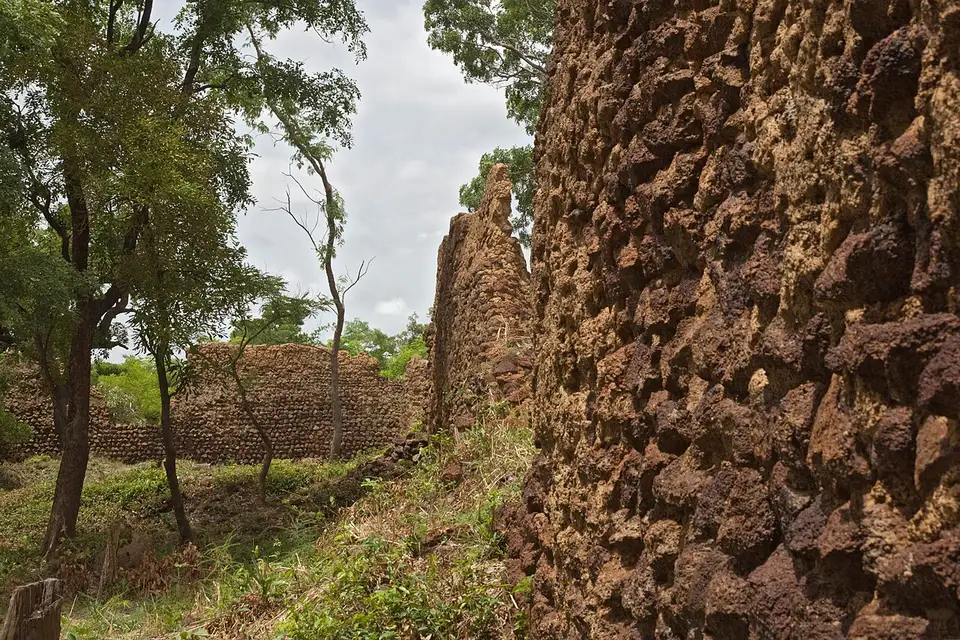
Burkina Faso has a rich tradition of masks. Among the Bwa and Bobo peoples, wooden masks carved as animals or striking geometric shapes are worn in dances at funerals and harvest festivals. The country's mud architecture is also remarkable: in the south, Kassena women paint the walls of their round houses in Tiébélé with bold black, white and red patterns.
Bronze casting and pottery are living crafts, and the International Arts and Crafts Fair in Ouagadougou, known as SIAO, draws artisans from across Africa. Burkinabè cinema is respected far beyond FESPACO; directors Idrissa Ouédraogo and Gaston Kaboré won major international prizes.
Five facts worth knowing
- The name means "land of upright people", combining words from the two main languages, Mooré and Dioula. Until 1984 the country was called Upper Volta, after the Volta rivers that rise here.
- Ouagadougou hosts FESPACO, the largest African film festival, held every two years since 1969.
- Burkina Faso has six neighbours – Mali, Niger, Benin, Togo, Ghana and Ivory Coast – an unusually high number for a country of its size.
- It is entirely landlocked. Goods reach the sea through ports in Ivory Coast, Ghana, Togo and Benin.
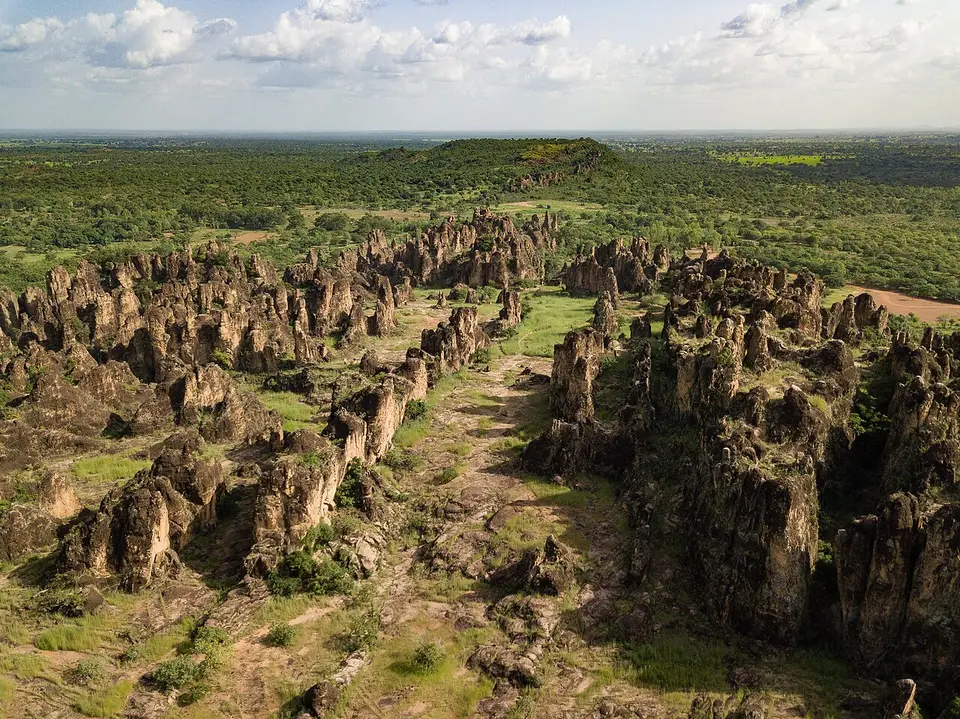
- The country sits in the Sahel, the transition zone between the Sahara to the north and the wetter savanna to the south.
Culture and traditions in Burkina Faso
- Saying hello
"Bonjour" in French or a local greeting, with time taken to ask after family.
- Food and drink
To, a millet or maize porridge, served with okra or peanut sauce.
- Festivals and traditions
FESPACO, the pan-African film festival in Ouagadougou, held in odd-numbered years.
- Everyday life
Greetings come before any business, and elders are treated with great respect.
- Did you know?
The name Burkina Faso means "land of upright people", combining words from Moore and Dioula.
Common mistakes
- Tapping Mali, which surrounds Burkina Faso on two sides and is much bigger.
- Tapping Niger, immediately to the east.
- Mixing it up with Ghana or Togo – both reach the coast, Burkina Faso does not.
Practise with Burkina Faso
- Africa quiz – Burkina Faso is one of 54 countries; find Ghana first and go north.
- West Africa quiz – a zoomed-in map where its position between Mali and the coastal strip stands out clearly.
- Africa flags – learn to separate the two-stripe red and green flag from Ghana's three stripes.
- Africa capitals quiz – Ouagadougou, one of the most distinctive capital names in the world.
- Mystery Country – a rounded, landlocked outline with a slight point towards the south-east.
Nearby countries
Quick check: how well do you know Burkina Faso?
3 questions, no sign-up. Tap an answer.
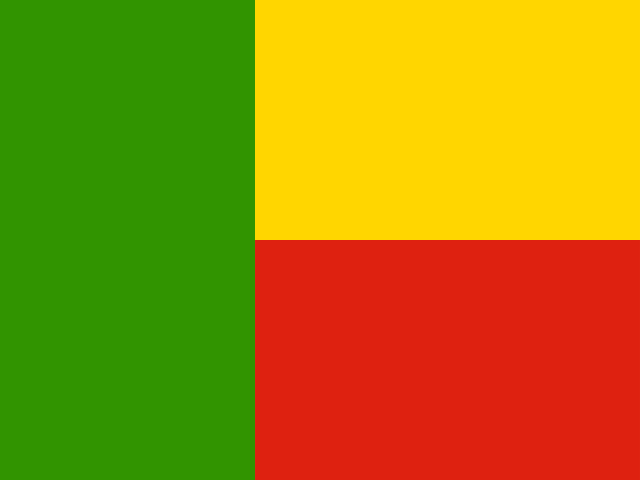
1. Which flag belongs to Burkina Faso?
That's the flag of Burkina Faso.
2. What is the capital of Burkina Faso?
The capital of Burkina Faso is Ouagadougou.
3. Which of these countries borders Burkina Faso?
Benin, Ghana, Ivory Coast, Mali, Niger and Togo border Burkina Faso.
Keep going on the Africa quiz – Burkina Faso is one of 54 countries there.
More ways to practise: find Burkina Faso on the blank map with no borders (hard mode), or play today's Globe and the other daily puzzles.
Frequently asked questions about Burkina Faso
What language is spoken in Burkina Faso?
French has long been the language of government and schools, but a 2023 constitutional change made it a working language while national languages became official. Mooré, the language of the Mossi, is the most widely spoken, followed by Fula (Fulfulde) and Dioula, a trade language in the west.
What currency does Burkina Faso use?
Burkina Faso uses the West African CFA franc (XOF), shared with seven other countries in the West African Economic and Monetary Union. It is pegged to the euro at 655.957 francs to one euro.
What time zone is Burkina Faso in?
Burkina Faso is on Greenwich Mean Time, UTC+0, all year round and does not use daylight saving time. It shares its clock with London in winter and with neighbours such as Mali, Ghana and Ivory Coast.
Which side of the road do they drive on in Burkina Faso?
Burkinabè drive on the right. Ouagadougou is known for its huge number of mopeds and motorbikes, which are the most common way of getting around the city.
What is the highest point in Burkina Faso?
The highest point is Mount Ténakourou, about 747 metres, in the south-west near the border with Mali. Most of Burkina Faso is a flat or gently rolling plateau.
Why is Burkina Faso called Burkina Faso?
The name was chosen in 1984 to replace Upper Volta. Burkina is a Mooré word for "upright" or "honest", and faso is a Dioula word for "homeland", so together it means "land of upright people". Citizens are called Burkinabè, using a Fula suffix.
Quizzes with Burkina Faso
Guides that help with this
- Learn all 54 African countries in a weekLearn the coastline in order, region by region.
- Flags that look alike (and how to tell them apart)Chad or Romania? Australia or New Zealand? The flag pairs that cost quiz points.
- The 25 hardest countries to find on a mapPacific islands, Caribbean islands and landlocked Africa – where they are.