Mali
Capital: Bamako. Mali is one of the 54 countries in the Africa quiz.
Quick answers: What is the capital of Mali? · Which countries border Mali?
Facts about Mali
- CapitalBamako
- Population25.2 million
- Area1,240,192 km²
- RegionsAfrica, West Africa
- LanguagesBambara, Fula, Songhay, Soninke, Tamasheq
- CurrencyWest African CFA franc (XOF)
Mali is the 19th most populous of the 54 countries in Africa and the 8th largest by area. Worldwide it ranks 58th by population and 23rd by area.
Where is Mali?
Mali is a large landlocked country in West Africa, stretching from the Sahara in the north down into the Sahel and the savanna along the Niger River in the south. It borders seven countries: Algeria to the north, Niger to the east, Burkina Faso and Ivory Coast to the south, Guinea to the south-west, and Senegal and Mauritania to the west. The capital, Bamako, is in the south-west on the Niger.
On a world map, find the bulge of West Africa. Mali is the big country in the middle of it, inland from the coast, with a northern half that reaches deep into the desert. Its outline looks like an hourglass tipped on its side.
How to find Mali on the map
- Start from Algeria. Mali is the large country directly south of Algeria's south-western side.
- Follow the Niger River. It makes a great bend through Mali, passing Bamako, Timbuktu and Gao before turning south into Niger.
- Look for the hourglass. Mali is wide in the north and south, pinched in the middle where Mauritania and Burkina Faso come close.
- Don't confuse it with Mauritania. Mauritania is to the west and has an Atlantic coast. Mali has no sea.
Flag
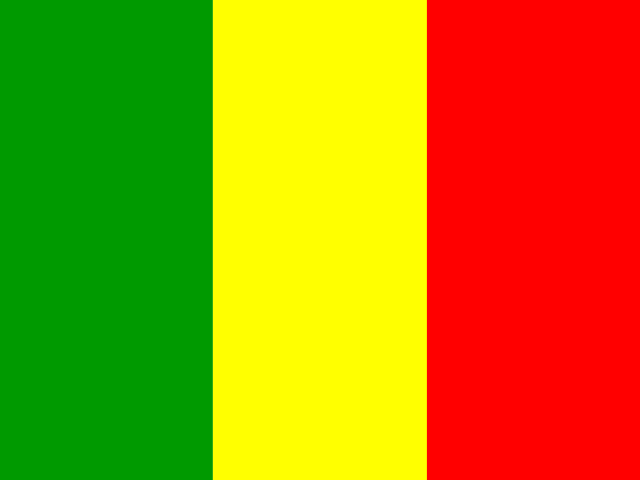
Mali's flag is three vertical bands of green, yellow and red, green at the hoist – the pan-African colours shared with many flags across the continent. It was adopted in 1961, shortly after independence from France; an earlier version with a black human figure in the centre was dropped within a year.
The problem flag is Guinea's, which has the same colours in the opposite order – red, yellow, green. Senegal uses Mali's order but adds a green star. Green at the pole, no star, is Mali.
A short history of Mali
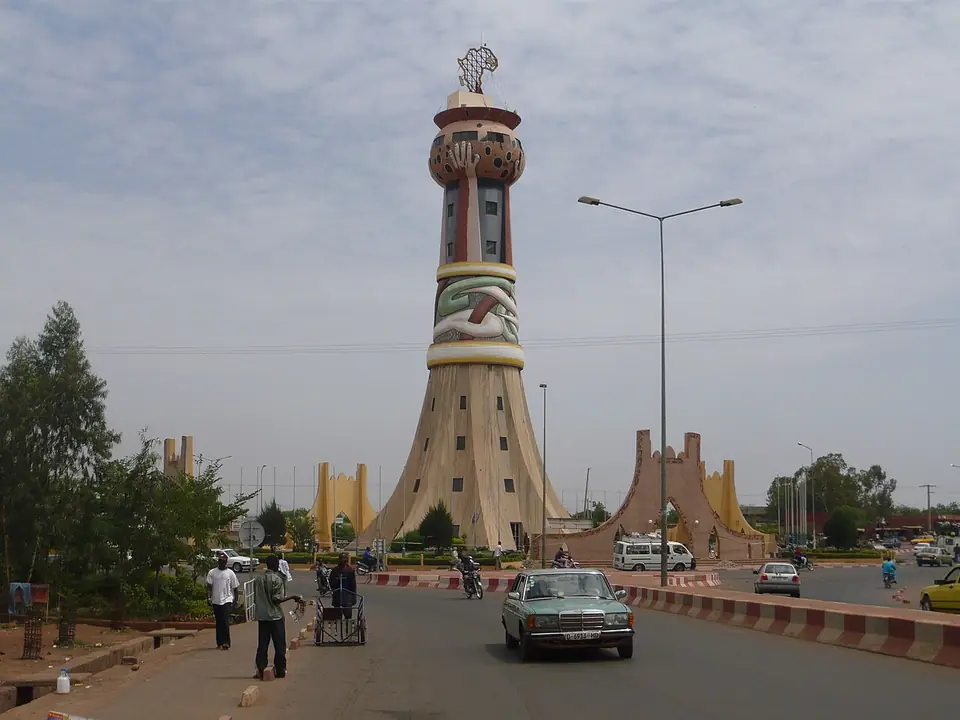
Long before the country had its present borders, the land along the Niger was home to some of Africa's great trading states. The Ghana Empire, centred north-west of today's Mali, grew rich by taxing the gold and salt that crossed the Sahara. When it faded, a Mandinka prince named Sundiata Keita founded the Mali Empire in the 1230s. Under his successors it stretched from the Atlantic coast deep into the desert, and modern Mali took its name from it.
In the 1400s power shifted east to Gao, the base of the Songhai Empire. Rulers such as Sonni Ali and Askia Muhammad built a state even larger than Mali had been. It collapsed in 1591, when a Moroccan army armed with firearms crossed the Sahara and defeated the Songhai at the Battle of Tondibi. Smaller states followed, including the Bambara kingdom of Ségou and the Islamic state founded by El Hadj Umar Tall in the 1800s.
France conquered the region in the late 19th century and ran it as French Sudan, part of French West Africa. The colonial lines explain the long straight borders in the desert north. In 1959 the territory joined Senegal in the short-lived Mali Federation, but the partnership broke up in August 1960, about two months after independence from France. Mali declared full independence on 22 September 1960, under Modibo Keïta, who followed a socialist path.
A military coup in 1968 began more than two decades of army rule, which ended when protests and a coup brought down the regime in 1991. Mali then held multi-party elections and was seen for years as a democratic model in the region. In 2012 a Tuareg rebellion and armed jihadist groups took over much of the north, and French troops intervened the following year. Further coups in 2020 and 2021 put the army back in charge, and Mali later left the regional bloc ECOWAS together with its neighbours Burkina Faso and Niger.
Today Mali relies on farming, cotton and gold, while much of the north remains insecure.
Culture and daily life in Mali
Mali is often called the home of West African music. The singer Salif Keita, the guitarist Ali Farka Touré and the kora player Toumani Diabaté became famous worldwide, while Oumou Sangaré carried the Wassoulou style of the south to international stages. In the desert north, Tuareg bands such as Tinariwen created the electric "desert blues". The old Epic of Sundiata, which tells the founding story of the Mali Empire, is still recited from memory.
Bambara is the language most people use to talk to each other, although dozens of others are spoken, including Fula, Songhai, Soninke and Tamasheq. A 2023 constitution made these national languages official and reduced French to a working language. Most Malians are Muslim, with a strong Sufi tradition, and older local beliefs remain alive in some regions.
Craft and art are deeply rooted. Bògòlanfini, or mud cloth, is cotton dyed with fermented mud into bold geometric patterns. The Dogon people, who live in cliffside villages along the Bandiagara Escarpment, are known for carved masks and masked dances. The photographers Seydou Keïta and Malick Sidibé captured life in Bamako in the decades around independence, and their portraits now hang in galleries around the world.
Five facts worth knowing
- Timbuktu, on the edge of the Sahara, was a centre of Islamic scholarship and trans-Saharan trade in the 14th to 16th centuries, and its manuscripts and mud mosques are a UNESCO World Heritage site.
- The medieval Mali Empire was one of the wealthiest states of its time, and its ruler Mansa Musa is often described as one of the richest people in history.
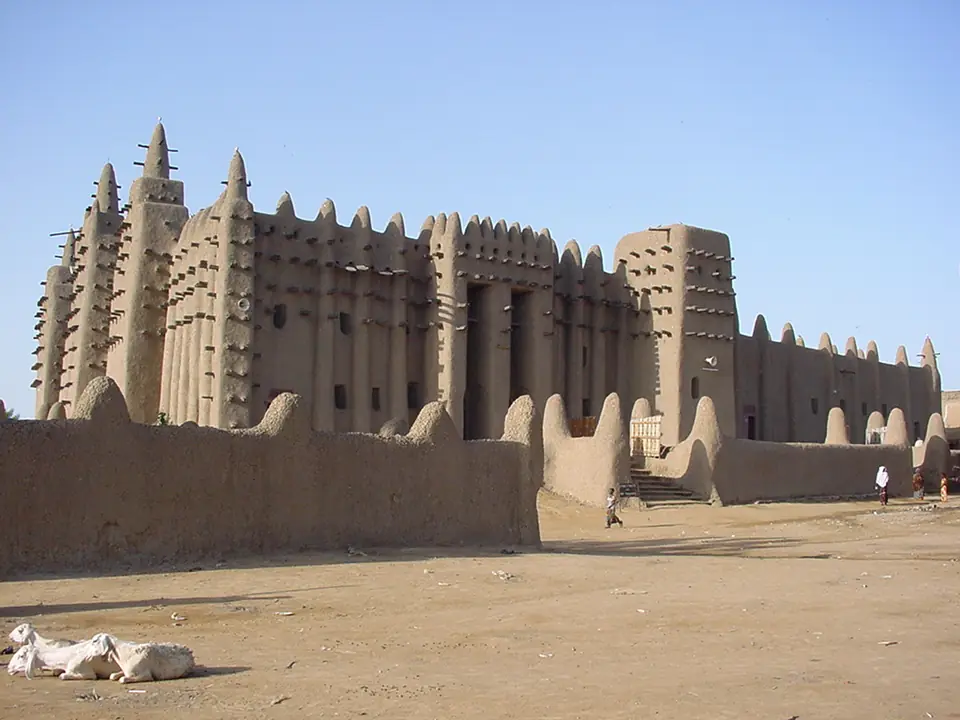
- The Great Mosque of Djenné is the largest mud-brick building in the world, replastered by the whole town every year.
- Mali is one of Africa's biggest gold producers, and gold is its main export.
- The country is roughly the size of South Africa, but most people live in the southern third along the rivers.
Culture and traditions in Mali
- Saying hello
Greetings are long and important; in Bambara people say "I ni ce" and ask about family and health.
- Food and drink
Tiguadege na, a peanut-butter stew with rice, and strong sweet green tea served in three rounds.
- Festivals and traditions
The Festival on the Niger in Ségou (usually February) celebrates music; the annual replastering of the Great Mosque of Djenné is a community event.
- Everyday life
Taking time to greet everyone is expected. Mali has a strong griot tradition of hereditary musicians and storytellers.
- Did you know?
The Great Mosque of Djenné is the largest mud-brick building in the world.
Common mistakes
- Tapping Niger – the two large Sahel countries sit side by side.
- Tapping Mauritania to the west.
- Choosing Guinea's reversed flag in the Flags quiz.
Practise with Mali
- West Africa quiz – the biggest inland country in the region, with the Niger bending through it.
- Africa quiz – find Algeria, then the hourglass below it.
- Africa flags – green, yellow, red from the pole; compare with Guinea and Senegal.
- Africa capitals quiz – Bamako.
- Mystery Country – the pinched-waist outline is one of the most recognisable in Africa.
Nearby countries
 AlgeriaAlgiers
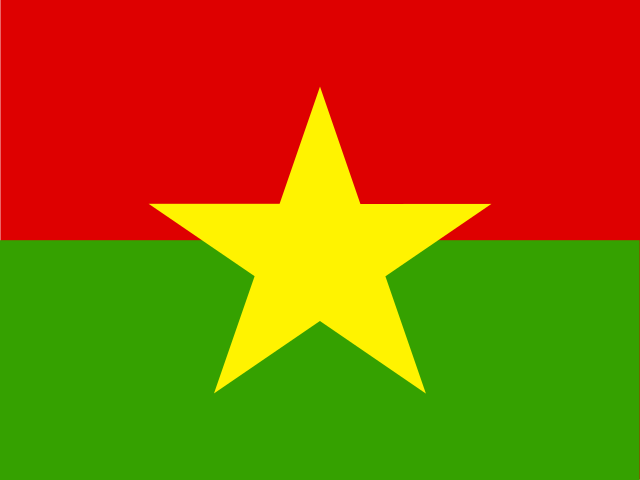 Burkina FasoOuagadougou
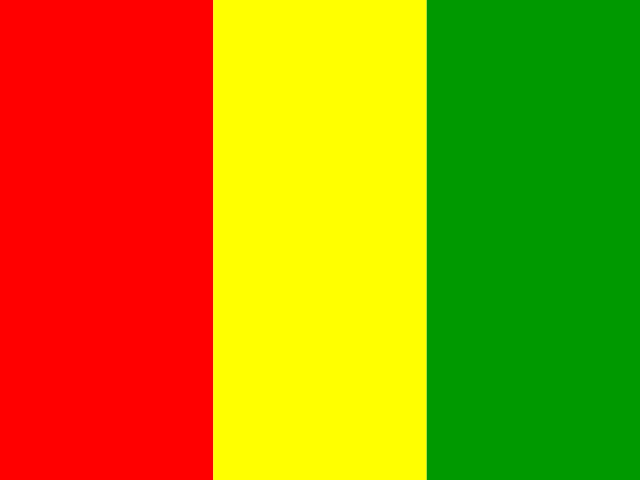 GuineaConakry
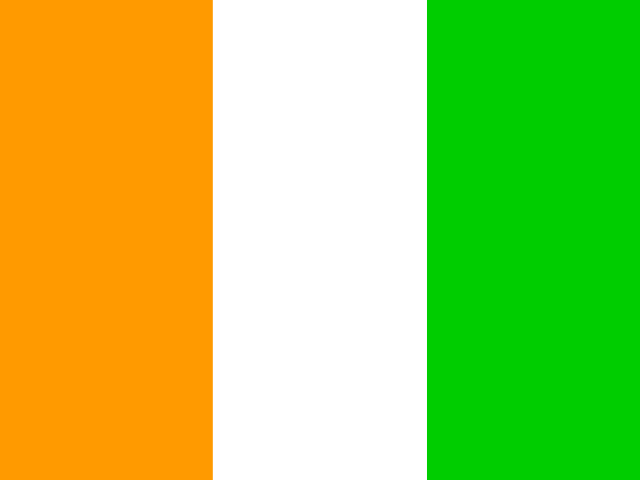 Ivory CoastYamoussoukro
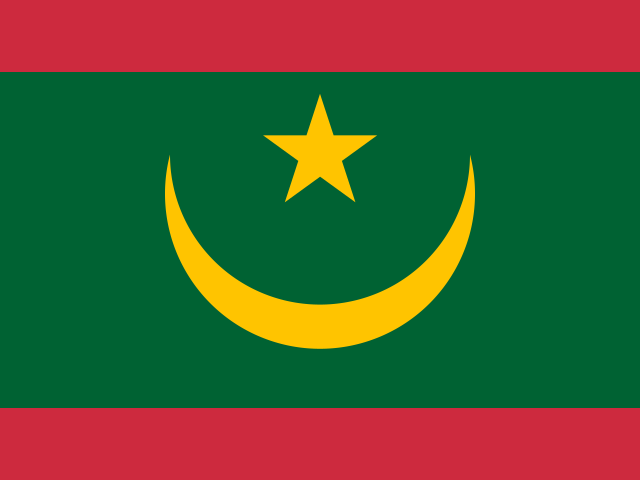 MauritaniaNouakchott
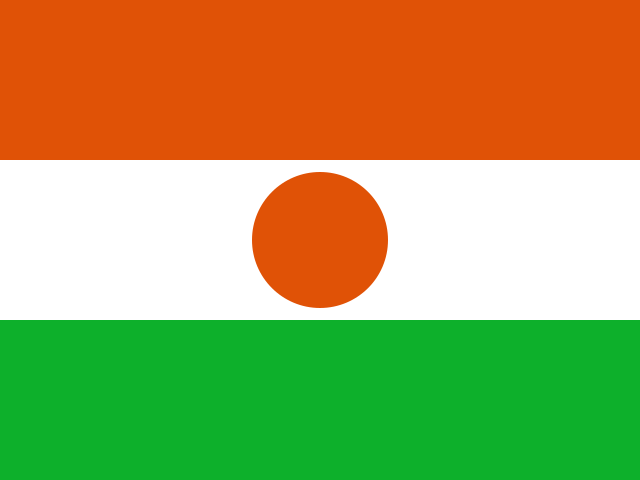 NigerNiamey
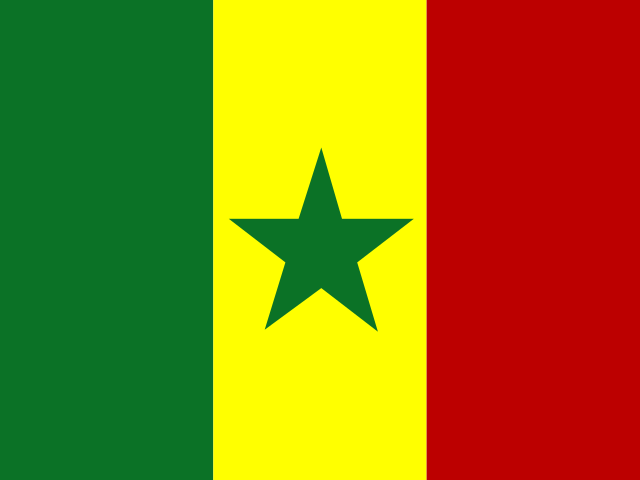 SenegalDakar
Quick check: how well do you know Mali?
3 questions, no sign-up. Tap an answer.
1. Which flag belongs to Mali?
That's the flag of Mali.
2. What is the capital of Mali?
The capital of Mali is Bamako.
3. Which of these countries borders Mali?
Algeria, Burkina Faso, Guinea, Ivory Coast, Mauritania, Niger and Senegal border Mali.
Keep going on the Africa quiz – Mali is one of 54 countries there.
More ways to practise: find Mali on the blank map with no borders (hard mode), or play today's Globe and the other daily puzzles.
Frequently asked questions about Mali
What language is spoken in Mali?
French was the sole official language from independence until 2023 and is still used as a working language in government. Bambara is the everyday lingua franca for most Malians, while Fula, Songhai, Soninke, Tamasheq and other national languages dominate in their own regions.
What currency does Mali use?
Mali uses the West African CFA franc (XOF), shared with seven other countries in the West African Economic and Monetary Union. It is pegged to the euro at a fixed rate and issued by the regional central bank in Dakar.
What time zone is Mali in?
Mali is on UTC+0, the same as Greenwich Mean Time, all year round. It does not use daylight saving time, so Bamako keeps the same clock time as London in winter and is an hour behind it in summer.
Which side of the road do they drive on in Mali?
Traffic in Mali drives on the right, as in all of its neighbours. Motorbikes make up a large share of traffic in Bamako, and the main paved routes link the capital with Ségou, Mopti, Sikasso and Kayes.
What is the highest point in Mali?
Hombori Tondo, a sheer-sided sandstone mesa in the Hombori Mountains near the border with Burkina Faso, is Mali's highest point at about 1,155 metres. The surrounding cliffs and towers, including the Main de Fatma, are known to rock climbers.
What is the Inner Niger Delta?
It is a huge inland floodplain in central Mali where the Niger spreads into lakes, channels and swamps each rainy season. Covering tens of thousands of square kilometres at its peak, it is one of Africa's largest wetlands and supports fishing, rice farming, cattle herders and millions of migratory birds.
Quizzes with Mali
Often confused with
Guides that help with this
- Learn all 54 African countries in a weekLearn the coastline in order, region by region.
- Flags that look alike (and how to tell them apart)Chad or Romania? Australia or New Zealand? The flag pairs that cost quiz points.
- The 25 hardest countries to find on a mapPacific islands, Caribbean islands and landlocked Africa – where they are.