Ivory Coast
Capital: Yamoussoukro. Ivory Coast is one of the 54 countries in the Africa quiz.
Quick answers: What is the capital of Ivory Coast? · Which countries border Ivory Coast?
Facts about Ivory Coast
- CapitalYamoussoukro
- Population32.7 million
- Area322,463 km²
- RegionsAfrica, West Africa
- LanguageFrench
- CurrencyWest African CFA franc (XOF)
Ivory Coast is the 16th most populous of the 54 countries in Africa and the 28th largest by area. Worldwide it ranks 50th by population and 69th by area.
Where is Ivory Coast?
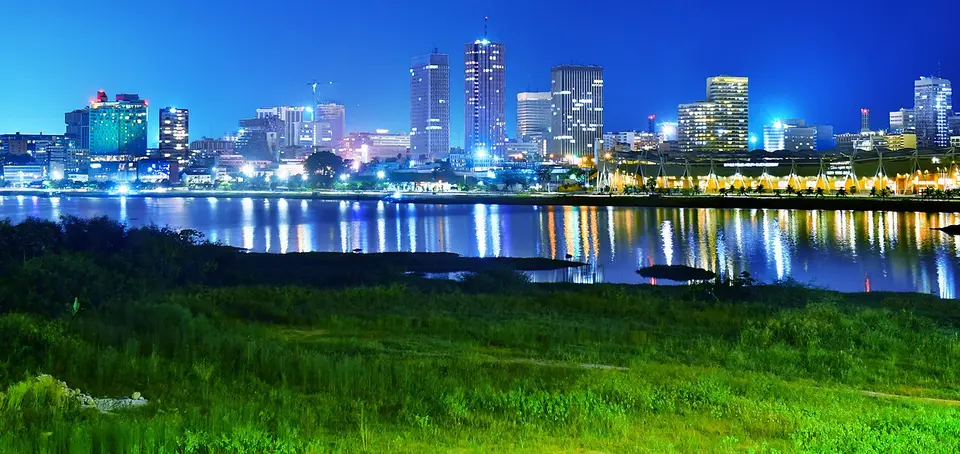
Ivory Coast, officially Côte d'Ivoire, is on the Gulf of Guinea in West Africa. Liberia and Guinea lie to the west, Mali and Burkina Faso to the north, and Ghana to the east. The southern edge is the Atlantic coast, lined with lagoons. The country has two capitals: Yamoussoukro, the official political capital in the centre, and Abidjan, the much larger economic capital and main port on the coast.
The country is roughly square, slightly bigger than Italy, and is the world's leading cocoa grower.
How to find Ivory Coast on the map
- Start from Ghana. Ghana is the country with the large lake in the middle of it. Ivory Coast is the country immediately to its west.
- Look along the bottom of the West African bulge. From west to east the coast runs Liberia, Ivory Coast, Ghana, Togo, Benin, Nigeria. Ivory Coast is the second of those.
- It's the square one. Ivory Coast has a fairly straight northern border and a gently curved southern coast, giving it a compact, boxy shape.
- Liberia is the smaller neighbour to the west. If the country you've tapped is narrow and bends down toward Sierra Leone, that's Liberia.
Flag
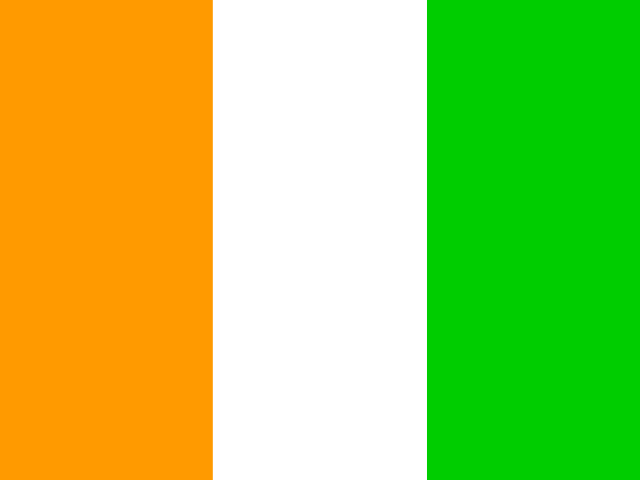
Ivory Coast's flag is three vertical bands – orange, white and green, with orange at the hoist. Orange stands for the northern savannah, white for peace and green for the forests of the south. It was adopted at independence in 1960.
Ireland's flag uses the same three colours in the opposite order: green at the hoist, orange at the fly. If the orange is on the left, it's Ivory Coast. Niger uses the same colours horizontally with an orange disc.
A short history of Ivory Coast
Before colonial rule, the land was shared by many states and peoples. In the north, the Dyula city of Kong grew into a trading empire in the 1700s, linking the forests to the caravan routes of the Sahara and serving as a centre of Islamic learning. In the centre, the Baoulé trace their origins to Queen Abla Pokou, who according to legend led her people west from the Asante lands of today's Ghana in the 1700s. Along the coast and in the south-east, Agni and other Akan kingdoms flourished.
European ships traded along the coast from the late 1400s, buying ivory that gave the region its name. France signed treaties with coastal chiefs from the 1840s and declared a colony in 1893. The capital moved several times: from Grand-Bassam, after a yellow fever outbreak, to Bingerville in 1900, and then to Abidjan in 1934, once a lagoon port was developed. Forced labour on plantations and roads was common until 1946.
Independence came in 1960 under Félix Houphouët-Boigny, who ruled until his death in 1993. He kept close ties with France and encouraged cocoa and coffee farming, and the 1960s and 70s boom was called the "Ivorian miracle". He also made his home village, Yamoussoukro, the official capital in 1983, which is why the government is based there while Abidjan remains the economic centre.
After his death, disputes over national identity and land fuelled instability. A coup came in 1999, and a civil war in 2002 split the country between the rebel-held north and the government-held south. Peace deals followed, but a disputed election in 2010 led to months of fighting in which around 3,000 people were killed.
Since 2011 Ivory Coast has recovered strongly and become one of the fastest-growing economies in West Africa. Besides cocoa, it is a leading producer of cashew nuts, and Abidjan hosts the African Development Bank.
Culture and daily life in Ivory Coast
More than sixty ethnic groups live in Ivory Coast, from the Baoulé and Agni to the Senufo, Malinké, Dan and Bété. French is the official language, but in Abidjan young people mix it with local words into Nouchi, a fast-changing street slang. Islam is strongest in the north and Christianity in the south, and many people also honour traditional beliefs.
The country's sculptors are celebrated worldwide, especially for Baoulé figures and masks and the bird carvings of the Senufo. The historic town of Grand-Bassam, with its faded colonial buildings, is a UNESCO World Heritage site. Ahmadou Kourouma's novel The Suns of Independence is a classic of African writing in French.
Music is everywhere. Alpha Blondy became one of Africa's leading reggae stars, and Magic System's Premier Gaou brought zouglou to the world. Football is a national passion. Didier Drogba famously appealed for peace on live television in 2005, and the national team won the Africa Cup of Nations in 1992, 2015 and on home soil in 2024.
Five facts worth knowing
- Ivory Coast produces around 40 per cent of the world's cocoa, more than any other country.
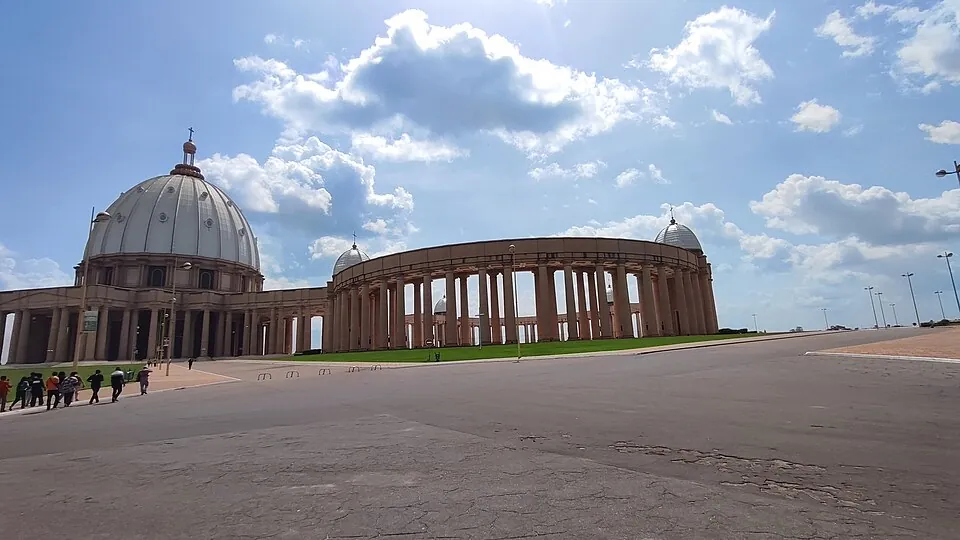
- The Basilica of Our Lady of Peace in Yamoussoukro is one of the largest churches in the world, modelled on St Peter's in Rome and completed in 1990.
- The government asks that the country be called Côte d'Ivoire in every language, though English speakers commonly say Ivory Coast.
- Abidjan is one of the largest French-speaking cities in the world and the country's economic engine.
- The elephant is the national symbol – the name refers to the ivory trade of earlier centuries, and the football team is nicknamed Les Éléphants.
Culture and traditions in Ivory Coast
- Saying hello
Handshakes and "Bonjour" in French, often followed by questions about family.
- Food and drink
Attiéké, fermented cassava couscous, with grilled fish; aloco, fried ripe plantain.
- Festivals and traditions
The Abissa festival in Grand-Bassam in October-November; mask festivals in the Man region.
- Everyday life
Maquis, open-air restaurants, are popular places to eat and socialise. Coupé-décalé dance music is everywhere.
- Did you know?
Ivory Coast is the world's largest producer of cocoa beans, supplying around 40% of the global crop.
Common mistakes
- Tapping Ghana, the neighbour to the east with a similar size.
- Tapping Liberia, which sits in Ivory Coast's south-western corner.
- Choosing Ireland's green-white-orange in the Flags quiz instead of orange-white-green.
Practise with Ivory Coast
- West Africa quiz – the zoomed-in map makes the coastal order from Liberia to Nigeria easy to learn.
- Africa quiz – find Ghana's big lake, then move one country west.
- Africa flags – sort out Ivory Coast from Ireland and Niger.
- Africa capitals quiz – Yamoussoukro is the answer, not Abidjan.
- Mystery Country – a boxy outline with a flat top and a curved coast at the bottom.
Nearby countries
 Burkina FasoOuagadougou
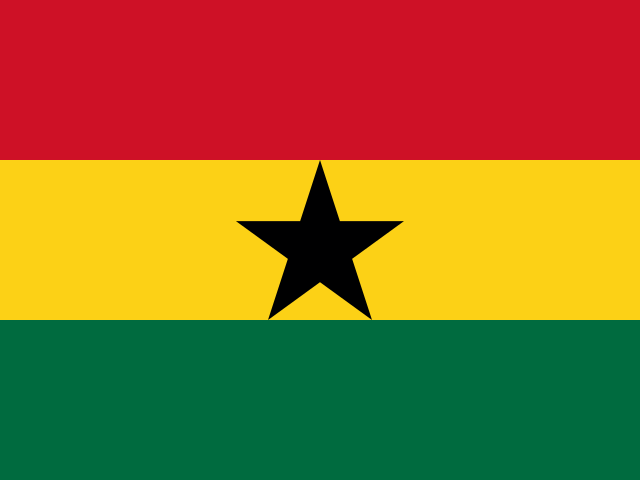 GhanaAccra
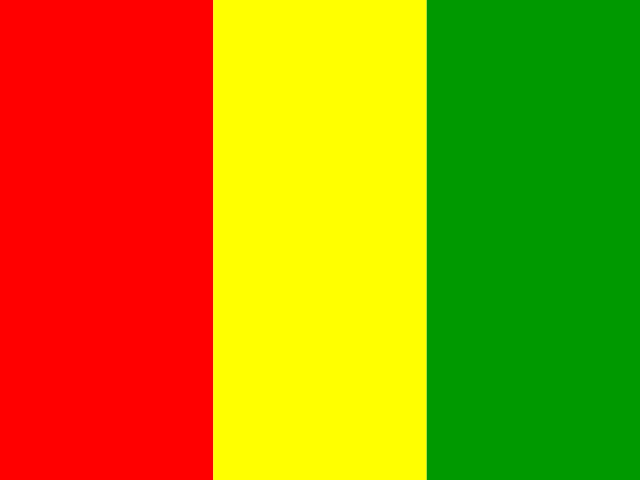 GuineaConakry
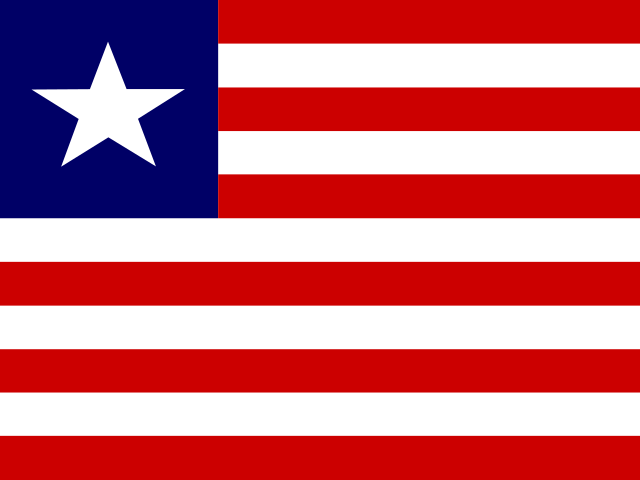 LiberiaMonrovia
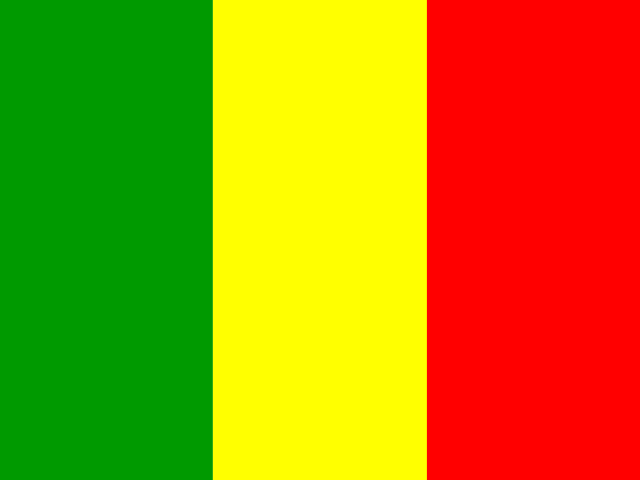 MaliBamako
Quick check: how well do you know Ivory Coast?
3 questions, no sign-up. Tap an answer.
1. Which flag belongs to Ivory Coast?
That's the flag of Ivory Coast.
2. What is the capital of Ivory Coast?
The capital of Ivory Coast is Yamoussoukro.
3. Which of these countries borders Ivory Coast?
Burkina Faso, Ghana, Guinea, Liberia and Mali border Ivory Coast.
Keep going on the Africa quiz – Ivory Coast is one of 54 countries there.
More ways to practise: find Ivory Coast on the blank map with no borders (hard mode), or play today's Globe and the other daily puzzles.
Frequently asked questions about Ivory Coast
What language is spoken in Ivory Coast?
French is the official language and is widely spoken, with a lively local slang called Nouchi in Abidjan. Around 60 African languages are also spoken, including Baoulé, Dioula (used widely in trade), Bété and Sénoufo.
What currency does Ivory Coast use?
Ivory Coast uses the West African CFA franc (XOF), shared with seven other countries in the West African Economic and Monetary Union. It is pegged to the euro at a fixed rate, and the region's central bank, the BCEAO, is based in Dakar.
What time zone is Ivory Coast in?
Ivory Coast is on UTC+0, Greenwich Mean Time, all year and does not use daylight saving time. Because it lies close to the Greenwich meridian, its clock time matches the sun quite closely.
Which side of the road do they drive on in Ivory Coast?
Ivory Coast drives on the right, like France and all its neighbours. A motorway links Abidjan with Yamoussoukro, and Abidjan is also connected by rail to Ouagadougou in Burkina Faso.
What is the highest point in Ivory Coast?
The highest point is Mount Nimba, about 1,752 metres, on the border with Guinea in the west. The Ivorian side of the Nimba range forms part of the Mount Nimba Strict Nature Reserve, a UNESCO World Heritage site.
What is Ivory Coast famous for?
Ivory Coast is the world's largest producer of cocoa, supplying a large share of the beans used in chocolate. It is also known for football, for coupé-décalé music, and for the huge Basilica of Our Lady of Peace in Yamoussoukro.
Quizzes with Ivory Coast
Often confused with
Guides that help with this
- Learn all 54 African countries in a weekLearn the coastline in order, region by region.
- Flags that look alike (and how to tell them apart)Chad or Romania? Australia or New Zealand? The flag pairs that cost quiz points.
- The 25 hardest countries to find on a mapPacific islands, Caribbean islands and landlocked Africa – where they are.