Estonia
Capital: Tallinn. Estonia is one of the 46 countries in the Europe quiz.
Quick answers: What is the capital of Estonia? · Which countries border Estonia?
Facts about Estonia
- CapitalTallinn
- Population1.4 million
- Area45,227 km²
- RegionsEurope, Central & Eastern Europe
- LanguageEstonian
- CurrencyEuro (EUR)
Estonia is the 37th most populous of the 46 countries in Europe and the 28th largest by area. Worldwide it ranks 156th by population and 129th by area.
Where is Estonia?
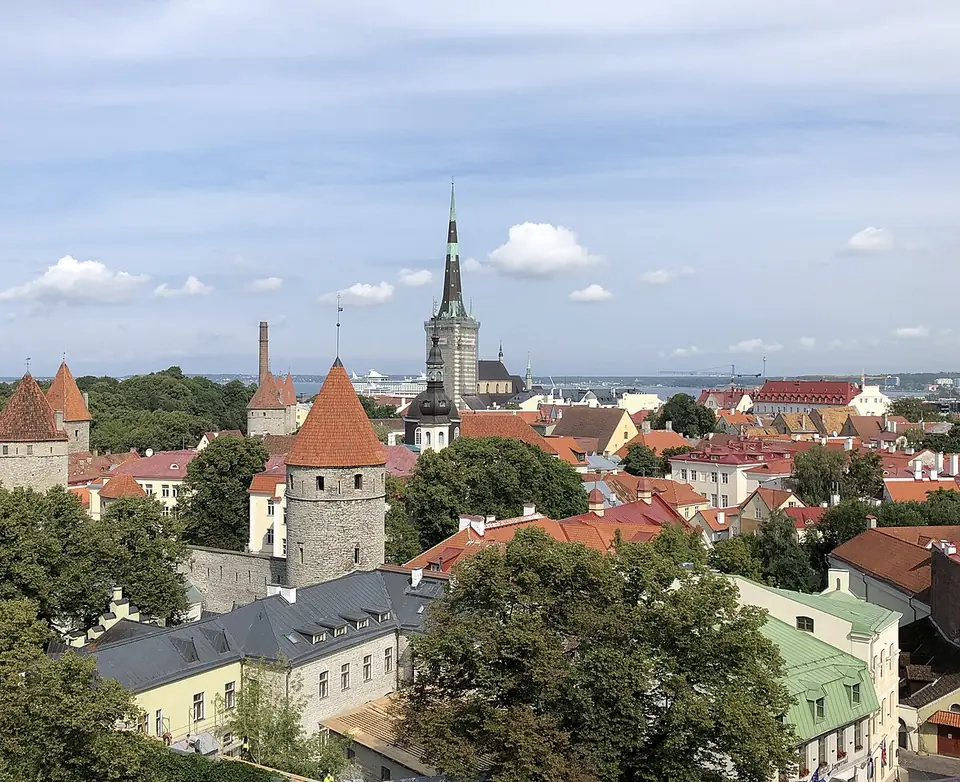
Estonia is the northernmost of the three Baltic states, on the eastern shore of the Baltic Sea. Latvia lies to the south and Russia to the east, with Lake Peipus forming much of that border. Finland is just across the Gulf of Finland to the north, and Sweden lies across the open Baltic to the west. The capital, Tallinn, is on the north coast, facing Helsinki.
On a world map, find the Gulf of Finland, the long inlet of the Baltic that ends at St Petersburg. Estonia is the country on the southern side of that gulf, directly below Finland.
How to find Estonia on the map
- Start from Finland. Estonia is the country immediately south across the Gulf of Finland.
- Count the Baltics from the top. Estonia is the uppermost of the three; Latvia is in the middle and Lithuania at the bottom.
- Look for the islands. Saaremaa and Hiiumaa, two large islands off the west coast, are unique among the Baltic states.
- Don't confuse it with Latvia. Latvia has the deep Gulf of Riga cut into its coast; Estonia is the one with the big islands and the border with Finland's gulf.
Flag
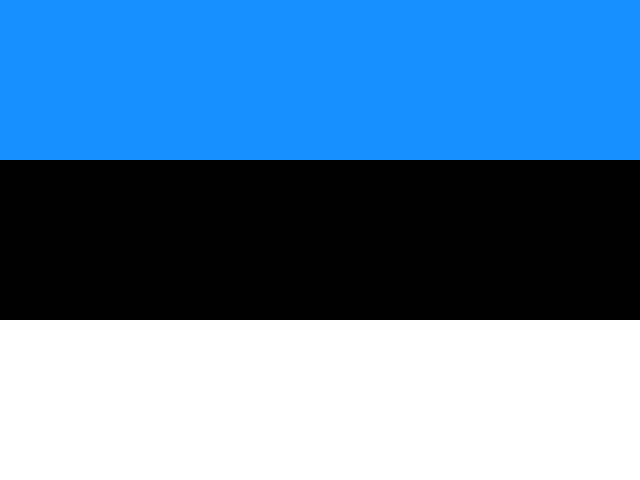
Estonia's flag is a horizontal tricolour of blue, black and white. Blue represents the sky and the sea, black the soil and the country's dark past, and white the snow and the hope for a brighter future. It was first used by a student society in the 1880s and became the national flag with independence in 1918.
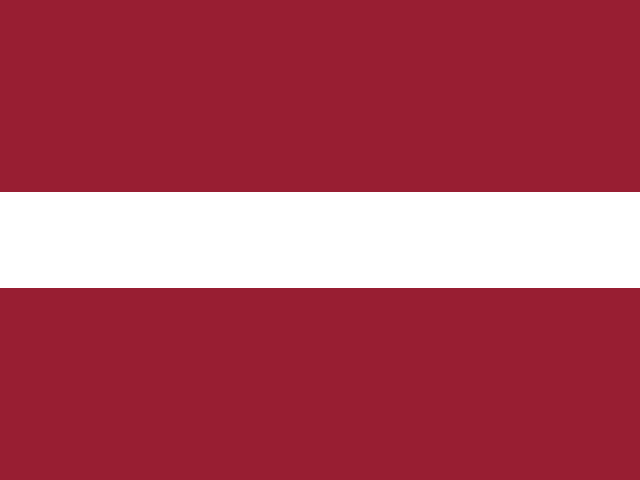
In the Flags quiz, no other national flag uses blue, black and white in horizontal bands. Latvia's is dark red and white, Lithuania's is yellow, green and red.
A short history of Estonia
People reached this corner of the Baltic soon after the Ice Age, around 9000 BC. Finnic-speaking ancestors of today's Estonians were living here by the first millennium BC, in farming villages and hill forts, and they stayed pagan long after most of Europe had become Christian.
That changed in the early 1200s, when German and Danish crusaders conquered the region. The Danes took the north, including Tallinn, and German knights of the Livonian Order controlled most of the rest. For centuries a German-speaking nobility owned the land and dominated the towns, while Estonians worked as peasants, many as serfs. Tallinn, then called Reval, became a wealthy member of the Hanseatic League, the trading network of northern Europe.
The Reformation brought Lutheranism in the 1500s. After the Livonian War, Sweden took control of Estonia, and its rule is sometimes remembered fondly because it founded the University of Tartu in 1632. In 1710, during the Great Northern War, Russia conquered the country, and it remained part of the Russian Empire for two centuries, though the Baltic German nobles kept their power. Serfdom was abolished in the early 1800s, and a national awakening followed, with Estonian newspapers, song festivals and the epic poem Kalevipoeg.
Estonia declared independence on 24 February 1918 and won it in a war against Soviet Russia and German forces, confirmed by the Treaty of Tartu in 1920. In 1940 the Soviet Union occupied the country under a secret deal with Nazi Germany. German occupation followed from 1941, and the Soviets returned in 1944. Tens of thousands of Estonians were deported to Siberia, and many Russian speakers moved in, which is why a large Russian-speaking minority lives in the north-east, around Narva.
The Singing Revolution of the late 1980s, in which crowds sang banned national songs, helped restore independence in August 1991. Today Estonia has a modern, technology-focused economy, and the video-calling software Skype was largely developed by Estonian engineers.
Culture and daily life in Estonia
Estonian has fourteen grammatical cases and no grammatical gender, and its vocabulary includes many words borrowed from German, a trace of centuries under German-speaking landlords. Around a quarter of the population speaks Russian as a first language. Estonia is one of the least religious countries in the world, though Lutheran churches remain landmarks, and older folk beliefs about forests, stones and holy groves are still respected.
The composer Arvo Pärt, whose quiet, bell-like style he calls tintinnabuli, is one of the most performed contemporary composers in the world. Choirs are a national habit, and thousands of singers take part in the great song festivals. The novelist A. H. Tammsaare wrote Truth and Justice, a five-volume saga of Estonian life.
In winter, ice roads sometimes open across the frozen sea to the islands. Cross-country skiing, basketball and wrestling are popular, and the islands of Kihnu and Muhu are known for brightly striped woollen skirts and embroidery. Many families spend summer at a country house, gathering mushrooms and berries in the forests.
Five facts worth knowing
- Estonia is one of the most digital countries in the world, with online voting since 2005 and an e-residency programme that lets foreigners run companies there remotely.
- The Estonian language is closely related to Finnish, not to Latvian or Lithuanian, which is why Estonians and Finns understand bits of each other's languages.
- Estonia has more than 2,000 islands, though only a few are inhabited; Saaremaa is the largest.
- Tallinn's old town is a UNESCO World Heritage site, one of the best preserved medieval trading cities in northern Europe.
- Estonia joined the EU and NATO in 2004 and adopted the euro in 2011, the first Baltic state to do so.
Culture and traditions in Estonia
- Saying hello
A firm handshake and "Tere" (hello), usually with direct eye contact.
- Food and drink
Dark rye bread (leib), eaten with almost every meal; verivorst, blood sausage traditionally served at Christmas.
- Festivals and traditions
Midsummer (Jaanipäev) on 23–24 June with bonfires; the huge Song Festival in Tallinn held about every five years.
- Everyday life
People value personal space, quiet and punctuality, and small talk is kept short. Sauna is a cherished part of life.
- Did you know?
The smoke sauna tradition of southern Estonia's Võromaa region is on UNESCO's list of Intangible Cultural Heritage.
Common mistakes
- Tapping Latvia, the neighbour to the south.
- Tapping southern Finland, across the gulf.
- Mixing up the order of the three Baltic states.
Practise with Estonia
- Europe quiz – find the Gulf of Finland and tap the country on its southern shore.
- Nordics quiz – Estonia is not included, but running it helps you fix where Finland ends and Estonia begins.
- Europe flags – the blue, black and white bands.
- Europe capitals quiz – Tallinn.
- Mystery Country – a squat outline with two large islands off the west coast and a lake on the eastern edge.
Nearby countries
Quick check: how well do you know Estonia?
3 questions, no sign-up. Tap an answer.
1. Which flag belongs to Estonia?
That's the flag of Estonia.
2. What is the capital of Estonia?
The capital of Estonia is Tallinn.
3. Which of these countries borders Estonia?
Latvia and Russia border Estonia.
Keep going on the Europe quiz – Estonia is one of 46 countries there.
More ways to practise: find Estonia on the blank map with no borders (hard mode), or play today's Globe and the other daily puzzles.
Frequently asked questions about Estonia
What language is spoken in Estonia?
Estonian is the official language. It is a Finnic language, closely related to Finnish and distantly to Hungarian, with 14 grammatical cases. Russian is the first language of a large minority, especially in Tallinn and the north-east.
What currency does Estonia use?
Estonia uses the euro (EUR), which replaced the Estonian kroon in 2011. It was the first former Soviet republic to adopt the euro. Estonian euro coins show a map of the country.
What time zone is Estonia in?
Estonia uses Eastern European Time, UTC+2, and switches to UTC+3 for summer time from late March to late October. It is one hour ahead of Sweden and Germany.
Which side of the road do they drive on in Estonia?
Estonians drive on the right. In winter, ice roads are sometimes opened across the frozen sea to islands such as Hiiumaa, with strict rules on speed and spacing.
What is the highest point in Estonia?
Suur Munamägi, meaning 'Great Egg Hill', in the south-east near the Latvian border, is the highest point at about 318 metres. It is also the highest point in the Baltic states, and an observation tower on top lets visitors see across three countries.
Is Estonia a Nordic or Baltic country?
Estonia is usually counted as one of the three Baltic states, with Latvia and Lithuania. It is not formally a Nordic country, but its language and culture are close to Finland's, and many Estonians describe their country as Nordic.
Quizzes with Estonia
Often confused with
Guides that help with this
- All 46 European capitals, with a memory trick for eachCapitals grouped by region, with hooks for the ones people forget.
- Flags that look alike (and how to tell them apart)Chad or Romania? Australia or New Zealand? The flag pairs that cost quiz points.
- The 25 hardest countries to find on a mapPacific islands, Caribbean islands and landlocked Africa – where they are.