Latvia
Capital: Riga. Latvia is one of the 46 countries in the Europe quiz.
Quick answers: What is the capital of Latvia? · Which countries border Latvia?
Facts about Latvia
- CapitalRiga
- Population1.8 million
- Area64,559 km²
- RegionsEurope, Central & Eastern Europe
- LanguageLatvian
- CurrencyEuro (EUR)
Latvia is the 33rd most populous of the 46 countries in Europe and the 24th largest by area. Worldwide it ranks 149th by population and 122nd by area.
Where is Latvia?
Latvia is the middle of the three Baltic states on the eastern shore of the Baltic Sea. Estonia is to the north, Lithuania to the south, Russia to the east and Belarus to the south-east. The capital, Riga, sits at the bottom of the Gulf of Riga, a wide bay cutting into the coast between Latvia and Estonia.
On a world map, look for the eastern edge of the Baltic Sea, opposite Sweden. Three small countries stack up along it from Finland down towards Poland. Latvia is the one in the middle.
How to find Latvia on the map
- Find the Baltic trio. Estonia, Latvia, Lithuania run top to bottom. Latvia is the middle one.
- Look for the Gulf of Riga. The large bay with the capital at its base is the clearest landmark on the coast.
- Count from Finland. Cross the Gulf of Finland south from Helsinki to Estonia; the next country down is Latvia.
- Don't confuse it with Lithuania. Lithuania is the southernmost and touches Poland and Kaliningrad. Latvia does not.
Flag
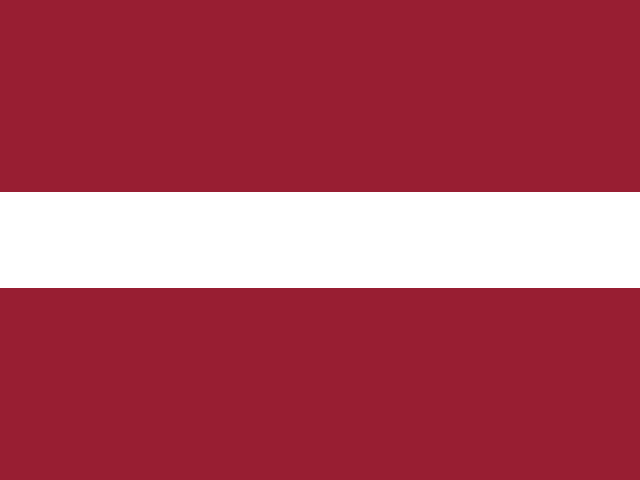
Latvia's flag is a dark red field with a thin white horizontal stripe through the middle. The red is a deep carmine, often called "Latvian red", and the white stripe is narrower than the red bands – the proportions are 2:1:2. The design is one of the oldest in Europe, with records of a red-white-red banner going back to the 13th century.
The flag that trips people up is Austria's, which is red-white-red in equal thirds and a brighter red. Thin white stripe on dark red is Latvia.
A short history of Latvia
For thousands of years the lands around the Gulf of Riga were home to Baltic and Finnic tribes – the Curonians, Latgalians, Selonians, Semigallians and Livs. Several of these names live on in the regions of Latvia, such as Kurzeme (Courland) and Latgale. They traded amber and furs and kept their own pagan religion long after most of Europe had become Christian.
That changed in the late 1100s and 1200s, when German crusaders and merchants arrived. Bishop Albert founded Riga in 1201, and the city joined the Hanseatic League of trading towns. The local tribes were conquered and the land was ruled by German knights and bishops as Livonia. For the next 700 years a German-speaking nobility owned most of the land, while Latvians were mainly peasants, many of them serfs.
From the 1500s neighbouring powers fought over the region. Parts were ruled by Poland-Lithuania and Sweden, while the Duchy of Courland was so active at sea that it briefly held colonies in Tobago and on the Gambia River. By the end of the 1700s the whole of Latvia was part of the Russian Empire. Serfdom was abolished in most of Latvia in 1817–19, and a "national awakening" later in the century saw Latvians publish newspapers and collect their folk songs.
Latvia declared independence on 18 November 1918 and defended it in a war against both Soviet and German forces. Between the wars it was a prosperous farming country. In 1940 the Soviet Union occupied it, followed by Nazi Germany in 1941, when most of Latvia's Jewish population was murdered, and then the Soviets again in 1944. Tens of thousands of Latvians were deported to Siberia, and many Russian speakers moved in, which is why roughly a quarter of the population today is ethnically Russian.
In 1989 around two million people joined hands across the three Baltic states in the Baltic Way protest. Since regaining independence Latvia has rebuilt itself as a Western-facing democracy, with transit, wood products and IT among its main industries.
Culture and daily life in Latvia
Latvian is written in the Latin alphabet with extra marks such as long vowels (ā, ē) and soft consonants (ļ, ņ). Its vocabulary holds many German loanwords from the long period of German rule. A tiny group of people still speak Livonian, a Finnic language now one of the most endangered in Europe. Religion is mixed: Lutherans in the west, Catholics in Latgale in the east and Orthodox Christians among Russian speakers, with many Latvians not religious at all.
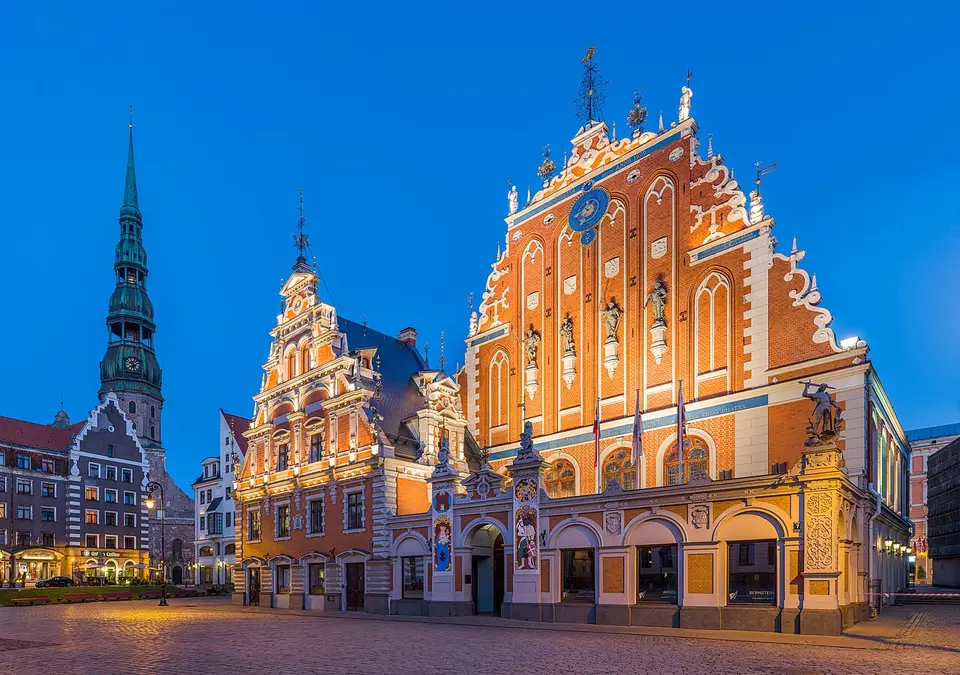
Singing is central to national identity, and choirs exist in almost every town. Old pagan traditions survive in festivals and in the ancient folk signs – symbols for the sun, thunder and other forces – woven into mittens, belts and jewellery. Riga's Art Nouveau streets include many buildings by Mikhail Eisenstein, father of the film director Sergei Eisenstein.
Notable Latvians include the painter Mark Rothko, born in Daugavpils, and the violinist Gidon Kremer. Ice hockey is the most passionate sport, and the men's team won a famous bronze at the 2023 World Championship, which was celebrated with a national holiday.
Five facts worth knowing
- Riga is the largest city in the three Baltic states, and its old town and Art Nouveau district are a UNESCO World Heritage site.
- Latvia regained independence in 1991 after decades in the Soviet Union, and joined the EU and NATO in 2004.
- Roughly half of Latvia is covered by forest.
- Latvian is one of only two surviving Baltic languages, the other being Lithuanian. Neither is closely related to Russian or Estonian.
- Latvia adopted the euro in 2014, a year before Lithuania and three years after Estonia.
Culture and traditions in Latvia
- Saying hello
A handshake with "Labdien" (good day) or "Sveiki" (hello).
- Food and drink
Dark rye bread; grey peas with bacon; Riga Black Balsam, an herbal liqueur.
- Festivals and traditions
Jāņi, Midsummer, on 23–24 June with bonfires and flower wreaths; the Song and Dance Festival every five years.
- Everyday life
People tend to be reserved at first. Flowers are given in odd numbers, as even numbers are for funerals.
- Did you know?
Over a million Latvian folk song verses, called dainas, have been collected, and the archive is on UNESCO's Memory of the World register.
Common mistakes
- Tapping Lithuania or Estonia – the Baltic states are the most swapped countries in the Europe quiz.
- Picking Austria's flag in the Flags quiz.
- Placing Riga on the open coast instead of at the bottom of the gulf.
Practise with Latvia
- Europe quiz – the middle Baltic state, with the Gulf of Riga biting into its coast.
- Europe flags – dark red with a thin white stripe, not Austria.
- Europe capitals quiz – Riga.
- Mystery Country – a squarish outline with a deep notch in the north-west where the gulf comes in.
- Mistake Bank – if you keep swapping the Baltics, this is where to drill them.
Nearby countries
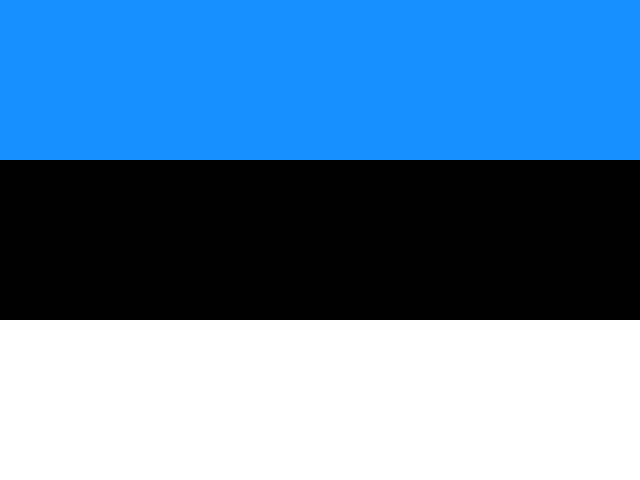
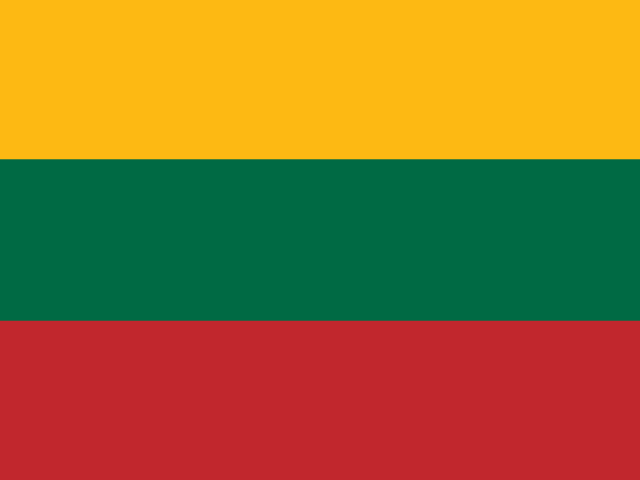
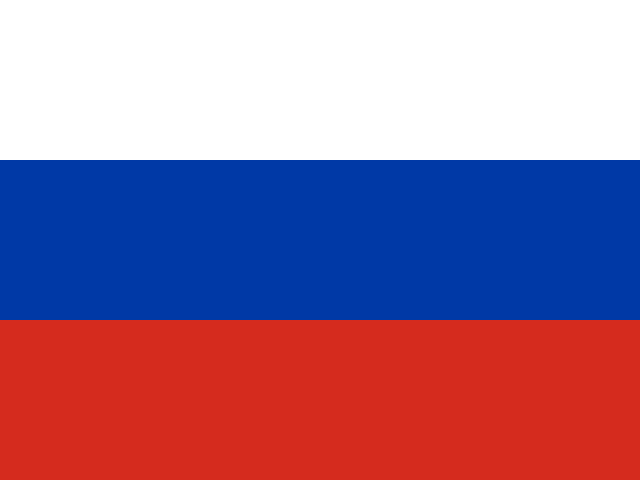
Quick check: how well do you know Latvia?
3 questions, no sign-up. Tap an answer.
1. Which flag belongs to Latvia?
That's the flag of Latvia.
2. What is the capital of Latvia?
The capital of Latvia is Riga.
3. Which of these countries borders Latvia?
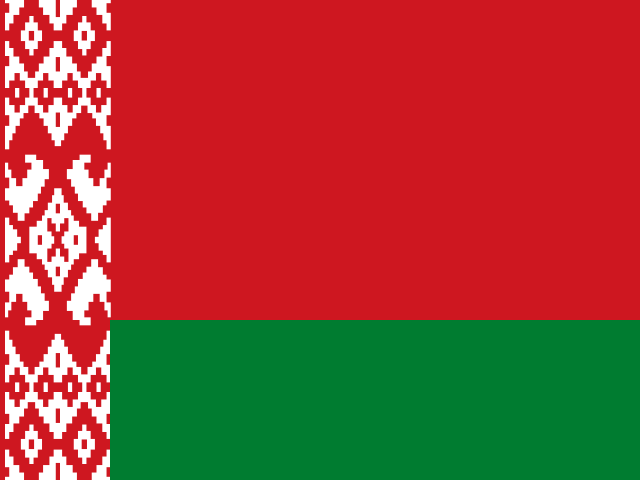
Belarus, Estonia, Lithuania and Russia border Latvia.
Keep going on the Europe quiz – Latvia is one of 46 countries there.
More ways to practise: find Latvia on the blank map with no borders (hard mode), or play today's Globe and the other daily puzzles.
Frequently asked questions about Latvia
What language is spoken in Latvia?
Latvian is the only official language. It is one of only two surviving Baltic languages, together with Lithuanian. Russian is the first language of a large minority, especially in Riga and Daugavpils, and Latgalian, a regional variety, is spoken in the east.
What currency does Latvia use?
Latvia uses the euro (EUR), which it adopted on 1 January 2014, replacing the lats. Latvia's €1 and €2 coins show a maiden in national dress, a figure that also appeared on the country's coins between the world wars.
What time zone is Latvia in?
Latvia uses Eastern European Time, UTC+2, in winter and Eastern European Summer Time, UTC+3, from the last Sunday of March to the last Sunday of October. It is one hour ahead of Sweden and Poland.
Which side of the road do they drive on in Latvia?
Latvia drives on the right. Dipped headlights must be used at all times, day and night, and winter tyres are compulsory from December to the end of February because of snow and ice.
What is the highest point in Latvia?
Latvia is low and flat. Its highest point is Gaiziņkalns, only about 312 metres above sea level, in the Vidzeme Upland in the centre of the country. A viewing tower was built on the summit to see over the forest.
Is Latvia in the EU?
Yes. Latvia joined the European Union and NATO in 2004, the Schengen area in 2007 and the eurozone in 2014. Membership marked a major turn westward after half a century of Soviet rule, which ended when independence was restored in 1991.
Quizzes with Latvia
Often confused with
Guides that help with this
- All 46 European capitals, with a memory trick for eachCapitals grouped by region, with hooks for the ones people forget.
- Flags that look alike (and how to tell them apart)Chad or Romania? Australia or New Zealand? The flag pairs that cost quiz points.
- The 25 hardest countries to find on a mapPacific islands, Caribbean islands and landlocked Africa – where they are.