Laos
Capital: Vientiane. Laos is one of the 48 countries in the Asia quiz.
Quick answers: What is the capital of Laos? · Which countries border Laos?
Facts about Laos
- CapitalVientiane
- Population7.9 million
- Area236,800 km²
- RegionsAsia, Southeast Asia
- LanguageLao
- CurrencyLao kip (LAK)
Laos is the 32nd most populous of the 48 countries in Asia and the 22nd largest by area. Worldwide it ranks 103rd by population and 82nd by area.
Where is Laos?
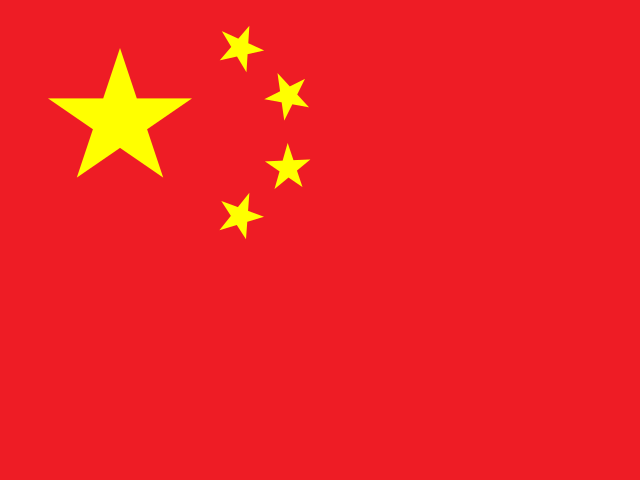
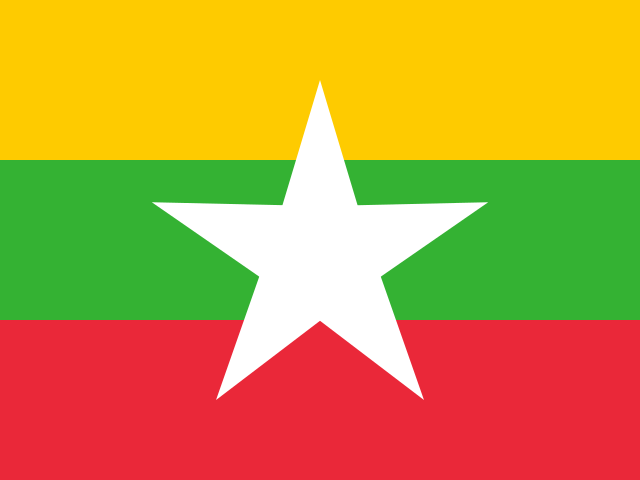
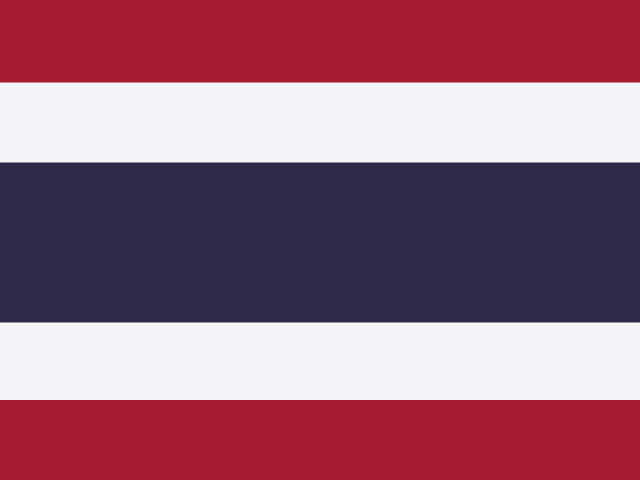
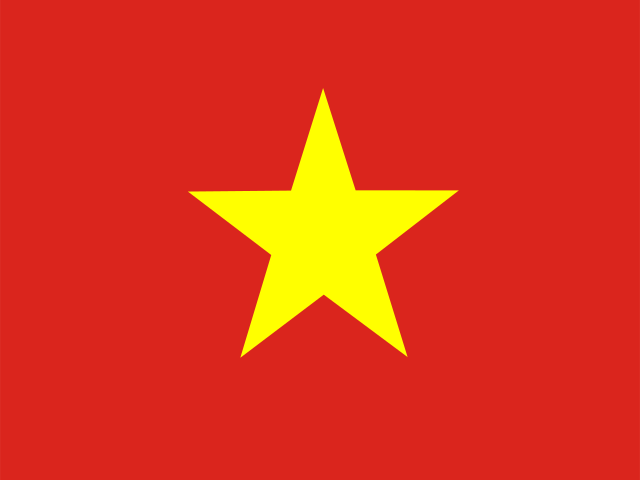
Laos is the only landlocked country in Southeast Asia, a long strip of mountains and river valleys between Thailand to the west and Vietnam to the east, with China to the north, Myanmar to the north-west and Cambodia to the south. The Mekong forms much of the Thai border and flows past the capital, Vientiane, which sits on the riverbank facing Thailand.
On a world map, find the peninsula hanging below China. Vietnam is the S-shaped strip along the eastern coast. Laos is tucked inside that S, with no coastline at all.
How to find Laos on the map
- Start from Vietnam. Laos is the landlocked country directly west of Vietnam's northern and central stretch.
- Look for the country with no sea. Every other mainland Southeast Asian country touches the ocean.
- Follow the Mekong. The river runs down the western edge of Laos, separating it from Thailand.
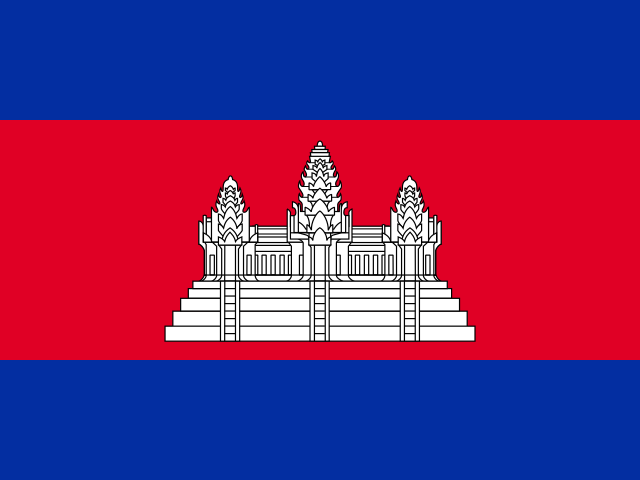
- Don't confuse it with Cambodia. Cambodia is the rounder country to the south, with a coast on the Gulf of Thailand.
Flag
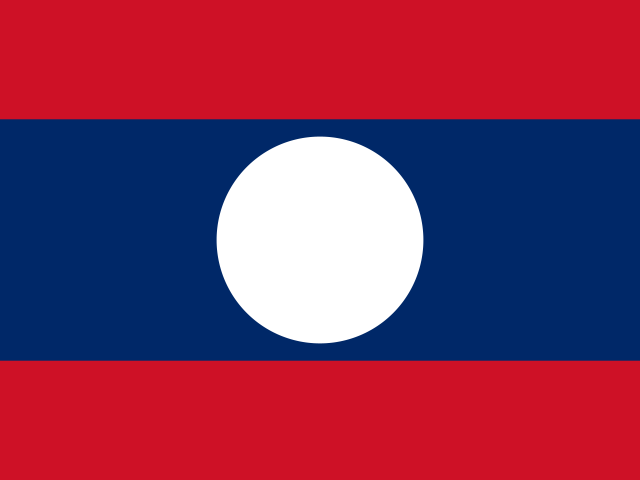
The flag of Laos has three horizontal bands – red, blue, red – with the middle blue band twice as tall as each red one and a white disc in its centre. The blue stands for the Mekong, the disc for the moon over the river, and the red for blood shed for independence. It was adopted in 1975.
The closest lookalike is Thailand, which has red-white-blue-white-red stripes and no disc. A disc on a blue band framed by red is Laos.
A short history of Laos
People have lived in the hills and river valleys of Laos for thousands of years. Its most mysterious relic is the Plain of Jars in the north-east, where hundreds of huge stone jars, around 2,000 years old, are scattered across the fields. Most researchers believe they were linked to funeral rites.
Tai-speaking peoples, ancestors of today's Lao, moved south from what is now southern China during the first millennium AD. In 1353 a prince called Fa Ngum united several territories into the kingdom of Lan Xang, "land of a million elephants", with its capital at Luang Prabang. Buddhism became the state religion. In the 1560s the capital moved downriver to Vientiane, partly to keep away from Burmese attacks. Lan Xang was one of the largest kingdoms in the region, but in the early 1700s it split into three rival kingdoms.
By the late 1700s the Lao kingdoms had fallen under Siam, today's Thailand. When King Anouvong of Vientiane rebelled in 1827, Siamese armies sacked the city. In 1893 France forced Siam to give up land east of the Mekong, and Laos became part of French Indochina. This is why the Mekong forms so much of the border today, and why many Lao speakers still live on the Thai side, in the region called Isan.
Laos became fully independent in 1953, but it was soon pulled into the wars of the Cold War. Royalist forces backed by the United States fought the communist Pathet Lao, which was supported by North Vietnam. The Ho Chi Minh Trail ran through eastern Laos, which made the country a target for American bombing in a "secret war". In 1975 the Pathet Lao took power, ended the 600-year-old monarchy and founded the Lao People's Democratic Republic, a one-party state that still governs.
From the late 1980s the government opened the economy to markets. Laos remains one of the poorer countries in Southeast Asia, relying on mining, hydropower and close ties with China and Thailand.
Culture and daily life in Laos
Lao is closely related to Thai, and speakers of the two can often understand each other, yet Laos is home to dozens of ethnic groups. Officials traditionally group them by where they live: lowland Lao along the rivers, and upland peoples such as the Hmong and Khmu in the hills, each with their own language, dress and beliefs. Most lowland Lao follow Theravada Buddhism mixed with belief in local spirits.
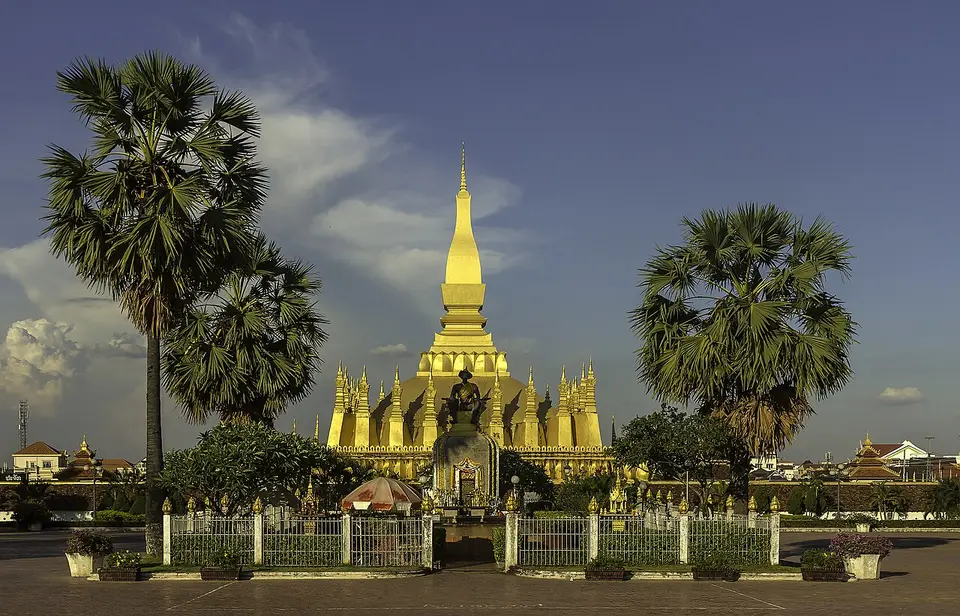
Temples are the heart of village life, and many young men spend time as monks. Wat Xieng Thong in Luang Prabang, with its sweeping roofs, and the golden stupa of Pha That Luang in Vientiane, a national symbol, are the most famous. The baci ceremony, in which white cotton strings are tied around a person's wrists for good luck, marks weddings, journeys and homecomings.
The khaen, a bamboo mouth organ, is the national instrument, and lam singing, with its quick-fire verses, is popular from villages to radio. Women weave silk skirts called sinh in patterns that vary by region, and wearing one is expected at offices and schools.
Five facts worth knowing
- Laos is the most heavily bombed country per person in history. More than two million tonnes of US ordnance fell on it during the Vietnam War era, and unexploded bombs are still being cleared.
- Vientiane is one of the few capitals directly on an international border, with Thailand visible across the Mekong.
- Luang Prabang, the old royal capital, is a UNESCO World Heritage city famous for its temples and morning alms procession.
- A railway linking Vientiane to Kunming in China opened in 2021, the country's first modern rail line.
- Laos exports hydroelectricity from dams on the Mekong and its tributaries, earning it the nickname "the battery of Southeast Asia".
Culture and traditions in Laos
- Saying hello
"Sabaidee" with a nop, palms pressed together at chest level.
- Food and drink
Larb, a minced meat salad with herbs and lime; sticky rice eaten by hand.
- Festivals and traditions
Pi Mai Lao, the New Year water festival, in mid-April; Boun Bang Fai, the rocket festival, in May.
- Everyday life
Remove shoes before entering homes and temples, and avoid touching anyone's head. Morning alms-giving to monks is a daily tradition in Luang Prabang.
- Did you know?
Sticky rice is served in small woven bamboo baskets called tip khao and rolled into balls with the fingers.
Common mistakes
- Tapping Vietnam – they share a long border and both run north to south.
- Tapping Cambodia, the rounder neighbour to the south.
- Picking Thailand's striped flag in the Flags quiz.
Practise with Laos
- Southeast Asia quiz – the map zooms in on Indochina.
- Asia quiz – find Vietnam first, then the landlocked country behind it.
- Asia flags – the blue band with the white disc.
- Asia capitals quiz – Vientiane.
- Mystery Country – a narrow outline with a bulge at the top and a tail running south-east.
Nearby countries
Quick check: how well do you know Laos?
3 questions, no sign-up. Tap an answer.
1. Which flag belongs to Laos?
That's the flag of Laos.
2. What is the capital of Laos?
The capital of Laos is Vientiane.
3. Which of these countries borders Laos?
Cambodia, China, Myanmar, Thailand and Vietnam border Laos.
Keep going on the Asia quiz – Laos is one of 48 countries there.
More ways to practise: find Laos on the blank map with no borders (hard mode), or play today's Globe and the other daily puzzles.
Frequently asked questions about Laos
What language is spoken in Laos?
Lao is the official language, closely related to Thai, so many Lao people understand Thai television and radio. Dozens of minority languages are also spoken, including Hmong and Khmu in the uplands. French survives among older people and on some signs, while English is now the main foreign language.
What currency does Laos use?
Laos uses the kip (LAK). Its value floats and has fallen sharply in recent years, so banknotes run to large denominations. Thai baht and US dollars are often accepted in towns near the border and in tourist areas, but the kip is the legal currency.
What time zone is Laos in?
Laos is on UTC+7, Indochina Time, all year and does not use daylight saving time. Its clocks match those of Thailand, Vietnam and Cambodia, and it is one hour behind China.
Which side of the road do they drive on in Laos?
Laos drives on the right, like Vietnam, Cambodia and China, even though neighbouring Thailand drives on the left. Vehicles therefore switch sides when crossing the Friendship Bridges over the Mekong.
What is the highest point in Laos?
The highest point is Phou Bia, about 2,819 metres, in the mountains south of the Plain of Jars in northern Laos. Access has long been restricted, and the summit is rarely climbed.
What is Laos famous for?
Laos is famous for the old royal town of Luang Prabang and its dawn alms-giving by monks, for the mysterious stone jars of the Plain of Jars and for the Mekong's Four Thousand Islands. Sadly, it is also the most heavily bombed country per person in history.
Quizzes with Laos
Often confused with
Guides that help with this
- Oceans, seas, rivers and mountainsThe physical map: seas around each continent, the big rivers and ranges.
- Flags that look alike (and how to tell them apart)Chad or Romania? Australia or New Zealand? The flag pairs that cost quiz points.
- The 25 hardest countries to find on a mapPacific islands, Caribbean islands and landlocked Africa – where they are.