Liechtenstein
Capital: Vaduz. Liechtenstein is one of the 46 countries in the Europe quiz.
Quick answers: What is the capital of Liechtenstein? · Which countries border Liechtenstein?
Facts about Liechtenstein
- CapitalVaduz
- Population41,024
- Area160 km²
- RegionsEurope, Central & Eastern Europe
- LanguageGerman
- CurrencySwiss franc (CHF)
Liechtenstein is the 43rd most populous of the 46 countries in Europe and the 43rd largest by area. Worldwide it ranks 190th by population and 192nd by area.
Where is Liechtenstein?
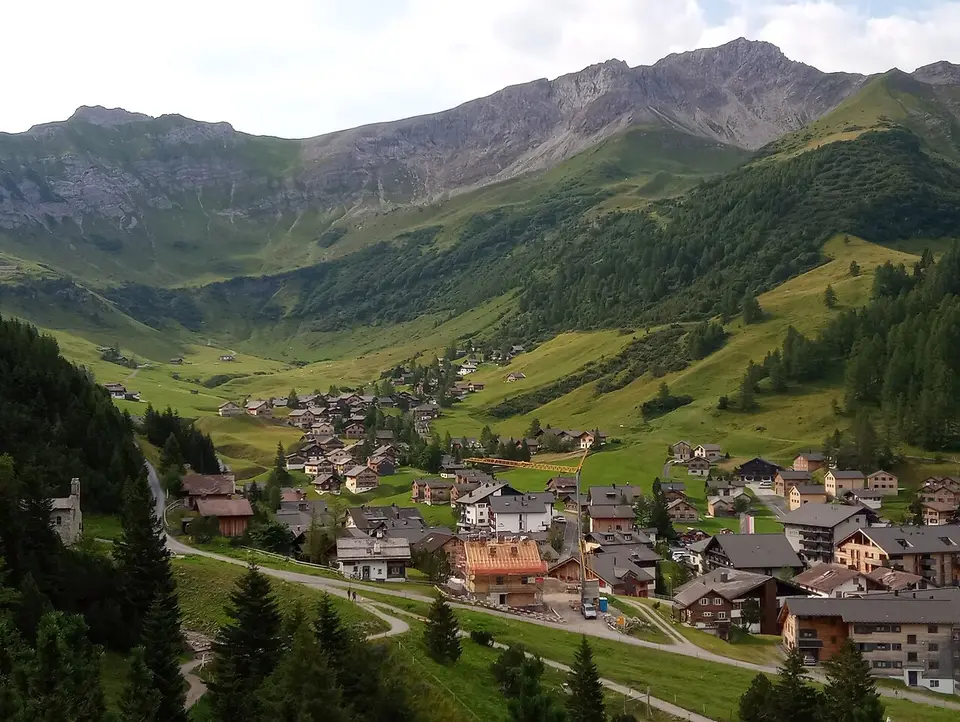
Liechtenstein is a tiny Alpine principality squeezed between Switzerland and Austria. It lies on the east bank of the Rhine, which forms its entire western border with Switzerland, and climbs into the mountains towards Austria in the east. The whole country is about 25 km long and a few kilometres wide. The capital, Vaduz, is on the Rhine in the middle.
On a world map you will not see it without zooming in. Find Switzerland, then its eastern border with Austria. Liechtenstein is the sliver where the two meet, just south of Lake Constance.
How to find Liechtenstein on the map
- Start from Switzerland. Zoom in on its eastern edge, where the Rhine runs north towards Lake Constance.
- Find the Rhine. Liechtenstein sits on the river's eastern bank, a short way upstream of the lake.
- Look between two bigger countries. It is the only country sandwiched entirely between Switzerland and Austria.
- Don't confuse it with Luxembourg. Both are small, rich and German-speaking, but Luxembourg is 400 km north-west between Belgium, Germany and France.
Flag
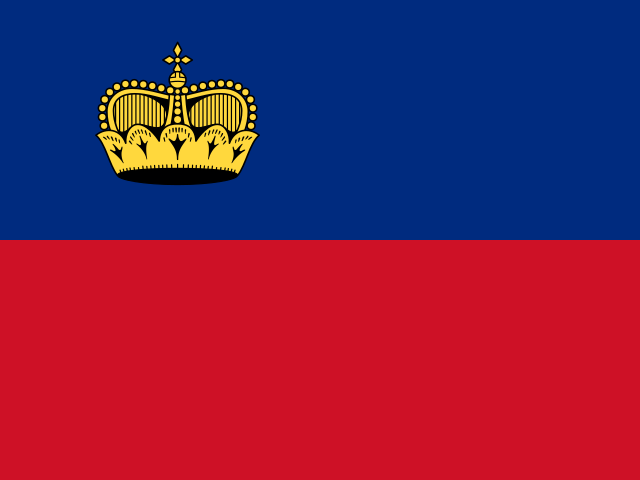
Liechtenstein's flag is two horizontal bands, blue over red, with a gold crown in the top-left corner. The crown was added in 1937 after the country discovered at the 1936 Berlin Olympics that its flag was identical to Haiti's. It represents the princely family, which has ruled since the 18th century.
Haiti's flag today carries a coat of arms in the centre rather than a crown, so the two are no longer identical – but the colours match, and the crown in the corner is the thing to look for.
A short history of Liechtenstein
The Rhine valley around Vaduz has been settled since the Stone Age, and the Romans built a road through it linking Italy with Lake Constance; the remains of Roman villas have been found at Schaan and Nendeln. Later the area was settled by the Alemanni, a Germanic people, which is why its dialects today are close to those of eastern Switzerland and Vorarlberg.
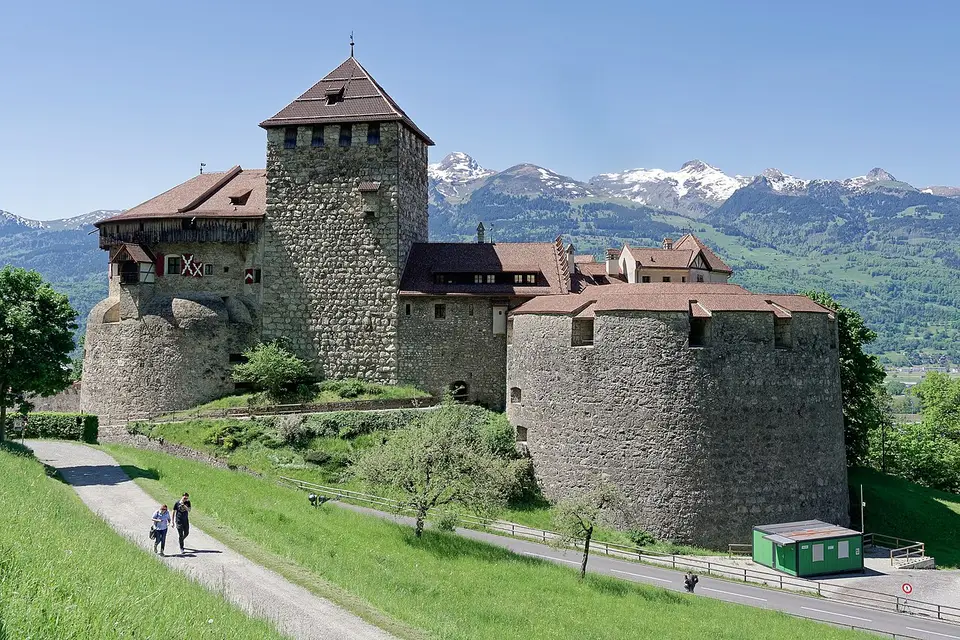
In the Middle Ages the land was split into two lordships, Vaduz in the south and Schellenberg in the north, passing between noble families of the Holy Roman Empire. Vaduz Castle, which still overlooks the capital, dates back to the 1100s or 1200s. The region was poor, suffered during the Swabian War of 1499 and the Thirty Years' War, and was badly hit by witch trials in the 1600s.
The Liechtenstein family were wealthy nobles whose estates lay mainly in Austria, Bohemia and Moravia. To win a seat in the imperial parliament they needed land held directly from the emperor, so they bought the two lordships. In 1719 Emperor Charles VI joined them into the Principality of Liechtenstein. For more than a century the princes did not even live there.
When Napoleon dissolved the Holy Roman Empire in 1806, Liechtenstein became a sovereign state. It joined the German Confederation and kept close links with Austria until 1918. It abolished its army in 1868 and has had none since. After the First World War, Austria was in crisis, and Liechtenstein turned to Switzerland, adopting the Swiss franc in 1924 and entering a customs union with it the same year. A new constitution in 1921 shared power between the prince and an elected parliament, and the princely family finally moved to Vaduz in 1938.
Once a farming country of emigrants, Liechtenstein has become one of the richest places on Earth. Banking and finance grew after the war, alongside high-tech manufacturing. It joined the UN in 1990 and the European Economic Area in 1995, and women gained the vote only in 1984.
Culture and daily life in Liechtenstein
German is the official language, but in daily life people speak Alemannic dialects that even differ from village to village. Most residents are Roman Catholic, and the cathedral of St Florin in Vaduz is the seat of an archbishop. About a third of the population are foreign citizens, mainly from Switzerland, Austria and Germany, and many more commute across the border each day.
Direct democracy is strong: citizens can call referendums, and the prince's role was strengthened by a vote in 2003. Each of the eleven municipalities has its own customs, and in spring villages light huge Funken bonfires topped with a witch figure to drive out winter.
The national museum and the Kunstmuseum Liechtenstein sit in the centre of Vaduz, and the country is also known for its postage stamps, which are prized by collectors. Skiing is the favourite sport: the slalom star Hanni Wenzel won two Olympic golds in 1980, giving Liechtenstein more Olympic medals per person than almost anywhere.
Five facts worth knowing
- Liechtenstein is one of only two doubly landlocked countries in the world, meaning all of its neighbours are landlocked too. The other is Uzbekistan.
- It uses the Swiss franc and has a customs union with Switzerland, though it is not part of Switzerland.
- The princely family's art collection is among the largest private collections in the world.
- Liechtenstein is the sixth-smallest country in the world by area, at about 160 square kilometres.
- It is the only country named entirely after its ruling family – the Liechtenstein princes bought the land in 1699 and 1712.
Culture and traditions in Liechtenstein
- Saying hello
"Grüezi" or the casual "Hoi" with a handshake.
- Food and drink
Käsknöpfle, small cheese dumplings topped with fried onions; local wine from the Rhine valley.
- Festivals and traditions
National Day on 15 August, when the prince invites everyone to a reception at Vaduz Castle grounds, followed by fireworks.
- Everyday life
Life is calm, tidy and punctual. German is spoken, and the Swiss franc is used.
- Did you know?
Liechtenstein is one of the world's leading producers of false teeth.
Common mistakes
- Tapping a corner of Switzerland or Austria because the target is so small.
- Confusing it with Luxembourg.
- Picking Haiti's flag instead of the one with the crown.
Practise with Liechtenstein
- Europe quiz – zoom in on the Swiss-Austrian border; the target is tiny.
- Europe flags – blue over red with the gold crown.
- Europe capitals quiz – Vaduz.
- Swiss Cantons – Liechtenstein borders St. Gallen and Graubünden.
- Austrian States – its eastern neighbour is Vorarlberg.
Nearby countries
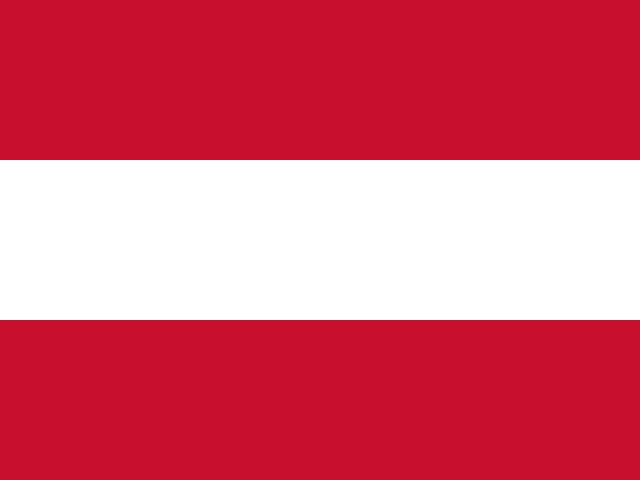 AustriaVienna
 SwitzerlandBern
Quick check: how well do you know Liechtenstein?
3 questions, no sign-up. Tap an answer.
1. Which flag belongs to Liechtenstein?
That's the flag of Liechtenstein.
2. What is the capital of Liechtenstein?
The capital of Liechtenstein is Vaduz.
3. Which of these countries borders Liechtenstein?
Austria and Switzerland border Liechtenstein.
Keep going on the Europe quiz – Liechtenstein is one of 46 countries there.
More ways to practise: find Liechtenstein on the blank map with no borders (hard mode), or play today's Globe and the other daily puzzles.
Frequently asked questions about Liechtenstein
What language is spoken in Liechtenstein?
German is the official language, used in writing, schools and government. In everyday speech most people use a local Alemannic dialect, similar to those spoken in neighbouring eastern Switzerland and Vorarlberg in Austria.
What currency does Liechtenstein use?
Liechtenstein uses the Swiss franc (CHF), which it adopted in 1920 and confirmed by a treaty with Switzerland in 1980. It has no central bank of its own, but it does issue its own postage stamps, which are popular with collectors.
What time zone is Liechtenstein in?
Liechtenstein uses Central European Time, UTC+1, in winter and Central European Summer Time, UTC+2, in summer, changing on the last Sundays of March and October, the same as Switzerland and Austria.
Which side of the road do they drive on in Liechtenstein?
Liechtenstein drives on the right. The country has no motorway of its own; the Swiss A13 motorway runs just across the Rhine, and a single railway line crosses the country between Austria and Switzerland.
What is the highest point in Liechtenstein?
The highest point is Grauspitz, about 2,599 metres, in the Rätikon range on the border with Switzerland in the south-east. Much of Liechtenstein's eastern half is mountainous, while the west lies on the flat Rhine valley floor.
Is Liechtenstein in the EU?
No. Liechtenstein is not an EU member, but it belongs to the European Economic Area, giving it access to the EU single market, and it joined the Schengen area in 2011. It also has a customs union with Switzerland.
Quizzes with Liechtenstein
Often confused with
Guides that help with this
- All 46 European capitals, with a memory trick for eachCapitals grouped by region, with hooks for the ones people forget.
- Flags that look alike (and how to tell them apart)Chad or Romania? Australia or New Zealand? The flag pairs that cost quiz points.
- The 25 hardest countries to find on a mapPacific islands, Caribbean islands and landlocked Africa – where they are.