Switzerland
Capital: Bern. Switzerland is one of the 46 countries in the Europe quiz.
Quick answers: What is the capital of Switzerland? · Which countries border Switzerland?
Facts about Switzerland
- CapitalBern
- Population9.1 million
- Area41,284 km²
- RegionsEurope, Central & Eastern Europe
- LanguagesGerman, French, Italian, Romansh
- CurrencySwiss franc (CHF)
Switzerland is the 18th most populous of the 46 countries in Europe and the 31st largest by area. Worldwide it ranks 99th by population and 132nd by area.
Where is Switzerland?
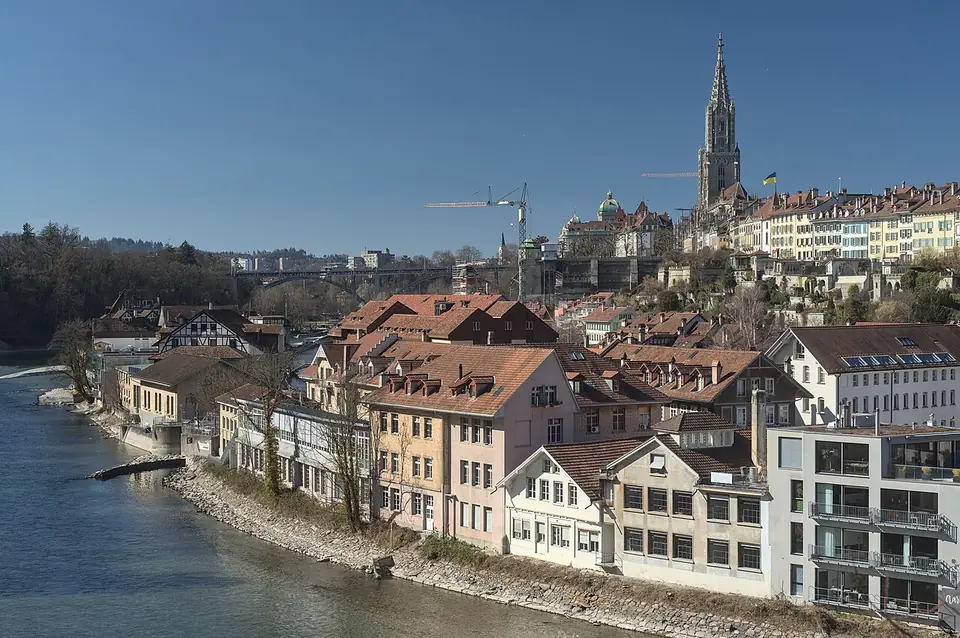
Switzerland is a landlocked country in the heart of the Alps, in Central Europe. Germany lies to the north, France to the west, Italy to the south, and Austria and tiny Liechtenstein to the east. Bern, the capital, is in the west-centre; Zürich, the largest city, is in the north; Geneva sits on the far western tip, on the lake that shares its name.
On a world map, find the arc of the Alps curving from France to Austria. Switzerland sits on the middle of that arc, with Lake Geneva at its western end and Lake Constance at its north-eastern corner.
How to find Switzerland on the map
- Start from Italy. Switzerland is the country directly above the top of the Italian boot, north of Milan.
- Look for the two lakes. Lake Geneva, a crescent on the French border, and Lake Constance, shared with Germany and Austria, bracket the country.
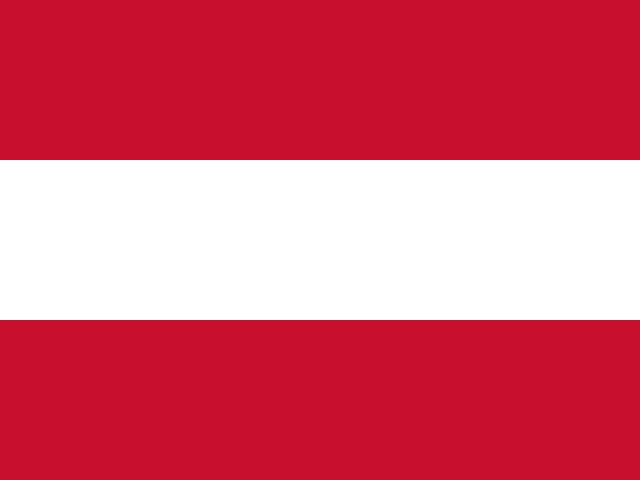
- Don't confuse it with Austria. Austria is longer and stretches east towards Hungary; Switzerland is more compact and touches France.
Flag
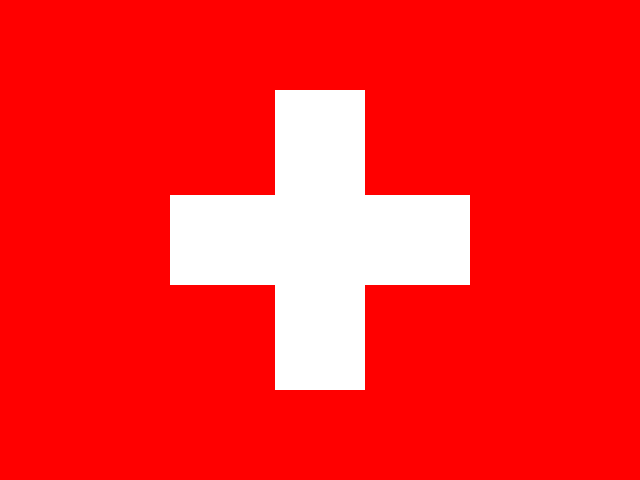
The Swiss flag is a white cross on a red square – one of only two square national flags in the world, the other being Vatican City's. The cross has equal arms that do not reach the edges, which separates it from the Nordic crosses.
The Red Cross emblem is the Swiss flag with the colours reversed, a tribute to the organisation's founding in Geneva in 1863. At a glance the flag can be confused with Denmark's, but Denmark's cross is off-centre and reaches the edges.
A short history of Switzerland
In Roman times the Swiss plateau was home to a Celtic people, the Helvetii. Their name lives on in the country's Latin title, Confoederatio Helvetica, which is why Swiss cars carry the code CH. After Rome fell, Germanic Alemanni settled the north and east, while Burgundians in the west adopted Latin speech. That early split is still visible as the line between German- and French-speaking Switzerland.
The Swiss state began as an alliance. In 1291 three Alpine valleys – Uri, Schwyz and Unterwalden – swore to defend one another against outside lords, and that pact is remembered on National Day. The story of William Tell belongs to this period, though historians treat it as legend. The confederates beat Habsburg armies at Morgarten in 1315 and Sempach in 1386, and more towns and valleys joined. Swiss foot soldiers became Europe's most sought-after mercenaries, and the Swiss Guard has protected the Pope since 1506.
The Reformation split the confederation. Zwingli led it in Zürich and Calvin in Geneva, while the central mountain cantons stayed Catholic. In 1648 the Peace of Westphalia formally recognised Swiss independence from the Holy Roman Empire. French revolutionary armies invaded in 1798 and imposed a centralised republic, but after his fall the Congress of Vienna in 1815 fixed Switzerland's borders and recognised its permanent neutrality.
A short civil war in 1847, the Sonderbund War, ended in Protestant-liberal victory, and the 1848 constitution created the modern federal state with Bern as the seat of government. Switzerland stayed neutral in both World Wars. It was slow on some reforms: women only gained the vote nationally in 1971, and the country joined the United Nations as late as 2002.
Today Switzerland is one of the world's richest countries, strong in banking, pharmaceuticals, precision engineering and watches. Geneva hosts the UN's European headquarters and many international organisations.
Culture and daily life in Switzerland
Language divides and unites. Most German speakers use Swiss German dialects in daily life, which other German speakers often struggle to follow, while writing in standard German. Romansh descends from the Latin spoken in Roman times. Religion follows the old Reformation map, with Catholic and Protestant cantons, though many Swiss now have no religious ties.
Politics is part of daily life through direct democracy. Citizens vote several times a year in referendums, and in Glarus and Appenzell Innerrhoden people still meet in the town square to vote by raising their hands.
Swiss culture has many famous names. Johanna Spyri wrote Heidi, set in the mountains of Graubünden; Friedrich Dürrenmatt and Max Frisch were leading post-war writers. Painter Paul Klee and sculptor Alberto Giacometti made their name abroad, as did architect Le Corbusier, born in the watchmaking town of La Chaux-de-Fonds. Mountain traditions include yodelling, the alphorn and Schwingen, a form of wrestling in sawdust rings. Roger Federer is the country's most celebrated sportsman, and skiing is close to a national pastime.
Five facts worth knowing
- Switzerland has four national languages: German, French, Italian and Romansh. German is spoken by the majority, French in the west, Italian in Ticino in the south, and Romansh by a small community in the south-east.
- The country is made of 26 cantons, each with a great deal of independence.
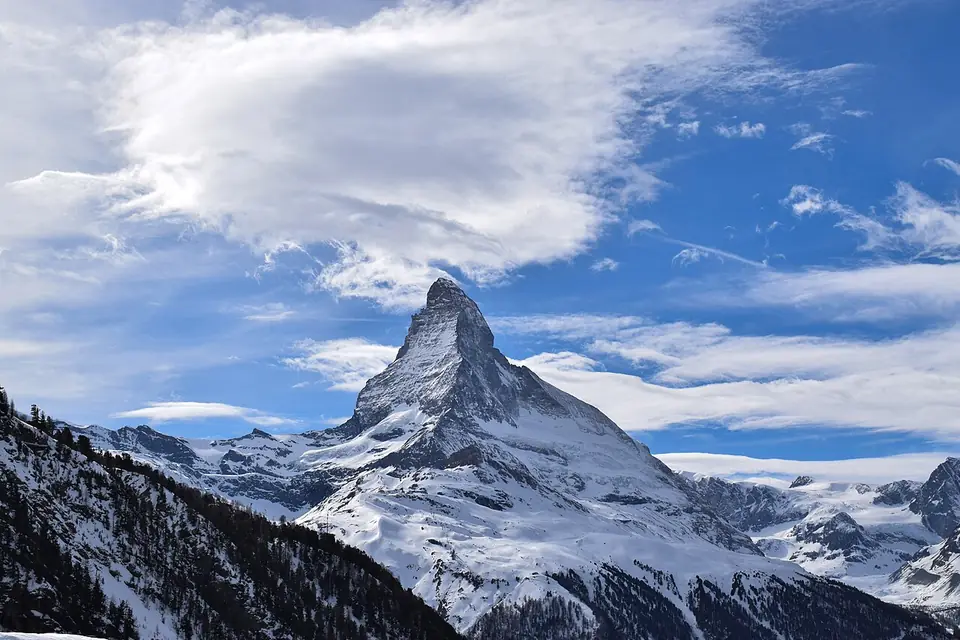
- The highest peak is the Dufourspitze at 4,634 metres, on the Italian border. The Matterhorn is lower at 4,478 metres but far more famous.
- Switzerland is not a member of the European Union, though it is part of the Schengen area, so there are no passport checks at its borders.
- Two of Europe's great rivers begin here. The Rhine flows north to the North Sea; the Rhône flows west through Lake Geneva to the Mediterranean.
Culture and traditions in Switzerland
- Saying hello
A handshake with strangers; friends often exchange three kisses on the cheek.
- Food and drink
Cheese fondue and raclette; rösti, crispy grated potatoes; Swiss chocolate.
- Festivals and traditions
Swiss National Day on 1 August, with bonfires and fireworks; Basel Fasnacht carnival, which starts at 4 am.
- Everyday life
Punctuality is highly valued, and trains run to the minute. Sundays are quiet, and noisy chores like mowing are often avoided.
- Did you know?
Switzerland has four national languages: German, French, Italian and Romansh.
Common mistakes
- Tapping Austria, further east.
- Confusing the Swiss flag with Denmark's in the Flags quiz.
- Answering Zürich or Geneva in the Capitals quiz.
Practise with Switzerland
- Europe quiz – the Alpine country touching France, Germany, Italy and Austria.
- Swiss Cantons – all 26, from Geneva to Graubünden.
- Europe flags – the square red flag with the white cross; watch out for Denmark and Georgia.
- Europe capitals quiz – Bern, not Zürich.
- Mystery Country – a lumpy, landlocked outline with Lake Geneva cut into the west and Ticino hanging down into Italy.
Nearby countries
 AustriaVienna
 FranceParis
 GermanyBerlin
 ItalyRome
 LiechtensteinVaduz
Quick check: how well do you know Switzerland?
3 questions, no sign-up. Tap an answer.
1. Which flag belongs to Switzerland?
That's the flag of Switzerland.
2. What is the capital of Switzerland?
The capital of Switzerland is Bern.
3. Which of these countries borders Switzerland?
Austria, France, Germany, Italy and Liechtenstein border Switzerland.
Keep going on the Europe quiz – Switzerland is one of 46 countries there.
More ways to practise: find Switzerland on the blank map with no borders (hard mode), or play today's Globe and the other daily puzzles.
Frequently asked questions about Switzerland
What language is spoken in Switzerland?
Switzerland has four national languages: German, French, Italian and Romansh. Swiss German dialects are spoken by about three in five people, mainly in the north and centre, French in the west, Italian in Ticino, and Romansh in parts of Graubünden.
What currency does Switzerland use?
Switzerland uses the Swiss franc (CHF), which is also the official currency of Liechtenstein. It floats freely and is seen as a safe-haven currency. Switzerland is not in the EU, so it does not use the euro.
What time zone is Switzerland in?
Switzerland uses Central European Time, UTC+1, and switches to Central European Summer Time, UTC+2, from late March to late October, in step with its EU neighbours.
Which side of the road do they drive on in Switzerland?
Switzerland drives on the right, like all its neighbours. Motorways need an annual sticker, the vignette, and many mountain roads give priority to uphill traffic and to the yellow postal buses.
What is the highest point in Switzerland?
The highest point is the Dufourspitze in the Monte Rosa massif, at about 4,630 metres, close to the Italian border. It is named after General Guillaume-Henri Dufour, who led the first accurate mapping of Switzerland.
Is Switzerland in the EU?
No. Switzerland has never joined the European Union, and voters rejected even the European Economic Area in 1992. Instead it has a web of bilateral agreements with the EU and is part of the Schengen area, so there are no routine passport checks at most of its borders.
Quizzes with Switzerland
Often confused with
Guides that help with this
- All 46 European capitals, with a memory trick for eachCapitals grouped by region, with hooks for the ones people forget.
- Flags that look alike (and how to tell them apart)Chad or Romania? Australia or New Zealand? The flag pairs that cost quiz points.
- The 25 hardest countries to find on a mapPacific islands, Caribbean islands and landlocked Africa – where they are.