Netherlands
Capital: Amsterdam. The Netherlands is one of the 46 countries in the Europe quiz.
Quick answers: What is the capital of the Netherlands? · Which countries border the Netherlands?
Facts about the Netherlands
- CapitalAmsterdam
- Population18.1 million
- Area41,850 km²
- RegionEurope
- LanguageDutch
- CurrencyEuro (EUR)
The Netherlands is the 10th most populous of the 46 countries in Europe and the 30th largest by area. Worldwide it ranks 72nd by population and 131st by area.
Where is the Netherlands?
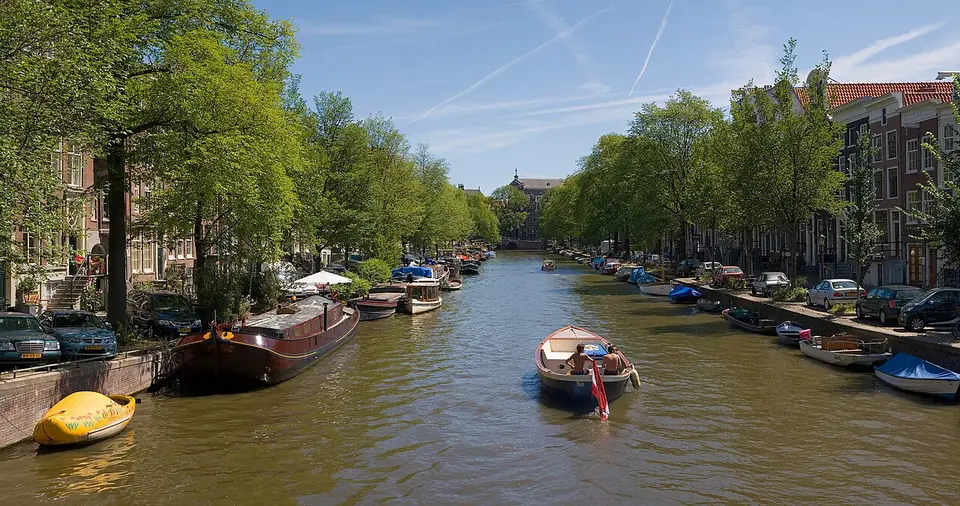
The Netherlands sits on the North Sea coast of north-western Europe, wedged between Germany to the east and Belgium to the south. It is small and famously flat. Amsterdam, the capital, is in the west, but the government sits in The Hague, further down the coast. Rotterdam, just south of The Hague, runs the busiest port in Europe.
On a world map, follow the North Sea coast from Denmark south and west. After Germany's short stretch of coast, the land turns a corner and the chain of the Frisian Islands begins. That corner is the Netherlands.
How to find the Netherlands on the map
- Start from Germany. The Netherlands is the country on Germany's western side, touching the sea.
- Look for the big inland water. The IJsselmeer, a former sea bay closed off by a dam, shows up as a lake in the middle of the country.
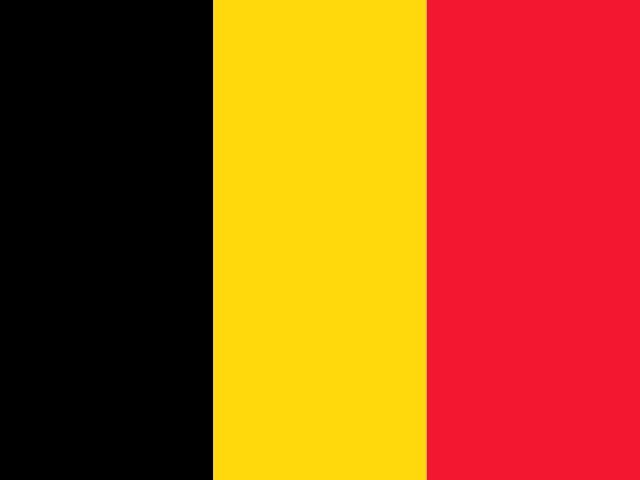
- Don't confuse it with Belgium. Belgium is directly below the Netherlands and touches France; the Netherlands never touches France.
Flag
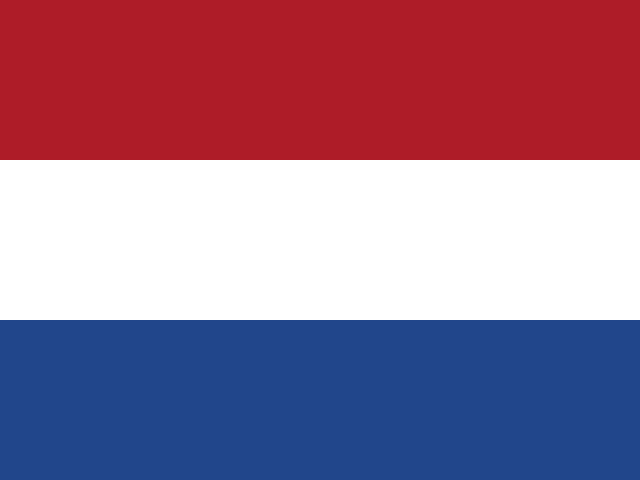
The Dutch flag is three horizontal bands – red, white and blue, red on top. It is one of the oldest tricolours in the world, used in some form since the 1500s.
The flag it gets mixed up with most is Luxembourg's, which has the same three colours in the same order, but with a lighter sky blue. If the bottom stripe is a deep navy, it's the Netherlands. Russia also uses white, blue and red horizontally, but with white on top.
A short history of the Netherlands
In Roman times the Rhine formed the empire's northern frontier, splitting today's Netherlands in two. North of the river lived the Frisians, who built mounds called terpen to keep their farms above the sea. In the Middle Ages the region became a patchwork of counties and bishoprics, such as Holland, Utrecht and Gelderland. Farmers drained peat bogs and built dikes, and towns grew rich on trade, fishing and cloth.
By the 1500s the Low Countries belonged to the Habsburgs and were ruled by Philip II of Spain. His heavy taxes and persecution of Protestants sparked the Dutch Revolt in 1568, led by William of Orange. The Eighty Years' War followed, and the northern provinces formed the Dutch Republic. Spain finally recognised its independence in 1648. The southern provinces stayed under Spain and later became Belgium, which is why the border between the two countries runs where it does.
The 1600s were the Dutch Golden Age. The Dutch East India Company, founded in 1602, built a trading empire in Asia, and Dutch traders settled from South Africa to New Amsterdam, today's New York. Amsterdam became the financial centre of Europe, and its canal ring was laid out in this period.
French troops occupied the republic in 1795, and Napoleon later made it part of France. After his defeat, the Kingdom of the Netherlands was formed in 1815, at first including Belgium, which broke away in 1830. The Netherlands stayed neutral in the First World War, but Germany invaded in 1940 and bombed Rotterdam. During the occupation most of the country's Jews were deported and murdered. The winter of 1944–45 brought famine in the west.
After the war, the Netherlands lost Indonesia, which became independent in 1949, and helped found NATO and the European communities. The North Sea flood of 1953, which killed over 1,800 people, led to a huge new system of sea defences. Today it is one of the world's largest exporters, with Rotterdam as Europe's gateway port and a strong farming, chemicals and technology sector.
Culture and daily life in the Netherlands
Dutch is a West Germanic language closely related to German and English; Afrikaans in South Africa developed from it. Frisian, spoken in the northern province of Friesland, is a separate official regional language and is often described as English's closest relative on the continent. Most Dutch people speak excellent English.
The country has a long tradition of tolerance, rooted partly in the Golden Age, when it took in religious refugees. Today a majority say they have no religion, while Catholicism, Protestantism and Islam remain the largest faiths. Dutch art is world-famous. Rembrandt's The Night Watch hangs in the Rijksmuseum, Vermeer's Girl with a Pearl Earring is in The Hague, and the Van Gogh Museum holds the largest collection of his work. Later, Piet Mondrian and the De Stijl movement shaped modern design.
Anne Frank's diary, written while hiding in an Amsterdam canal house, is one of the most-read books in the world. In sport, Dutch football became famous for "Total Football", developed by the coach Rinus Michels and embodied by Johan Cruyff, and speed skating is a national passion, with the Elfstedentocht, a 200 km race on frozen canals, held only in the rare winters cold enough.
Five facts worth knowing
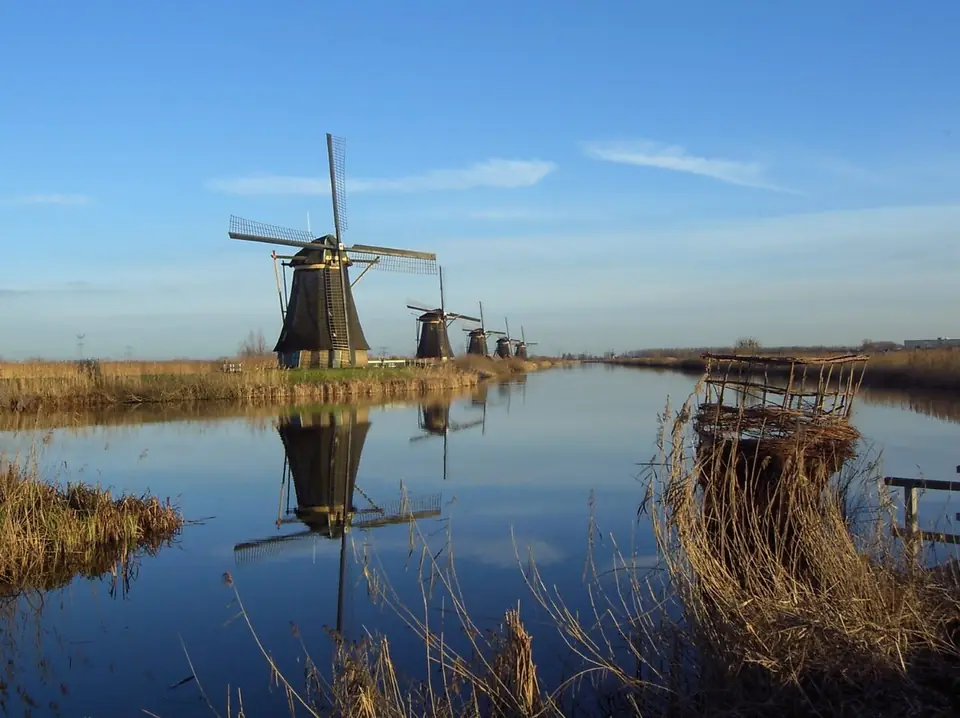
- About a quarter of the country lies below sea level. Much of it was reclaimed from the sea and is protected by dikes, dunes and pumping stations. The Delta Works in the south-west are among the largest flood defences ever built.
- The highest point on the mainland is 322 metres – the Vaalserberg, in the far south-east, where the Netherlands, Belgium and Germany meet.
- The Kingdom of the Netherlands stretches to the Caribbean. Aruba, Curaçao and Sint Maarten are separate countries within the kingdom; Bonaire, Sint Eustatius and Saba are special municipalities of the Netherlands itself.
- The Netherlands has 12 provinces, from Groningen in the north to Limburg in the south.
- Amsterdam is the capital, but parliament, the government and the king all work in The Hague.
Culture and traditions in the Netherlands
- Saying hello
A firm handshake, or three cheek kisses between friends; "Hoi" or "Goedemorgen".
- Food and drink
Stroopwafels, syrup-filled waffle cookies, and raw herring with onions; bitterballen are popular bar snacks.
- Festivals and traditions
King's Day on 27 April turns cities orange with street markets; Sinterklaas arrives in mid-November ahead of 5 December.
- Everyday life
People are known for being direct and punctual. Cycling is everywhere, and splitting the bill ("going Dutch") is common.
- Did you know?
The Netherlands has more bicycles than people, roughly 23 million bikes for about 18 million residents.
Common mistakes
- Tapping Belgium instead of the Netherlands – the two are stacked, and the Netherlands is the one on top.
- Tapping Denmark, which sits north of Germany rather than west of it.
- Choosing Luxembourg's flag in the Flags quiz.
Practise with the Netherlands
- Europe quiz – find Germany, then slide west to the coast.
- Dutch Provinces – all 12, from Friesland and the islands to Zeeland in the delta.
- Europe flags – tell the Dutch, Luxembourg and Russian tricolours apart.
- Europe capitals quiz – Amsterdam, not The Hague.
- Mystery Country – the IJsselmeer bite out of the top is a giveaway.
Nearby countries
Quick check: how well do you know the Netherlands?
3 questions, no sign-up. Tap an answer.
1. Which flag belongs to the Netherlands?
That's the flag of the Netherlands.
2. What is the capital of the Netherlands?
The capital of the Netherlands is Amsterdam.
3. Which of these countries borders the Netherlands?
Belgium and Germany border the Netherlands.
Keep going on the Europe quiz – Netherlands is one of 46 countries there.
More ways to practise: find the Netherlands on the blank map with no borders (hard mode), or play today's Globe and the other daily puzzles.
Frequently asked questions about the Netherlands
What language is spoken in the Netherlands?
Dutch is the official language and is spoken by nearly everyone. West Frisian is also official in the province of Friesland, and Papiamento and English are official on the Caribbean islands of Bonaire, Sint Eustatius and Saba. Most Dutch people speak English well.
What currency does the Netherlands use?
The Netherlands uses the euro (EUR), which replaced the Dutch guilder in 2002. The Caribbean Netherlands – Bonaire, Sint Eustatius and Saba – use the US dollar instead.
What time zone is the Netherlands in?
The European Netherlands uses Central European Time, UTC+1, in winter and UTC+2 in summer with daylight saving. The Caribbean islands of Bonaire, Sint Eustatius and Saba are on UTC−4 all year.
Which side of the road do they drive on in the Netherlands?
The Netherlands drives on the right. It is also one of the world's great cycling countries, with tens of thousands of kilometres of cycle paths and more bicycles than people.
What is the highest point in the Netherlands?
The highest point in the kingdom's territory is Mount Scenery, a volcano on the Caribbean island of Saba, at about 887 metres. In the European part, the highest ground is the Vaalserberg, where the Netherlands, Belgium and Germany meet.
Is it Holland or the Netherlands?
The country is the Netherlands. North Holland and South Holland are just two of its twelve provinces, though they contain Amsterdam, Rotterdam and The Hague. "Holland" is often used informally for the whole country, but the government asks people to use "the Netherlands" in official contexts.
Quizzes with the Netherlands
Often confused with
Guides that help with this
- All 46 European capitals, with a memory trick for eachCapitals grouped by region, with hooks for the ones people forget.
- Flags that look alike (and how to tell them apart)Chad or Romania? Australia or New Zealand? The flag pairs that cost quiz points.
- The 25 hardest countries to find on a mapPacific islands, Caribbean islands and landlocked Africa – where they are.