Belgium
Capital: Brussels. Belgium is one of the 46 countries in the Europe quiz.
Quick answers: What is the capital of Belgium? · Which countries border Belgium?
Facts about Belgium
- CapitalBrussels
- Population11.9 million
- Area30,528 km²
- RegionEurope
- LanguagesDutch, French, German
- CurrencyEuro (EUR)
Belgium is the 11th most populous of the 46 countries in Europe and the 33rd largest by area. Worldwide it ranks 82nd by population and 137th by area.
Where is Belgium?
Belgium is a small country in Western Europe squeezed between four neighbours: France to the south and west, Luxembourg to the south-east, Germany to the east and the Netherlands to the north. It has only a short stretch of North Sea coast, about 65 km. Brussels, the capital, sits almost exactly in the middle of the country and is the main home of the European Union and NATO.
On a world map, find the English Channel and follow the coast east from Calais. The first country you reach is Belgium.
How to find Belgium on the map
- Start from France. Belgium is tucked into the north-eastern corner of France, between France and the Netherlands.
- Look for the stack. Netherlands on top, Belgium underneath, Luxembourg as the small square hanging off Belgium's bottom corner. Together they are the Benelux countries.
- Check for France. Belgium touches France; the Netherlands doesn't. If the country you're about to tap has no French border, it's the wrong one.
Flag
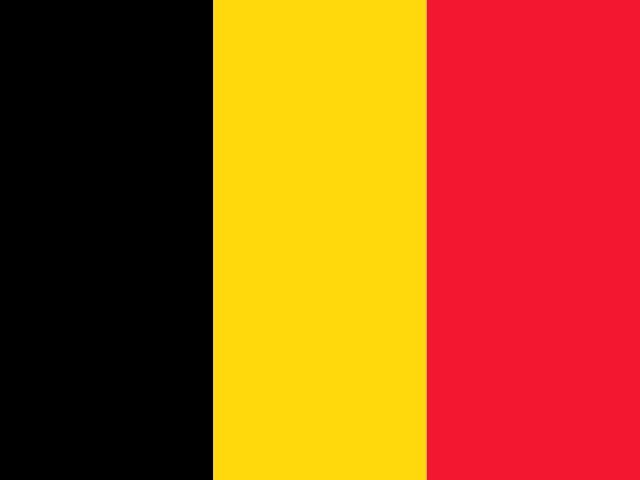
The Belgian flag is three vertical bands of black, yellow and red, with black at the hoist. The colours come from the coat of arms of the old Duchy of Brabant – a golden lion with red claws on a black shield.
The obvious lookalike is Germany, which uses black, red and gold – but horizontally, with black on top. If the stripes are vertical, it's Belgium; if they're horizontal, it's Germany.
A short history of Belgium
Julius Caesar wrote that the Belgae were the bravest of the peoples of Gaul, and the Roman province of Gallia Belgica later took their name. As the Roman Empire faded, the Franks moved in, and the line where Germanic speech gave way to Latin became, roughly, today's divide between Dutch and French. Charlemagne's family came from this region.
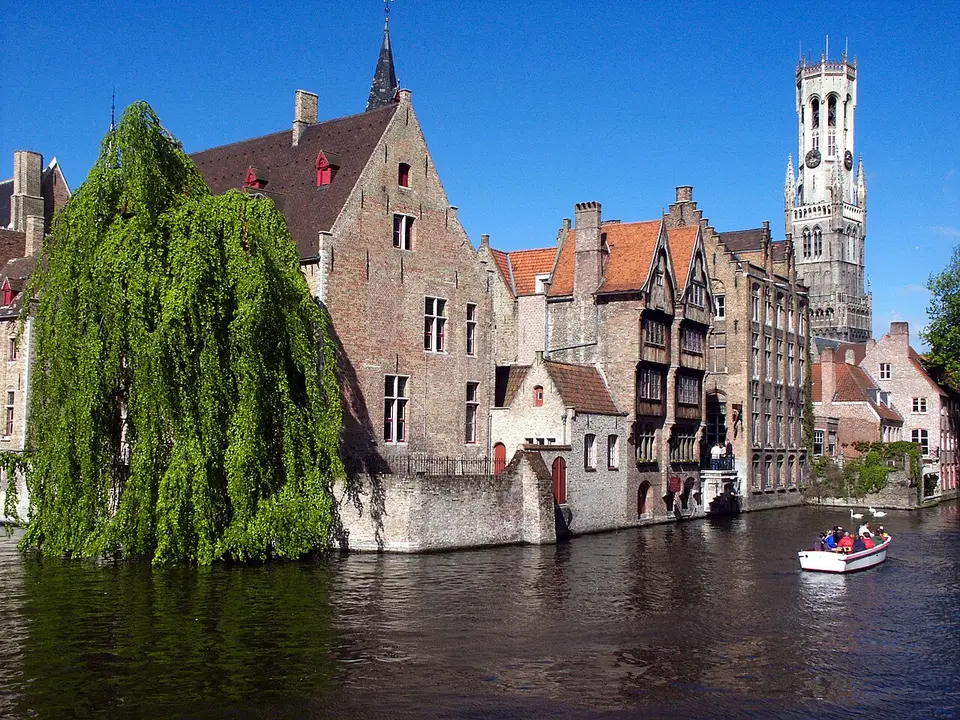
In the Middle Ages, cities such as Bruges, Ghent and Ypres grew rich on weaving cloth from English wool, and Bruges became one of Europe's great trading centres. The territory passed to the Dukes of Burgundy and then to the Habsburgs. When the northern Netherlands broke away in the late 1500s, the south stayed Catholic under Spanish and later Austrian rule. Antwerp, once the busiest port in Europe, declined after the Dutch closed the Scheldt river to shipping.
France annexed the region in the 1790s. After Napoleon's defeat, it was joined to the Netherlands in 1815, but many Catholic and French-speaking southerners resented Dutch rule. A revolt in Brussels in 1830 led to independence, and in 1831 Leopold of Saxe-Coburg became the first King of the Belgians. Belgium then became one of the first countries on the continent to industrialise, with coal mines and steelworks in Wallonia.
King Leopold II ran the vast Congo Free State as his personal colony from 1885, and forced labour there caused enormous suffering until the Belgian state took over in 1908. Germany invaded neutral Belgium in both world wars, and fighting around Ypres and in the Ardennes left deep scars. After 1945 Belgium was a founding member of what became the European Union and of NATO, and the Congo became independent in 1960.
From 1970 onwards, tensions between Flemish and French speakers were managed by turning the state into a federation in stages. Today Belgium is a wealthy country, and Brussels hosts the main institutions of the European Union and the headquarters of NATO.
Culture and daily life in Belgium
Belgium's language border shapes everyday life: schools, media and even political parties are split by language. Most Belgians have Catholic roots, though church attendance has fallen sharply. The country is very urban, and people often identify first with their city or region.
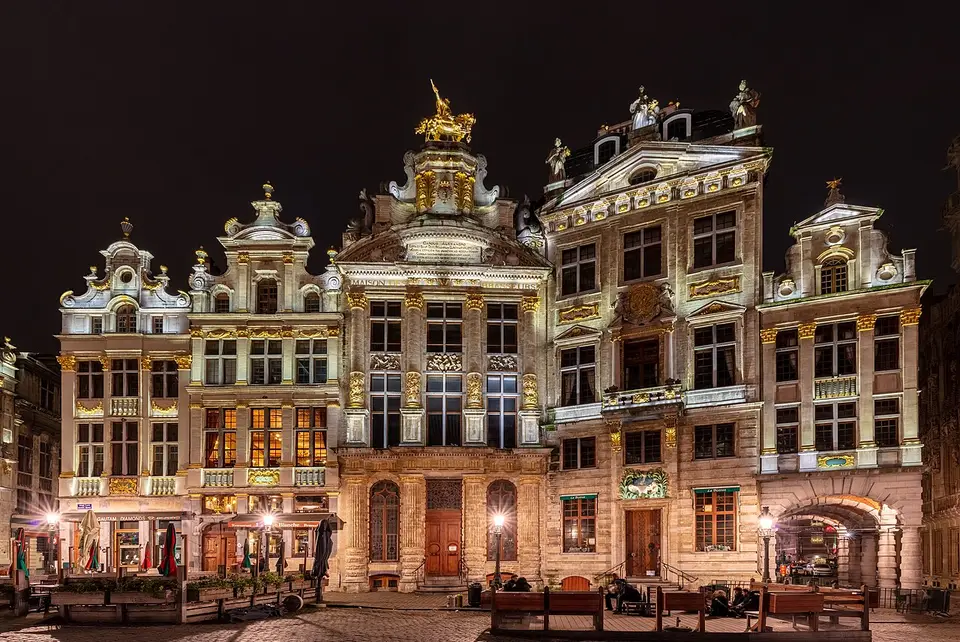
Belgian painters have shaped European art for centuries. Jan van Eyck's Ghent Altarpiece, Pieter Bruegel's village scenes and the work of Peter Paul Rubens in Antwerp are world treasures. Later came the surrealist René Magritte, whose bowler-hatted men and floating pipes are instantly recognisable. Victor Horta made Brussels a centre of Art Nouveau architecture, and the Atomium, built for the 1958 World's Fair, is a much-loved landmark.
Comics are taken seriously here. Hergé created Tintin, and the Smurfs and Lucky Luke are Belgian too. The saxophone was invented by Adolphe Sax from Dinant. Cycling is a passion, with Eddy Merckx often called the greatest rider of all time, and cobbled races such as the Tour of Flanders draw huge crowds.
Five facts worth knowing
- Belgium has three official languages. Dutch is spoken in Flanders in the north, French in Wallonia in the south, and German in a small area along the eastern border. Brussels is officially bilingual.
- The country is split into three regions – Flanders, Wallonia and the Brussels-Capital Region – each with its own government.
- The highest point is only 694 metres, the Signal de Botrange in the Ardennes, the forested hills of the south-east.
- The Battle of Waterloo was fought here in 1815, just south of Brussels.
- Baarle-Hertog is one of the strangest borders in the world. The Belgian town is made of more than twenty pieces of land completely surrounded by the Netherlands, some with Dutch pieces inside them.
Culture and traditions in Belgium
- Saying hello
A single kiss on the cheek among friends, or a handshake.
- Food and drink
Moules-frites (mussels and fries), waffles and world-famous chocolate.
- Festivals and traditions
The Carnival of Binche before Lent, and the Brussels Flower Carpet each August in even years.
- Everyday life
Belgium has three official languages, and many beers are served in their own branded glass.
- Did you know?
Belgian beer culture is listed by UNESCO as intangible cultural heritage.
Common mistakes
- Tapping the Netherlands – it's the bigger country directly above Belgium.
- Tapping Luxembourg, the small square beneath Belgium's south-eastern corner.
- Picking Germany's flag in the Flags quiz because the colours match.
Practise with Belgium
- Europe quiz – find the corner where France meets the Netherlands and Germany.
- Europe flags – vertical black-yellow-red; compare it with Germany's horizontal flag.
- Europe capitals quiz – Brussels.
- Mystery Country – a compact outline with a short, straight coast and the Ardennes bulging to the south-east.
- Mistake Bank – if you keep swapping Belgium and the Netherlands, drill them here.
Nearby countries
 FranceParis
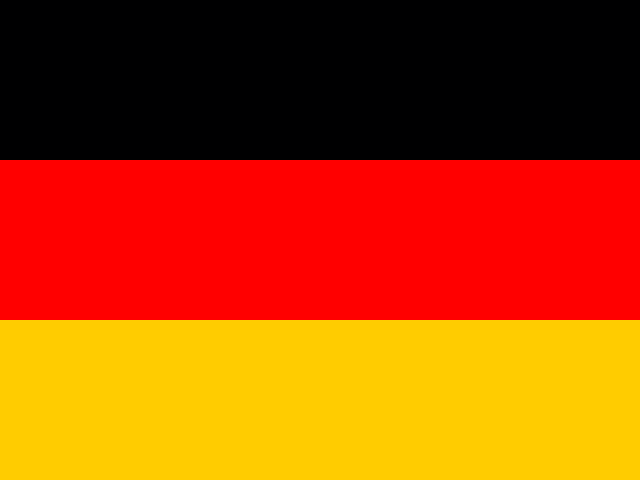 GermanyBerlin
 LuxembourgLuxembourg
 NetherlandsAmsterdam
Quick check: how well do you know Belgium?
3 questions, no sign-up. Tap an answer.
1. Which flag belongs to Belgium?
That's the flag of Belgium.
2. What is the capital of Belgium?
The capital of Belgium is Brussels.
3. Which of these countries borders Belgium?
France, Germany, Luxembourg and the Netherlands border Belgium.
Keep going on the Europe quiz – Belgium is one of 46 countries there.
More ways to practise: find Belgium on the blank map with no borders (hard mode), or play today's Globe and the other daily puzzles.
Frequently asked questions about Belgium
What language is spoken in Belgium?
Belgium has three official languages: Dutch, French and German. Dutch, often called Flemish locally, is spoken by the majority in Flanders, French in Wallonia, and German by a small community in the east. Brussels is officially bilingual, though French is the language most heard there.
What currency does Belgium use?
Belgium uses the euro (EUR). It was one of the first countries to adopt it, in 1999, and euro notes and coins replaced the Belgian franc in 2002. Before that, Belgium and Luxembourg shared a monetary union, and their francs circulated in both countries.
What time zone is Belgium in?
Belgium uses Central European Time, UTC+1, and moves to UTC+2 for daylight saving time from late March to late October. It shares its clock with France, the Netherlands, Luxembourg and Germany.
Which side of the road do they drive on in Belgium?
Belgians drive on the right. The country's motorways are famously lit at night, so many of them glow when seen from space, although some of the lighting has been switched off in recent years to save energy.
What is the highest point in Belgium?
The highest point is the Signal de Botrange in the Ardennes, about 694 metres, in the High Fens near the German border. An artificial mound and tower on top let visitors stand above 700 metres.
Is Belgium in the EU?
Yes. Belgium was one of the six founding members of the European Economic Community in 1957, together with France, West Germany, Italy, the Netherlands and Luxembourg. It is also a member of the Schengen Area and of NATO.
Quizzes with Belgium
Often confused with
Guides that help with this
- All 46 European capitals, with a memory trick for eachCapitals grouped by region, with hooks for the ones people forget.
- Flags that look alike (and how to tell them apart)Chad or Romania? Australia or New Zealand? The flag pairs that cost quiz points.
- The 25 hardest countries to find on a mapPacific islands, Caribbean islands and landlocked Africa – where they are.