Somalia
Capital: Mogadishu. Somalia is one of the 54 countries in the Africa quiz.
Quick answers: What is the capital of Somalia? · Which countries border Somalia?
Facts about Somalia
- CapitalMogadishu
- Population19.7 million
- Area637,657 km²
- RegionsAfrica, East Africa
- LanguagesSomali, Arabic
- CurrencySomali shilling (SOS)
Somalia is the 24th most populous of the 54 countries in Africa and the 18th largest by area. Worldwide it ranks 67th by population and 41st by area.
Where is Somalia?
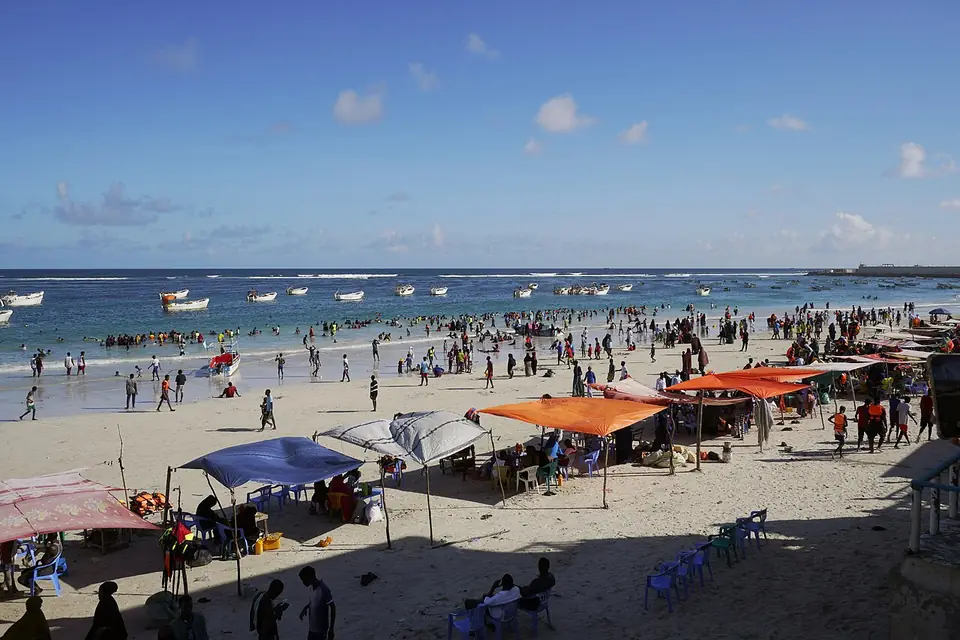
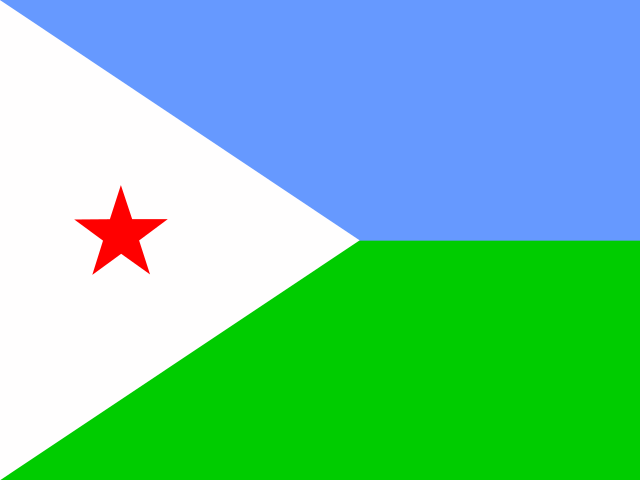
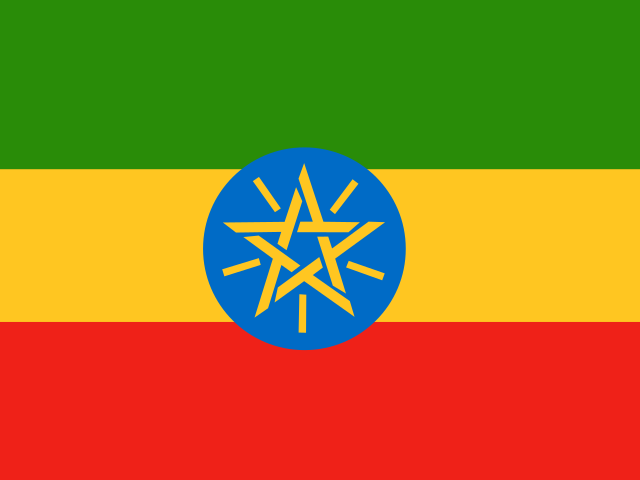
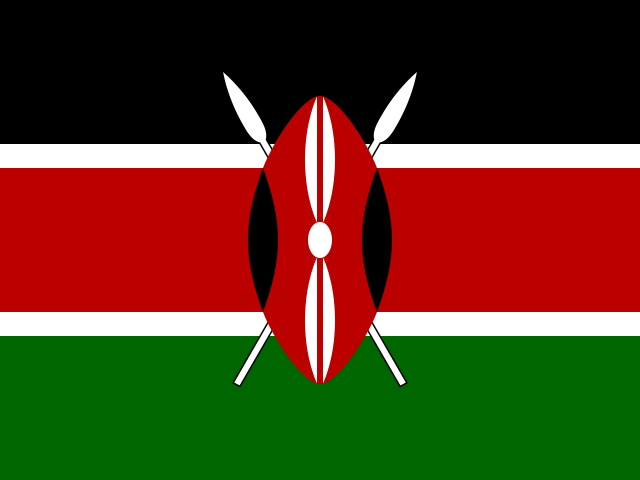
Somalia occupies the Horn of Africa, the pointed tip of the continent that juts east into the Indian Ocean. It has the longest coastline on the African mainland, running along the Gulf of Aden in the north and the Indian Ocean in the east. Inland it borders Djibouti to the north-west, Ethiopia to the west and Kenya to the south-west.
The capital, Mogadishu, is on the Indian Ocean coast in the south. The northern part of the country has operated as the self-declared Republic of Somaliland since 1991, though it is not internationally recognised and most maps, including this one, show it as part of Somalia.
How to find Somalia on the map
- Find the Horn. Africa's eastern tip is the most distinctive point on the continent's outline. Somalia is the country that wraps around it.
- Look for the number 7. Somalia's shape resembles a figure 7: a horizontal top along the Gulf of Aden and a long diagonal down the Indian Ocean coast.
- It faces Yemen. Across the Gulf of Aden, the Arabian Peninsula is only a few hundred kilometres away.
- Don't confuse it with Ethiopia, the large landlocked country behind it, or with Eritrea and Djibouti, which sit on the Red Sea further north-west.
Flag
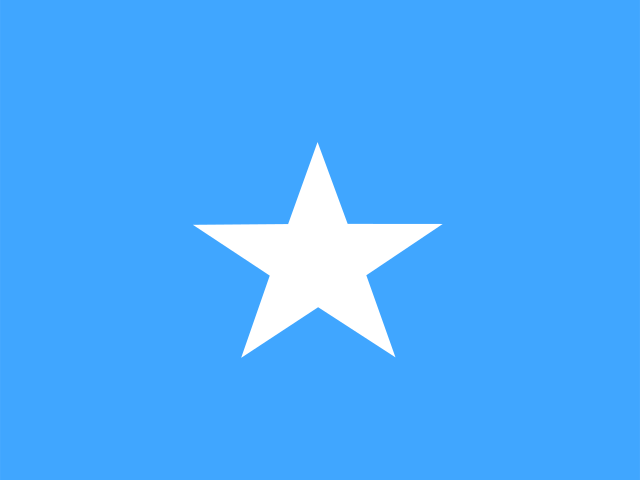
Somalia's flag is a plain light blue field with a single white five-pointed star in the centre. The blue was inspired by the United Nations flag, since the UN oversaw the territory in the years before independence in 1960. The star's five points represent the five regions where Somalis traditionally live.
The flag is easy to recognise but can be confused at a glance with the flag of Micronesia (blue with four stars) or a few other blue-and-white designs. One star, light blue, nothing else – that's Somalia.
A short history of Somalia
The Horn of Africa has been a trading crossroads for thousands of years. Ancient Egyptians sent expeditions to a land they called Punt, a source of incense, gold and exotic animals, and many historians think it lay on or near the Somali coast. In Roman times, Greek merchants described ports along the northern shore that traded frankincense and myrrh.
Islam arrived very early, carried across the Gulf of Aden by Arab traders. Coastal towns such as Zeila, Mogadishu, Merca and Barawa grew into wealthy Muslim trading cities. Mogadishu was a powerful sultanate in the Middle Ages, and the traveller Ibn Battuta visited it in the 1330s. In the 1500s Imam Ahmad ibn Ibrahim, known as Ahmad Gurey, led armies from the Adal Sultanate deep into Christian Ethiopia, a conflict still remembered on both sides.
In the late 1800s European powers divided Somali lands. Britain took the north, opposite its base at Aden. Italy took the south and east, and France took the area around Djibouti. Ethiopia gained the Ogaden in the west, and Kenya's north-east also came to hold many Somalis. This is why the five-pointed star on the flag stands for a people scattered across several countries. In the north, the religious leader Mohammed Abdullah Hassan, called the "Mad Mullah" by the British, resisted colonial rule for twenty years until he was defeated with the help of air power in 1920.
After independence in 1960, Somalia was a lively but fragile democracy until General Siad Barre seized power in 1969 and created a socialist state. His attempt to take the Ogaden from Ethiopia in 1977–78 ended in defeat. Opposition to his rule grew, and when he fell in 1991, the state collapsed into civil war and famine. A US-led and UN intervention in the early 1990s ended in withdrawal after the battle in Mogadishu in 1993. In the north, Somaliland declared itself independent, and Puntland became a self-governing region. A federal government was formed in 2012, and it continues to fight the militant group al-Shabaab.
Today Somalia is slowly rebuilding, with livestock exports, money sent home by Somalis abroad and a lively private sector in telecommunications and trade.
Culture and daily life in Somalia
Somalia is one of Africa's most culturally uniform countries: almost everyone speaks Somali and is a Sunni Muslim. Society is organised around clans, large family groups tracing descent through the father's line, and knowing one's lineage is an important part of identity. Many Somalis are still pastoralists, moving with camels, goats and sheep in search of water and grazing. Somalia has one of the largest camel populations in the world, and camels appear in poems, proverbs and songs.
Poetry, passed on by memory, can settle disputes, praise heroes or criticise leaders, and the poet Hadraawi was widely regarded as a national voice. The novelist Nuruddin Farah, writing in English, is the best-known Somali author abroad. Popular music grew in the 1970s around bands such as Waaberi, and singers like Magool and Maryam Mursal became stars.
The diaspora is large, with sizeable communities in Kenya, Britain, the United States, Sweden and the Gulf. The Olympic champion runner Mo Farah and the rapper K'naan are two of its best-known members.
Five facts worth knowing
- Somalia has the longest coastline of any mainland African country, at roughly 3,300 kilometres.
- Modern Somalia was formed in 1960 by uniting British Somaliland in the north with Italian Somaliland in the south.
- Cape Guardafui (Ras Asir), the tip of the Horn, is the easternmost point of mainland Africa.
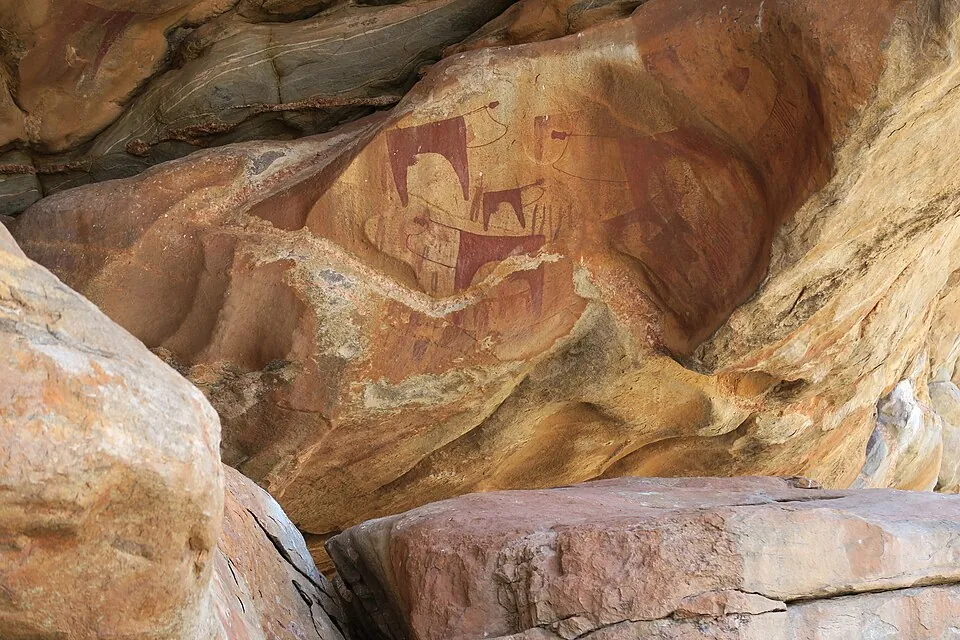
- Laas Geel, near Hargeisa in the north, has some of the oldest rock paintings in Africa, estimated at several thousand years old.
- Somali is written in the Latin alphabet, adopted officially in 1972, and Arabic is also an official language.
Culture and traditions in Somalia
- Saying hello
"Assalamu alaikum" with a handshake, usually between people of the same gender.
- Food and drink
Canjeero (laxoox), a spongy pancake-like flatbread; bariis iskukaris, spiced rice often served with goat or camel meat.
- Festivals and traditions
Independence is celebrated on 26 June and 1 July; Eid holidays are major family occasions.
- Everyday life
Sweet spiced tea (shaah) with cardamom is drunk throughout the day. People eat and pass things with the right hand.
- Did you know?
Somalia is often called a "nation of poets" because oral poetry plays a central role in everyday life and history.
Common mistakes
- Tapping Ethiopia – it is the big country behind the Horn, but it has no coast.
- Tapping Djibouti, the small country at the Gulf of Aden's entrance.
- Picking a different blue-and-white-star flag in the Flags quiz.
Practise with Somalia
- Africa quiz – the Horn is the easiest landmark on the continent; Somalia is the country shaped around it.
- East Africa quiz – the zoomed map separates Somalia from Djibouti, Eritrea and Ethiopia cleanly.
- Africa flags – light blue with one white star, a quick win.
- Africa capitals quiz – Mogadishu.
- Mystery Country – the figure-7 outline with the sharp point at the top-right corner is one of the most recognisable in Africa.
Nearby countries
Quick check: how well do you know Somalia?
3 questions, no sign-up. Tap an answer.
1. Which flag belongs to Somalia?
That's the flag of Somalia.
2. What is the capital of Somalia?
The capital of Somalia is Mogadishu.
3. Which of these countries borders Somalia?
Djibouti, Ethiopia and Kenya border Somalia.
Keep going on the Africa quiz – Somalia is one of 54 countries there.
More ways to practise: find Somalia on the blank map with no borders (hard mode), or play today's Globe and the other daily puzzles.
Frequently asked questions about Somalia
What language is spoken in Somalia?
Somali and Arabic are the official languages. Somali, a Cushitic language, is spoken by nearly the whole population and has been written in the Latin alphabet since 1972. Arabic is used in religion and education, and English and Italian are heard in some settings.
What currency does Somalia use?
Somalia's official currency is the Somali shilling, code SOS. Old shilling notes still circulate, but many larger transactions take place in US dollars, and mobile money services are used very widely for everyday payments.
What time zone is Somalia in?
Somalia uses East Africa Time, UTC+3, the same as Kenya, Ethiopia and Djibouti. It does not use daylight saving time, so the clocks stay the same throughout the year.
Which side of the road do they drive on in Somalia?
Somalia drives on the right, like neighbouring Ethiopia, and most cars are left-hand drive. Many roads are unpaved, and the main highways link Mogadishu with the interior and the north.
What is the highest point in Somalia?
The highest point is Shimbiris, roughly 2,400 metres, in the Cal Madow mountains in the far north, near the Gulf of Aden coast. The surrounding highlands hold some of the country's last juniper forests.
What is frankincense?
Frankincense is an aromatic resin tapped from Boswellia trees, which grow wild in the dry mountains of northern Somalia. The region has exported frankincense and myrrh for thousands of years, and the area is often linked with the Land of Punt described by the ancient Egyptians.
Quizzes with Somalia
Often confused with
Guides that help with this
- Learn all 54 African countries in a weekLearn the coastline in order, region by region.
- Flags that look alike (and how to tell them apart)Chad or Romania? Australia or New Zealand? The flag pairs that cost quiz points.
- The 25 hardest countries to find on a mapPacific islands, Caribbean islands and landlocked Africa – where they are.