Ethiopia
Capital: Addis Ababa. Ethiopia is one of the 54 countries in the Africa quiz.
Quick answers: What is the capital of Ethiopia? · Which countries border Ethiopia?
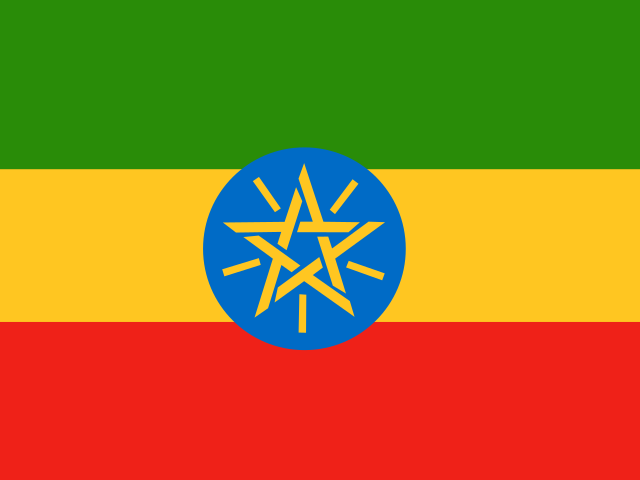
Facts about Ethiopia
- CapitalAddis Ababa
- Population135.5 million
- Area1,104,300 km²
- RegionsAfrica, East Africa
- LanguageAmharic
- CurrencyEthiopian birr (ETB)
Ethiopia is the 2nd most populous of the 54 countries in Africa and the 10th largest by area. Worldwide it ranks 10th by population and 26th by area.
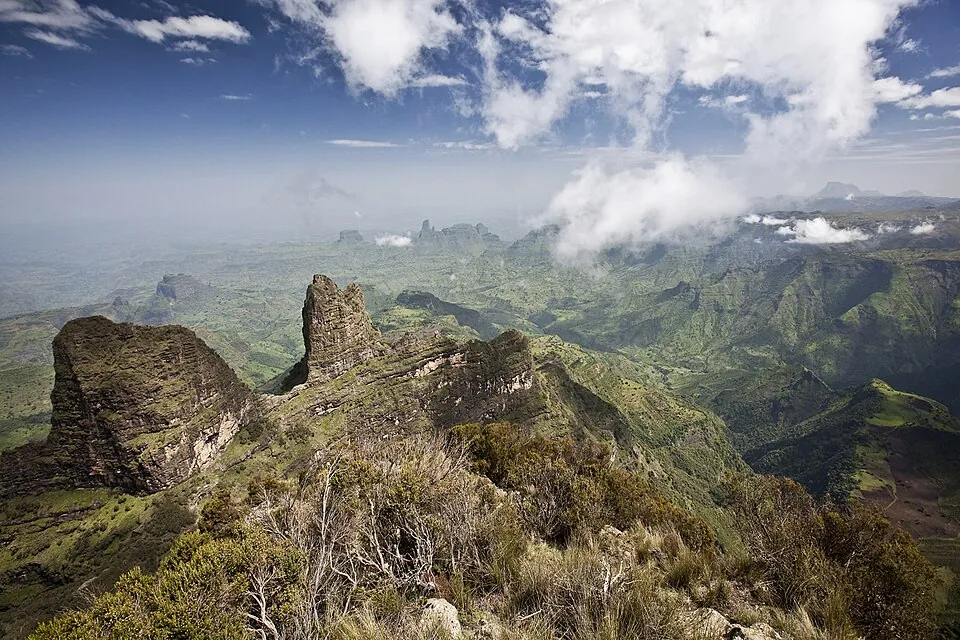
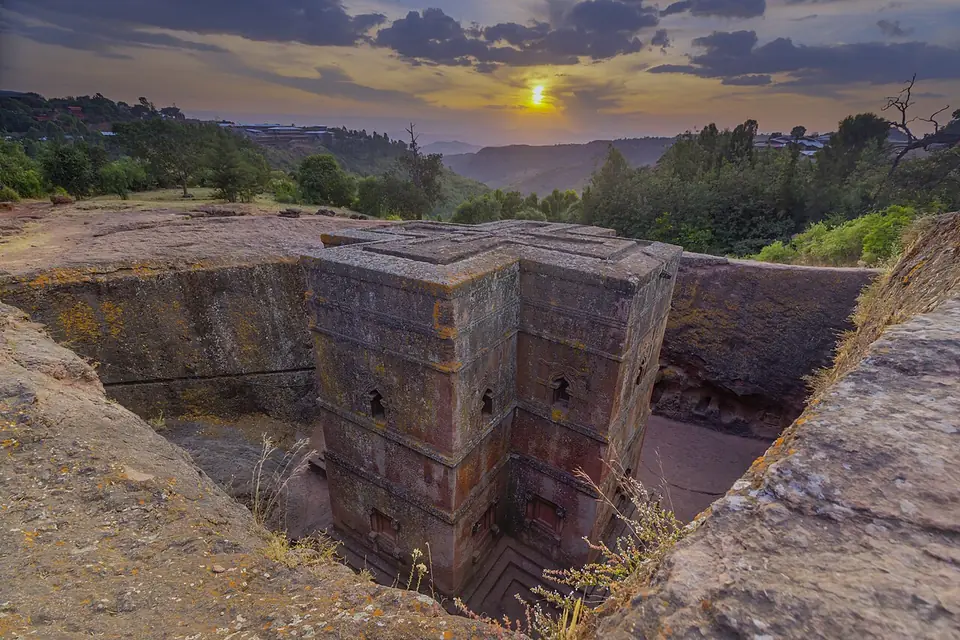
Where is Ethiopia?
Ethiopia is in the Horn of Africa, the pointed bulge on the eastern side of the continent. It is landlocked, surrounded by Eritrea to the north, Djibouti to the north-east, Somalia to the east and south-east, Kenya to the south, South Sudan to the west and Sudan to the north-west. Most of the country is a high plateau, split by the Great Rift Valley. Addis Ababa, the capital, is near the centre, at about 2,300 metres above sea level.
On a world map, find the Horn of Africa and look just inland from the coast. The large country filling the middle of the Horn, with no coastline of its own, is Ethiopia.
How to find Ethiopia on the map
- Start from the Horn. Somalia is the thin coastal country along the point; Ethiopia is the big country behind it.
- Look for the Red Sea. Ethiopia sits just inland from the southern end of the Red Sea, but Eritrea and Djibouti take the coast.
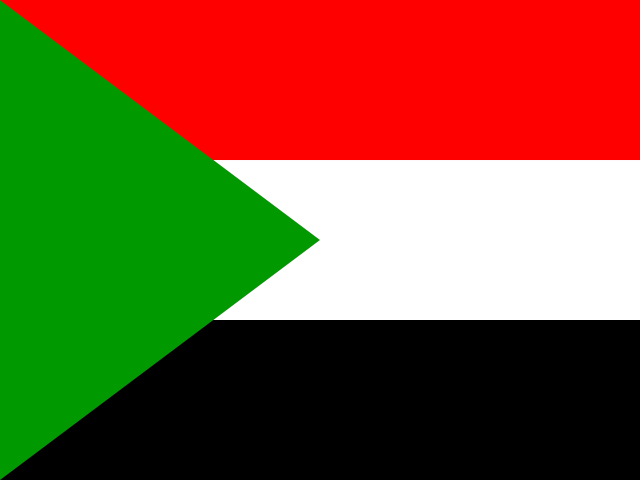
- Don't confuse it with Sudan. Sudan is to the north-west and much bigger; it reaches the Red Sea and the Nile runs through it.
- Don't confuse it with Kenya. Kenya is directly south and has an Indian Ocean coast; Ethiopia has no sea at all.
Flag
Ethiopia's flag has three horizontal bands – green, yellow and red – with a blue disc in the centre holding a yellow star with rays. The green-yellow-red combination is one of the oldest in Africa, and after Ethiopia resisted European colonisation it was adopted by many newly independent African states, which is why these are known as the pan-African colours.
That makes the plain stripes easy to confuse with Ghana, Guinea, Mali, Senegal and others. The blue disc with the star is the giveaway: no other green-yellow-red flag has it.
A short history of Ethiopia
Ethiopia is often called a cradle of humanity. The fossil skeleton known as Lucy, more than three million years old, was found in the Afar region in 1974, and some of the oldest known remains of our own species also come from Ethiopia.
Around the first century AD, the Kingdom of Aksum grew powerful in the north, trading ivory and gold across the Red Sea and minting its own coins. Its tall carved stone obelisks still stand in the town of Aksum. In the 300s King Ezana adopted Christianity, making Aksum one of the first Christian states. Later, the Zagwe dynasty carved the famous rock-hewn churches of Lalibela out of solid stone in the 1100s and 1200s.
In 1270 the Solomonic dynasty took power, claiming descent from King Solomon and the Queen of Sheba. In the 1500s the Muslim Adal sultanate, led by Ahmad ibn Ibrahim, overran much of the highlands until Portuguese soldiers helped the emperor drive it back. Gondar, with its castles, became the capital in the 1600s. A period of weak emperors followed until Tewodros II reunited the country in the 1850s.
Emperor Menelik II expanded the empire south, founded Addis Ababa and defeated an Italian invasion at the Battle of Adwa in 1896, a victory that inspired anti-colonial movements across Africa. Italy invaded again in 1935, and Haile Selassie went into exile until British and Ethiopian forces freed the country in 1941. Haile Selassie was overthrown in 1974 by a Marxist military regime, the Derg, whose rule brought civil war, terror and the famine of the mid-1980s.
Rebel forces took Addis Ababa in 1991, and Ethiopia became a federation of regions largely drawn along ethnic lines. Conflict has continued, including a devastating war in Tigray from 2020 to 2022. The economy grew quickly in the 2000s and 2010s, driven by farming, coffee, airlines and new dams such as the Grand Ethiopian Renaissance Dam on the Blue Nile.
Culture and daily life in Ethiopia
More than 80 languages are spoken. Amharic, written in the Ge'ez-based script with its own symbols for each syllable, is the federal working language, while Oromo is the most widely spoken first language. Ethiopian Orthodox Christianity, with its own ancient liturgy and many fasting days, is the largest faith, and Islam is followed by a large share of the population, especially in the east and south. The walled city of Harar is considered a holy city of Islam.
Ethiopian music has its own scales, and the "Ethio-jazz" of Mulatu Astatke and singers like Mahmoud Ahmed became known worldwide. Churches are filled with bright painted saints with large almond-shaped eyes, and illuminated manuscripts on goatskin parchment are treasured in monasteries around Lake Tana.
Long-distance running is a national obsession. Abebe Bikila won the 1960 Olympic marathon barefoot in Rome, and Haile Gebrselassie, Tirunesh Dibaba and Kenenisa Bekele followed. Many of the best athletes train at altitude around Addis Ababa and in the Arsi highlands.
Five facts worth knowing
- Ethiopia is the only African country never colonised by a European power, though Italy occupied it from 1936 to 1941.
- It became landlocked in 1993, when Eritrea gained independence and took the whole Red Sea coast with it.
- The Blue Nile rises at Lake Tana in the Ethiopian highlands and supplies most of the water that reaches Egypt.
- Ethiopia uses its own calendar with 13 months, running about seven to eight years behind the calendar used in most of the world.
- Coffee is believed to have originated in Ethiopia, and the country remains one of Africa's biggest producers.
Culture and traditions in Ethiopia
- Saying hello
"Selam" with a handshake; close friends may kiss on the cheek several times or bump shoulders.
- Food and drink
Injera with doro wat, a spicy chicken stew; freshly roasted Ethiopian coffee.
- Festivals and traditions
Enkutatash, Ethiopian New Year, on 11 September; Timkat, celebrating Epiphany, on 19 January.
- Everyday life
Meals are shared from one large plate and eaten with the right hand. The coffee ceremony, often three rounds, is a sign of hospitality.
- Did you know?
Ethiopia uses its own calendar with 13 months, which runs about seven to eight years behind the Gregorian calendar.
Common mistakes
- Tapping Somalia – it wraps around Ethiopia's eastern side along the coast of the Horn.
- Tapping Sudan or Kenya on either side.
- Picking Ghana, Guinea or another green-yellow-red flag in the Flags quiz; look for the blue disc.
Practise with Ethiopia
- East Africa quiz – the region is zoomed in, so Ethiopia, Eritrea, Djibouti and Somalia are much easier to tell apart.
- Africa quiz – the big landlocked country inside the Horn.
- Africa flags – the pan-African colours with the star on a blue disc.
- Africa capitals quiz – Addis Ababa.
- Mystery Country – the outline has a long diagonal edge against Somalia and a notch in the north-east where Djibouti sits.
Nearby countries
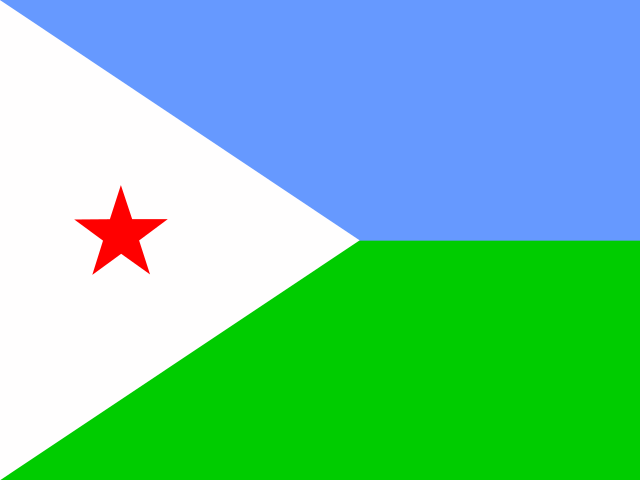
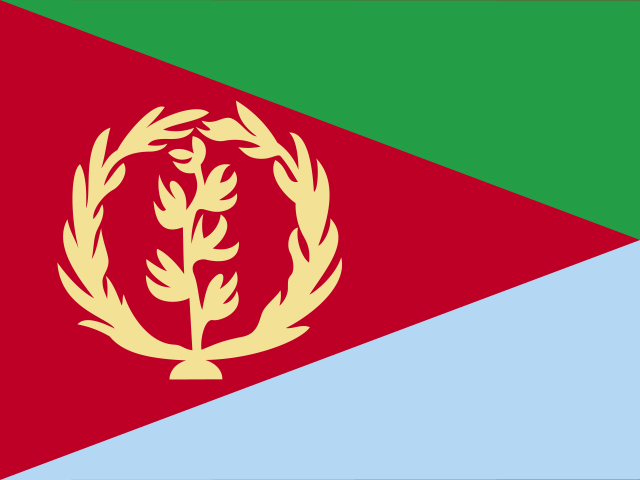
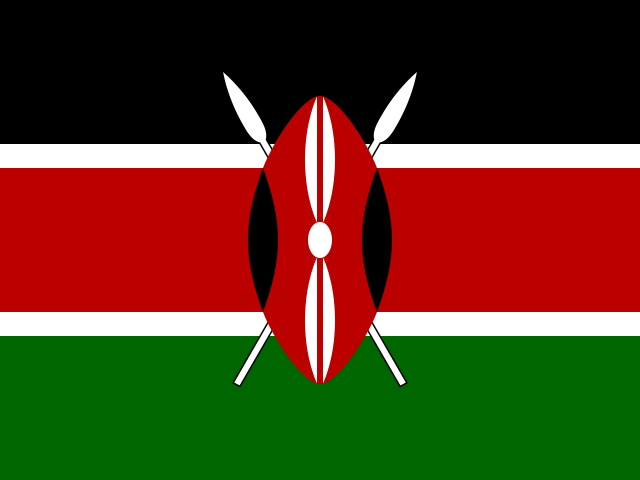
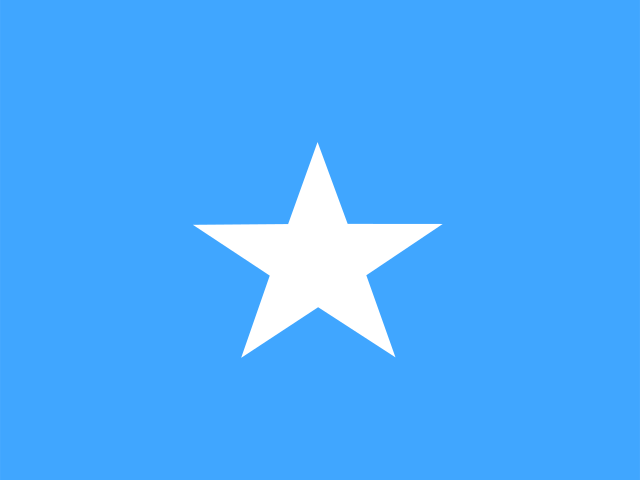
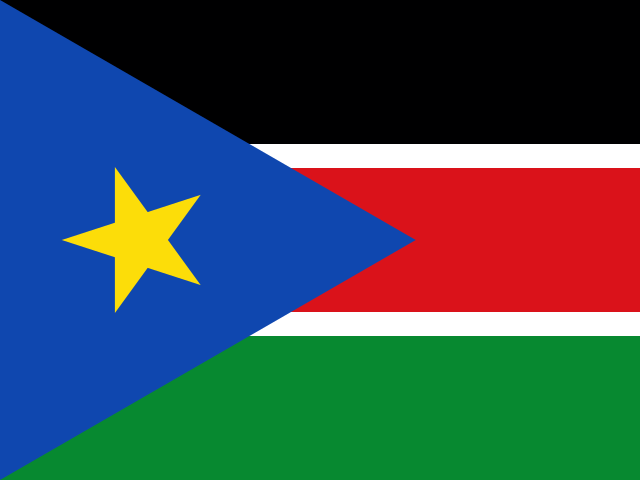
Quick check: how well do you know Ethiopia?
3 questions, no sign-up. Tap an answer.
1. Which flag belongs to Ethiopia?
That's the flag of Ethiopia.
2. What is the capital of Ethiopia?
The capital of Ethiopia is Addis Ababa.
3. Which of these countries borders Ethiopia?
Djibouti, Eritrea, Kenya, Somalia, South Sudan and Sudan border Ethiopia.
Keep going on the Africa quiz – Ethiopia is one of 54 countries there.
More ways to practise: find Ethiopia on the blank map with no borders (hard mode), or play today's Globe and the other daily puzzles.
Frequently asked questions about Ethiopia
What language is spoken in Ethiopia?
Amharic is the working language of the federal government. In 2020 Afaan Oromo, Tigrinya, Somali and Afar were added as federal working languages. Afaan Oromo has the most native speakers, and Amharic is written in the Ge'ez script.
What currency does Ethiopia use?
Ethiopia uses the birr (ETB), divided into 100 santim. In 2024 the central bank stopped tightly managing the exchange rate and allowed the birr to float, after which it lost much of its value against the dollar.
What time zone is Ethiopia in?
Ethiopia uses East Africa Time, UTC+3, with no daylight saving. In everyday life, however, many Ethiopians count hours from dawn rather than midnight, so 7 am is called 'one o'clock in the morning'.
Which side of the road do they drive on in Ethiopia?
Ethiopians drive on the right. Livestock on the road is common outside the cities, and an expressway now links Addis Ababa with Adama to the south-east.
What is the highest point in Ethiopia?
Ras Dashen, in the Simien Mountains, is the highest point at about 4,550 metres. It is the highest mountain in Ethiopia and one of the highest in Africa.
What is Ethiopia famous for?
Ethiopia is famous for long-distance runners, including Abebe Bikila, who won the 1960 Olympic marathon barefoot. It is also known for injera, a spongy flatbread made from teff, and the coffee ceremony, in which beans are roasted and brewed in front of guests.
Quizzes with Ethiopia
Often confused with
Guides that help with this
- Learn all 54 African countries in a weekLearn the coastline in order, region by region.
- Flags that look alike (and how to tell them apart)Chad or Romania? Australia or New Zealand? The flag pairs that cost quiz points.
- The 25 hardest countries to find on a mapPacific islands, Caribbean islands and landlocked Africa – where they are.